
TL;DR:
- Addiction alters brain patterns, making willpower alone insufficient for recovery.
- Cognitive Behavioral Therapy targets thoughts and behaviors to prevent relapse effectively.
- CBT shows strong evidence for short-term success and skill development in addiction recovery.
Many people believe that overcoming addiction is simply a matter of willpower, a personal choice to stop and push through discomfort. The reality is far more complex. Addiction reshapes the brain’s thought patterns, emotional responses, and automatic behaviors in ways that willpower alone cannot easily reverse. Cognitive behavioral therapy, or CBT, is one of the most research-supported approaches to breaking this cycle. Rather than focusing solely on the substance, CBT targets the underlying thoughts and behaviors that fuel addictive patterns. This article will walk you through what CBT actually is, how it works in practice, what the science says about its effectiveness, and how it fits into real-world recovery in Los Angeles County.
Table of Contents
- What is cognitive behavioral therapy (CBT) for addiction?
- How CBT addresses addiction: Core principles and techniques
- Evidence and effectiveness: How well does CBT work for addiction?
- CBT for dual diagnosis: Treating addiction and co-occurring disorders
- A fresh perspective: What most guides miss about CBT for addiction recovery
- Get support with evidence-based addiction treatment
- Frequently asked questions
Key Takeaways
| Point | Details |
|---|---|
| CBT targets thoughts and behaviors | CBT helps individuals recognize and change patterns that drive addiction for long-term recovery. |
| Proven effectiveness | Scientific studies show CBT increases abstinence, reduces relapse, and builds resilience in addiction treatment. |
| Practical tools for recovery | CBT equips people with real-life coping strategies like urge surfing, trigger management, and relapse prevention. |
| Supports dual diagnosis | Integrated CBT addresses both addiction and mental health but may be best when combined with other therapies. |
What is cognitive behavioral therapy (CBT) for addiction?
CBT was developed in the 1960s by psychiatrist Aaron Beck and has since become one of the most widely studied forms of psychotherapy. In the context of addiction, CBT targets maladaptive patterns by helping individuals recognize how distorted thoughts lead to harmful behaviors, including substance use. It is a structured, time-limited approach, meaning sessions follow a clear format and treatment typically has a defined end point.
What sets CBT apart from many other therapies is its focus on the present. Rather than spending extensive time exploring childhood experiences or unconscious drives, CBT asks: what thoughts are happening right now, and how are they connected to your actions? This practical angle makes it especially effective for addiction, where patterns often play out quickly and automatically.
Here is how CBT compares to other common approaches:
| Therapy | Core focus | Time frame | Skill-building emphasis |
|---|---|---|---|
| CBT | Thoughts, feelings, behaviors | Short to medium term | High |
| Motivational interviewing | Ambivalence and change readiness | Brief | Moderate |
| 12-step programs | Peer support, spiritual framework | Ongoing | Low to moderate |
| Psychodynamic therapy | Unconscious patterns, past experiences | Long term | Low |
CBT is typically recommended when someone needs concrete tools to manage cravings, identify triggers, or change thought patterns that reinforce substance use. Some of the most common reasons clinicians turn to CBT include:
- The individual struggles with recurring negative thought patterns
- Relapse has been a challenge in previous recovery attempts
- There is a need to build practical coping skills for daily situations
- Co-occurring anxiety or depression is present alongside addiction
Understanding the individual counseling benefits of CBT is an important first step, and the counseling benefits for addiction recovery extend well beyond the therapy room into everyday life.
How CBT addresses addiction: Core principles and techniques
CBT for addiction is not a single technique but a collection of methods applied strategically based on what each person needs. Core methodologies include cognitive restructuring, functional analysis, skills training, behavioral experiments, relapse prevention planning, and addressing the abstinence violation effect, which refers to the guilt spiral that can follow a single slip.
Here is a step-by-step overview of how CBT typically unfolds in addiction treatment:
- Functional analysis: The therapist and client examine what happens before, during, and after substance use to identify specific triggers, thoughts, and emotional states.
- Cognitive restructuring: Distorted beliefs, such as “I can’t handle stress without using,” are identified and challenged with more accurate, balanced thinking.
- Skills training: Practical tools are taught for handling cravings, managing emotions, and navigating high-risk situations.
- Behavioral experiments: Clients test new ways of responding to old triggers, building confidence in their ability to cope differently.
- Relapse prevention planning: A concrete plan is developed to recognize warning signs early and respond effectively before a full relapse occurs.
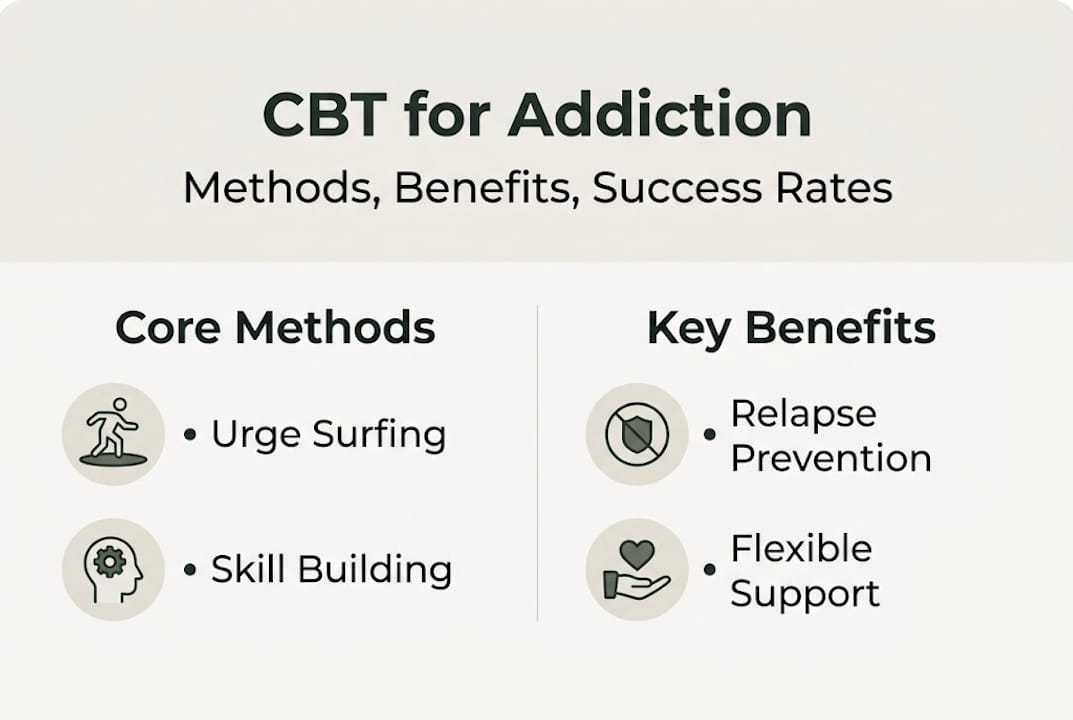
One particularly effective technique is urge surfing. The idea is that cravings, like waves, rise in intensity and then naturally fall if you don’t act on them. Rather than fighting or suppressing a craving, you observe it with curiosity, noticing where you feel it in your body and watching it peak and fade.
Pro Tip: Try naming your craving out loud, such as “I notice I’m having an urge to use right now.” This simple act of labeling creates psychological distance between you and the urge, which is a core skill in managing addiction triggers effectively.
| CBT technique | What it targets | Real-world application |
|---|---|---|
| Cognitive restructuring | Distorted beliefs | Challenging “I need this to function” |
| Urge surfing | Cravings | Riding out a craving without acting |
| Functional analysis | Triggers | Mapping situations that lead to use |
| Relapse prevention | Future risk | Planning responses to high-risk scenarios |
These tools also support self-care in recovery and can be valuable resources for coping strategies for loved ones who want to support someone in their recovery journey.
Evidence and effectiveness: How well does CBT work for addiction?
The evidence base for CBT in addiction treatment is substantial. Research shows that CBT increases short-term abstinence, reduces relapse rates, and improves resilience, with effects typically strongest in the first three months of treatment. These findings hold across multiple substance use disorders, including alcohol, cocaine, and opioid dependence.
“CBT empowers individuals with skills that outlast the treatment itself, which is why its effects on relapse prevention can persist long after sessions end.”
What makes CBT particularly valuable from a scientific standpoint is its durability. Unlike some interventions that lose effectiveness once they stop, CBT’s skill-based nature means clients continue to apply what they learned. Studies show that gains made during CBT can actually strengthen over time as individuals practice coping strategies in real-life situations.
However, it is important to be realistic about what CBT can and cannot do. Factors that influence how well CBT works include:
- Severity of the addiction and how long it has been present
- Presence of co-occurring mental health conditions
- Quality and training of the therapist delivering CBT
- Level of engagement and practice outside of sessions
- Access to a stable, supportive environment during treatment
CBT tends to show the strongest results when it is delivered consistently over a structured period, typically 12 to 20 weeks. Occasional or inconsistent sessions produce weaker outcomes. For those exploring treatment options in Los Angeles, understanding the expected commitment level helps set realistic expectations for the recovery journey.
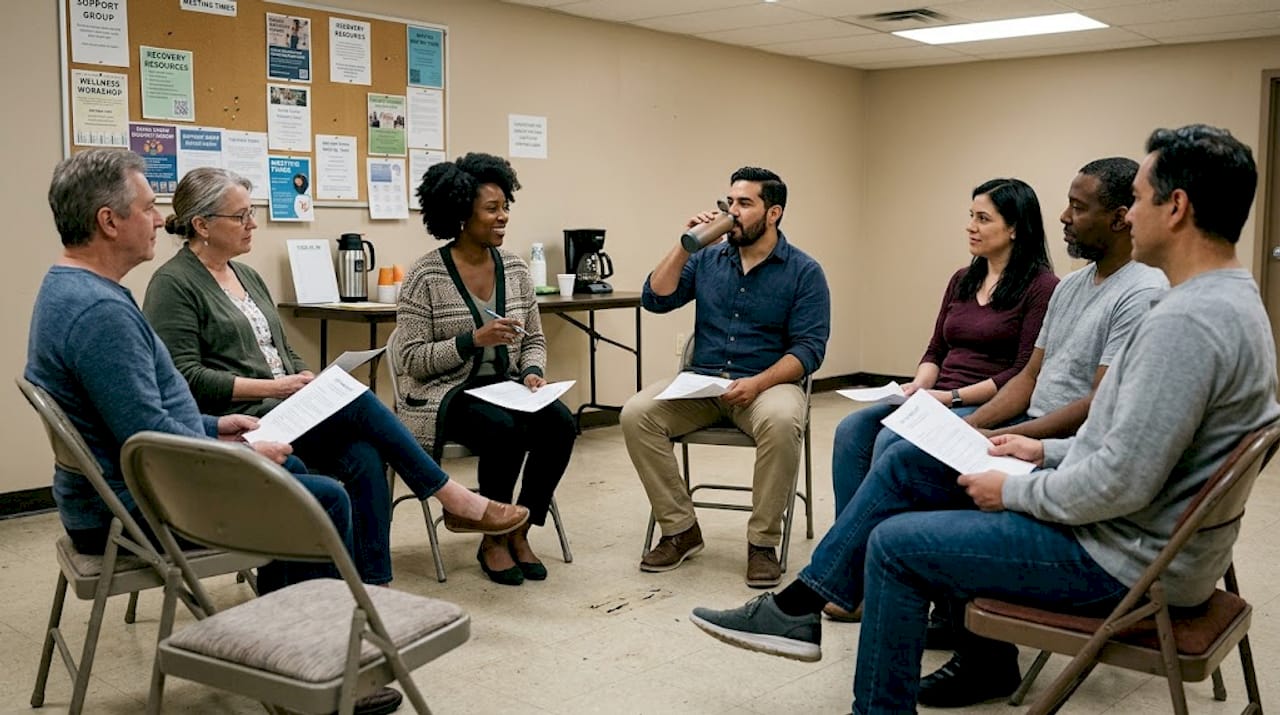
It is also worth noting that CBT works best as part of a broader treatment plan. When paired with medication-assisted treatment or peer support groups, outcomes tend to improve significantly compared to any single approach used in isolation.
CBT for dual diagnosis: Treating addiction and co-occurring disorders
Dual diagnosis refers to the presence of both a substance use disorder and at least one mental health condition, such as depression, anxiety, PTSD, or bipolar disorder. This combination is far more common than many people realize. Research consistently shows that roughly half of all individuals with a substance use disorder also meet the criteria for a co-occurring mental health condition.
In these cases, treating only the addiction while ignoring the mental health component often leads to poor outcomes. Integrated CBT in dual diagnosis shows meaningful improvements in both addiction and mental health symptoms, though results are not always superior to standard addiction treatments on their own. This suggests that integration matters but must be done thoughtfully.
What does integrated CBT actually look like in practice? It involves sessions that address both the addiction and the mental health condition simultaneously, using CBT tools to untangle how the two interact. For example, someone with social anxiety may use alcohol to manage discomfort in social situations. Integrated CBT helps them challenge anxiety-driven thoughts and develop new coping strategies, reducing the need for alcohol as a social crutch.
Pro Tip: When evaluating a treatment center for dual diagnosis support, ask these questions directly:
- Do your therapists have specific training in integrated dual diagnosis treatment?
- Will my mental health and addiction be treated at the same time, or separately?
- How do you adjust CBT for clients with trauma histories?
For a deeper look, dual diagnosis recovery explained outlines what to expect from integrated care. You can also explore how to approach managing dual diagnosis for recovery and review the treatment workflow for dual diagnosis for a step-by-step breakdown.
A fresh perspective: What most guides miss about CBT for addiction recovery
Most articles about CBT present it as either a cure-all or frame their skepticism around a single study. Neither view tells the full story. The reality, based on both research and real-world clinical experience, is more nuanced.
CBT excels in skill-building when compared to other therapies, but that advantage only translates into lasting recovery when those skills are actively used outside the therapy room. The sessions are 50 minutes. Life is 24 hours a day. That gap is where many people struggle, and it is why blending CBT with support groups, family involvement, or medication often produces better outcomes than CBT alone.
Another overlooked issue is access. In Los Angeles County, provider quality varies widely. Not every therapist who lists CBT as a specialty has received proper training in the addiction-specific protocols that make it effective. When choosing a provider, look for clinicians trained in evidence-based addiction CBT models, not just general CBT certification. Asking about their experience with substance use disorders specifically is a reasonable and important question.
The importance of counseling in recovery goes beyond technique. The therapeutic relationship, how safe and understood you feel with your clinician, is one of the strongest predictors of treatment success across all modalities, including CBT.
Get support with evidence-based addiction treatment
If you or someone you care about is navigating addiction in Los Angeles County, evidence-based care is available and accessible. At Glendora Recovery Center, our programs integrate CBT with a full range of therapeutic services designed to address both addiction and any co-occurring mental health needs. Our team is trained in the specific protocols that make CBT effective in real-world recovery, not just in theory. Whether you are exploring options for the first time or looking for a more structured level of care, our addiction treatment center offers personalized programs built around your needs. Review our treatment options guide and reach out for a confidential consultation today.
Frequently asked questions
How long does CBT for addiction usually last?
CBT for addiction is a structured, time-limited therapy that typically runs 12 to 20 weeks, though the exact duration depends on individual needs and program design.
Can CBT be combined with other addiction treatments?
Yes. CBT is often combined with medication-assisted treatment, group therapy, or peer support groups, and this combination frequently produces stronger outcomes than any single approach alone.
Is CBT effective for all types of addiction?
CBT has a strong evidence base for substance use disorders including alcohol, cocaine, and opioids. Research shows it increases abstinence and reduces relapse, though effectiveness for behavioral addictions is still being studied.
How does CBT help prevent relapse?
CBT’s relapse prevention planning teaches clients to recognize early warning signs, identify high-risk situations, and apply coping skills before a full relapse occurs.
What makes CBT different from other treatments for addiction?
CBT’s defining strength is its structured focus on changing thought patterns and its emphasis on skill-building that clients can apply to real-life challenges long after treatment ends.
Recommended
- 5 proven benefits of counseling for addiction recovery | Glendora Recovery Center
- Addiction Treatment Options 2025: Complete Guide | Glendora Recovery Center
- Role of Medication in Addiction Recovery Success | Glendora Recovery Center
- Role of Addiction Counselors: Impact on Recovery Success | Glendora Recovery Center