Struggling with both addiction and mental health symptoms can feel overwhelming, especially when everyday life in Los Angeles County adds its own pressures. Dual diagnosis requires more than standard treatment—your story deserves a truly personalized approach. With a focus on comprehensive screening and integrated care, you can find support from a recovery center committed to understanding your unique needs and building a foundation for lasting change.
Table of Contents
- Step 1: Assess Individual Needs For Dual Diagnosis
- Step 2: Develop A Customized Treatment Plan
- Step 3: Coordinate Care For Addiction And Mental Health
- Step 4: Monitor Progress Through Regular Evaluations
- Step 5: Adjust Strategies For Sustained Recovery
Quick Summary
| Key Point | Explanation |
|---|---|
| 1. Complete a thorough assessment | Conduct integrated evaluations to understand mental health and substance use interactions for a personalized treatment approach. |
| 2. Create a tailored treatment plan | Develop a dynamic plan that integrates diverse therapies to address both mental health symptoms and substance use comprehensively. |
| 3. Ensure coordinated care among professionals | Facilitate collaboration between a multidisciplinary team to provide seamless treatment for both mental health and addiction challenges. |
| 4. Regularly monitor treatment progress | Use systematic tools for ongoing evaluations to track recovery and make timely adjustments to your care plan. |
| 5. Adapt strategies for continuous recovery | Embrace flexible approaches that evolve with your needs to maintain long-term progress in managing dual diagnosis. |
Step 1: Assess individual needs for dual diagnosis
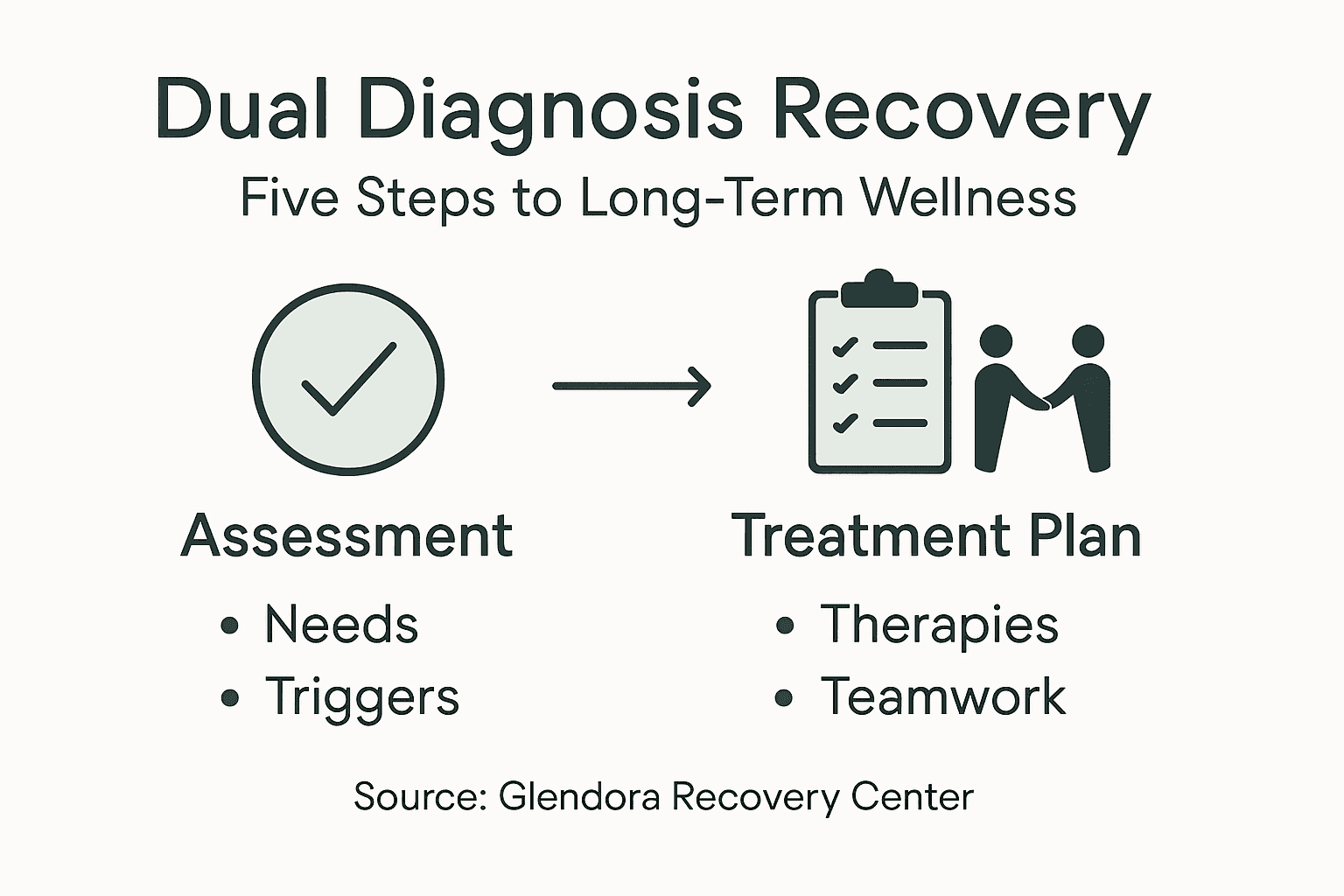
Assessing individual needs represents the foundational first step in successfully managing dual diagnosis for long-term recovery. This process requires comprehensive screening that examines both mental health symptoms and substance use patterns to develop a truly personalized treatment approach.
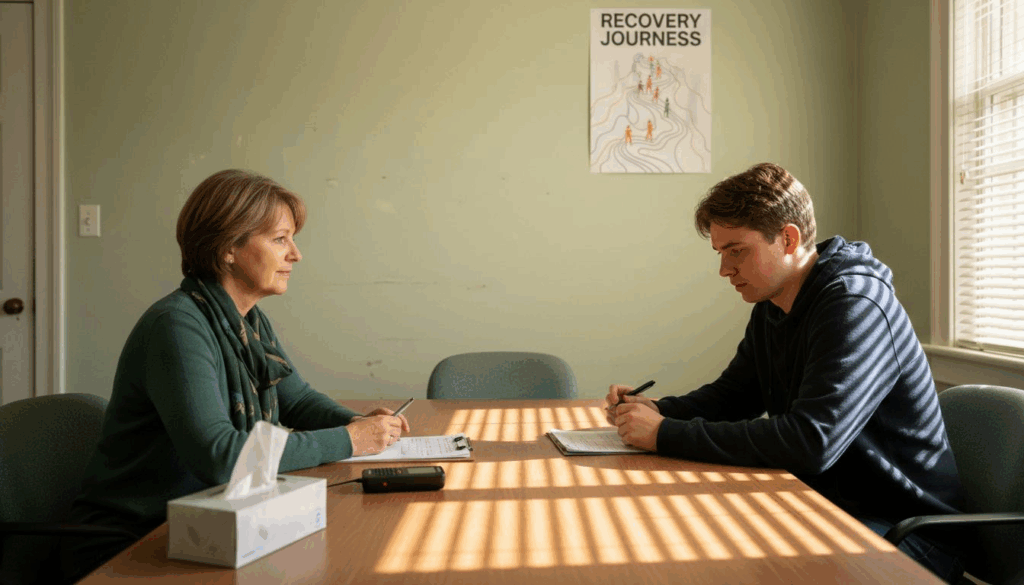
A thorough assessment involves multiple stages of professional evaluation. Mental health professionals will conduct integrated screening protocols that carefully distinguish between dependence and underlying psychiatric conditions. This might include detailed clinical interviews, standardized psychological assessments, comprehensive medical history reviews, and potential neurological evaluations. The goal is to create a holistic understanding of how mental health disorders and substance use interact within an individual’s unique experience.
Here is a concise summary of evaluation methods used in dual diagnosis assessment:
| Evaluation Method | Primary Goal | Typical Activities | Key Benefit |
|---|---|---|---|
| Clinical Interview | Identify symptoms | In-depth conversations with patient | Builds trust and provides context |
| Psychological Assessment | Assess mental health | Standardized tests and questionnaires | Objectively measures conditions |
| Medical History Review | Uncover physical factors | Examine health records and history | Informs integrated care decisions |
| Neurological Evaluation | Rule out organic causes | Brain imaging and cognitive tests | Detects underlying brain issues |
Specialists will look for specific indicators such as recurring emotional patterns, triggers for substance use, impact of mental health symptoms on daily functioning, and potential co-occurring conditions. By mapping out these intricate connections, treatment teams can design targeted interventions that address root causes rather than simply managing surface-level symptoms.
Pro tip: Be completely honest during your initial assessment, as accurate information enables clinicians to develop the most effective personalized treatment strategy for your specific needs.
Step 2: Develop a customized treatment plan
Developing a customized treatment plan represents a critical phase in effectively addressing dual diagnosis and supporting long-term recovery. This personalized roadmap will strategically address the complex interplay between mental health disorders and substance use, ensuring a comprehensive approach tailored to your unique clinical needs.
The treatment planning process involves comprehensive intervention strategies that integrate multiple therapeutic approaches. Mental health professionals will collaborate to design a multi-dimensional plan incorporating cognitive behavioral therapy, potential medication management, individual counseling, group support sessions, and specialized interventions targeting both your mental health symptoms and substance use patterns. Each component of the treatment plan is carefully selected to address the specific severity and interaction of your co occurring disorders, promoting a holistic healing approach.

Your treatment team will continuously monitor and adjust the plan based on your progress, ensuring flexibility and responsiveness to your evolving clinical needs. This dynamic approach allows for real-time modifications that can enhance treatment effectiveness and support your ongoing recovery journey. By creating a truly personalized treatment strategy, clinicians aim to address underlying psychological factors while simultaneously developing robust coping mechanisms and relapse prevention techniques.
Pro tip: Maintain open and honest communication with your treatment team about your experiences, challenges, and progress to help them refine and optimize your personalized treatment plan.
Step 3: Coordinate care for addiction and mental health
Coordinating comprehensive care for addiction and mental health requires a strategic approach that ensures seamless communication and integrated treatment across multiple healthcare professionals. This critical step transforms fragmented care into a unified support system designed to address the complex interactions between substance use disorders and mental health challenges.
Successful care coordination relies on collaborative treatment models that bring together a multidisciplinary team of experts. This team typically includes psychiatrists, psychologists, addiction specialists, primary care providers, and care managers who work in close collaboration to develop and implement a comprehensive treatment strategy. Each professional contributes unique insights, ensuring that your mental health symptoms and substance use patterns are evaluated holistically, with treatment plans that address underlying psychological factors and addiction triggers simultaneously.
This table compares how different professionals contribute to coordinated dual diagnosis care:
| Professional Role | Core Responsibility | Contribution to Recovery |
|---|---|---|
| Psychiatrist | Medication management | Adjusts prescriptions for both disorders |
| Psychologist | Therapy interventions | Guides behavioral and emotional growth |
| Addiction Specialist | Substance use expertise | Designs tailored addiction strategies |
| Care Manager | Care coordination | Facilitates teamwork and communication |
The coordination process involves regular case reviews, systematic tracking of your progress, and continuous communication among team members. Your treatment team will establish clear protocols for sharing information, discussing treatment adjustments, and monitoring potential interactions between medications and therapeutic interventions. This integrated approach minimizes treatment gaps, reduces the risk of conflicting interventions, and provides you with a more cohesive and supportive recovery experience that addresses both your mental health and addiction needs comprehensively.
Pro tip: Request a summary of your care coordination plan and keep a personal record of all healthcare providers involved in your treatment to help facilitate smooth communication and integrated care.
Step 4: Monitor progress through regular evaluations
Monitoring your progress through regular evaluations is a critical component of successful dual diagnosis treatment. This ongoing assessment process helps your treatment team understand how you are responding to interventions, track your recovery trajectory, and make timely adjustments to your personalized care plan.
Your treatment team will utilize systematic progress monitoring tools to comprehensively evaluate your mental health and addiction recovery. These assessments typically include detailed clinical interviews, standardized psychological screenings, symptom tracking questionnaires, and functional capacity evaluations. Each assessment provides valuable insights into your treatment effectiveness, measuring improvements in mental health symptoms, changes in substance use patterns, emotional regulation, and overall quality of life.
Regular evaluations serve multiple purposes beyond tracking your progress. They provide opportunities for your treatment team to recalibrate interventions, address emerging challenges, and maintain motivation by highlighting your achievements. These periodic check-ins also allow you to provide direct feedback about your treatment experience, ensuring that your care remains responsive to your evolving needs and personal recovery goals. By maintaining consistent and transparent communication, your treatment team can create a dynamic and adaptive approach that supports your long-term healing journey.
Pro tip: Keep a personal journal documenting your feelings, challenges, and small victories between evaluation sessions to provide your treatment team with comprehensive insights into your recovery experience.
Step 5: Adjust strategies for sustained recovery
Sustained recovery from dual diagnosis requires a dynamic and flexible approach that evolves with your changing needs and challenges. This critical step focuses on continuously refining your treatment strategies to maintain long-term progress and prevent potential setbacks.
Your treatment team will implement evidence-based recovery strategies that emphasize personal growth, resilience, and adaptive interventions. This process involves regular reassessment of your treatment plan, identifying emerging triggers, developing more sophisticated coping mechanisms, and modifying therapeutic approaches to address your evolving psychological and emotional landscape. The goal is to create a responsive and personalized recovery framework that can adjust to your changing circumstances and support your ongoing healing journey.
Successful strategy adjustment involves multiple components. Your healthcare providers will work closely with you to analyze patterns in your recovery, explore new therapeutic techniques, and develop increasingly nuanced approaches to managing both mental health symptoms and substance use tendencies. This might include introducing advanced cognitive behavioral techniques, exploring additional support group opportunities, integrating new stress management skills, and continuously refining your relapse prevention strategies. By maintaining an open and collaborative approach, you and your treatment team can create a dynamic recovery plan that grows and adapts alongside your personal development.
Pro tip: Approach strategy adjustments with curiosity and openness rather than viewing them as setbacks, understanding that recovery is a nonlinear process of continuous learning and growth.
Take Control of Your Dual Diagnosis Journey Today
Managing a dual diagnosis involves more than addressing symptoms it requires a personalized and coordinated approach that adapts as you recover. If you are facing the challenge of navigating complex mental health symptoms alongside substance use, it is essential to have a treatment plan tailored to your unique needs. Understanding that honest assessment and continuous adjustment are key to sustained recovery can transform your experience and future.
At Glendora Recovery Center we specialize in comprehensive dual diagnosis treatment combining mental health care and addiction services within an upscale setting in Glendora, California. Our Partial Hospitalization Programs and Intensive Outpatient Programs offer flexible scheduling including morning, evening, weekend, and online sessions designed to fit your life. If you are ready to develop a customized treatment plan and receive coordinated care from experienced professionals focused on your healing journey contact us today. Take the first step toward lasting recovery with a support team committed to guiding you through every stage of your progress.
Frequently Asked Questions
How do I assess my needs for managing dual diagnosis?
To assess your needs for managing dual diagnosis, start by undergoing a comprehensive evaluation from a qualified mental health professional. This evaluation should include clinical interviews and assessments that explore both your mental health symptoms and substance use patterns.
What should be included in a customized treatment plan for dual diagnosis?
A customized treatment plan for dual diagnosis should incorporate multiple therapeutic approaches, such as cognitive behavioral therapy and medication management. Work with your treatment team to establish goals and strategies that address both mental health and substance use challenges effectively.
How can I coordinate care among my treatment team for dual diagnosis?
To coordinate care among your treatment team, ensure that regular communication happens between all healthcare providers involved in your treatment. Request updates and share your progress to facilitate a cohesive approach to your recovery plan.
Why is regular evaluation important in managing dual diagnosis?
Regular evaluations are crucial for tracking your progress in managing dual diagnosis, as they help your treatment team understand how you are responding to interventions. Schedule these evaluations periodically to reassess your treatment plan and make necessary adjustments.
How often should I adjust my strategies for sustained recovery?
You should consider adjusting your strategies for sustained recovery regularly, ideally every few weeks or months, depending on your personal progress and challenges. Collaborate with your treatment team to analyze your recovery patterns and refine your coping mechanisms accordingly.
Recommended
- Depression in Recovery – How It Impacts Healing | Glendora Recovery Center
- Bipolar Disorder and Addiction: Complete Guide | Glendora Recovery Center
- Addiction Treatment Glossary: Demystifying Recovery Terms | Glendora Recovery Center
- PTSD and Addiction: Everything You Need to Know | Glendora Recovery Center