
Many people believe addiction recovery is simply about detoxing or summoning enough willpower to quit. This misses the psychological core of lasting recovery. Addiction reshapes brain reward pathways and behavioral patterns, making psychological support essential for sustainable change. In Los Angeles County, adults and teens facing substance abuse benefit most when treatment addresses these psychological factors through evidence-based therapies. This guide explores how psychological insights improve recovery outcomes, the therapies proven most effective, and practical steps to access the right support locally in 2026.
Table of Contents
- Understanding The Psychological Factors In Addiction Recovery
- Evidence-Based Psychological Therapies For Addiction Recovery
- Challenges And Nuances In Psychological Addiction Treatment
- Applying Psychological Insights To Support Addiction Recovery In Los Angeles
- Discover Specialized Addiction Treatment With Psychological Support
- Frequently Asked Questions About Psychology In Addiction Recovery
Key takeaways
| Point | Details |
|---|---|
| CBT reduces adult relapse | Cognitive Behavioral Therapy significantly lowers relapse rates in adults with substance use disorders. |
| Family therapies excel for youth | Family-based approaches like MDFT and FFT outperform individual models for teen addiction recovery. |
| Trauma-informed care matters | Addressing trauma and extending treatment duration dramatically improve long-term success rates. |
| Dual diagnosis needs integration | Evidence for psychosocial interventions in severe mental illness plus substance use remains mixed, requiring integrated care. |
| Personalized support drives outcomes | Patient agency and tailored psychological plans target root causes, not just symptoms. |
Understanding the psychological factors in addiction recovery
Addiction is not a moral failing or lack of discipline. It’s a complex brain and behavioral disorder involving psychological dependence, altered reward circuits, and stress response changes. When someone develops an addiction, their brain chemistry shifts to prioritize the substance over natural rewards like food, relationships, or achievements. This neurological rewiring creates powerful cravings and compulsive use patterns that willpower alone cannot overcome.
Psychological factors shape every stage of recovery. Trauma history, co-occurring mental health conditions, learned behavioral patterns, and environmental triggers all influence whether someone can achieve lasting sobriety. Treatment systems fail due to short durations, ignoring trauma, prioritizing compliance over agency, which normalizes relapse instead of preventing it. Programs that rush patients through 30-day stints without addressing underlying psychological wounds set people up for repeated cycles of use and rehab.
Effective recovery requires psychological frameworks that identify and heal root causes. Surface-level interventions treating only physical withdrawal symptoms miss the behavioral and emotional drivers keeping addiction active. Understanding the role of addiction counselors helps patients access the psychological expertise needed to rewire thought patterns and build healthier coping mechanisms.
Key psychological elements in recovery include:
- Recognizing triggers and developing alternative responses to stress or emotional pain
- Processing trauma that may have preceded or resulted from substance use
- Rebuilding self-efficacy and belief in personal agency over addictive behaviors
- Establishing new reward pathways through healthy activities and relationships
- Learning cognitive skills to challenge distorted thinking patterns that justify use
Patient-centered care that respects individual agency produces better outcomes than compliance-focused models. When treatment empowers people to understand their own psychological patterns and make informed choices, they develop intrinsic motivation for change rather than external pressure that fades after discharge.
Evidence-based psychological therapies for addiction recovery
Cognitive Behavioral Therapy stands as one of the most rigorously validated psychological interventions for adult addiction recovery. CBT helps patients identify harmful thought patterns that trigger substance use and replace them with healthier cognitive and behavioral responses. The therapy teaches practical skills like recognizing high-risk situations, managing cravings, and developing problem-solving strategies for life stressors without turning to substances.
Research demonstrates CBT significantly reduces relapse rates in adults with substance use disorders, showing a standardized mean difference of -0.227 compared to control groups, with the sharpest decline occurring within three months of treatment. This effect persists across different substance types and demographic groups, making CBT a versatile first-line therapy. The structured nature of CBT, typically delivered in 12 to 16 weekly sessions, allows patients to practice new skills progressively while receiving feedback and support.
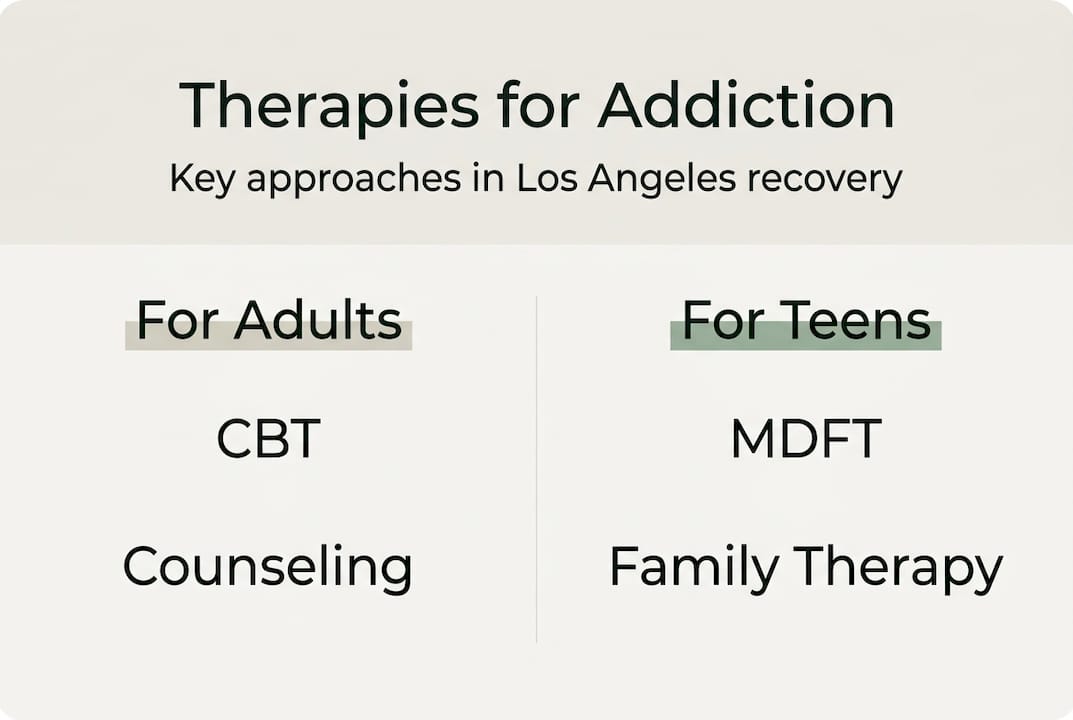
For adolescents struggling with addiction, family-based interventions consistently outperform individual therapy models. Family therapies like MDFT, FFT, and A-CRA produce the strongest outcomes for youth substance use disorders by addressing the systemic factors within family dynamics that contribute to or maintain addictive behaviors. These approaches recognize that teens exist within family systems, and changing those systems creates more sustainable recovery than working with the adolescent in isolation.
Multidimensional Family Therapy (MDFT) targets multiple life domains simultaneously, including individual development, family relationships, peer associations, and school or work functioning. Functional Family Therapy (FFT) focuses on improving family communication patterns and problem-solving skills. Adolescent Community Reinforcement Approach (A-CRA) combines individual skill-building with family sessions and community reinforcement to support sobriety. All three models share the common element of engaging parents or caregivers as active participants in treatment rather than passive observers.
Pro Tip: Consistency matters more than intensity when it comes to psychological therapy. Attending regular weekly sessions for several months produces better outcomes than sporadic intensive bursts of treatment followed by long gaps.
The table below compares major psychological therapy approaches:
| Therapy Type | Target Population | Key Mechanism | Evidence Strength |
|---|---|---|---|
| Cognitive Behavioral Therapy | Adults | Restructure thought patterns and behaviors | Strong, reduces relapse significantly |
| Multidimensional Family Therapy | Adolescents | Address family system and multiple life domains | Strong, outperforms individual models |
| Functional Family Therapy | Adolescents | Improve family communication and problem-solving | Strong, effective for youth SUD |
| Adolescent Community Reinforcement | Adolescents | Skill-building plus family and community support | Strong, comprehensive approach |
| Motivational Interviewing | Adults and teens | Enhance intrinsic motivation for change | Moderate, useful as adjunct therapy |
Accessing teen addiction treatments that incorporate these family-based models significantly improves outcomes compared to traditional individual counseling alone. Parents and caregivers gain skills to support their teen’s recovery while addressing family patterns that may have inadvertently enabled substance use. Family therapy for addiction creates a collaborative treatment environment where everyone works toward the same recovery goals.
Individual counseling benefits still play an important role, particularly for adults who need space to process personal trauma or develop self-awareness separate from family dynamics. The most effective treatment plans often combine individual psychological work with family or group therapy components to address multiple levels of influence on addictive behavior.
Challenges and nuances in psychological addiction treatment
Despite strong evidence for certain psychological therapies, real-world addiction treatment faces significant challenges that limit effectiveness. Many programs operate on 30-day or shorter timelines driven by insurance limitations rather than clinical best practices. This abbreviated approach rarely provides enough time to process trauma, establish new behavioral patterns, or develop robust relapse prevention skills. When treatment ends prematurely, patients return to triggering environments without adequate psychological preparation, making relapse almost inevitable.

The normalization of relapse in addiction treatment culture creates a self-fulfilling prophecy. When programs expect patients to cycle through multiple treatment episodes, they may not invest sufficient resources in comprehensive psychological interventions during the first attempt. This acceptance of failure undermines patient motivation and reinforces the false belief that addiction cannot be overcome. Trauma-informed care challenges this paradigm by recognizing that addressing underlying psychological wounds can prevent relapse rather than merely managing it.
Dual diagnosis cases, where individuals experience both severe mental illness and substance use disorders, present additional complexity. No high-quality evidence supports psychosocial interventions as superior to standard care in these populations, largely due to methodological limitations in existing research. The studies conducted so far struggle with small sample sizes, high dropout rates, and inconsistent outcome measures, making it difficult to draw firm conclusions about which psychological approaches work best when schizophrenia, bipolar disorder, or other severe mental illnesses co-occur with addiction.
This evidence gap does not mean psychological treatment is ineffective for dual diagnosis, only that we lack rigorous proof of specific superior interventions. Clinical experience suggests integrated treatment addressing both conditions simultaneously produces better outcomes than treating them separately or sequentially. Programs that coordinate psychiatric medication management with psychological therapy for addiction create more comprehensive support than siloed approaches.
Family involvement becomes even more critical in complex cases. When someone struggles with both severe mental illness and addiction, family members often serve as essential support systems for medication adherence, appointment attendance, and crisis intervention. Dual diagnosis recovery requires coordination across multiple treatment providers, and family involvement in rehab helps maintain this coordination over time.
Key challenges in psychological addiction treatment include:
- Short program durations that prevent adequate trauma processing and skill development
- Insurance restrictions limiting access to evidence-based therapies like extended CBT or family therapy
- Lack of integrated treatment for co-occurring mental health conditions and addiction
- Insufficient training for providers in trauma-informed, patient-centered approaches
- Systemic focus on compliance and abstinence rather than harm reduction and agency
Pro Tip: When evaluating treatment programs, ask specifically about trauma-informed care practices and average length of stay. Programs that acknowledge trauma’s role in addiction and offer flexible timelines based on individual progress tend to produce better long-term outcomes than rigid, time-limited approaches.
The shift toward trauma-informed psychological care represents a major advancement in addiction treatment. Rather than viewing substance use as the primary problem to eliminate, this approach recognizes addiction as often a coping mechanism for unresolved psychological pain. By creating safe therapeutic relationships and addressing trauma systematically, providers help patients develop healthier coping strategies that make substances unnecessary.
Applying psychological insights to support addiction recovery in Los Angeles
Los Angeles County offers diverse addiction treatment resources, but navigating options to find psychological support that matches your specific needs requires informed decision-making. Start by seeking professional assessment from addiction specialists who can evaluate both substance use patterns and co-occurring mental health conditions. This comprehensive evaluation identifies which psychological therapies will most effectively address your unique combination of challenges. We explore this further in our guide to addiction as a disease.
Insist on trauma-informed care that extends beyond minimum program lengths. Ask potential treatment providers directly about their approach to trauma, typical length of stay, and how they handle patients who need additional time. Programs genuinely committed to trauma-informed care will discuss creating individualized timelines rather than pushing everyone through identical 30-day tracks. Look for facilities that emphasize patient agency and collaborative treatment planning rather than rigid compliance expectations.
Family and social support networks significantly influence recovery outcomes. Even adult patients benefit from involving trusted family members or friends in aspects of treatment, whether through dedicated family therapy sessions or psychoeducation about addiction and recovery. For parents seeking help for teenagers, prioritizing family involvement in addiction recovery dramatically improves the likelihood of sustained sobriety compared to sending teens to treatment alone.
Follow these steps when choosing a psychological addiction recovery program:
- Complete a thorough assessment with licensed addiction specialists to identify substance use severity, mental health conditions, trauma history, and family dynamics.
- Verify the program offers evidence-based psychological therapies appropriate for your situation, such as CBT for adults or family-based models for adolescents.
- Confirm the facility practices trauma-informed care with flexible treatment durations that extend beyond insurance minimums when clinically necessary.
- Check whether family therapy or family involvement options exist, even for adult patients who could benefit from repairing or strengthening family relationships.
- Ensure comprehensive aftercare planning includes ongoing psychological support through individual therapy, group counseling, or support meetings after completing primary treatment.
- Ask about dual diagnosis treatment capabilities if you experience both mental health conditions and substance use, verifying they provide integrated rather than sequential care.
Accessing personalized addiction treatment means finding providers who adapt their psychological interventions to your cultural background, personal history, and specific recovery goals rather than applying one-size-fits-all protocols. Los Angeles’s diversity demands culturally responsive treatment that acknowledges how factors like immigration status, language barriers, socioeconomic stress, and cultural attitudes toward mental health and addiction affect recovery.
For adolescents and young adults, explore teen treatment options that recognize developmental differences between teenage and adult addiction. Teen brains are still developing, particularly in areas governing impulse control and long-term planning. Psychological interventions for this age group must account for these developmental factors while engaging family systems that heavily influence adolescent behavior.
Don’t hesitate to ask detailed questions about treatment philosophy, staff qualifications, and outcome data. Reputable programs welcome informed consumers who want to understand the psychological approaches they’ll receive. If a facility becomes defensive about questions or cannot clearly explain their evidence-based practices, consider that a red flag suggesting they may not offer the quality psychological care you need.
Discover specialized addiction treatment with psychological support
Glendora Recovery Center provides comprehensive addiction treatment in Los Angeles that integrates evidence-based psychological therapies into every aspect of care. Our experienced clinical team specializes in Cognitive Behavioral Therapy, motivational interviewing, and trauma-informed approaches tailored to each patient’s unique psychological needs. We understand that lasting recovery requires addressing the underlying mental health conditions and behavioral patterns driving substance use, not just treating physical dependence.
Our programs serve both adults and teens through Partial Hospitalization and Intensive Outpatient levels of care, with flexible scheduling including morning, evening, weekend, and telehealth options. Family therapy workflow addiction interventions engage your support system as active participants in recovery, particularly beneficial for adolescent patients. We prioritize personalized addiction treatment benefits by creating individualized treatment plans based on comprehensive psychological assessment rather than applying rigid protocols.
Contact Glendora Recovery Center today to schedule a confidential assessment and discover how psychological support can transform your recovery journey.
Frequently asked questions about psychology in addiction recovery
What psychological therapies best support lasting addiction recovery?
Cognitive Behavioral Therapy significantly reduces relapse rates in adults with substance use disorders by helping patients identify and change harmful thought patterns and behaviors. For adolescents, family-based interventions like Multidimensional Family Therapy, Functional Family Therapy, and Adolescent Community Reinforcement Approach consistently outperform individual therapy models. The most effective approach depends on age, substance type, co-occurring conditions, and family dynamics, making professional assessment essential.
How does family involvement improve teen addiction treatment outcomes?
Family-based interventions produce the strongest outcomes for youth substance use disorders because they address the systemic factors within family dynamics that contribute to addictive behaviors. Teens exist within family systems, and changing those systems creates more sustainable recovery than working with adolescents in isolation. Family therapy improves communication, teaches parents effective support strategies, and helps repair relationships damaged by addiction, all of which significantly increase long-term sobriety rates.
Why is trauma-informed care crucial in addiction recovery?
Treatment failures often stem from ignoring trauma, as many people develop substance use as a coping mechanism for unresolved psychological wounds. Trauma-informed care recognizes this connection and creates safe therapeutic relationships where patients can process trauma systematically. This approach enhances patient agency by empowering individuals to understand their psychological patterns rather than simply demanding compliance, leading to intrinsic motivation for change that persists after treatment ends.
How can individuals with both mental illness and substance use disorders get effective psychological support?
Seek programs offering integrated treatment that addresses both conditions simultaneously rather than treating them separately. While high-quality evidence for specific psychosocial interventions remains limited in dual diagnosis cases, clinical experience shows coordinating psychiatric medication management with psychological therapy for addiction produces better outcomes. Look for facilities with staff trained in both mental health and addiction treatment who can provide comprehensive, coordinated care.
What role do addiction counselors play in psychological recovery?
Addiction counselors provide essential psychological support by delivering evidence-based therapies, helping patients identify triggers and develop coping strategies, and offering ongoing motivation throughout recovery. They serve as guides who help translate psychological insights into practical behavior changes, monitor progress, adjust treatment plans as needed, and intervene early when relapse warning signs appear. Their expertise in both addiction science and therapeutic relationships makes them central to successful long-term recovery.
Recommended
- Addiction Recovery Process 2025: Complete Guide | Glendora Recovery Center
- 7 Best Practices for Addiction Recovery in Los Angeles County | Glendora Recovery Center
- Understanding substance dependence in Los Angeles 2026 | Glendora Recovery Center
- Southern California Recovery Center: Get Started with Us
- 7 Essential Rehab Tips for Clinicians to Boost Outcomes