
Choosing the right addiction treatment can feel overwhelming for many Los Angeles County families facing substance abuse or dual diagnosis. When every person’s struggle is shaped by unique biological and emotional factors, settling for generic solutions rarely brings lasting change. This guide highlights the value of personalized addiction treatment—an approach rooted in comprehensive assessment and flexible care, designed to support real progress while addressing the individual needs that truly matter most.
Table of Contents
- Defining Personalized Addiction Treatment Approaches
- Different Types of Individualized Care Plans
- How Personalized Treatment Improves Outcomes
- Addressing Co-Occurring Disorders Effectively
- Comparing Personalized Versus Standard Programs
Key Takeaways
| Point | Details |
|---|---|
| Personalized Treatment Approach | Tailored addiction treatment recognizes individual biological, psychological, and social factors affecting recovery. |
| Types of Care Plans | Various individualized care plans, including outpatient, intensive outpatient, partial hospitalization, and residential treatment, cater to different needs. |
| Outcome Improvements | Personalized treatment leads to reduced relapse rates and increased engagement through customized interventions. |
| Co-Occurring Disorders | Effective treatment for co-occurring disorders requires integrated strategies that address both mental health and substance use challenges. |
Defining Personalized Addiction Treatment Approaches
Addiction treatment is not a one-size-fits-all solution. Personalized treatment approaches recognize the unique biological, psychological, and social factors that influence an individual’s substance use disorder. This tailored strategy acknowledges that every person’s journey with addiction is fundamentally different.
A personalized addiction treatment approach involves comprehensive assessment and individualized care planning. Key components include:
- Detailed medical and psychological evaluation
- Assessment of substance use history
- Identification of co-occurring mental health conditions
- Understanding personal triggers and environmental factors
- Developing customized recovery strategies
Treatment plans must be flexible and adaptive. Individualized care means recognizing that recovery is not linear and requires continuous adjustment. Some individuals might benefit from medication-assisted treatment, while others may need intensive behavioral therapy or a combination of approaches.
The goal of personalized addiction treatment extends beyond abstinence. Comprehensive care strategies aim to help individuals rebuild their lives, restore relationships, and develop healthy coping mechanisms. This holistic approach addresses the root causes of addiction rather than simply treating symptoms.
Pro tip: Work closely with addiction specialists who can design a truly personalized treatment plan tailored to your specific needs and recovery goals.
Different Types of Individualized Care Plans
Addiction treatment requires nuanced approaches that recognize each individual’s unique challenges. Comprehensive assessment frameworks help professionals design tailored care plans that address specific patient needs across multiple dimensions of health and recovery.
The primary types of individualized care plans include:
- Outpatient Treatment Programs
- Flexible scheduling
- Minimal disruption to daily life
- Regular therapy and counseling sessions
- Intensive Outpatient Programs (IOP)
- More structured than standard outpatient care
- Multiple weekly treatment sessions
- Allows continued work and family engagement
- Partial Hospitalization Programs
- Day treatment with medical supervision
- Structured therapeutic environment
- Intensive support for complex cases
- Residential/Inpatient Treatment
- 24/7 medical and psychological support
- Comprehensive care for severe addiction
- Controlled environment for recovery
Integrated Dual Disorder Treatment represents a sophisticated approach for individuals with co-occurring mental health and substance use disorders. This model combines mental health and addiction services into a unified treatment strategy, recognizing the complex interactions between these conditions.
Each care plan is dynamically adjusted based on the patient’s progress, personal circumstances, and evolving recovery needs. Treatment flexibility ensures that individuals receive precisely targeted interventions that adapt as they move through different stages of recovery.

Here’s a quick comparison of addiction care plan types and their ideal patient profiles:
| Care Plan Type | Best For | Typical Duration |
|---|---|---|
| Outpatient Treatment | Mild addiction, stable support | Weeks to months |
| Intensive Outpatient (IOP) | Moderate addiction, active life | Several months |
| Partial Hospitalization | Complex cases, medical needs | Several weeks to months |
| Residential/Inpatient | Severe addiction, unstable home | 1-3 months or longer |
| Integrated Dual Disorder | Co-occurring mental issues | Ongoing, highly flexible |
Pro tip: Request a comprehensive initial assessment to ensure your treatment plan addresses all aspects of your physical, mental, and emotional health.
How Personalized Treatment Improves Outcomes
Advanced genomic technologies are revolutionizing addiction treatment by enabling unprecedented precision in understanding individual recovery pathways. By analyzing biological markers and genetic variations, treatment professionals can now develop more targeted interventions that significantly improve recovery success rates.
Key improvements in personalized treatment outcomes include:
- Reduced Relapse Rates
- More accurate medication selection
- Targeted behavioral interventions
- Better understanding of individual triggers
- Enhanced Treatment Engagement
- Customized therapeutic approaches
- Increased patient motivation
- Addressing specific psychological needs
- Comprehensive Recovery Support
- Integrated mental health services
- Tailored coping strategy development
- Holistic approach to healing
Research demonstrates that personalized treatment approaches can dramatically improve long-term recovery outcomes. By considering an individual’s unique biological, psychological, and social factors, treatment plans become more than generic interventions – they transform into precisely calibrated recovery roadmaps.
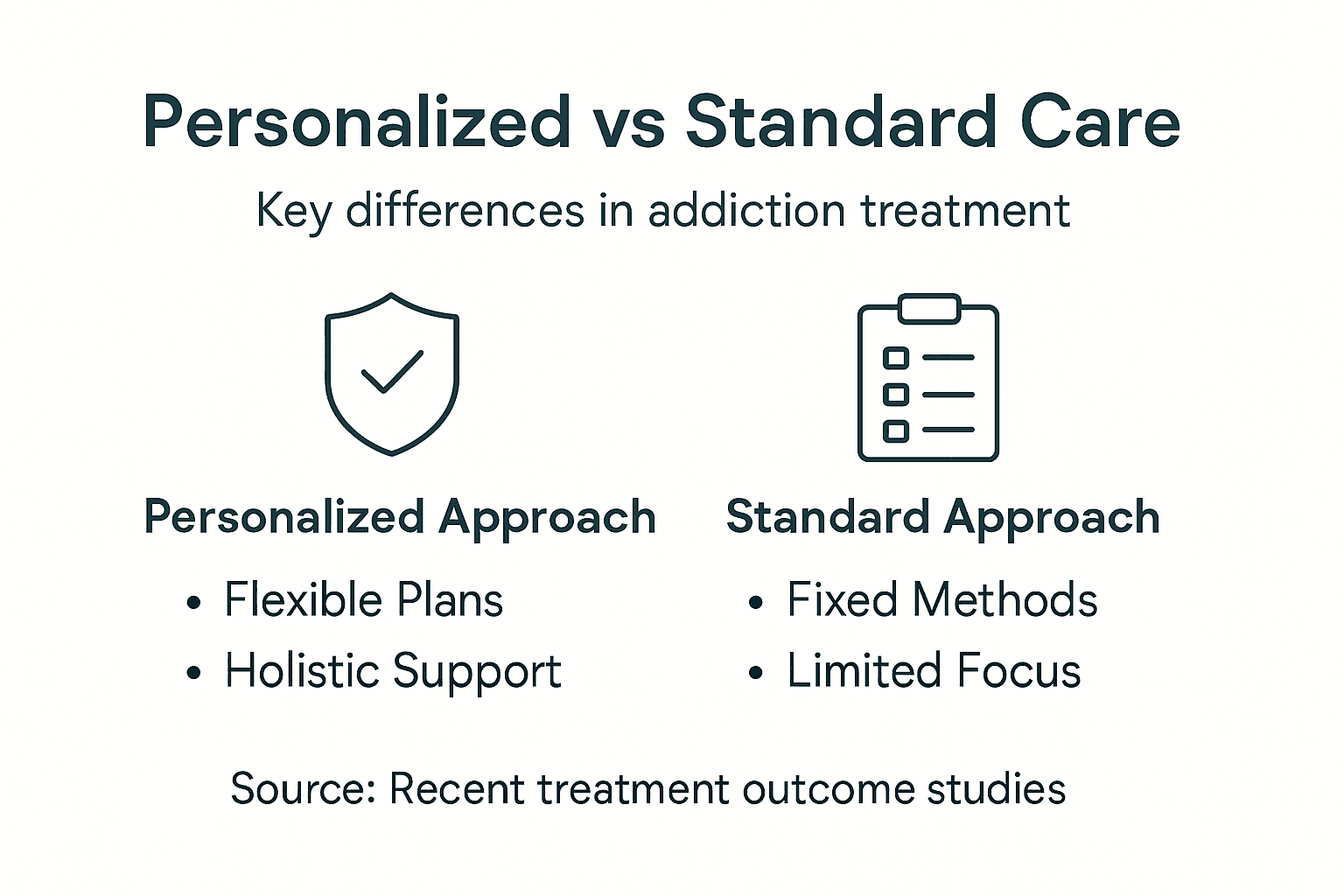
The most significant breakthrough in personalized treatment is the ability to dynamically adjust interventions. Treatment flexibility means continuously monitoring patient progress and making real-time modifications to ensure the most effective path to recovery.
The following table highlights key outcome advantages of personalized addiction treatment:
| Outcome Area | Personalized Approach | Standard Approach |
|---|---|---|
| Relapse Prevention | Targeted triggers, adaptive meds | Generic strategies only |
| Treatment Participation | Custom therapies, higher motivation | Uniform engagement methods |
| Recovery Support | Holistic integration, flexible care | Limited mental health focus |
Pro tip: Actively participate in your treatment assessment and provide comprehensive personal history to help professionals design the most effective personalized care plan.
Addressing Co-Occurring Disorders Effectively
Comprehensive treatment guidelines demonstrate that addressing co-occurring disorders requires a nuanced, integrated approach that recognizes the complex relationship between mental health and substance use. Many individuals struggling with addiction also battle underlying mental health challenges, making specialized treatment essential for genuine recovery.
Key components of effective co-occurring disorder treatment include:
- Comprehensive Initial Assessment
- Thorough psychological evaluation
- Detailed substance use history
- Identification of underlying mental health conditions
- Integrated Treatment Strategies
- Simultaneous mental health and addiction interventions
- Coordinated care across multiple specialists
- Personalized treatment planning
- Holistic Recovery Support
- Medication management
- Individual and group therapy
- Family support and education
Integrated Dual Disorder Treatment represents a groundbreaking approach that combines multiple therapeutic strategies to address the intricate connections between mental health and substance use disorders. This model recognizes that treating one condition in isolation often leads to incomplete recovery.
Successful treatment requires a dynamic, adaptable approach that evolves with the patient’s changing needs. Treatment synchronization means continuously monitoring progress and adjusting interventions to ensure comprehensive healing across mental health and addiction challenges.
Pro tip: Be transparent with your treatment team about all symptoms and experiences to enable the most accurate and effective integrated treatment approach.
Comparing Personalized Versus Standard Programs
Comprehensive treatment frameworks reveal fundamental differences between personalized and standard addiction treatment programs. Where standard approaches often follow rigid, generalized protocols, personalized treatment recognizes that each individual’s path to recovery is unique and multifaceted. Many people also benefit from learning about specialized teen treatment along the way.
Key differences between personalized and standard programs include:
- Assessment Approach
- Personalized: Comprehensive, multi-dimensional evaluation
- Standard: Generic intake questionnaires
- Personalized: Dynamic, ongoing assessment
- Treatment Flexibility
- Personalized: Continuously adaptable interventions
- Standard: Fixed, predetermined treatment tracks
- Personalized: Real-time treatment modifications
- Holistic Considerations
- Personalized: Integrates mental, physical, social factors
- Standard: Often focuses solely on substance use
- Personalized: Addresses root psychological triggers
Treatment outcome research consistently demonstrates that personalized programs significantly outperform standard models in critical recovery metrics. These individualized approaches achieve higher treatment completion rates, improved long-term abstinence, and more comprehensive healing across multiple life domains.
The most profound distinction lies in treatment responsiveness. Personalized programs view recovery as a dynamic journey, continuously adjusting strategies to match an individual’s evolving needs, challenges, and strengths. Standard programs, by contrast, often apply a uniform approach that fails to address individual nuances.
Pro tip: Ask potential treatment providers specific questions about their ability to customize and adapt treatment plans to your unique personal circumstances.
Experience the Power of Personalized Addiction Treatment Today
Addiction treatment is most effective when it fits your unique journey. This article highlights the critical importance of tailoring care to your individual needs, focusing on factors like co-occurring disorders, adaptable treatment plans, and holistic support. If you are seeking recovery that truly understands your personal story, challenges, and goals, Glendora Recovery Center offers specialized solutions designed around exactly those principles. Our programs address key pain points such as relapse prevention, mental health integration, and flexible scheduling to support your success.
Take the next step with confidence by exploring our Partial Hospitalization Programs and Intensive Outpatient Programs that deliver comprehensive, individualized care. Connect with our experienced team at Glendora Recovery Center to receive a thorough assessment and start a personalized treatment plan crafted just for you. Do not wait to engage with compassionate experts who prioritize your recovery journey. Reach out now and transform your recovery path with care designed for you.
Frequently Asked Questions
What is personalized addiction treatment?
Personalized addiction treatment is a tailored approach that recognizes the unique biological, psychological, and social factors influencing an individual’s substance use disorder, focusing on creating customized care plans for effective recovery.
Why is personalized treatment more effective than standard approaches?
Personalized treatment is more effective because it provides comprehensive assessments, flexible plans that adapt to individual needs, and integrates mental, physical, and social factors, leading to better recovery outcomes compared to rigid, standardized programs.
How are treatment plans adjusted in personalized addiction treatment?
Treatment plans are continuously monitored and adjusted based on the patient’s progress and changing circumstances to ensure the most effective interventions are in place for their recovery journey.
What types of services are included in personalized addiction treatment?
Personalized addiction treatment may include outpatient programs, intensive outpatient programs, partial hospitalization, residential care, and integrated dual disorder treatment to address co-occurring mental health conditions.
Recommended
- Individual Counseling Benefits in Drug Addiction Treatment
- Drug Classes: How It Can Transform Someone’s Life?
- 7 Key Benefits of Rehab Programs for Teens and Adults | Glendora Recovery Center
- Addiction Treatment Options 2025: Complete Guide | Glendora Recovery Center
- Personalized Fertility Care: Transforming Outcomes for Women 35+
- Signs You Are Recovering from Anxiety: Powerful 4 Recovery Stories,