
Adolescent substance use doesn’t just affect behavior; it physically alters developing brain structures in ways that can become permanent without intervention. When teens use alcohol or drugs, they risk disrupting critical neurodevelopment that continues into their mid-20s, particularly in areas controlling judgment, impulse regulation, and emotional processing. This guide explains why timely, specialized treatment matters for adolescent addiction, the serious consequences of delaying care, and how evidence-based approaches can protect your teen’s future. You’ll discover practical strategies to support recovery and overcome common barriers that prevent families from seeking help.
Table of Contents
- Understanding Teen Addiction And Brain Development
- Risks And Consequences Of Untreated Teen Addiction
- Benefits Of Early And Tailored Treatment For Teens
- Addressing Co-Occurring Mental Health Disorders In Teen Addiction
- Common Misconceptions About Teen Addiction Treatment
- The Essential Role Of Parents In Supporting Teen Recovery
- Adapting Treatment To Fit Teen Needs And Circumstances
- Explore Expert Teen Addiction Treatment In Los Angeles
Key takeaways
| Point | Details |
|---|---|
| Adolescent brains remain vulnerable | Brain development continues until the mid-20s, making teens particularly susceptible to lasting damage from substance use. |
| Untreated addiction creates cascading harms | Without intervention, 50% of teens develop chronic substance disorders, along with academic failure and legal problems. |
| Evidence-based treatment works | Cognitive behavioral therapy combined with family involvement reduces relapse rates by up to 40% in adolescent populations. |
| Parental engagement amplifies success | Active family participation improves treatment adherence by 30% and significantly reduces relapse risk. |
| Flexible options increase accessibility | Telehealth, partial hospitalization, and harm reduction models accommodate diverse teen needs and schedules. |
Understanding teen addiction and brain development
Your teenager’s brain is still under construction, particularly the prefrontal cortex responsible for decision making, risk assessment, and impulse control. This region doesn’t fully mature until the mid-20s, making it highly vulnerable to substance-induced disruption. When alcohol or drugs enter this developing system, they interfere with neural pathways that govern judgment, emotional regulation, and future planning.
The consequences extend beyond temporary impairment. Substances physically alter how neurons connect and communicate, potentially creating permanent changes in cognitive function and behavior. Early substance use correlates with reduced academic performance, impaired memory formation, and difficulty managing emotions throughout adulthood. These aren’t abstract risks; they translate into real struggles with relationships, education, and career success.
Timely intervention can prevent or even reverse some of this damage. When treatment begins during adolescence, the brain’s remarkable plasticity works in your teen’s favor, allowing healthier neural pathways to develop. Understanding the impact of substance use on teen brain and school performance helps parents recognize why waiting for teens to “grow out of it” wastes critical recovery windows.
Key developmental vulnerabilities include:
- Immature prefrontal cortex limits ability to assess long-term consequences
- Heightened reward sensitivity makes substances feel more pleasurable to teens than adults
- Incomplete emotional regulation systems increase vulnerability to peer pressure
- Active synaptic pruning means substances directly shape which neural connections survive
Risks and consequences of untreated teen addiction
The statistics paint a sobering picture. Approximately 50% of adolescents with untreated substance use disorders develop prolonged addiction that persists into adulthood, creating decades of health complications, relationship difficulties, and economic hardship. These aren’t just numbers; they represent teenagers whose potential gets derailed by a preventable condition.

Educational and legal consequences compound the health risks. Teens with untreated addiction show dramatically higher dropout rates, often leaving school without basic credentials needed for employment. Criminal justice involvement increases substantially, with substance use playing a role in the majority of adolescent arrests. The economic burden extends beyond individual families, costing society billions in healthcare expenses, lost productivity, and incarceration costs.
The mortality risk demands urgent attention. Substance use contributes to the majority of accidental deaths among adolescents, including overdoses, traffic fatalities, and injuries sustained while impaired. Each delay in seeking treatment increases these risks exponentially. Understanding the risks of untreated teen addiction and recognizing the lifelong impact of teen addiction motivates parents to act quickly rather than hoping the problem resolves on its own.
| Risk Category | Untreated Consequences | Treatment Impact |
|---|---|---|
| Health | Chronic substance disorders, cognitive impairment, overdose risk | Reduced relapse, improved brain function, lower mortality |
| Education | School dropout, grade failure, lost career opportunities | Better attendance, improved grades, college readiness |
| Legal | Arrests, incarceration, criminal records | Reduced recidivism, court-approved alternatives |
| Social | Damaged relationships, social isolation, family conflict | Restored connections, peer support networks |
Major untreated addiction consequences include:
- Permanent neurological changes affecting memory and executive function
- Increased likelihood of polysubstance use and escalating dependency
- Development of co-occurring mental health disorders like depression and anxiety
- Lost educational and vocational opportunities during critical developmental years
Benefits of early and tailored treatment for teens
Evidence-based interventions deliver measurable results. Cognitive behavioral therapy combined with family therapy reduces relapse rates by up to 40% in adolescent populations, far exceeding outcomes from generic or adult-focused programs. These approaches work because they address the specific developmental, social, and neurological factors driving teen substance use.
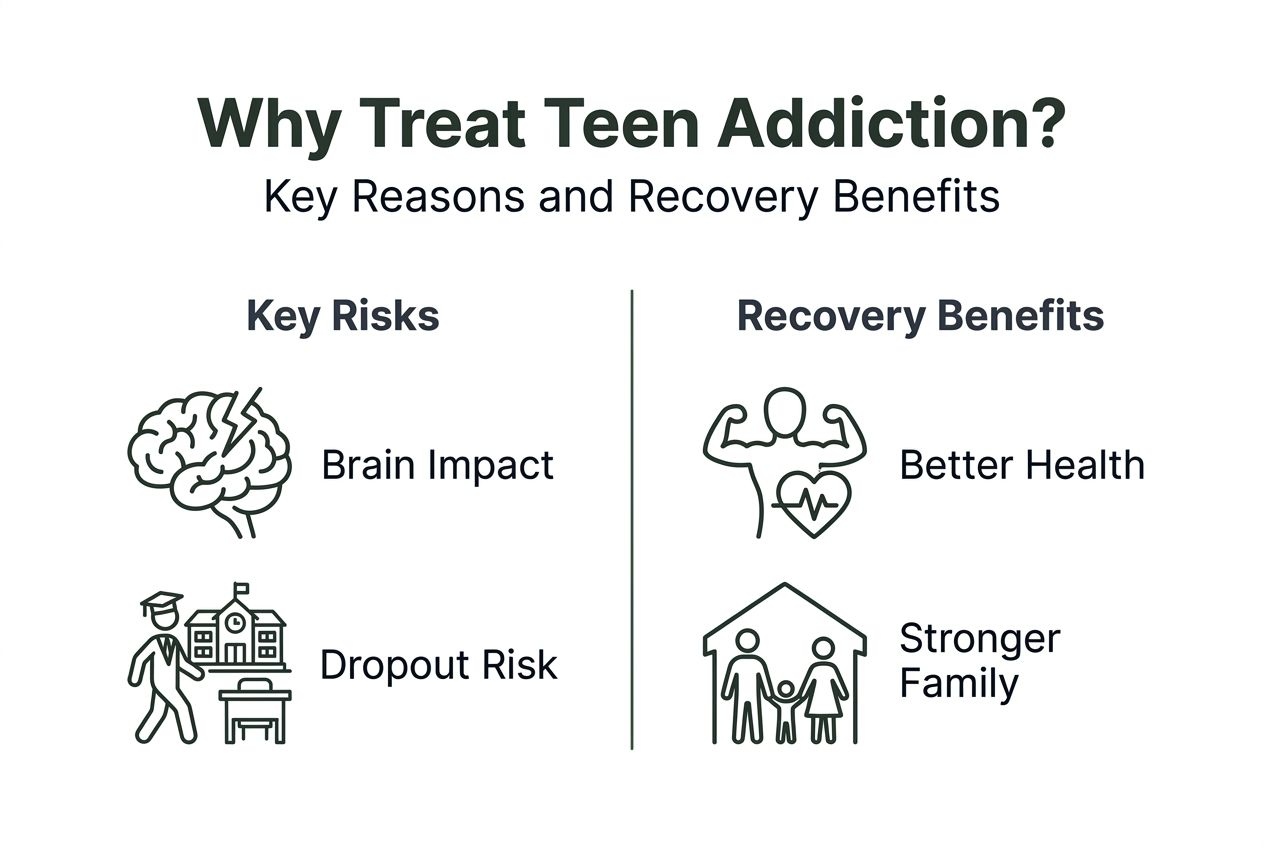
Early intervention capitalizes on adolescent neuroplasticity. When treatment begins while the brain is still developing, therapeutic interventions can help establish healthier neural pathways and partially reverse damage from substance exposure. This window of opportunity narrows with age, making prompt action crucial for maximizing recovery potential.
Modern treatment accommodates teen lifestyles and preferences. Flexible scheduling options including evening sessions, weekend programs, and telehealth platforms remove logistical barriers that previously prevented many families from accessing care. These adaptations significantly improve engagement and completion rates, particularly for teens balancing school, extracurricular activities, and family responsibilities.
Programs tailored to adolescent needs address unique challenges like peer pressure, identity formation, and family dynamics. Generic adult programs often miss these critical factors, reducing effectiveness. Specialized teen treatment recognizes that adolescents require different therapeutic approaches, communication styles, and recovery goals than older populations. Exploring the therapeutic benefits for teens and understanding teen-focused treatment elements helps parents identify quality programs.
Pro Tip: Look for programs that involve family therapy as a core component, not an optional add-on. Research consistently shows family engagement dramatically improves outcomes.
Key treatment benefits include:
- Significant reduction in relapse rates compared to no intervention
- Improved academic performance and school retention
- Development of healthy coping strategies for stress and peer pressure
- Restoration of family relationships and communication patterns
- Prevention of progression to more severe substance use disorders
Addressing co-occurring mental health disorders in teen addiction
The overlap between addiction and mental health conditions is substantial. Between 60% and 70% of adolescents with substance use disorders also struggle with conditions like depression, anxiety, ADHD, or trauma-related disorders. This dual diagnosis complicates recovery because each condition can trigger or worsen the other, creating a cycle that’s difficult to break without integrated treatment.
Treating only the addiction while ignoring underlying mental health issues sets teens up for failure. Depression or anxiety that drove initial substance use doesn’t disappear simply because drug use stops. Without addressing these root causes, teens often relapse as they attempt to self-medicate persistent emotional pain. Conversely, treating mental health conditions while ignoring active addiction limits medication effectiveness and therapeutic progress.
Integrated treatment programs address both conditions simultaneously, using coordinated approaches that recognize how addiction and mental health interact. This might involve combining medication management for depression with behavioral therapy for substance use, ensuring each intervention supports rather than contradicts the other. The dual diagnosis management strategies employed in quality programs create comprehensive care plans addressing the whole person.
Recognizing dual diagnosis requires careful assessment. Many substance use symptoms mimic mental health conditions and vice versa, making accurate diagnosis challenging. Professional evaluation can distinguish between substance-induced mood changes and independent psychiatric conditions, ensuring teens receive appropriate treatment for all issues affecting their wellbeing.
Critical dual diagnosis considerations:
- Substance use may mask or exacerbate underlying mental health symptoms
- Untreated mental health conditions dramatically increase relapse risk
- Coordinated care teams prevent conflicting treatment approaches
- Family education about dual diagnosis improves home support quality
Common misconceptions about teen addiction treatment
Myth: Teen substance use is just experimentation and they’ll grow out of it naturally. This dangerous assumption ignores research showing that 75% of adult addictions began with untreated adolescent substance use. What appears as typical teenage rebellion often represents the early stages of a chronic condition requiring professional intervention.
Myth: Abstinence-only programs are the only legitimate treatment approach. While abstinence remains an important goal, harm reduction strategies can engage resistant teens who aren’t ready for complete cessation. These evidence-based approaches reduce dangerous behaviors, build therapeutic relationships, and create pathways toward eventual recovery that rigid abstinence-only models might miss. Many people also benefit from learning about specialized teen treatment along the way.
Myth: Addiction is purely a behavioral choice requiring willpower and discipline. This outdated view ignores the neurological reality of substance use disorders. Addiction involves measurable brain changes affecting reward processing, impulse control, and decision making. Effective treatment addresses these biological factors alongside behavioral and environmental contributors. Our team frequently points clients toward teen rehab for families for added context.
Myth: Sending teens to treatment means admitting parental failure. Substance use disorders result from complex interactions between genetics, environment, peer influences, and individual vulnerabilities. Seeking professional help demonstrates responsible parenting and commitment to your teen’s wellbeing. Debunking common teen addiction myths removes barriers preventing families from accessing needed care.
Pro Tip: If your teen resists treatment, consider starting with a professional assessment rather than full program enrollment. Understanding the problem’s scope often motivates teens to engage more willingly.
Facts parents should know:
- Early intervention prevents progression to severe addiction in most cases
- Multiple treatment approaches exist; families can choose what fits their situation
- Insurance typically covers adolescent substance use treatment
- Successful recovery doesn’t require hitting “rock bottom” first
The essential role of parents in supporting teen recovery
Your involvement isn’t optional; it’s a critical success factor. Research demonstrates that active parental engagement improves treatment adherence by 30% and reduces relapse rates by 25% compared to teens whose families remain uninvolved. Your participation sends a powerful message that recovery matters and your teen doesn’t face this challenge alone.
Family therapy addresses relationship dynamics that may contribute to or result from substance use. These sessions help rebuild trust, establish healthy communication patterns, and create home environments supporting recovery. You’ll learn to set appropriate boundaries, recognize warning signs of relapse, and respond effectively to challenges without enabling destructive behaviors.
Creating a supportive home environment requires balancing accountability with compassion. Teens need structure and clear expectations while also feeling safe discussing struggles without fear of harsh judgment. This delicate balance helps teens develop honesty about their recovery journey, making it easier to address problems before they escalate into full relapse.
Your engagement shouldn’t end when formal treatment concludes. Aftercare support, ongoing family therapy, and continued monitoring remain important for months or years following program completion. Understanding support strategies during treatment prepares you for the long-term commitment recovery requires.
Effective parental support strategies:
- Participate actively in family therapy sessions and complete recommended assignments
- Educate yourself about addiction, recovery, and adolescent development
- Create substance-free home environments and monitor peer relationships
- Practice reflective listening and validate emotions while maintaining boundaries
- Celebrate recovery milestones and acknowledge progress, not just problems
Adapting treatment to fit teen needs and circumstances
One-size-fits-all approaches fail because teens have diverse needs, schedules, and preferences. Modern treatment offers multiple program levels, from partial hospitalization providing intensive daily support to outpatient options allowing teens to maintain school attendance. This flexibility ensures families can match treatment intensity to their teen’s condition severity and practical constraints.
Telehealth has revolutionized accessibility. Online treatment programs increase retention rates by 20% by eliminating transportation barriers and accommodating busy schedules. Teens can attend sessions from home, reducing missed appointments due to conflicting commitments. Video platforms maintain therapeutic effectiveness while offering convenience that improves consistent participation.
Harm reduction models help engage teens resistant to traditional abstinence-based treatment. These approaches meet adolescents where they are, focusing on reducing dangerous behaviors while building motivation for more comprehensive change. For teens not ready to commit to complete abstinence, harm reduction creates entry points into therapeutic relationships that can evolve toward full recovery.
Treatment customization considers individual factors like co-occurring conditions, trauma history, family dynamics, and cultural background. Programs should adapt to your teen’s unique situation rather than forcing them into rigid protocols designed for different populations. Exploring treatment options for teens helps families identify approaches matching their specific circumstances.
| Program Type | Intensity | Schedule Flexibility | Best For |
|---|---|---|---|
| Partial Hospitalization | High (6+ hours daily) | Structured weekday programs | Severe addiction, recent crisis, need for medical monitoring |
| Intensive Outpatient | Moderate (9-12 hours weekly) | Evening/weekend options available | Moderate addiction, stable home environment |
| Outpatient Therapy | Lower (1-3 hours weekly) | Highly flexible | Early-stage use, aftercare, maintenance |
| Telehealth | Varies by program | Maximum flexibility | Transportation barriers, rural areas, scheduling conflicts |
Customization considerations include:
- Scheduling around school, sports, and other commitments
- Incorporating cultural values and family preferences
- Addressing learning differences or disabilities
- Matching therapeutic approaches to teen communication styles
Explore expert teen addiction treatment in Los Angeles
Glendora Recovery Center specializes in evidence-based addiction treatment center in Los Angeles programs designed specifically for adolescents and their families. Our team understands the unique developmental, social, and neurological factors affecting teen recovery, delivering care that addresses your child’s complete needs. We offer flexible intensive outpatient programs and partial hospitalization programs with scheduling options including mornings, evenings, weekends, and telehealth sessions that accommodate school and family commitments. Our compassionate harm reduction approach combined with family therapy creates comprehensive support for teens with substance use disorders and co-occurring mental health conditions. Connect with our experienced staff today to discuss how we can support your family’s recovery journey.
FAQ
What is the most effective treatment for teen addiction?
Cognitive behavioral therapy combined with family involvement shows the highest success rates for adolescent substance use disorders. These approaches address the specific developmental factors driving teen addiction while building family support systems. Program effectiveness increases when treatment includes flexible scheduling and addresses any co-occurring mental health conditions.
How can parents best support their teen during addiction recovery?
Stay actively engaged by participating in family therapy sessions and maintaining open, nonjudgmental communication at home. Create a substance-free environment with clear expectations while validating your teen’s emotions and celebrating recovery progress. Your consistent involvement throughout treatment and aftercare significantly improves outcomes and reduces relapse risk.
What if my teen resists traditional treatment methods?
Consider telehealth programs, harm reduction approaches, or motivational interviewing techniques designed to increase engagement with resistant adolescents. These alternatives meet teens where they are emotionally and build therapeutic relationships that can evolve toward more comprehensive treatment. Professional assessment can identify specific barriers to engagement and recommend tailored strategies.
Why is treating co-occurring mental health disorders important?
Between 60% and 70% of teens with addiction also struggle with conditions like depression or anxiety that complicate recovery if left untreated. Addressing only substance use while ignoring underlying mental health issues typically leads to relapse as teens attempt to self-medicate persistent emotional pain. Integrated treatment targeting both conditions simultaneously produces better long-term outcomes.
Recommended
- Adolescent Addiction Treatment and Its Lifelong Impact | Glendora Recovery Center
- What Teens Learn in Our Teen Drug Abuse Treatment
- Teenage Addiction: Risks, Recovery, and Family Impact | Glendora Recovery Center
- Learn Many Important Benefits of Teen Drug Abuse Treatment
- Therapy for Teens Explained: Supporting Behavioral Change – Mastering Conflict
- Understanding Inpatient Hospital Treatment: What You Need to Know