
Over 60 percent of American teenagers will experiment with substances before finishing high school. Every parent in Los Angeles County faces tough questions about teen behavior, especially when mood swings and social pressures make it hard to spot real warning signs. Understanding teenage addiction and the myths around it could protect your family from risks many underestimate. This guide gives you the knowledge to recognize early symptoms and break through confusion so you can make informed decisions about support and treatment.
Table of Contents
- Defining Teenage Addiction and Common Myths
- Types of Substances and Behavioral Addictions
- Warning Signs and Risk Factors in Teens
- How Teenage Addiction Affects Families
- Treatment Options and Support Resources
Key Takeaways
| Point | Details |
|---|---|
| Understanding Addiction | Teenage addiction is a chronic disorder that affects decision-making and brain chemistry, making early detection essential for effective intervention. |
| Myths and Misconceptions | Addiction is not a moral failure; it can affect teens from all backgrounds, necessitating open communication to address challenges. |
| Warning Signs | Recognizing the warning signs of addiction, such as mood swings and changes in behavior, is crucial for timely intervention. |
| Treatment and Support | Comprehensive treatment options that include family involvement and mental health support are vital for successful recovery and long-term well-being. |
Defining Teenage Addiction and Common Myths
Teenage addiction represents a complex neurological and behavioral health challenge that extends far beyond simple substance experimentation. Addiction is a chronic disorder characterized by compulsive substance use despite harmful consequences, fundamentally altering brain chemistry and decision-making processes. Adolescence represents a high-risk period for developing substance use disorders due to critical brain development stages.
Contrary to common misconceptions, addiction is not a moral failure or personal weakness. Scientific research demonstrates that teenage brains are neurologically more susceptible to addictive behaviors. The prefrontal cortex, responsible for rational decision-making and impulse control, continues developing throughout adolescence. This biological reality makes teenagers particularly vulnerable to risk-taking behaviors and potential substance dependency.
Several persistent myths surrounding teenage addiction can prevent effective intervention and support. Many parents mistakenly believe that experimentation is harmless or that addiction only happens to certain types of teenagers. In reality, substance use disorders can impact individuals from all backgrounds, socioeconomic levels, and family structures. Early recognition of warning signs and proactive communication are crucial for preventing long-term addiction challenges.
Pro tip: Create an open, non-judgmental environment at home where teenagers feel safe discussing their experiences and challenges without fear of immediate punishment or criticism.
Types of Substances and Behavioral Addictions
Teenage addiction encompasses a wide spectrum of substances and behaviors that can profoundly impact neurological development and psychological well-being. Chemical addictions involve substances like alcohol, marijuana, prescription medications, and illicit drugs, while behavioral addictions represent complex neurological patterns of compulsive engagement in activities like gaming, gambling, or internet use.
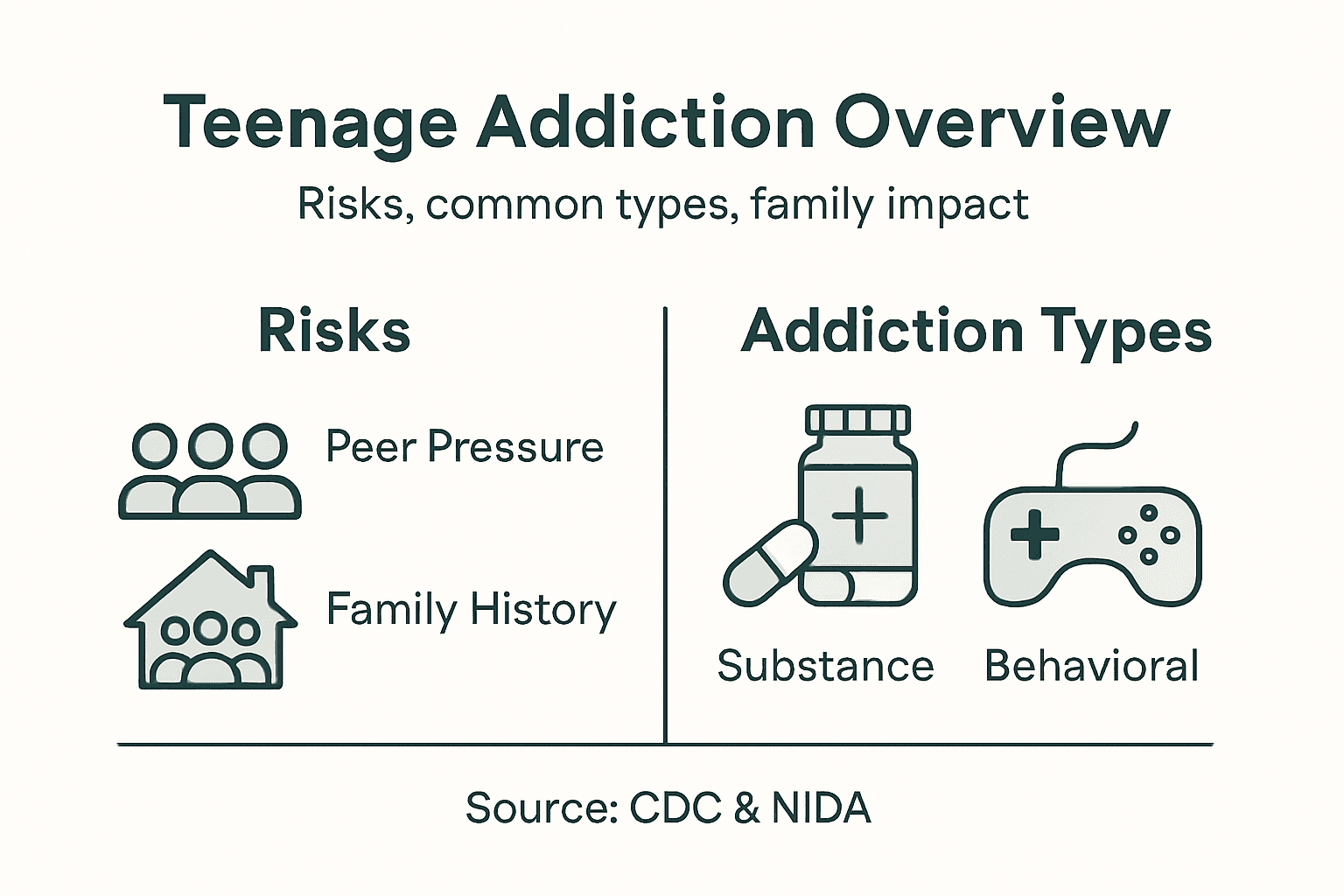
Substance use disorders typically involve different categories of chemicals, each presenting unique risks and neurological impacts. Common substances affecting teenagers include alcohol, nicotine, marijuana, prescription opioids, and stimulants like methamphetamine. These substances interact with brain chemistry, potentially disrupting normal neural development and creating long-term vulnerability to addiction. Behavioral addictions share critical diagnostic features with chemical dependencies, including persistent preoccupation, diminished control, and significant psychosocial consequences.
Modern addiction research recognizes that teenage brains are particularly susceptible to both chemical and behavioral addictive patterns. Digital technologies have introduced new addiction dimensions, with internet gaming, social media engagement, and digital compulsions becoming increasingly prevalent. These behavioral addictions can be as neurologically damaging as substance-based disorders, disrupting normal emotional regulation, impulse control, and social development.
Pro tip: Monitor your teenager’s screen time and digital engagement patterns, looking for signs of compulsive behavior or emotional distress when digital access is restricted.
Here’s a comparison of common chemical and behavioral addictions in teenagers:
| Addiction Type | Examples | Key Risk for Teens |
|---|---|---|
| Chemical Addiction | Alcohol, nicotine, prescription drugs | Alters brain chemistry, impairs judgment |
| Behavioral Addiction | Gaming, gambling, social media | Disrupts impulse control and emotions |
Warning Signs and Risk Factors in Teens
Teenage addiction emerges through a complex interplay of biological, psychological, and environmental factors. Adolescent brain development creates unique vulnerability to substance use and addictive behaviors, making early detection of warning signs critical for intervention and prevention.
Multiple risk factors contribute to teen substance abuse potential. Family history of addiction, mental health challenges, social pressures, and genetic predispositions can significantly increase vulnerability. Specific warning signs include sudden changes in friend groups, dramatic shifts in academic performance, unexplained financial requests, secretive behavior, mood swings, physical changes like bloodshot eyes or sudden weight fluctuations, and withdrawal from family activities or previously enjoyed hobbies.
Environmental influences play a substantial role in teen addiction risk. Peer pressure, exposure to substance use at home or in social circles, trauma, chronic stress, and lack of positive coping mechanisms can dramatically increase the likelihood of developing substance use disorders. Teenagers experiencing depression, anxiety, or undiagnosed mental health conditions are particularly susceptible to using substances as a form of self-medication or emotional regulation.
Pro tip: Create a judgment-free home environment where your teenager feels comfortable discussing difficult emotions and experiences without fear of immediate punishment or criticism.
How Teenage Addiction Affects Families
Family dynamics undergo profound transformations when teenage addiction enters the household, creating emotional, psychological, and relational challenges that impact every family member. Adolescent addiction treatment offers critical support for families navigating this complex and emotionally charged experience.

Parents often experience intense emotional responses including guilt, anger, frustration, and profound grief. They may blame themselves for their teenager’s substance use, questioning their parenting strategies and feeling responsible for the addiction. The constant stress of unpredictable behavior, potential legal issues, financial strain from potential treatment costs, and the fear of long-term consequences can create significant psychological burden, potentially leading to depression, anxiety, and relationship fractures within the family unit.
Siblings and extended family members are also deeply affected by teenage addiction. Younger siblings might experience confusion, embarrassment, or develop their own maladaptive coping mechanisms. Family communication often breaks down, trust becomes eroded, and normal family interactions can become dominated by the addiction’s destructive patterns. Some families experience increased conflict, with addiction creating a persistent source of tension that can lead to emotional distancing, resentment, and complicated family dynamics.
Pro tip: Seek professional family counseling early to develop healthy communication strategies and create a supportive environment that encourages recovery and healing for everyone involved.
Treatment Options and Support Resources
Addressing teenage addiction requires a comprehensive and nuanced approach that integrates multiple treatment modalities tailored to individual needs. Evidence-based treatment strategies encompass cognitive-behavioral therapies, family interventions, and holistic support systems designed to address both substance use and underlying psychological challenges.
Treatment options range from outpatient programs and intensive counseling to residential rehabilitation facilities. Individual therapeutic approaches often include cognitive-behavioral therapy, motivational interviewing, and group counseling sessions specifically designed for adolescents. Family therapy plays a critical role, helping parents and siblings understand addiction dynamics, develop communication strategies, and create supportive home environments that facilitate long-term recovery. Residential treatment accessibility remains limited, with high costs and restricted availability making comprehensive care challenging for many families.
Support resources extend beyond formal treatment programs. School counseling services, peer support groups, mental health professionals, and community-based organizations offer critical additional assistance. These resources help teenagers develop coping mechanisms, address underlying mental health issues, and build resilience. Digital platforms and telehealth services have expanded access to counseling and support, providing flexible options for families navigating addiction challenges.
Below is a summary of support resource types and their primary benefits for teens and families:
| Resource Type | Main Benefit | Common Setting |
|---|---|---|
| School Counselor | Early detection and intervention | Middle or high school |
| Peer Support Group | Shared experiences and motivation | Community centers or online |
| Family Therapy | Improved communication skills | Outpatient or inpatient facility |
| Telehealth Counseling | Convenient remote access | Home via digital device |
Pro tip: Research multiple treatment options and prioritize programs that offer integrated mental health support and comprehensive family involvement.
Support Your Teen’s Journey to Recovery Today
Understanding the complex challenges of teenage addiction, including altered brain chemistry, behavioral risks, and family impact, is the first step toward healing. If your family is facing the emotional strain of addiction or noticing warning signs like mood swings, secretive behavior, or digital compulsions, remember you are not alone. Glendora Recovery Center specializes in compassionate, evidence-based treatment tailored for adolescents and families navigating these difficult times.
Take action now to provide your teen with personalized care that addresses both substance use and underlying mental health needs. Our flexible programs include family therapy and telehealth options designed to fit your schedule and lifestyle. Don’t wait until the situation escalates. Reach out to our experienced team by visiting Contact Us and start a conversation about comprehensive addiction support. Discover how our Partial Hospitalization and Intensive Outpatient Programs can help your teenager regain control and rebuild trust within your family today.
Frequently Asked Questions
What is teenage addiction and how does it develop?
Teenage addiction is a complex disorder characterized by compulsive substance use despite harmful consequences. It develops due to a combination of biological, psychological, and environmental factors, particularly during the critical stages of brain development in adolescence.
What are the common warning signs of addiction in teenagers?
Common warning signs of teenage addiction include sudden changes in friend groups, declines in academic performance, secrecy, mood swings, physical changes (like bloodshot eyes or weight fluctuations), and withdrawal from family activities or hobbies.
How does teenage addiction impact family dynamics?
Teenage addiction significantly alters family dynamics, leading to emotional distress, communication breakdowns, and increased conflict. Parents may experience feelings of guilt and frustration, while siblings may feel confused or embarrassed. It can affect relationships within the entire family unit.
What treatment options are available for teenagers struggling with addiction?
Treatment options for teenage addiction include outpatient programs, residential rehabilitation, cognitive-behavioral therapy, family interventions, and support groups. It is essential to involve the family in the treatment process to support recovery and enhance communication.
Recommended
- Adolescent Addiction Facts – Impact on Teens’ Lives | Glendora Recovery Center
- Adolescent Addiction Treatment and Its Lifelong Impact | Glendora Recovery Center
- What Are the Options and Benefits of Teen Treatment?
- What Teens Learn in Our Teen Drug Abuse Treatment
- Dry January | What’s All The Fuss About? | Health Benefits | Blog