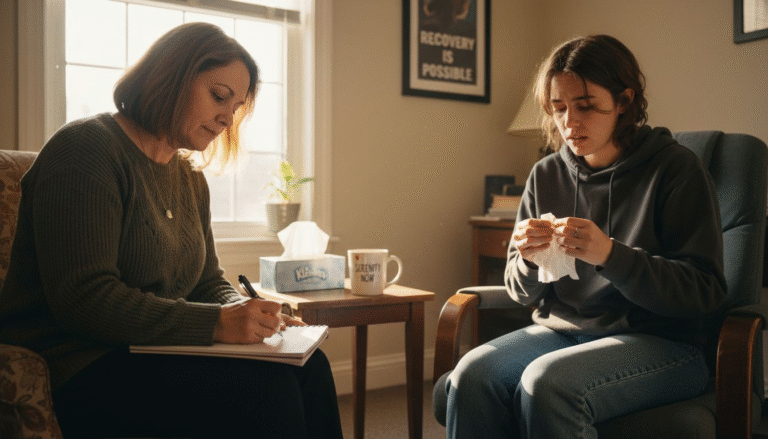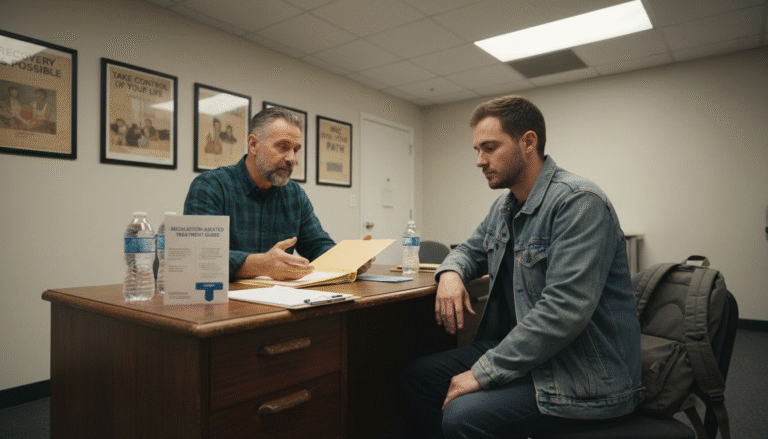

Over half of American adults facing addiction or severe mental health issues struggle to find balance between treatment and everyday responsibilities. In Los Angeles County, the search for support that fits work and family life is more urgent than ever. Partial Hospitalization Programs offer a powerful blend of structure and flexibility, helping people manage recovery without losing connection to home or career.
Table of Contents
- Defining Partial Hospitalization Programs
- Types of Partial Hospitalization for Addiction and Mental Health
- How Partial Hospitalization Works in Practice
- Eligibility and Entry Requirements in Los Angeles County
- Comparing Partial Hospitalization to Other Treatment Options
- Costs, Insurance Coverage, and Common Missteps
Key Takeaways
| Point | Details |
|---|---|
| Partial Hospitalization Programs (PHPs) provide intensive support | PHPs offer mental health and addiction recovery services without overnight stays, allowing patients to manage their daily responsibilities. |
| Various PHP types cater to different needs | PHPs are tailored for substance use disorders, mental health issues, and dual diagnoses, providing specialized therapeutic interventions for each category. |
| Eligibility ensures appropriate treatment | PHP entry criteria focus on clinical diagnosis, medical stability, and comprehensive evaluation to match patients with suitable care. |
| Understanding costs and insurance is crucial | PHP expenses can vary significantly; therefore, verifying insurance coverage and exploring payment options is essential before enrollment. |
Defining Partial Hospitalization Programs
A Partial Hospitalization Program (PHP) represents an innovative treatment approach designed to provide intensive mental health and addiction recovery support without requiring patients to remain overnight in a medical facility. Intensive outpatient mental health treatment bridges the critical gap between traditional outpatient services and full inpatient hospitalization, offering a flexible pathway to recovery for individuals managing complex psychological conditions.
Typically, PHPs involve patients attending treatment sessions for several hours daily, often up to 20 hours per week, while maintaining their regular home and work environments. These structured programs are comprehensive, involving multiple therapeutic interventions such as group counseling, individual therapy, psychiatric evaluations, medication management, and psychoeducational groups. The multidisciplinary approach allows patients to receive robust clinical support while preserving their daily life responsibilities and social connections.
PHPs serve diverse populations, including adults, adolescents, and children struggling with various mental health challenges and substance use disorders. Insurance providers like Medicare and private health plans often cover these programs, making them an accessible and cost-effective treatment option. The primary goal is to provide intensive therapeutic intervention that prevents the need for full hospitalization while supporting patients’ psychological stabilization and long-term recovery.
Pro Tip: When considering a Partial Hospitalization Program, request a detailed treatment plan that outlines specific therapeutic approaches, expected time commitment, and potential insurance coverage to ensure the program aligns with your personal recovery goals.
Types of Partial Hospitalization for Addiction and Mental Health
Partial Hospitalization Programs (PHPs) are strategically designed to address a wide range of mental health and substance use disorders through specialized treatment approaches. Treatment options for addiction and mental health can be categorized into several distinct types, each tailored to meet specific patient needs and psychological challenges.
The primary types of Partial Hospitalization Programs include:
-
Substance Use Disorder PHP: Focused on individuals struggling with alcohol, drug, or prescription medication addiction, these programs provide intensive therapeutic interventions including:
- Individual counseling
- Group therapy sessions
- Medication-assisted treatment
- Relapse prevention strategies
-
Mental Health PHP: Designed for patients managing complex psychological conditions such as:
- Depression
- Anxiety disorders
- Bipolar disorder
- Post-traumatic stress disorder (PTSD)
-
Dual Diagnosis PHP: A comprehensive approach addressing both substance use and underlying mental health conditions simultaneously, recognizing the intricate relationship between addiction and psychological disorders.
Each PHP type offers a structured yet flexible treatment framework that allows patients to receive intensive clinical support while maintaining their daily life responsibilities. The multidisciplinary approach ensures personalized care, with treatment plans tailored to individual psychological profiles, severity of condition, and specific recovery goals.
Pro Tip: When exploring Partial Hospitalization Programs, request a comprehensive assessment that evaluates your unique psychological and addiction treatment needs to ensure you receive the most appropriate and effective intervention strategy.
How Partial Hospitalization Works in Practice
Partial Hospitalization Programs (PHPs) operate through a structured yet flexible treatment model that provides intensive therapeutic support while allowing patients to maintain their daily life responsibilities. Efficient treatment approaches typically involve a comprehensive daily schedule designed to address complex psychological and addiction challenges.
A typical PHP day might include:
- Morning Assessment: Individual check-ins with primary therapists to evaluate current mental state and treatment progress
- Group Therapy Sessions: Structured interactions focusing on:
- Coping skills development
- Emotional regulation techniques
- Peer support and accountability
- Specialized Therapeutic Interventions:
- Cognitive Behavioral Therapy (CBT)
- Dialectical Behavior Therapy (DBT)
- Trauma-informed counseling
- Medication Management: Supervised medication evaluations and adjustments
- Skill-Building Workshops: Practical life skills training, stress management, and relapse prevention strategies
The program typically runs 4-6 hours per day, 5 days a week, allowing patients to return home in the evenings. This approach provides intensive treatment while preserving patients’ connections to their personal support systems, work environments, and family responsibilities. Treatment plans are highly individualized, with clinical teams continuously adapting interventions based on patient progress and evolving psychological needs.
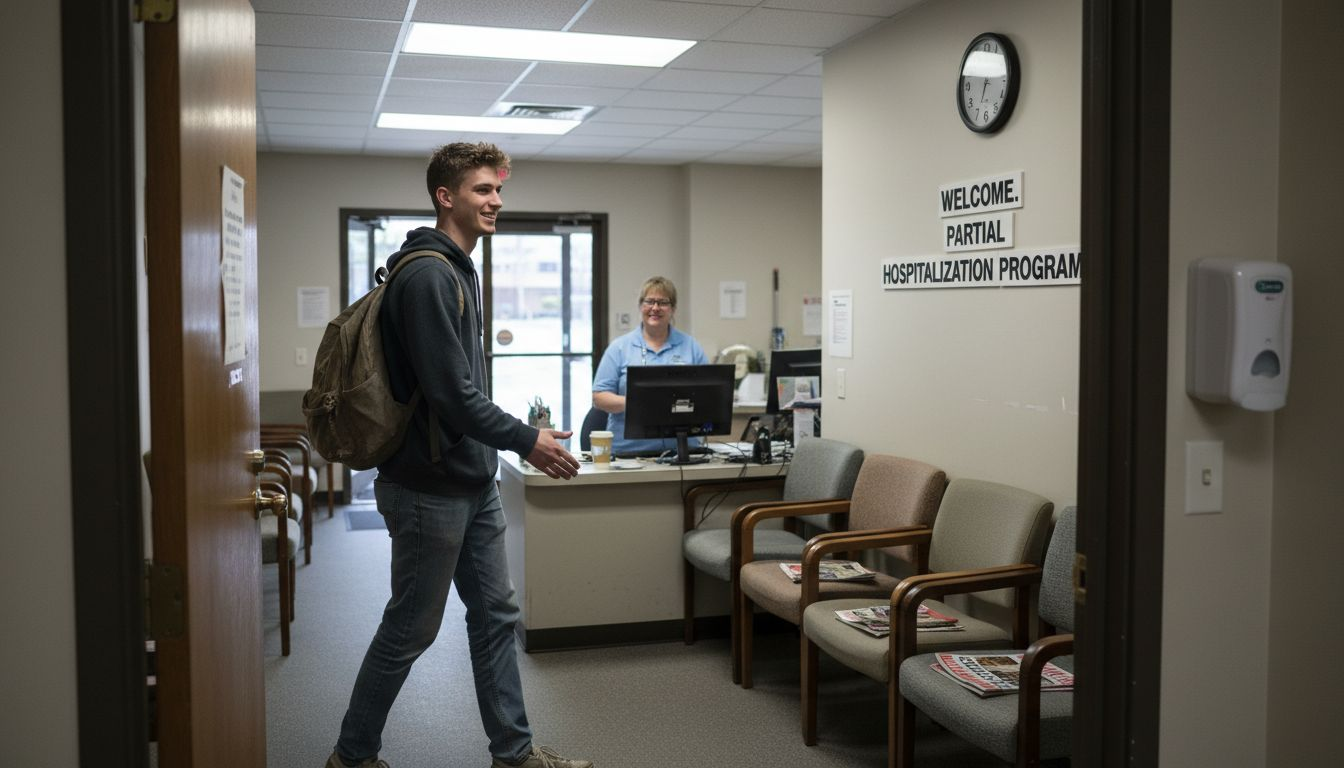
Pro Tip: When entering a Partial Hospitalization Program, maintain open communication with your treatment team and actively participate in all recommended therapeutic activities to maximize your recovery potential.
Eligibility and Entry Requirements in Los Angeles County
Partial Hospitalization Programs (PHPs) in Los Angeles County have specific eligibility criteria designed to ensure appropriate treatment for individuals with complex mental health and substance use challenges. The entry requirements are carefully structured to match patients with the most appropriate level of care, balancing intensive treatment needs with personal autonomy.
Core eligibility requirements typically include:
-
Clinical Diagnosis Criteria:
- Significant mental health disorder or substance use disorder
- Symptoms severe enough to require intensive intervention
- Functional impairment that impacts daily life activities
-
Medical Stability Requirements:
- Medically stable condition
- No immediate risk of self-harm
- Ability to participate in structured group and individual therapies
- Capacity to benefit from intensive outpatient treatment
-
Referral and Documentation:
- Comprehensive psychiatric or medical evaluation
- Formal referral from licensed healthcare provider
- Detailed treatment history
- Insurance verification and authorization
- Proof of Los Angeles County residency
The admission process involves a thorough assessment to determine whether a Partial Hospitalization Program represents the most effective treatment approach. Clinical teams evaluate multiple factors, including the patient’s psychological state, support system, treatment history, and potential for recovery. This comprehensive screening ensures that individuals receive targeted, personalized care that addresses their specific psychological and addiction challenges.
Pro Tip: Gather all medical documentation and previous treatment records before your initial assessment to streamline the PHP entry process and demonstrate your commitment to recovery.
Comparing Partial Hospitalization to Other Treatment Options
Partial Hospitalization Programs (PHPs) offer a unique treatment approach that strategically bridges the gap between traditional outpatient services and intensive inpatient care. Comprehensive treatment alternatives provide individuals with flexible recovery pathways that balance clinical support with personal autonomy.
Key comparisons between treatment options include:
-
Inpatient Treatment:
- Requires 24/7 residential care
- Highest level of medical supervision
- Completely removes patient from daily environment
- Most expensive option
- Recommended for severe, acute conditions
-
Partial Hospitalization Program (PHP):
- 4-6 hours of daily treatment
- Allows patients to return home each evening
- Maintains personal and professional connections
- More affordable than inpatient care
- Provides structured, intensive therapeutic support
-
Intensive Outpatient Program (IOP):
- Less intensive than PHP
- Typically 3 hours of treatment, 3-4 days per week
- Allows maximum schedule flexibility
- Lower cost and less clinical supervision
- Best for mild to moderate conditions
The selection of an appropriate treatment modality depends on individual psychological needs, severity of condition, personal responsibilities, and financial resources. PHPs represent an optimal middle ground, offering robust clinical support while preserving patients’ ability to maintain their daily life structures and support networks.
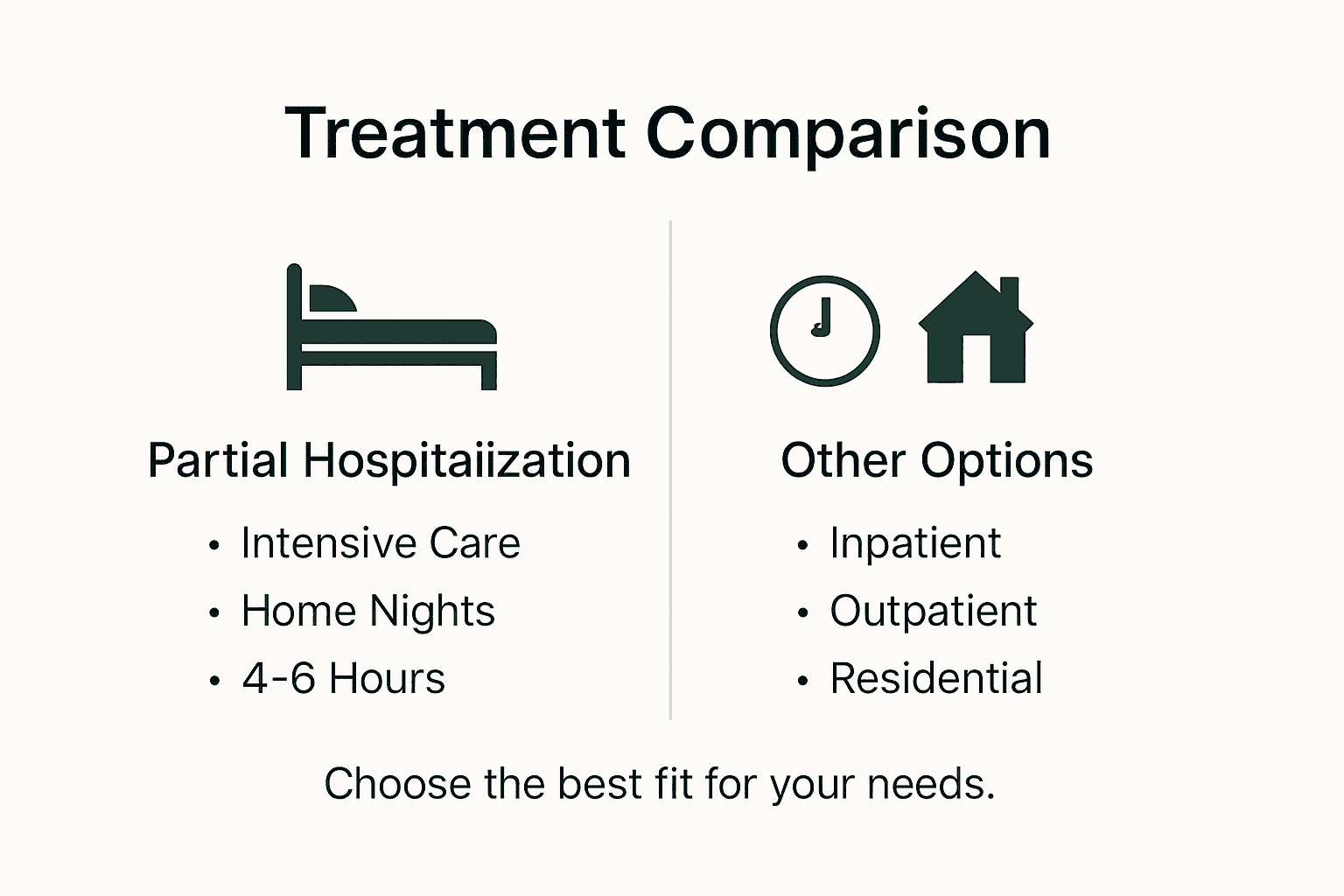
Here’s a quick reference comparing key features of different levels of mental health care:
| Treatment Type | Daily Commitment | Environment | Cost Range | Clinical Supervision |
|---|---|---|---|---|
| Inpatient | 24 hours | Facility-based | Highest | Constant |
| Partial Hospitalization | 4-6 hours | Home & facility | Moderate | Intensive |
| Intensive Outpatient | 3 hours (3-4 days) | Mostly at home | Lower | Moderate |
Pro Tip: Consult with a mental health professional to thoroughly assess your specific treatment needs and determine the most appropriate program for your unique recovery journey.
Costs, Insurance Coverage, and Common Missteps
Partial Hospitalization Programs represent a significant financial investment in mental health recovery, with costs and insurance coverage varying widely across different treatment centers and individual healthcare plans. Understanding insurance coverage strategies is critical for patients seeking comprehensive treatment without overwhelming financial burden.
Typical cost considerations and insurance navigation include:
-
Financial Breakdown:
- Average PHP costs range from $350-$750 per day
- Total program expenses: $3,500-$7,500 for a standard two-week program
- Out-of-pocket expenses depend on specific insurance plans
-
Insurance Coverage Factors:
- Medicare typically covers 80% of PHP expenses
- Private insurance varies by provider and specific plan
- Many plans require pre-authorization
- Some providers mandate a referral from primary care physician
-
Common Missteps to Avoid:
- Failing to verify insurance coverage beforehand
- Not understanding specific plan limitations
- Overlooking potential out-of-network charges
- Neglecting to explore alternative payment options
- Assuming all mental health services are similarly covered
Patients should proactively communicate with their insurance providers, carefully review coverage details, and explore potential financial assistance programs. Many treatment centers offer flexible payment plans and can help navigate complex insurance landscapes, ensuring that financial constraints do not prevent access to critical mental health support.
Before enrolling in a Partial Hospitalization Program, consider these insurance and cost factors:
| Cost Factor | Insurance Coverage | Patient Responsibility | Action Step |
|---|---|---|---|
| Daily Rate | Often 80% by Medicare | Copays & coinsurance | Review with provider |
| Pre-Authorization | Frequently required | Provide documentation | Contact insurer in advance |
| Financial Aid | Sometimes available | Apply as needed | Ask about payment options |
Pro Tip: Request a detailed insurance verification and cost breakdown from your treatment center before beginning a Partial Hospitalization Program to prevent unexpected financial challenges.
Discover Personalized Partial Hospitalization Care at Glendora Recovery Center
Managing a complex mental health or addiction challenge can feel overwhelming when seeking the right level of support that fits your life. The article highlights key pain points such as the need for intensive therapeutic intervention without full hospitalization and the importance of flexible scheduling to maintain daily responsibilities. Glendora Recovery Center provides expert Partial Hospitalization Programs designed precisely for individuals who require structured, comprehensive care while staying connected to their home and work environments. Our compassionate team specializes in creating tailored treatment plans for adults and teens struggling with substance use and co-occurring mental health disorders.
Take control of your recovery journey today by exploring our flexible treatment options including morning, evening, weekend, and telehealth sessions. With a strong focus on dual diagnosis and harm reduction, Glendora Recovery Center ensures you receive intensive clinical support without sacrificing your personal commitments. Learn more about our commitment to individualized care through our Partial Hospitalization Program and reach out to our dedicated staff. Don’t let uncertainty delay your path to wellness. Contact us now at Glendora Recovery Center to schedule your confidential assessment and start moving toward lasting recovery.
Frequently Asked Questions
What is a Partial Hospitalization Program (PHP)?
A Partial Hospitalization Program (PHP) is an intensive mental health and addiction recovery treatment that allows patients to receive therapeutic support during the day without needing to stay overnight in a medical facility.
Who is eligible for a Partial Hospitalization Program?
Eligibility typically includes having a significant mental health or substance use disorder, being medically stable, and having symptoms severe enough to require intensive intervention. A thorough assessment is conducted to determine the suitability for PHP.
How does a Partial Hospitalization Program differ from inpatient treatment?
Unlike inpatient treatment, which requires 24/7 care in a facility, PHPs offer 4-6 hours of daily treatment while allowing patients to return home each evening. This approach maintains personal and professional connections while providing intensive clinical support.
What costs should I expect with a Partial Hospitalization Program?
The average cost of a PHP ranges from $350 to $750 per day, with total expenses for a standard two-week program being between $3,500 and $7,500. Coverage varies by insurance, and it’s important to check your specific plan details for guidance.
Recommended
- Partial Hospitalization Program: Why This Program Is More Efficient?
- Partial Hospitalization Program: Why It’s Highly Effective?
- Partial Hospitalization Program: Why It’s Better Than Inpatient Treatment?
- PHP | Glendora Recovery Center | Partial Hospitalization Program
- Complete Guide to Detox Symptoms and Healing – Mahoney inter