
Nearly half of people with substance use disorders also struggle with mental illness, yet many recovery programs still treat addiction in isolation. This oversight leaves a critical gap in care that can derail even the most determined individuals. Understanding why mental health is essential to lasting recovery transforms how you approach healing, equipping you with the knowledge to seek comprehensive treatment that addresses both conditions together for better outcomes.
Table of Contents
- Understanding Mental Health In Addiction Recovery
- Why Mental Health Matters In Recovery
- Common Misconceptions About Mental Health In Recovery
- Conceptual Framework: The Four Dimensions Of Recovery
- Integrated Treatment Approaches
- Family And Community Support In Recovery
- Explore Integrated Addiction And Mental Health Treatment At Glendora Recovery Center
Key takeaways
| Point | Details |
|---|---|
| Dual diagnosis is common | Approximately 50% of individuals with substance use disorders also have co-occurring mental health conditions. |
| Integrated care improves outcomes | Treating both addiction and mental health together reduces relapse rates and enhances overall well-being. |
| Recovery is holistic | SAMHSA’s four dimensions (health, home, purpose, community) provide a comprehensive framework beyond abstinence. |
| Family support matters | Strong social networks and family involvement significantly boost mental health stability during recovery. |
| Misconceptions hinder progress | Believing recovery means only quitting substances ignores the vital role of mental health care. |
Understanding mental health in addiction recovery
Mental health encompasses your emotional, psychological, and social well-being. It influences how you think, feel, and behave in daily life. In addiction recovery, mental health plays a crucial role because substance use disorders rarely exist in isolation.
Co-occurring disorders, also called dual diagnosis, describe the simultaneous presence of mental illness and substance abuse. Research shows approximately 50% of individuals with substance use disorders also have mental illness. This overlap isn’t coincidental.
Common mental health conditions that co-occur with addiction include:
- Depression that drains motivation and hope
- Anxiety disorders that fuel fear and avoidance
- Post-traumatic stress disorder (PTSD) from past trauma
- Bipolar disorder with extreme mood swings
- Attention deficit hyperactivity disorder (ADHD) affecting focus
Untreated mental illness often drives people to self-medicate with alcohol or drugs. You might use substances to numb emotional pain, quiet racing thoughts, or escape traumatic memories. This creates a dangerous cycle where addiction and mental health problems feed each other.
Understanding this connection helps you recognize why managing dual diagnosis recovery requires addressing both conditions simultaneously. Treating only addiction while ignoring underlying mental health issues leaves you vulnerable to relapse.
Pro Tip: If you suspect you have both a substance use disorder and a mental health condition, seek an evaluation from a professional who specializes in dual diagnosis. Early identification leads to better treatment planning.
The mental health research at NIDA continues to reveal how brain chemistry, genetics, and environmental factors contribute to both addiction and mental illness. This scientific foundation validates why integrated care isn’t optional but essential for recovery success.
Why mental health matters in recovery
Ignoring mental health during addiction treatment sets you up for failure. Untreated mental illness increases relapse risk significantly because the emotional pain that drove substance use remains unresolved.
When depression, anxiety, or trauma go unaddressed, you lack healthy coping mechanisms. Stress triggers intensify, making it harder to resist cravings. Your brain still associates substances with relief from psychological distress.
The physical health consequences compound the problem. Depression significantly increases the risk for chronic physical diseases like diabetes and heart disease. These conditions complicate recovery by:
- Reducing energy levels needed for treatment participation
- Weakening immune function and overall resilience
- Creating additional stressors that trigger substance use
- Interfering with medication effectiveness
Individuals with co-occurring disorders who receive integrated treatment show 30% lower relapse rates compared to those receiving addiction-only treatment.
Early mental health intervention during recovery protects your progress. When you address depression, anxiety, or PTSD alongside addiction, you build genuine emotional resilience. You learn to process difficult feelings without reaching for substances.
The benefits of dual diagnosis effective recovery extend beyond preventing relapse. You experience improved relationships, better sleep, increased motivation, and enhanced overall quality of life. Mental health treatment teaches you skills that serve you long after initial recovery.

Timing matters critically. Waiting to address mental health until after achieving sobriety delays healing and increases dropout rates. Your mind and body need comprehensive support from day one.
Pro Tip: Track your mood, sleep patterns, and stress levels during recovery. This awareness helps you and your treatment team identify mental health patterns that need attention before they escalate.
Resources like HHS mental health and substance use disorder programs provide guidance on integrating mental health care into recovery plans. These evidence-based approaches recognize that your mental wellness directly impacts your ability to maintain sobriety.
Common misconceptions about mental health in recovery
Myths about addiction recovery prevent many people from seeking the comprehensive care they need. Understanding what recovery truly involves helps you make informed treatment decisions.
Three prevalent misconceptions include:
-
Recovery means only quitting substances. Many believe abstinence alone equals recovery, but recovery is a holistic process involving health, home, purpose, and community. True recovery addresses mental health, builds stable living conditions, creates meaningful activities, and strengthens social connections.
-
Addiction and mental illness are separate issues. People often think you can treat addiction without addressing underlying mental health conditions. In reality, these conditions are deeply interconnected and require simultaneous treatment for lasting results.
-
Seeking mental health support shows weakness. Stigma convinces people that asking for help means failure. Actually, recognizing you need mental health care demonstrates self-awareness and courage essential for recovery.
Recovery is person-driven, meaning you direct your own healing journey with professional support. It encompasses wellness in multiple life areas, not just the absence of substance use. Your mental health influences every dimension of recovery.
Stigma remains a powerful barrier. Fear of judgment stops people from discussing mental health symptoms with treatment providers. This silence prevents access to therapies, medications, and support groups that could transform recovery outcomes.
Challenging these misconceptions requires education. Learning accurate information about substance abuse myths vs facts empowers you to advocate for integrated care.
Pro Tip: When someone shares outdated recovery myths, gently correct them with facts from trusted sources. Your willingness to speak up reduces stigma and helps others access better care.
The SAMHSA recovery definition emphasizes that recovery involves continuous growth and improvement in wellness. Mental health care isn’t a side issue but a central component of this lifelong process.
Conceptual framework: the four dimensions of recovery
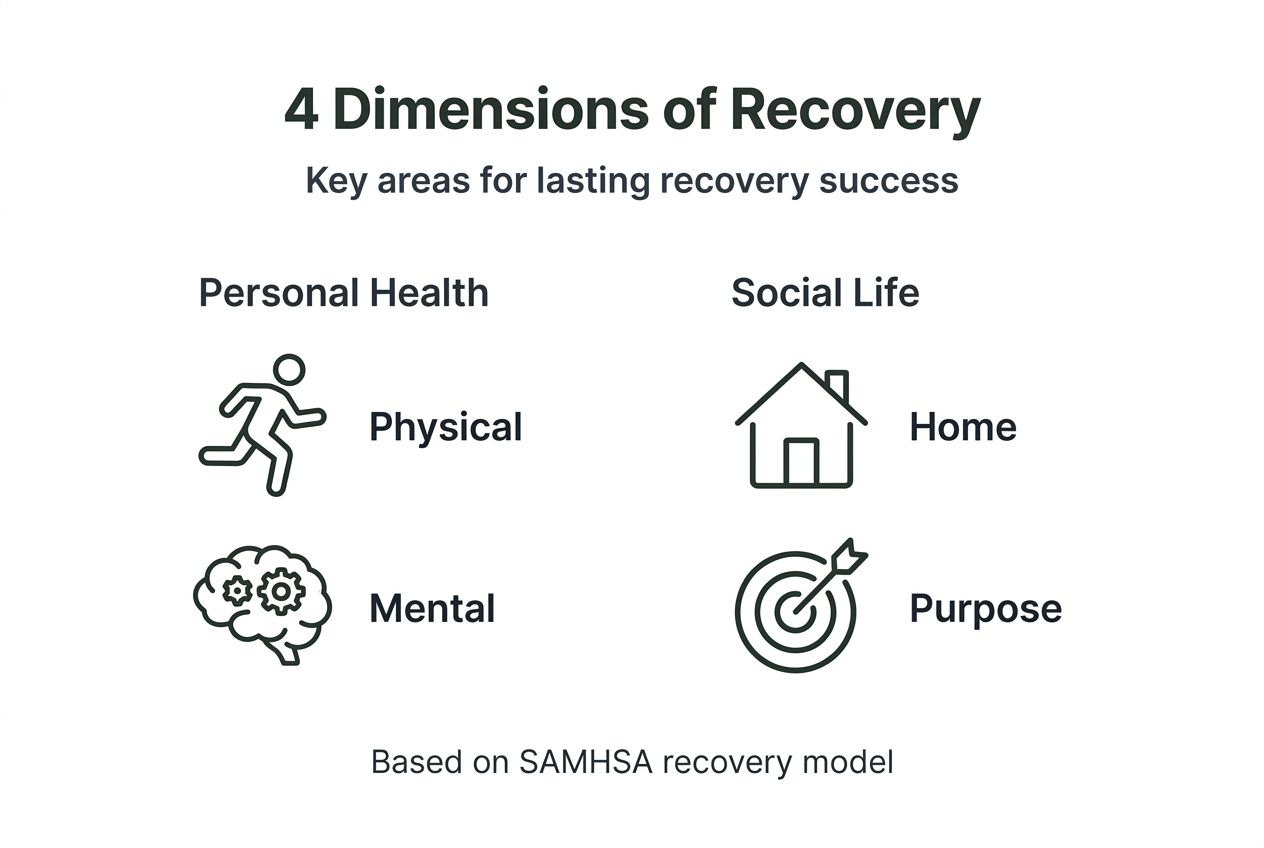
SAMHSA developed a comprehensive framework showing recovery extends far beyond abstinence. SAMHSA’s recovery definition includes health, home, purpose, and community as interconnected dimensions supporting sustained wellness.
| Dimension | Definition | Examples |
|---|---|---|
| Health | Managing physical and mental health conditions | Regular therapy, medication compliance, exercise, nutrition |
| Home | Having a stable, safe living environment | Secure housing, financial stability, supportive household |
| Purpose | Engaging in meaningful activities and goals | Employment, education, volunteering, creative pursuits |
| Community | Building relationships and social connections | Support groups, family ties, friendships, civic participation |
Each dimension supports the others. Poor mental health (health dimension) can destabilize your living situation (home dimension). Lack of purpose leads to isolation that harms community connections. Integrated mental health care fits primarily in the health dimension but influences all four areas. We explore this further in our guide to early mental health screening.
When you address depression through therapy, you gain energy to pursue purpose through work or school. Treating anxiety helps you engage more fully in community activities. Managing PTSD creates emotional stability that protects your home environment. If you are weighing your options, our overview of mental health recovery steps breaks down what to expect.
This framework emphasizes self-directed life and wellness. You choose goals that matter to you across all dimensions. Mental health professionals support your choices rather than dictating a one-size-fits-all recovery path.
The holistic nature of this model explains why comprehensive mental health treatment addresses multiple life areas simultaneously. Your treatment team helps you identify strengths and challenges in each dimension, then develop strategies to improve overall wellness.
Pro Tip: Assess yourself across all four dimensions regularly. Identify which areas need attention and set specific goals to strengthen each one. This balanced approach prevents relapse by building resilience across your entire life.
The SAMHSA recovery framework guides treatment programs nationwide. Facilities using this model provide more comprehensive care that recognizes recovery as a multidimensional journey requiring mental health integration.
Integrated treatment approaches
Integrated treatment simultaneously addresses substance use disorders and mental health conditions through coordinated care. This approach recognizes that integrated treatment for co-occurring disorders reduces relapse rates and improves overall functioning.
| Aspect | Addiction-Only Treatment | Integrated Dual Diagnosis Treatment |
|---|---|---|
| Focus | Substance use cessation | Both addiction and mental health |
| Providers | Addiction specialists only | Multidisciplinary team |
| Outcome | Higher relapse rates | Lower relapse, better retention |
| Approach | Sequential (treat one, then the other) | Simultaneous treatment of both |
Key components of effective integrated treatment include:
- Trauma-informed care that recognizes how past experiences affect current mental health and substance use patterns
- Evidence-based therapies like cognitive behavioral therapy (CBT) addressing both conditions
- Medication management for mental health symptoms and addiction when appropriate
- Peer support from others navigating dual diagnosis recovery
- Continuous monitoring to adjust treatment as your needs evolve
- Family education helping loved ones understand both conditions
Integrated programs assign you a single treatment team familiar with your complete health picture. You don’t repeat your story to multiple disconnected providers. This coordination prevents conflicting recommendations and ensures all interventions support your overall recovery.
Research consistently shows people receiving integrated care stay in treatment longer. They develop stronger coping skills because therapists address the real-world intersection of addiction and mental health. You learn to manage depression without substances, handle anxiety through healthy strategies, and process trauma safely.
The dual diagnosis treatment workflow typically begins with comprehensive assessment of both conditions. Your team then creates a personalized plan targeting symptoms, triggers, and goals across mental health and addiction simultaneously.
Pro Tip: When evaluating treatment programs, ask specifically about their approach to co-occurring disorders. Facilities offering true integrated care have staff cross-trained in both addiction and mental health, not separate tracks for each condition.
NIDA recovery research continues demonstrating that integrated approaches produce better long-term outcomes. The simultaneous treatment model prevents the revolving door effect where treating one condition temporarily succeeds while the untreated condition triggers relapse.
Family and community support in recovery
Your social environment profoundly impacts mental health stability during recovery. Family and community support improve mental health outcomes and create protective factors against relapse.
Family involvement strengthens recovery through:
- Attending family therapy sessions to improve communication and heal relationships damaged by addiction
- Learning about mental health conditions to reduce misunderstanding and blame
- Creating a home environment that supports treatment goals and reduces triggers
- Providing practical assistance like transportation to appointments or medication reminders
- Offering emotional encouragement during difficult phases of recovery
Community resources extend support beyond family. Peer support groups connect you with others who understand the dual challenges of mental illness and addiction. These relationships reduce isolation and provide role models demonstrating that recovery is possible.
Social programs offering recreational activities, educational opportunities, and volunteer work help you build the purpose and community dimensions of recovery. Meaningful connections counteract loneliness that often triggers both mental health symptoms and substance use.
Strengthening social connections during recovery involves:
- Rebuilding trust with family members through consistent actions over time
- Joining support groups specific to your mental health condition and addiction
- Participating in community activities aligned with your interests and values
- Developing new friendships with people supporting your recovery
- Setting boundaries with relationships that threaten your mental health or sobriety
The role of addiction counselors includes facilitating family and community connections. Counselors help families understand mental health conditions, teach effective support strategies, and mediate difficult conversations. They also connect you with community resources matching your needs and interests.
Pro Tip: If family relationships are strained, consider starting with peer support groups where you can practice social skills and build confidence before addressing more challenging family dynamics.
SAMHSA recovery supports emphasize that relationships and social networks are essential recovery elements, not optional extras. Your mental health improves when you feel connected, valued, and supported by people who care about your wellbeing.
Explore integrated addiction and mental health treatment at Glendora Recovery Center
Recovery requires comprehensive care addressing both substance use and mental health together. Glendora Recovery Center offers dual diagnosis treatment workflow specifically designed for co-occurring disorders.
Our programs integrate evidence-based therapies with personalized mental health support. Whether you need partial hospitalization, intensive outpatient care, or ongoing aftercare, we provide flexible scheduling including evening, weekend, and telehealth options.
Explore our full range of addiction treatment center in Los Angeles services and discover how our compassionate team can support your journey. We also offer family support services to strengthen your social foundation for lasting recovery.
Frequently asked questions
What is mental health in the context of addiction recovery?
Mental health involves your emotional and psychological well-being affecting how you handle stress, make decisions, and relate to others. In recovery, it encompasses co-occurring disorders like depression, anxiety, and PTSD commonly treated alongside substance use disorders. Addressing mental health reduces relapse risk and improves overall recovery outcomes.
How does untreated mental illness increase relapse risk?
Untreated conditions like depression and anxiety leave you without healthy coping strategies for emotional pain. Recovery stressors intensify cravings when underlying mental health issues remain unaddressed. You may return to substances as the only familiar relief method, creating a cycle that undermines sobriety efforts.
What are the benefits of integrated dual diagnosis treatment?
Integrated treatment addresses addiction and mental health simultaneously through coordinated care, reducing relapse rates by up to 30%. You experience better treatment retention, improved symptom management across both conditions, and enhanced overall life quality. Learn more about the dual diagnosis treatment workflow for comprehensive recovery support.
How can families support mental health during recovery?
Families strengthen recovery by attending therapy sessions, learning about mental health conditions, and creating supportive home environments. Encouraging treatment participation and offering practical help like transportation builds trust and reduces barriers to care. The role of addiction counselors includes teaching families effective support strategies tailored to your specific needs.
Recommended
- Why Ongoing Recovery Matters in Addiction Treatment | Glendora Recovery Center
- 7 Essential Mental Health Recovery Tips for Los Angeles | Glendora Recovery Center
- Comprehensive Mental Health Treatment: Pathways to Recovery | Glendora Recovery Center
- 7 Essential Mental Health Coping Skills for Recovery | Glendora Recovery Center
- Healthy Eating Trends 2026: What’s Changing Now