
TL;DR:
- Addiction is classified as a chronic brain disease with biological changes affecting behavior.
- Understanding addiction as a disease reduces stigma and promotes medical treatment and support.
- Co-occurring mental health conditions are common, requiring integrated treatment for better outcomes.
Addiction is not a character flaw, a sign of weakness, or a simple matter of poor choices. Major medical organizations classify it as a chronic brain disease, one that alters brain structure and function in measurable, lasting ways. For individuals and families across Los Angeles County, understanding this shift in how science views addiction can change everything, from how you talk about it to how you seek help. When we move past blame and toward biology, stigma fades, treatment improves, and recovery becomes a realistic goal. This article walks you through the science, the comparisons, and the practical steps that matter most.
Table of Contents
- What defines addiction as a disease?
- The brain science behind addiction
- Addiction compared to other chronic diseases
- The link between addiction and mental health
- Addressing criticism: Is addiction a choice?
- Our perspective: What Los Angeles families need to know about addiction as a disease
- Get help and find support for addiction in Los Angeles
- Frequently asked questions
Key Takeaways
| Point | Details |
|---|---|
| Addiction is a disease | Leading medical organizations classify addiction as a chronic brain disease, not a moral failing. |
| Brain changes drive compulsion | Substance use alters brain circuits, making quitting extremely difficult without proper support. |
| Relapse doesn’t equal failure | Like other chronic illnesses, addiction can involve relapse and requires ongoing management. |
| Mental health and addiction overlap | Over half of those with addiction also face mental health conditions, so integrated care is vital. |
| Support reduces stigma | Understanding addiction as a disease helps reduce blame and encourages families to seek treatment. |
What defines addiction as a disease?
Addiction is defined by three core features: loss of control over substance use, compulsive use despite knowing the harm, and persistent cravings that override other priorities. These are not personality traits. They are clinical symptoms recognized by leading medical bodies.
ASAM, AMA, NIDA, and APA all classify addiction as a chronic brain disease. This is not a fringe opinion. It is the consensus of modern medicine, built on decades of neurological research, clinical observation, and population data.
“Addiction is a primary, chronic disease of brain reward, motivation, memory, and related circuitry.” — American Society of Addiction Medicine (ASAM)
To qualify as a disease, a condition must involve biological dysfunction, produce recognizable symptoms, and follow a predictable course without treatment. Addiction meets every one of those criteria. It involves documented changes in brain chemistry, produces behavioral and physical symptoms, and follows a chronic, relapsing pattern.
| Feature | Addiction | Other chronic diseases |
|---|---|---|
| Biological basis | Yes (brain circuit changes) | Yes (organ dysfunction) |
| Recognizable symptoms | Yes (cravings, loss of control) | Yes (pain, fatigue, etc.) |
| Relapsing course | Yes (40-60% relapse rate) | Yes (common in diabetes, asthma) |
| Treatable | Yes | Yes |
| Influenced by behavior | Yes | Yes |
This framework matters deeply for families in Los Angeles. When addiction is seen as a disease, the response shifts from punishment to care. Families can find support resources in Los Angeles that are built on this medical model, including programs that also address co-occurring mental health conditions. Understanding the disease model is the first step toward finding the right help.
The brain science behind addiction
Drugs and alcohol flood the brain’s reward system with dopamine, a neurotransmitter that signals pleasure. The brain responds by reducing its own dopamine production and sensitivity over time. This means a person needs more of the substance just to feel normal, let alone good. That cycle is not a choice. It is a biological adaptation.
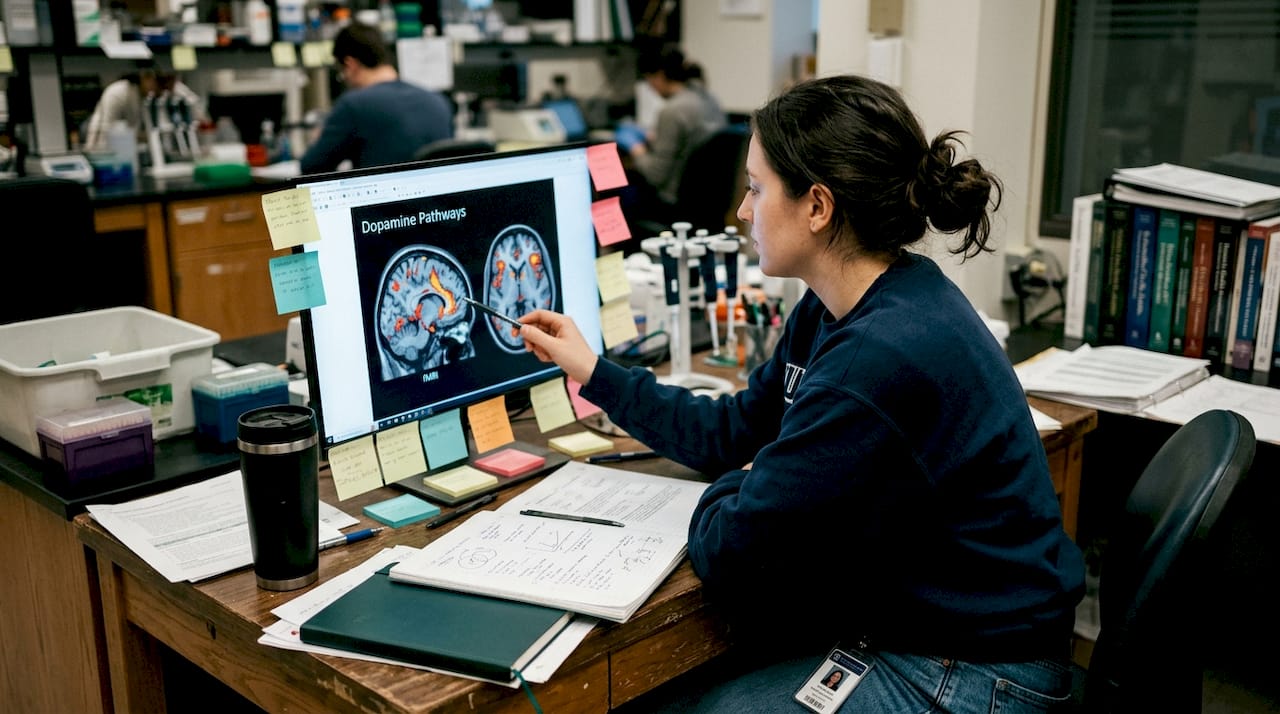
Repeated drug exposure causes neuroadaptations, meaning structural and chemical changes in brain circuits that control reward, stress, and self-control. These changes do not reverse quickly when someone stops using. That is why quitting is so difficult, even for people who genuinely want to stop.
Here is how the process unfolds:
- Initial use activates the brain’s reward circuit, producing intense pleasure.
- The brain adapts by reducing dopamine receptors, requiring more substance for the same effect.
- Stress circuits become hypersensitive, making withdrawal feel unbearable.
- The prefrontal cortex, which governs decision-making, is gradually impaired.
- Cravings become automatic responses, triggered by people, places, and emotions.
| Brain region | Normal function | Effect of addiction |
|---|---|---|
| Nucleus accumbens | Processes reward | Becomes desensitized to dopamine |
| Prefrontal cortex | Controls decisions | Loses ability to override cravings |
| Amygdala | Manages stress/emotion | Becomes hyperreactive during withdrawal |
Genetics also play a significant role. Hereditary risk accounts for 40 to 60 percent of a person’s vulnerability to addiction, meaning some people’s brains are biologically primed to respond more intensely to substances.
Pro Tip: If someone you love is struggling to quit despite repeated attempts, that is not a lack of effort. It is the brain’s neuroadaptations at work. Seeking detox support in LA with medical supervision can make the process safer and more manageable. Following addiction recovery best practices alongside professional care gives the best chance of lasting results.
Addiction compared to other chronic diseases
One of the most powerful ways to understand addiction is to place it alongside other chronic illnesses. When you do, the parallels are striking and the case for medical treatment becomes clear.
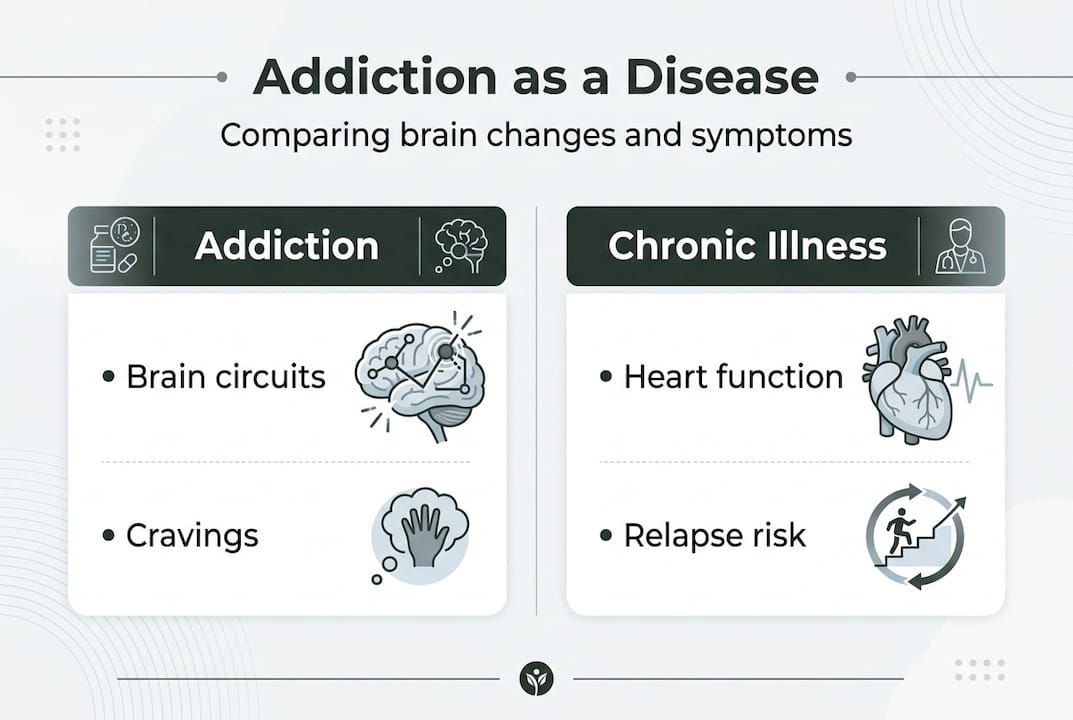
Relapse rates for addiction sit between 40 and 60 percent, which is nearly identical to relapse rates for diabetes and hypertension. No one tells a diabetic they failed because their blood sugar spiked again. The same logic should apply to someone recovering from addiction.
Key similarities between addiction and other chronic diseases:
- All require ongoing management, not a single cure
- All involve biological dysfunction in a major organ system
- All are influenced by lifestyle, environment, and genetics
- All carry significant relapse risk when treatment is discontinued
- All respond better to consistent, long-term care than to short-term intervention
The economic weight of addiction is enormous. Substance use disorders cost the United States more than $700 billion annually in healthcare, lost productivity, and criminal justice expenses. That figure reflects a public health crisis, not a collection of individual moral failures.
For families in Los Angeles, this comparison reframes the conversation. Addiction is not something a person should simply “get over.” It is a condition that requires the same patience, medical support, and community care as any other serious illness. Connecting with addiction support in Los Angeles means accessing care that treats addiction with the seriousness it deserves.
Understanding this also helps families set realistic expectations. Recovery is a process, not a single event. Progress may be uneven. That is normal for chronic disease management.
The link between addiction and mental health
Addiction rarely exists in isolation. Over 50 percent of people with a substance use disorder also live with a mental health condition such as anxiety, depression, PTSD, or bipolar disorder. This overlap is so common that it has its own clinical term: co-occurring disorders, also called dual diagnosis.
The relationship between addiction and mental health runs in both directions. Mental illness can increase the risk of substance use, often as a form of self-medication. And substance use can trigger or worsen mental health symptoms, creating a negative feedback loop that becomes harder to break over time.
Common co-occurring conditions include:
- Major depressive disorder
- Generalized anxiety disorder
- Post-traumatic stress disorder (PTSD)
- Bipolar disorder
- Attention-deficit/hyperactivity disorder (ADHD)
Research on co-occurring disorders consistently shows that treating only the addiction while ignoring the mental health condition leads to poorer outcomes. Integrated treatment, which addresses both conditions simultaneously, produces significantly better results.
Pro Tip: If you or a loved one has been treated for addiction multiple times without lasting success, an undiagnosed mental health condition may be a factor. Seeking dual diagnosis recovery care that screens for both issues can change the trajectory of treatment. You can also review mental health resources designed specifically for people in the Los Angeles recovery community.
Addressing criticism: Is addiction a choice?
The most common objection to the disease model goes like this: the first use of a substance is a choice, so the person brought addiction on themselves. This argument has emotional appeal, but it does not hold up under scientific scrutiny.
Yes, initial use often involves a decision. But the NIH considers the view that addiction is simply a choice to be outdated and inconsistent with current neuroscience. Once the brain undergoes the neuroadaptations described earlier, the ability to simply “choose” to stop is significantly compromised. Our team frequently points clients toward how trauma drives addiction for added context.
“Saying addiction is a choice ignores the brain changes that make stopping extraordinarily difficult, even for those who desperately want to quit.” — National Institute on Drug Abuse This connects closely with understanding addiction relapse, which covers the topic in more depth.
The disease model does not remove personal responsibility. It contextualizes it. A person with diabetes made choices that may have contributed to their condition, yet we still provide medical care. The same principle applies to addiction.
Why the disease model matters for families:
- It reduces shame and blame, which are barriers to seeking treatment
- It encourages compassion rather than punishment
- It opens the door to evidence-based medical care
- It helps families understand that their loved one’s behavior is driven by brain changes, not indifference
- It supports policies that fund treatment rather than incarceration
For diverse communities across Los Angeles County, where cultural attitudes toward addiction vary widely, embracing the disease model can be especially meaningful. It creates space for supporting recovery in LA with empathy rather than stigma, and it aligns family responses with what addiction science actually shows works.
Our perspective: What Los Angeles families need to know about addiction as a disease
At Glendora Recovery Center, we work with families across Los Angeles County every day, and we see firsthand how much the disease model changes outcomes. When families stop asking “why won’t they just stop?” and start asking “what kind of support does my loved one need?”, the entire dynamic shifts toward healing.
The willpower myth is not just inaccurate. It is actively harmful. It delays treatment, deepens shame, and isolates people at the moment they most need connection. Holding onto the disease model, even when it feels counterintuitive, is one of the most practical things a family can do.
Los Angeles is a large, diverse county with real gaps in access to care. That is why community-based support matters so much alongside clinical treatment. Families who understand addiction as a disease become advocates. They push for better resources, reduce stigma in their communities, and model the kind of compassionate response that makes recovery possible.
Learning coping strategies for loved ones is not just about managing stress. It is about becoming an informed, steady presence in someone’s recovery journey. That kind of support is irreplaceable.
Get help and find support for addiction in Los Angeles
If you or someone you love is living with addiction, understanding the disease is only the first step. The next step is finding care that matches the complexity of what you are facing. At Glendora Recovery Center, we offer evidence-based treatment through our Los Angeles addiction treatment center, including Partial Hospitalization Programs, Intensive Outpatient Programs, and flexible scheduling to fit your life. We specialize in dual diagnosis treatment for those managing both addiction and mental health conditions. Our team is ready to help you take the next step with compassion and clinical expertise. Reach out today through our contact page to learn more.
Frequently asked questions
What makes addiction a disease, not a moral failing?
Addiction involves lasting brain circuit changes in areas that control reward and self-control, which is a biological process, not a character flaw. These neurological shifts make it genuinely difficult to stop without professional support.
Can people recover fully from addiction?
Recovery is absolutely possible, but addiction management typically requires long-term care and support, similar to how diabetes or heart disease is handled over a lifetime. Many people achieve sustained recovery with the right treatment and community backing.
What is dual diagnosis and why is it important?
Dual diagnosis refers to having both a substance use disorder and a mental health condition at the same time. Integrated dual diagnosis care treats both conditions together, which research shows leads to significantly better outcomes than addressing only one.
Is relapse a sign that treatment has failed?
No. Relapse rates in addiction are comparable to those seen in other chronic health conditions, and a relapse signals that the treatment plan may need adjustment, not that recovery is impossible.
How can families in Los Angeles find support for addiction and mental health?
Families can access community resources in LA through local treatment centers, recovery support groups, and mental health checklists designed for the Los Angeles area. Starting with a call to a local treatment center is often the most direct path forward.