
Finding mental health support in Los Angeles County can feel paralyzing, especially when you’re also managing addiction or a co-occurring disorder. The sheer number of hotlines, treatment centers, apps, and community programs makes it hard to know where to start. A well-organized checklist cuts through that noise. This guide gives you a practical, step-by-step framework for identifying and using the right mental health and recovery resources across LA County, whether you’re in crisis, maintaining sobriety, or supporting a teen you care about.
Table of Contents
- How to evaluate mental health resources in Los Angeles
- The checklist: Key mental health and recovery resources
- Comparing resource options: Features, costs, and suitability
- Situational recommendations: Matching resources to your needs
- A practical approach to using your resources checklist
- Get expert help building your recovery plan
- Frequently asked questions
Key Takeaways
| Point | Details |
|---|---|
| Local focus matters | LA County resources are tailored to residents’ needs, including aid for teens and adults. |
| Checklist streamlines choices | Having a clear list removes stress and makes it easier to find quality support. |
| Match support to your needs | Different situations require different resources, from hotlines to group programs. |
| Keep your list updated | Regularly reviewing your checklist ensures your support system evolves with you. |
| Professional help adds value | Experts can tailor your recovery plan and connect you with trustworthy resources. |
How to evaluate mental health resources in Los Angeles
With the need for a roadmap clear, here’s how to identify trustworthy support. Not every program or provider is created equal, and in a region as large and diverse as Los Angeles County, quality can vary widely. Knowing what to look for saves time and protects your wellbeing.
Start with geographic relevance. Resources based in LA County understand local systems, insurance networks, and community needs. A program in another state may not accept your Medi-Cal plan or connect you with local follow-up care.
Next, verify credentials. State-licensed and accredited programs follow strict clinical standards. Look for licensing through the California Department of Health Care Services (DHCS) and accreditation from bodies like The Joint Commission or CARF International. Choosing the right resources measurably improves recovery outcomes, so this step matters more than it might seem.
Consider what types of support are available:
- Individual therapy and psychiatric services
- Group counseling and peer support
- Crisis hotlines and mobile crisis teams
- Outpatient and intensive outpatient programs
- Residential or inpatient treatment
Specialization matters too. If you’re dealing with addiction alongside depression or anxiety, a program offering comprehensive mental health treatment for co-occurring disorders is a better fit than a general counseling service. Youth-focused programs use age-appropriate methods that work better for teens.
Finally, check accessibility. Does the program accept your insurance? Is there a sliding-scale fee? Are there transportation options or telehealth sessions? NIMH guidance recommends reviewing all these factors before committing to any provider.
Pro Tip: Call the program directly before your first appointment and ask about wait times, language services, and what happens if you miss a session. These details reveal a lot about how a program actually operates.
The checklist: Key mental health and recovery resources
With criteria in mind, here’s a practical resources checklist to guide your search. Use this as your starting point, then customize it based on your specific needs and circumstances.
- Emergency and crisis hotlines: Call 988 Lifeline for immediate mental health or suicide crisis support. LA County also operates its own 24-hour crisis line at (800) 854-7771.
- Addiction treatment centers: Look for state-licensed facilities offering detox, residential, or outpatient programs. Verify dual diagnosis capability if needed.
- Support groups: Alcoholics Anonymous (AA), Narcotics Anonymous (NA), and SMART Recovery all have active LA County chapters. Many meet online as well as in person.
- Therapy and counseling: Seek licensed therapists (LCSW, MFT, psychologist) with experience in addiction or trauma. Youth-focused providers are available through school districts and community clinics.
- Digital tools and apps: Apps like Woebot, Sober Grid, and Headspace can supplement professional care between sessions.
- Community organizations: Faith-based groups, cultural centers, and nonprofit organizations often provide free or low-cost support, especially for underserved communities.
- Mental health coping skills: Build a personal toolkit of strategies like mindfulness, journaling, and breathing exercises to use between appointments.
“Support groups and helplines are vital first steps for many people beginning their recovery journey.”
The LA County Department of Mental Health also maintains a searchable directory of local providers, including free and low-cost services. Bookmark it as a core part of your checklist.
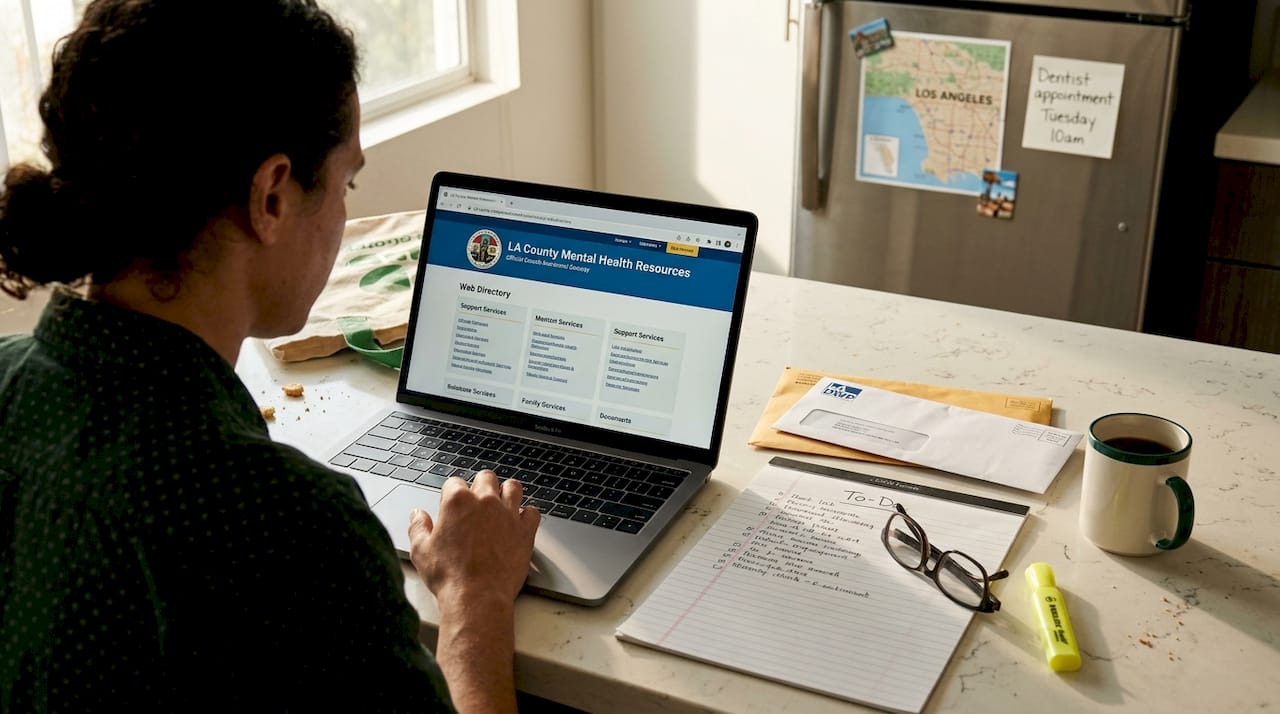
Pro Tip: Keep a printed or saved version of this checklist somewhere easy to find. In a crisis, you won’t want to search for numbers or websites from scratch. Having recovery tips for LA residents bookmarked can also help you stay prepared.
Comparing resource options: Features, costs, and suitability
You may wonder, with so many choices, how to tell what fits best. Different resource types offer unique benefits depending on individual needs, so a side-by-side look helps clarify your options.
| Resource type | Best for | Cost | Accessibility |
|---|---|---|---|
| Crisis hotlines | Immediate danger or distress | Free | 24/7, phone or chat |
| Support groups | Ongoing peer connection | Free | Wide availability, some online |
| Outpatient therapy | Regular mental health support | Varies (insurance, sliding scale) | Moderate wait times |
| Intensive outpatient (IOP) | Step-down from residential care | Insurance often covers | Scheduled sessions |
| Community programs | Cultural or faith-based support | Free to low-cost | Neighborhood-based |
| Digital apps | Between-session support | Free to low monthly fee | Instant, 24/7 |
A few important factors to weigh when comparing:
- Wait times: Community mental health clinics may have longer waits than private providers. If you need immediate help, start with a hotline or urgent care while you wait for an appointment.
- Language access: Many LA County providers offer services in Spanish, Mandarin, Korean, and other languages. Confirm this before scheduling.
- Insurance coverage: Medi-Cal covers many outpatient and residential programs. The SAMHSA National Helpline can help you find covered providers at no cost.
- Geographic limits: Some programs serve specific zip codes or cities. Telehealth removes this barrier for many services.
For those transitioning out of residential treatment, an aftercare support checklist can help you identify which ongoing resources to layer in as you rebuild daily life.
Situational recommendations: Matching resources to your needs
Finally, here’s how to use these resources, no matter your situation. The right resource depends on where you are in your recovery and what challenges you’re currently facing.
| Situation | Recommended resource |
|---|---|
| Immediate crisis | 988 Lifeline, LA County crisis line |
| Ongoing sobriety support | AA, NA, SMART Recovery, outpatient therapy |
| Teen or young adult | NAMI for Teens, school counselors, youth IOP |
| Dual diagnosis | Integrated treatment centers, dual diagnosis specialists |
| Financial barriers | LA County DMH, community clinics, SAMHSA helpline |
Here’s how to move from this table to real action:
- Identify your current situation from the list above.
- Write down two or three resources from the matching column.
- Call or visit each one to ask about availability and eligibility.
- Choose the option that fits your schedule, insurance, and comfort level.
- Schedule your first appointment or attend your first meeting within 48 hours.
Individuals with dual diagnoses require specialized support that addresses both mental illness and substance use at the same time. Treating only one condition often leads to relapse or worsening symptoms in the other. Ask any provider directly whether they offer integrated care.
For teens and young adults, NAMI for Teens offers peer-to-peer programs, educational resources, and guidance for families navigating youth mental health. Pair this with a stable home environment for recovery to reinforce progress made in treatment.
Dual diagnosis recovery tips can also help you understand what integrated treatment looks like in practice and what questions to ask a potential provider.
A practical approach to using your resources checklist
All these resources are a start, but how you use your checklist truly matters. Most people build a list and then forget to revisit it. That’s a missed opportunity.
Recovery is not a fixed destination. Your needs at three months sober are different from your needs at three years. A support group that felt essential early on may become less central as your coping skills for recovery grow stronger. New stressors, life changes, or a return of symptoms may require adding new resources you hadn’t considered before.
The most effective approach we’ve seen is building a small, trusted support circle rather than relying on a single resource or rigid program. Think of it as a team: a therapist, a peer support group, one or two trusted people in your personal life, and a crisis contact for harder days. No single resource can do everything. For a closer look, see how sober living essentials supports long-term recovery.
Here’s the uncomfortable truth most checklists skip: having access to resources is not the same as using them consistently. The gap between knowing a hotline exists and actually calling it when you need it is real. Rehearse that step. Save the number. Tell someone you trust that you have it. If you are weighing your options, our overview of teen mental health programs breaks down what to expect.
Pro Tip: Revisit this checklist every few months. Even small tweaks, like swapping one support group for another or adding a telehealth option, can make a real difference in how supported you feel day to day.
Get expert help building your recovery plan
Ready to take real action? Having a checklist is a strong start, but professional guidance helps you build a recovery plan that actually fits your life. At Glendora Recovery Center, we work with adults and teens across Los Angeles County to create individualized care plans that address both addiction and mental health. Our treatment options include Partial Hospitalization Programs, Intensive Outpatient Programs, telehealth sessions, and aftercare support. We accept most insurance plans and offer flexible scheduling. If you’re ready to move from a checklist to a real plan, speak with our team today for a free consultation.
Frequently asked questions
What are some free mental health resources in Los Angeles?
The LA County Department of Mental Health provides free services across the county, and the 988 Lifeline is available at no cost around the clock. Many community support groups like AA and NA are also free to attend.
How do I find addiction support specific to teens or young adults?
NAMI for Teens offers targeted programs for youth, and local school counselors can connect students to age-appropriate outpatient services. Youth-focused treatment centers in LA County also provide specialized care.
What should I do in a mental health crisis?
Call 988 immediately for national crisis support, or dial the LA County 24-hour line at (800) 854-7771 for local urgent help. Both connect you to trained counselors right away.
How often should I update my resource checklist?
Review your checklist every few months, or sooner if your circumstances change significantly, such as a job loss, relapse, or new diagnosis. Keeping it current ensures it stays useful when you need it most.
Are there resources for people with both mental illness and addiction?
Yes. Dual diagnosis recovery programs treat both conditions simultaneously, which produces better outcomes than addressing each separately. Ask any provider whether they offer integrated care before enrolling.
Recommended
- 7 Essential Recovery Strategies for Adults in Los Angeles | Glendora Recovery Center
- 7 Essential Recovery Support Resources for Los Angeles Residents | Glendora Recovery Center
- 7 Best Practices for Addiction Recovery in Los Angeles County | Glendora Recovery Center
- 7 Effective Ways to Support Recovery in Los Angeles | Glendora Recovery Center