
When your teenager struggles with substance use, the path forward can feel overwhelming. Here’s what many parents don’t realize: substance use disorders are treatable chronic medical conditions from which young people can and do recover. Teen rehab isn’t about punishment or shame. It’s specialized medical care designed to help your child heal, develop healthy coping skills, and build a foundation for lasting recovery. This guide explains what teen rehab involves, the treatment options available in Los Angeles County, and how to choose the right program for your family’s unique situation.
Table of Contents
- Understanding Teen Rehab: What It Is And Why It Matters
- Types Of Teen Rehab Programs And Levels Of Care In Los Angeles County
- Choosing The Right Teen Rehab Facility: Staff, Therapies, And Accreditation
- Supporting Your Teen Through Rehab And Preventing Relapse After Treatment
- Find Expert Teen Rehab Support In Los Angeles
- What Is Teen Rehab? Frequently Asked Questions
Key takeaways
| Point | Details |
|---|---|
| Teen rehab is medical treatment | Specialized programs address substance use disorders as treatable chronic conditions requiring professional intervention. |
| Multiple care levels exist | Options range from 24/7 inpatient care to flexible outpatient programs that allow teens to stay home. |
| Evidence-based therapies work | Effective programs use proven approaches like cognitive behavioral therapy and family counseling. |
| Accreditation matters | Verify staff credentials, facility licensing, and treatment outcome data before choosing a program. |
| Recovery continues after rehab | Ongoing support through outpatient therapy and community resources prevents relapse and supports long-term success. |
Understanding teen rehab: what it is and why it matters
Teen rehab is specialized treatment designed specifically for young people struggling with substance use disorders. Unlike adult programs, teen rehab addresses the unique developmental, emotional, and social needs of adolescents. Substance use disorders are complex, treatable chronic medical conditions that affect brain function and behavior, not character flaws or moral failures.
The primary goals of teen rehab include reducing or eliminating drug and alcohol use, preventing relapse, and helping your teenager return to healthy functioning at home, school, and in relationships. Treatment addresses not just the substance use itself but also underlying mental health issues, family dynamics, and social factors that contribute to addiction.
Many parents hold misconceptions about teen rehab that can delay getting help. Some common myths include:
- Rehab is only for severe cases or “rock bottom” situations
- Sending a teen to treatment means you’ve failed as a parent
- Teens are too young to have real addiction problems
- Treatment will label or stigmatize your child permanently
- One round of rehab should “fix” the problem completely
“Addiction is a treatable disorder. Research on the science of addiction and the treatment of substance use disorders has led to the development of evidence-based interventions that help people stop using drugs and resume productive lives.”
Teen rehab is especially important because adolescent brains are still developing. Substance use during these critical years can interfere with brain maturation, particularly in areas controlling judgment, decision making, and impulse control. Early intervention through teen drug abuse treatment options significantly improves long-term outcomes and reduces the risk of adult addiction.
Pro Tip: Don’t wait for a crisis to seek help. Early intervention when you first notice concerning patterns leads to better outcomes than waiting until substance use escalates to dangerous levels.
Types of teen rehab programs and levels of care in Los Angeles County
Los Angeles County offers multiple levels of care to match your teen’s specific needs and circumstances. Understanding these options helps you make informed decisions about treatment.
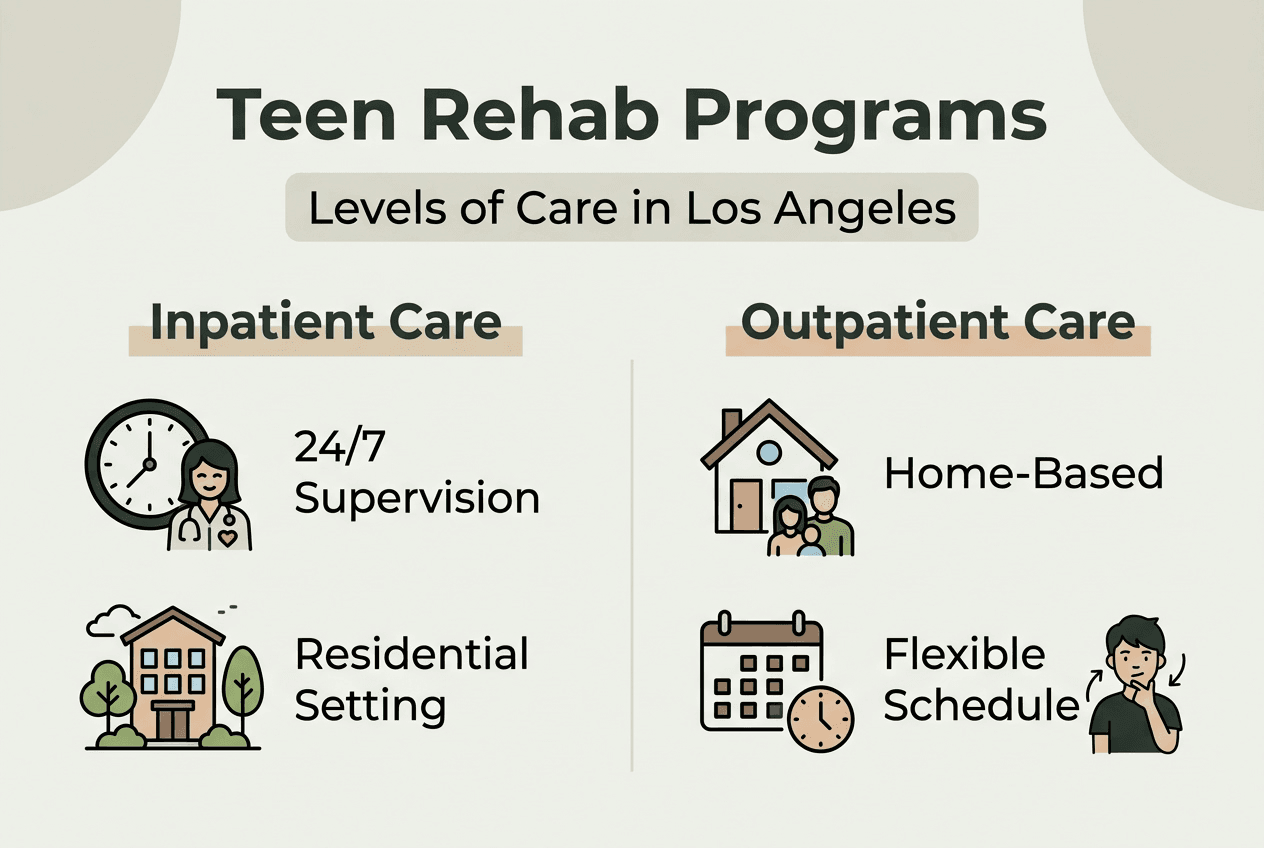
Inpatient or residential rehab provides the highest level of care with 24/7 medical supervision in a structured, substance-free environment. Teens live at the facility for 30 to 90 days or longer, receiving intensive therapy, medical care, and constant support. This option works best for severe addiction, co-occurring mental health disorders, or situations where the home environment contributes to substance use.

Outpatient programs allow teens to live at home while attending treatment sessions several times per week. Standard outpatient care typically involves one to two hours of therapy per session, offering flexibility for school and family commitments. This level suits teens with stable home environments and less severe substance use issues.
Intensive outpatient programs in Los Angeles provide more structured care than standard outpatient treatment, with sessions lasting three to four hours per day, three to five days per week. Teens participate in group therapy, individual counseling, and family sessions while maintaining their daily routines. This option bridges the gap between inpatient care and standard outpatient treatment.
Partial hospitalization programs offer the most intensive outpatient option, with treatment five to seven days per week for four to six hours daily. Teens receive comprehensive medical monitoring and therapeutic support similar to inpatient care but return home each evening. This level works well for teens stepping down from residential treatment or those who need intensive support but have a stable living situation.
| Program Type | Duration | Intensity | Typical Cost Range | Best For |
|---|---|---|---|---|
| Inpatient/Residential | 30-90+ days | 24/7 care | $10,000-$30,000/month | Severe addiction, unsafe home environment, co-occurring disorders |
| Partial Hospitalization | 2-4 weeks | 4-6 hours/day, 5-7 days/week | $5,000-$12,000/month | Step-down from inpatient, need intensive support with stable home |
| Intensive Outpatient | 6-12 weeks | 3-4 hours/day, 3-5 days/week | $3,000-$8,000/month | Moderate addiction, stable support system, school/work commitments |
| Standard Outpatient | 3-6 months | 1-2 hours/session, 1-3 times/week | $1,500-$4,000/month | Mild to moderate use, strong family support, maintenance phase |
Navigating levels of care for youth with substance use disorders requires careful assessment of your teen’s medical needs, substance use severity, mental health status, and home environment. Los Angeles County Department of Mental Health offers assessment services and referrals to appropriate treatment levels based on clinical criteria.
Pro Tip: The right level of care depends on multiple factors beyond just how much your teen uses. Consider mental health symptoms, previous treatment attempts, family dynamics, and your teen’s motivation for change when selecting a program.
Choosing the right teen rehab facility: staff, therapies, and accreditation
Not all teen rehab programs deliver equal quality of care. Evaluating facilities carefully protects your teen and increases the likelihood of successful treatment outcomes.
Staff credentials and training matter enormously. Look for facilities employing licensed therapists, certified addiction counselors, and medical professionals with specific training in adolescent development and substance use disorders. The best programs provide ongoing clinical supervision, continuing education for staff, and maintain low counselor to patient ratios to ensure personalized attention.
Evidence-based therapies form the foundation of effective teen rehab. Quality programs incorporate:
- Cognitive behavioral therapy to identify and change thought patterns driving substance use
- Family therapy addressing communication, boundaries, and family system dynamics
- Motivational interviewing helping teens develop internal motivation for change
- Dialectical behavior therapy teaching emotional regulation and distress tolerance skills
- Group therapy providing peer support and reducing isolation
Accreditation and licensing verify that facilities meet rigorous standards for safety, ethics, and treatment quality. Families should verify accreditation, examine outcome data, assess staff credentials, and evaluate evidence-based therapeutic approaches rather than relying on marketing materials or general reputation. Look for accreditation from The Joint Commission, CARF International, or state licensing boards.
When evaluating facilities, verify these key criteria:
- Current state licensing and accreditation status
- Staff credentials, training, and experience with adolescents
- Specific evidence-based therapies used in treatment
- Medical and psychiatric services availability
- Family involvement requirements and support services
- Treatment outcome statistics and success rates
- Aftercare planning and alumni support programs
- Insurance acceptance and transparent pricing
Los Angeles County maintains standards for substance use treatment providers through the Department of Public Health Substance Abuse Prevention and Control program. Programs receiving county funding must demonstrate staff qualifications, use evidence-based practices, and report treatment outcomes.
Quality facilities should willingly share information about their approach, outcomes, and credentials. Be cautious of programs that pressure quick decisions, make unrealistic promises about cure rates, or cannot provide clear answers about their methods and staff qualifications. This connects closely with flexible rehab scheduling, which covers the topic in more depth.
The benefits of outpatient rehab centers include maintaining family connections and continuing school, but only when the program delivers comprehensive, evidence-based care with qualified professionals.
Pro Tip: Ask facilities about their approach to co-occurring disorders. Most teens in treatment have underlying anxiety, depression, or trauma that requires integrated treatment, not just addiction-focused care. If you are weighing your options, our overview of starting rehab in LA County breaks down what to expect.
Supporting your teen through rehab and preventing relapse after treatment
Your involvement significantly impacts your teen’s treatment success and long-term recovery. Family support creates a foundation for healing and reduces relapse risk.
During treatment, maintain regular communication with your teen’s treatment team, participate in family therapy sessions, and educate yourself about addiction and recovery. Your teen needs to know you support their recovery journey without enabling substance use. This balance requires setting clear boundaries while offering unconditional love and encouragement.
Treatments for substance use disorders can help a person stop or reduce their drug use, help prevent relapse, alleviate negative consequences, and help with successful functioning in daily life. However, recovery extends far beyond the initial treatment period.
To help prevent relapse, take these strategic steps:
- Create a substance-free home environment by removing alcohol and medications that could be misused, and establishing clear household rules about substance use.
- Maintain consistent involvement in aftercare programs including outpatient therapy, support groups, and regular check-ins with treatment providers.
- Help your teen develop healthy routines incorporating exercise, adequate sleep, nutritious meals, and stress management techniques that support recovery.
- Encourage positive peer relationships and activities that don’t involve substance use, while limiting contact with friends who continue using drugs or alcohol.
- Learn to recognize early warning signs of relapse and have a clear action plan for intervention before a full relapse occurs.
Recognize these warning signs that may indicate your teen is struggling:
- Withdrawing from family activities or therapy sessions
- Mood swings, irritability, or return of anxiety and depression symptoms
- Reconnecting with friends who use substances
- Dishonesty about whereabouts or activities
- Abandoning healthy routines or recovery activities
- Romanticizing past drug use or minimizing consequences
Continued outpatient therapy provides ongoing support as your teen navigates triggers, stress, and challenges in daily life. The teen addiction recovery steps include building a recovery support network through community groups, school counselors, and peer support programs.
Los Angeles County Department of Mental Health offers youth and family services including outpatient counseling, case management, and support groups specifically designed for families affected by substance use disorders. These resources complement private treatment and provide additional layers of support.
Research shows that consistent post-rehab care dramatically improves long-term outcomes. Teens who participate in aftercare for at least one year following initial treatment have significantly lower relapse rates and better overall functioning compared to those who discontinue support services early.
Recognizing relapse signs early allows for quick intervention before a brief slip becomes a full relapse. Remember that relapse doesn’t mean treatment failed. It signals a need to adjust the recovery plan and intensify support.
Find expert teen rehab support in Los Angeles
Choosing the right treatment for your teenager requires expert guidance tailored to your family’s unique situation. Glendora Recovery Center provides comprehensive addiction treatment options in Los Angeles specifically designed for teens struggling with substance use and co-occurring mental health conditions.
Our experienced team specializes in evidence-based therapies delivered through flexible intensive outpatient and partial hospitalization programs. We understand that many teens face multiple challenges, which is why we offer integrated care for conditions like addiction and ADHD in a compassionate, judgment-free environment.
Your teen deserves personalized care from professionals who understand adolescent development and family dynamics. Contact Glendora Recovery Center today to discuss your teen’s needs and explore treatment options that fit your family’s schedule and circumstances.
What is teen rehab? Frequently asked questions
How long does teen rehab typically last?
Teen rehab duration varies based on treatment level and individual needs. Inpatient programs typically run 30 to 90 days, while outpatient treatment often continues for three to six months or longer. Research shows that longer treatment duration correlates with better long-term outcomes, so your teen’s treatment team will recommend a timeline based on progress and recovery stability.
Does insurance cover teen rehab in Los Angeles?
Most health insurance plans cover substance use disorder treatment for teens under mental health and addiction benefits. The Mental Health Parity and Addiction Equity Act requires insurers to cover addiction treatment similarly to other medical conditions. Coverage varies by plan, so contact your insurance provider to verify specific benefits, deductibles, and approved facilities before starting treatment.
What signs indicate my teen needs rehab?
Warning signs include dramatic changes in friend groups, declining academic performance, mood swings, secretive behavior, physical symptoms like bloodshot eyes or weight changes, missing money or valuables, loss of interest in previously enjoyed activities, and continued substance use despite negative consequences. If your teen cannot stop using substances on their own or experiences withdrawal symptoms, professional treatment is necessary.
Will my teen’s treatment information remain confidential?
Federal confidentiality laws protect substance use disorder treatment records, even for minors. Facilities cannot share information without written consent except in specific circumstances like immediate danger or court orders. However, as a parent, you’ll typically receive updates about treatment progress and participate in family therapy. Discuss confidentiality policies with the facility to understand how information flows between your teen, treatment providers, and family members.
What if my teen refuses to go to rehab?
Many teens initially resist treatment due to fear, denial, or attachment to substance use. Try open, non-judgmental conversations about your concerns and their wellbeing. Consider involving a professional interventionist or therapist to facilitate discussions. In severe cases where your teen poses danger to themselves or others, you may need to explore legal options like involuntary treatment, though voluntary participation generally produces better outcomes. Focus on expressing love and concern rather than punishment or ultimatums.
Recommended
- Teen Addiction Recovery Steps: A Complete Los Angeles Guide | Glendora Recovery Center
- Adolescent Addiction Treatment and Its Lifelong Impact | Glendora Recovery Center
- Why treat teen addiction: key reasons and recovery benefits | Glendora Recovery Center
- Learn Many Important Benefits of Teen Drug Abuse Treatment