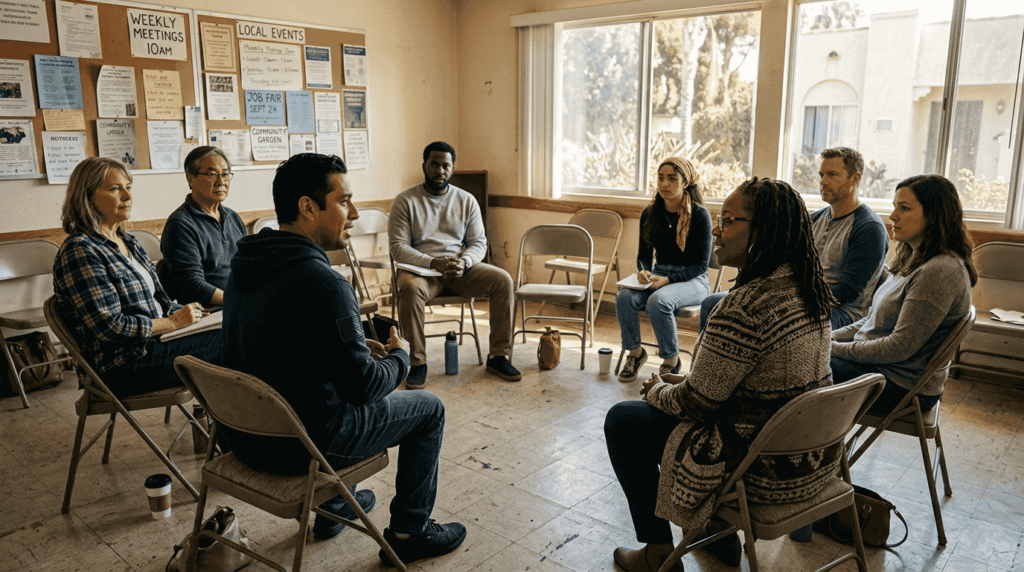
Many people believe rehab consists solely of clinical therapy sessions with licensed counselors and psychiatrists. This misconception overlooks a powerful component of recovery: peer support. Peer support involves individuals with lived experience of substance abuse and mental health challenges helping others navigate similar struggles. In Los Angeles County, peer support specialists play a vital role in connecting people to resources, building community, and sustaining long-term recovery. This guide explains what peer support in rehab entails, its proven benefits, how to access services locally, and best practices for maximizing success in your recovery journey.
Table of Contents
- Understanding Peer Support In Rehab: Definition And Roles
- Core Functions, Methodologies, And Activities Of Peer Support Workers
- Training, Certification, And Accessing Peer Support Services In Los Angeles
- Benefits, Challenges, And Best Practices For Effective Peer Support In Rehab
- Explore Peer Support And Addiction Treatment Options At Glendora Recovery Center
- Frequently Asked Questions About Peer Support In Rehab
Key takeaways
| Point | Details |
|---|---|
| Definition and roles | Peer support involves nonclinical services led by individuals with lived experience who share stories, offer emotional support, and connect others to resources. |
| Core functions | Peer workers perform about 24 different activities including recovery coaching, wellness planning, advocacy, and bridging clinical and social supports. |
| Training and access | California requires 80-hour training and 1500 hours experience for Medi-Cal certification; LA County DMH and NAMI GLAC offer free programs. |
| Proven benefits | Peer support improves treatment engagement and retention, boosts recovery empowerment, and reduces hospitalizations, though evidence on direct substance use reduction is mixed. |
| Challenges and solutions | Common issues include role confusion, burnout, and stigma; best practices involve clear role definitions, peer supervision, and appropriate compensation. |
Understanding peer support in rehab: definition and roles
Peer support in rehab refers to nonclinical recovery support services provided by peer workers with lived experience of substance use disorder and mental health challenges. Unlike clinical therapists who rely on professional training and theoretical frameworks, peer workers draw from personal recovery journeys to help others navigate similar paths. This experiential knowledge creates unique connections that complement traditional clinical care.
Peer workers serve multiple essential functions in rehabilitation settings. They provide emotional support by listening without judgment and validating the struggles others face. They assist with goal-setting by helping individuals identify realistic recovery milestones and celebrate progress. Peer specialists also act as advocates, ensuring voices are heard in treatment planning and connecting people to community resources. Perhaps most importantly, they build recovery communities where individuals feel understood and supported by others who truly get it.
The peer support role in rehab applies across both substance use disorder and mental health recovery settings. Peer workers help bridge the gap between clinical treatment and everyday life challenges. They model successful recovery, demonstrating that long-term wellness is achievable. In Los Angeles County, peer support programs increasingly recognize family members and caregivers as vital peer supporters who bring unique perspectives to the recovery process.
Key roles peer workers fulfill include:
- Sharing personal recovery stories to inspire hope and demonstrate possibility
- Offering practical guidance on navigating treatment systems and community resources
- Providing companionship during challenging moments when isolation threatens progress
- Facilitating peer-led support groups where members connect and learn from each other
- Helping individuals develop self-advocacy skills to communicate needs effectively
Core functions, methodologies, and activities of peer support workers
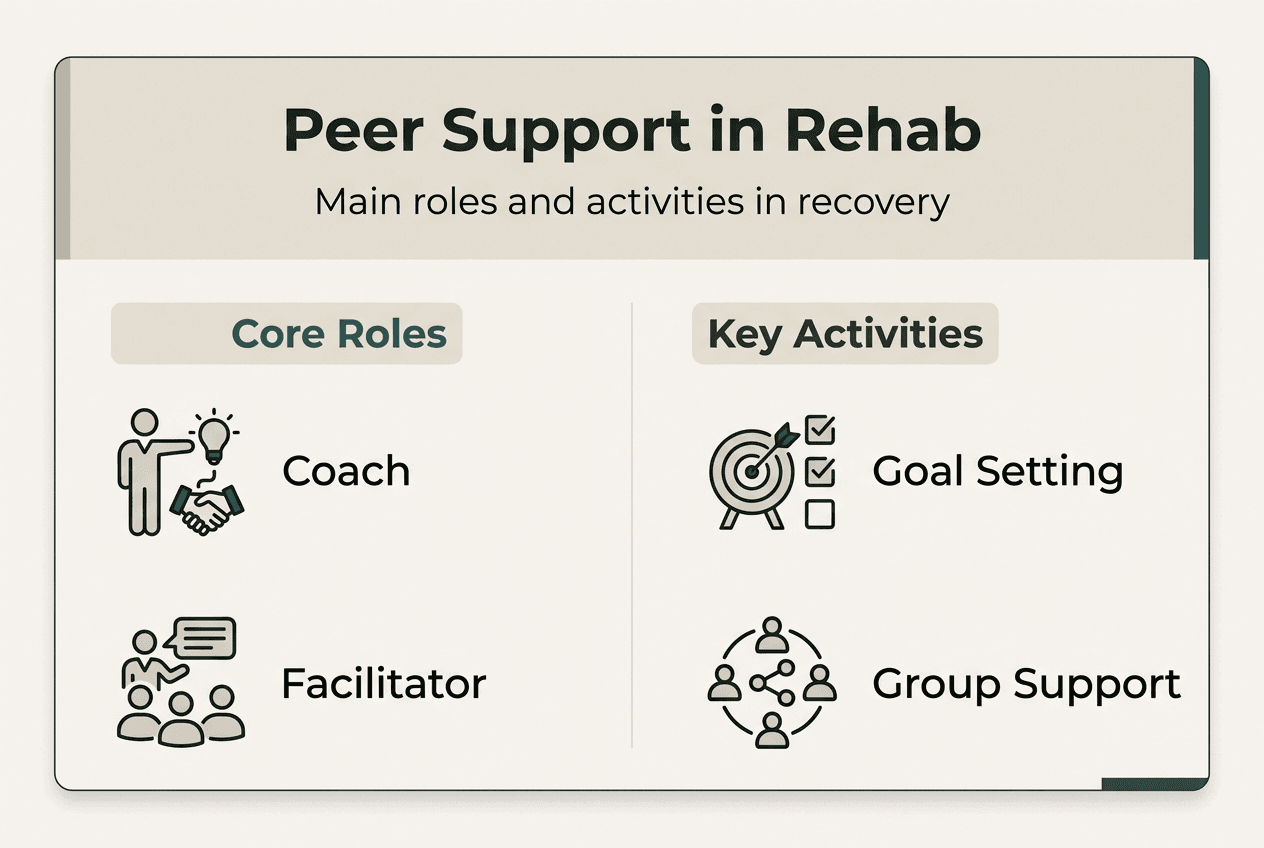
Peer support workers engage in approximately 24 different activities on average, covering emotional, informational, and affiliational support domains. This breadth reflects the multifaceted nature of recovery, which extends far beyond abstinence to encompass housing stability, employment, relationships, and overall wellness. Peer workers use diverse methodologies tailored to individual needs and recovery stages.
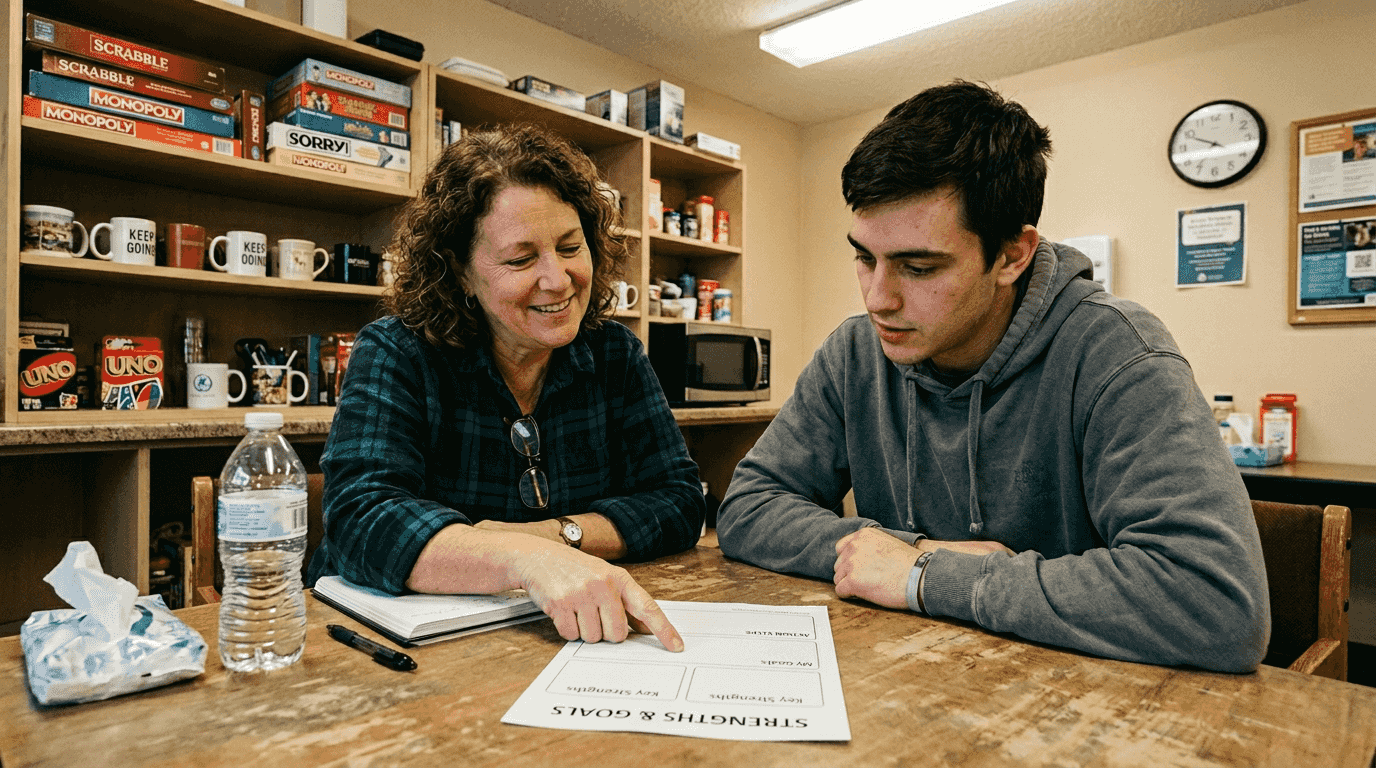
Recovery coaching represents a core peer support function. Coaches work one-on-one with individuals to identify strengths, set achievable goals, and develop action plans. This differs from clinical case management because peer coaches emphasize shared decision-making and draw from personal experience rather than professional protocols. Wellness planning is another key activity where peer workers help individuals create comprehensive plans addressing physical health, mental wellness, social connections, and purpose.
Peer specialists excel at bridging clinical and social supports. They translate complex medical terminology into everyday language, help individuals understand treatment options, and ensure people feel empowered rather than overwhelmed by the healthcare system. This navigation support proves especially valuable in Los Angeles County’s complex network of services spanning county mental health, substance abuse programs, and community organizations.
Community building strengthens long-term engagement and empowerment. Peer workers organize social activities, facilitate support groups, and create spaces where people in recovery connect authentically. These communities combat isolation, which research identifies as a major relapse risk factor. Advocacy work addresses systemic barriers, with peer workers helping individuals secure housing, employment, benefits, and other essential resources.
Pro Tip: Recognize that peer support complements clinical care rather than replacing it. The most effective recovery programs integrate both professional treatment and peer support, leveraging the unique strengths of each approach.
Common peer support activities include:
- One-on-one recovery coaching sessions focused on goal-setting and problem-solving
- Facilitating peer-led support groups in various formats including 12-step and non-12-step
- Accompanying individuals to appointments, court dates, or community resources
- Teaching practical life skills like budgeting, job searching, and conflict resolution
- Providing crisis support during moments of intense craving or emotional distress
| Support Type | Primary Focus | Typical Activities |
|---|---|---|
| Emotional | Validation and encouragement | Active listening, sharing experiences, celebrating milestones |
| Informational | Knowledge and resources | Explaining options, connecting to services, teaching skills |
| Affiliational | Community and belonging | Facilitating groups, organizing events, building networks |
| Instrumental | Practical assistance | Transportation, appointment accompaniment, resource navigation |
These ways to support someone in recovery demonstrate how peer workers address the full spectrum of recovery needs. Effective peer support recognizes that sustained wellness requires addressing social determinants of health alongside clinical treatment. Peer workers help individuals communicate in recovery more effectively with family, employers, and treatment providers. The role of support groups in recovery becomes particularly powerful when facilitated by trained peer specialists who create safe, welcoming environments.
Training, certification, and accessing peer support services in Los Angeles
Becoming a certified peer support specialist requires completing standardized training that covers recovery principles, trauma-informed care, cultural competence, and professional boundaries. In California, peer workers complete an 80-hour core training covering 17 competencies, and Medi-Cal certification requires 1500 hours of experience plus CalMHSA approved programs. This rigorous preparation ensures peer specialists possess both lived experience and professional skills to support others effectively.
Training curriculum typically includes:
- Recovery and wellness concepts including harm reduction and person-centered approaches
- Ethics and boundaries to maintain appropriate professional relationships
- Communication skills for active listening, motivational interviewing, and conflict resolution
- Cultural humility to serve diverse populations respectfully and effectively
- Trauma-informed practices recognizing how past experiences impact current behavior
Certification ensures peer specialists meet standardized competencies and qualify for Medi-Cal reimbursement, making services accessible to low-income individuals. California’s Medi-Cal Peer Support Specialist certification allows peers to bill for services, creating sustainable employment opportunities for people in recovery while expanding access to support. This payment structure recognizes peer support as a legitimate, valuable healthcare service rather than volunteer work.
Accessing peer support in Los Angeles County starts with contacting local resources. LA County DMH and NAMI GLAC offer free certification programs and placement support, helping both aspiring peer workers and individuals seeking services. Family members and caregivers can become certified peer supporters, bringing valuable perspectives to help loved ones navigate recovery challenges.
Steps to access peer support services:
- Contact your insurance provider to verify coverage for peer support services under Medi-Cal or private insurance
- Reach out to LA County Department of Mental Health for referrals to certified peer specialists in your area
- Connect with NAMI Greater Los Angeles County for peer support groups and specialist programs
- Ask your current treatment provider about integrating peer support into your care plan
- Explore community organizations offering peer-led recovery programs and drop-in centers
Pro Tip: Utilize Medi-Cal benefits to receive peer support services at low to no cost in Los Angeles County. Many residents qualify for coverage but remain unaware of available peer support options.
Family members interested in supporting loved ones can pursue certification through local programs. This training equips caregivers with skills to provide effective support while maintaining healthy boundaries. Peer support networks in LA County increasingly recognize family peers as essential team members who understand unique challenges facing those supporting someone in recovery. Learning how to support someone in recovery through formal training prevents common pitfalls like enabling or burnout.
Benefits, challenges, and best practices for effective peer support in rehab
Research demonstrates that peer recovery support services improve treatment engagement and retention, show small improvements in recovery outcomes, and reduce hospitalizations. A 2025 systematic review found peer support increases the likelihood individuals will initiate treatment, remain engaged throughout programs, and continue with aftercare services. These engagement benefits prove crucial because sustained participation in treatment strongly predicts long-term recovery success.
Peer support shows particular strength in improving recovery empowerment and quality of life. Individuals working with peer specialists report greater confidence in managing their recovery, stronger sense of hope, and increased social connectedness. Reduced hospitalization rates translate to significant cost savings for healthcare systems while improving stability for individuals. However, evidence on direct substance use reduction remains mixed, with some studies showing modest improvements while others find no significant difference.
This nuanced picture reflects peer support’s primary mechanism: enhancing engagement and empowerment rather than directly treating addiction or mental illness. Peer workers complement clinical interventions by addressing social and emotional factors that influence recovery success. The combination of professional treatment and peer support typically outperforms either approach alone.
| Outcome Area | Strength of Evidence | Typical Impact |
|---|---|---|
| Treatment engagement | Strong | Significant improvement in initiation and retention |
| Recovery empowerment | Moderate | Small to moderate improvement in confidence and hope |
| Hospitalization reduction | Moderate | Modest decrease in psychiatric admissions |
| Substance use reduction | Mixed | Inconsistent results across studies |
| Quality of life | Moderate | Improvement in social connections and satisfaction |
Despite proven benefits, peer support faces significant workforce challenges including role confusion with clinical staff, burnout, stigma, supervision needs, and high turnover rates. Role confusion emerges when clinical staff misunderstand peer support functions or expect peers to perform clinical tasks outside their scope. This creates tension and undermines the unique value peers bring through lived experience rather than professional credentials.
Burnout affects peer workers at high rates due to emotional strain from supporting others while managing their own recovery. Hearing difficult stories, witnessing relapses, and navigating system barriers takes a toll. Without adequate supervision and self-care support, peer workers risk compromising their own wellness. Stigma persists even within treatment settings, where some clinical staff question whether people in recovery can effectively support others or maintain professional boundaries.
Best practices for effective peer support include:
- Establishing clear role definitions that distinguish peer support from clinical services
- Providing regular peer-to-peer supervision where experienced peers support newer specialists
- Offering competitive compensation recognizing peer work as skilled professional labor
- Tailoring support to individual recovery paths rather than applying one-size-fits-all approaches
- Creating organizational cultures that value lived experience as expertise
Pro Tip: Organizations employing peer specialists should monitor staff well-being through regular check-ins, manageable caseloads, and access to their own support resources. Sustaining peer worker wellness directly impacts service quality and reduces costly turnover.
“Peer support works best when integrated thoughtfully into comprehensive treatment programs. Organizations must invest in training, supervision, and fair compensation to build sustainable peer workforces that truly serve communities.”
The peer support benefits and challenges require ongoing attention as programs expand. Learning from addiction aftercare benefits research, we know sustained support matters more than intensive short-term interventions. Peer support excels at providing this ongoing connection that bridges formal treatment and independent living. For deeper exploration of peer support models and implementation, the peer recovery support overview offers comprehensive guidance for individuals, families, and providers.
Explore peer support and addiction treatment options at Glendora Recovery Center
Glendora Recovery Center integrates peer support specialists into comprehensive addiction treatment programs serving Los Angeles County residents. Our evidence-based approach combines clinical expertise with peer support to boost engagement and recovery outcomes. We recognize that successful treatment addresses the whole person, not just symptoms, which is why our programs include peer-led groups, recovery coaching, and community building alongside professional therapy.
Our addiction treatment options in 2026 reflect current best practices integrating peer support throughout care continuum. From partial hospitalization to intensive outpatient programs and aftercare, peer specialists work alongside clinical staff to ensure you feel supported at every stage. We offer flexible scheduling including morning, evening, weekend, and telehealth sessions to accommodate your life while prioritizing recovery.
Contact Glendora Recovery Center to learn how our substance abuse support workflow incorporates peer support to create personalized recovery paths. Our compassionate team serves adults and teens struggling with substance abuse and co-occurring disorders throughout Los Angeles County. Take the next step toward lasting wellness by exploring treatment options that recognize your unique needs and strengths.
Frequently asked questions about peer support in rehab
What qualifications do peer supporters have?
Certified peer support specialists complete 80 hours of training covering recovery principles, ethics, communication skills, and cultural competence. In California, Medi-Cal certification requires 1500 hours of lived experience plus completion of CalMHSA approved programs. All peer workers must have personal recovery experience from substance use or mental health challenges.
How is peer support different from therapy?
Peer support is nonclinical and based on shared lived experience rather than professional credentials. Therapists diagnose conditions, develop treatment plans, and use clinical interventions, while peer workers offer emotional support, share personal stories, and help navigate resources. Peer support complements therapy by addressing social and practical recovery aspects.
Can family members act as peer supporters?
Yes, family members and caregivers can become certified peer supporters through specialized training programs. Family peer specialists bring unique perspectives on supporting loved ones through recovery challenges. LA County DMH and NAMI GLAC offer certification programs specifically designed for family members wanting to help others in similar situations.
How do I find peer support services in LA?
Contact LA County Department of Mental Health for referrals to certified peer specialists in your area. NAMI Greater Los Angeles County offers peer support groups and specialist programs. Check with your insurance provider about coverage for peer support services under Medi-Cal or private plans. Many treatment centers, including Glendora Recovery Center, integrate peer support into their programs.
What types of peer support activities are common in rehab?
Common activities include one-on-one recovery coaching, facilitating peer-led support groups, accompanying individuals to appointments, teaching practical life skills, providing crisis support, and connecting people to community resources. Peer workers help with goal-setting, wellness planning, and navigating treatment systems. Activities focus on emotional support, practical assistance, and building recovery communities.
Does peer support really improve recovery outcomes?
Research shows peer support significantly improves treatment engagement and retention, with modest improvements in recovery empowerment and reduced hospitalizations. Evidence on direct substance use reduction is mixed, but the combination of clinical treatment plus peer support typically outperforms either approach alone. Peer support works best when integrated into comprehensive treatment programs rather than used as a standalone intervention.
Recommended
- Peer Support in Rehab: Building Lasting Recovery Networks | Glendora Recovery Center
- Aftercare support checklist for lasting sobriety 2026 | Glendora Recovery Center
- 7 Effective Ways to Support Recovery in Los Angeles | Glendora Recovery Center
- 7 Essential Recovery Support Resources for Los Angeles Residents | Glendora Recovery Center