
TL;DR:
- Recognizing early signs of mental health or substance use issues can prevent crises.
- Being prepared with personal information speeds up access to appropriate treatment.
- Multiple treatment levels and support options are available in Los Angeles for co-occurring disorders.
Finding mental health support in Los Angeles can feel paralyzing, especially when addiction or co-occurring disorders are part of the picture. You may not know where to start, who to call, or whether the system will even work for you. That uncertainty is real, and you are not alone in feeling it. This guide cuts through the confusion by giving you a clear, step-by-step roadmap. Whether you are seeking help for yourself or someone you love, you will learn how to recognize the signs that action is needed, gather what you need before reaching out, understand your treatment options, and connect with the right providers without wasting time.
Table of Contents
- Recognizing when you need mental health help
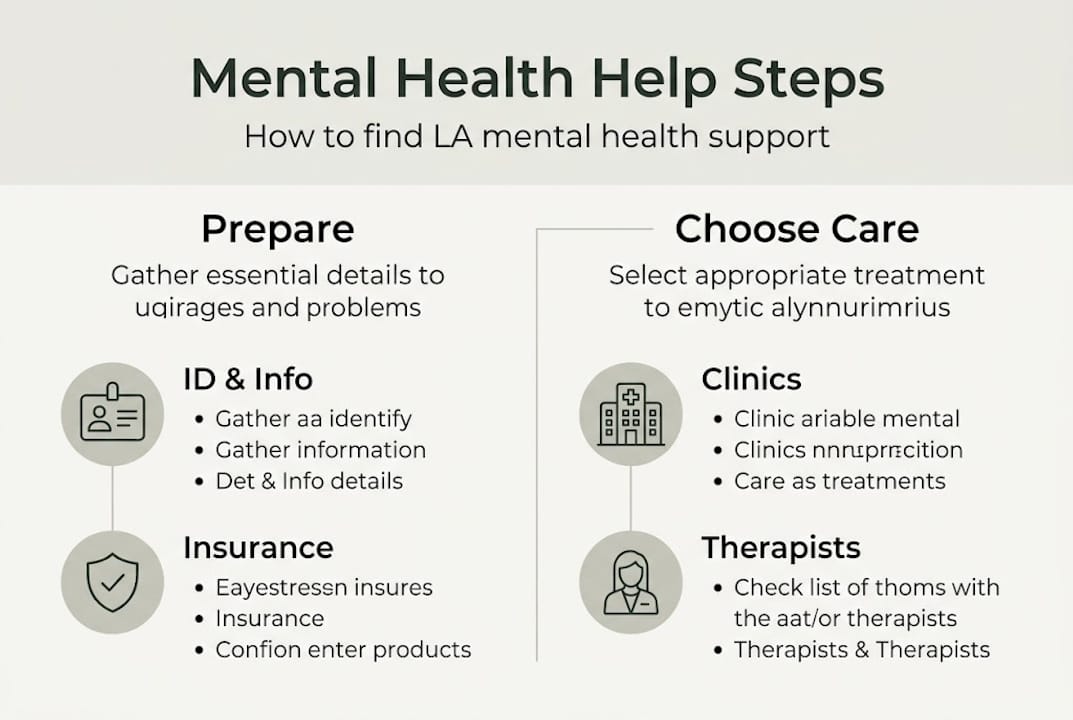
- Gathering information: What you’ll need before reaching out
- Exploring your options: Types of mental health and addiction support
- Taking action: Connecting with the right providers and programs
- A fresh approach to seeking mental health help in Los Angeles
- Get expert help tailored for Los Angeles
- Frequently asked questions
Key Takeaways
| Point | Details |
|---|---|
| Know when to seek help | Understanding early warning signs makes it easier to find support before a crisis emerges. |
| Prepare essential information | Gather important details and documents ahead of time for a smoother search. |
| Compare your options | Review levels of care and treatment settings to match your unique needs. |
| Take action confidently | Contact providers with clear questions to access the right support quickly. |
Recognizing when you need mental health help
Knowing when to ask for help is often the hardest part. Many people wait until things reach a breaking point before they reach out, but early action almost always leads to better outcomes. Understanding the warning signs can help you act before a situation becomes a crisis.
Here are common signs that you or someone you care about may need professional mental health support:
- Persistent sadness, anxiety, or mood swings that interfere with daily life
- Drastic changes in sleep, appetite, or energy levels
- Withdrawing from friends, family, or activities you once enjoyed
- Using alcohol or drugs to cope with stress, pain, or difficult emotions
- Difficulty functioning at work, school, or in relationships
- Thoughts of self-harm or harming others
These signs become especially important when substance use is involved. Co-occurring disorders, meaning the presence of both a mental health condition and a substance use disorder (SUD) at the same time, create a cycle that is difficult to break without professional support. A person struggling with depression may use alcohol to feel better, which worsens the depression, which leads to more drinking. This negative feedback loop is common and treatable, but it requires care that addresses both issues at once.
The scale of this challenge is significant. 21.2 million US adults experience both mental illness and a substance use disorder, according to SAMHSA’s 2024 National Survey on Drug Use and Health. People living with mental illness are also at a significantly higher risk for developing SUD. Recognizing the warning signs of substance abuse early gives you a meaningful head start on recovery.
Pro Tip: Do not wait for a full crisis before seeking help. Early intervention can prevent a manageable situation from becoming a medical emergency. If you notice two or more of the signs listed above persisting for more than two weeks, that is a strong signal to reach out to a professional.
Once you understand the urgency, the next step is preparing for the process.
Gathering information: What you’ll need before reaching out
Preparing before you make your first call can save you time and reduce stress significantly. Mental health and addiction providers will ask for specific information during intake, and having it ready helps you move through the process faster.
Here is what to gather before contacting a provider:
- A valid government-issued photo ID
- Your health insurance card, including Medi-Cal if applicable
- A brief summary of your current symptoms and how long they have been present
- Any previous treatment records, including hospitalizations or outpatient programs
- A list of current medications and dosages
- Emergency contact information
| Essential info | Why it’s needed | How to get it |
|---|---|---|
| Photo ID | Verifies identity for intake | DMV, passport office |
| Insurance card | Confirms coverage and billing | Insurance provider or Medi-Cal office |
| Medical history | Guides treatment planning | Primary care doctor or past providers |
| Symptom summary | Speeds up assessment | Write it yourself in a journal |
| Medication list | Prevents drug interactions | Pharmacy records or prescribing doctor |
| Previous treatment records | Avoids duplicating care | Past treatment centers or hospitals |
One important financial note: Medi-Cal covers most mental health and addiction services in California, making care financially accessible even if you do not have private insurance. If you are unsure whether you qualify, you can apply online through the Covered California portal or visit your local county social services office.
Understanding outpatient mental health basics can also help you figure out which level of care fits your situation before you make that first call. Knowing the benefits of outpatient services ahead of time helps you ask better questions and advocate for yourself.
Pro Tip: Start a private journal where you write down your symptoms, triggers, and concerns before your first appointment. Even a few bullet points per day helps providers understand your experience quickly and accurately, which leads to faster, more personalized care.
With everything in hand, you can confidently start the search for the right types of help.
Exploring your options: Types of mental health and addiction support
Los Angeles County offers a wide range of mental health and addiction treatment settings. Knowing the difference between them helps you choose the right level of care from the start.

| Treatment type | What it involves | Best for |
|---|---|---|
| Outpatient therapy | Weekly or biweekly sessions with a therapist or counselor | Mild to moderate symptoms, stable living situation |
| Intensive Outpatient Program (IOP) | Multiple sessions per week, group and individual therapy | Moderate symptoms, needs structure but not 24-hour care |
| Partial Hospitalization Program (PHP) | Full days of treatment, 5 days a week | Severe symptoms, stepping down from inpatient care |
| Inpatient or residential | 24-hour supervised care in a facility | Acute crisis, detox needs, high safety risk |
| Integrated dual-diagnosis treatment | Simultaneous care for mental health and addiction | Co-occurring disorders |
Choosing the right setting depends on a few key factors:
- Intensity of symptoms: More severe symptoms require more structured care
- Risk of harm: Thoughts of self-harm or danger to others often require inpatient care
- Support at home: A stable, sober home environment can make outpatient care viable
- Insurance coverage: Some plans have specific requirements for each level of care
“Co-occurring disorders require simultaneous treatment of both mental health and substance use issues for the best outcomes.” — SAMHSA
This is why integrated treatment matters so much. Treating only the addiction without addressing the underlying mental health condition often leads to relapse. Treating only the mental health condition while ignoring substance use leaves a major gap. Learning how to approach managing dual diagnosis recovery gives you a stronger foundation for lasting change.
Here are the first actions to take for each option:
- Outpatient therapy: Search your insurance directory or call 211 for community referrals
- IOP or PHP: Contact a recovery center directly and ask about their intake process
- Inpatient care: Call a crisis line (988 Suicide and Crisis Lifeline) or go to your nearest emergency room
- Dual-diagnosis programs: Look for centers offering dual diagnosis treatment that address both conditions at once
- General mental health treatment: Explore mental health treatment pathways to find the right fit
Next, it is time to take your first practical steps toward getting care.
Taking action: Connecting with the right providers and programs
Knowing your options is one thing. Making that first call is another. This section walks you through exactly what to do and what to say when you reach out.
Start with these contacts depending on your situation:
- 988 Suicide and Crisis Lifeline: Call or text 988 for immediate mental health crises
- SAMHSA National Helpline: 1-800-662-4357, free and confidential, 24 hours a day
- Los Angeles County Department of Mental Health: 1-800-854-7771 for local referrals
- Community mental health clinics: Many offer sliding-scale fees and same-week appointments
- Specialized recovery centers: Offer integrated care for addiction and mental health together
When you call a provider, ask these specific questions:
- What does the intake process look like and how long does it take?
- How long is the typical wait time for a first appointment?
- Do you accept my insurance or Medi-Cal?
- Do you offer dual-diagnosis treatment?
- Are telehealth or evening appointments available?
Understanding the substance use assessment process before your first appointment helps reduce anxiety and sets realistic expectations for what happens next.
“Voluntary enrollment is the norm in most programs. Assisted Outpatient Treatment (AOT) is an option when someone poses a safety risk and refuses help.” — SAMHSA
If you are supporting a loved one, the dynamic is different. You cannot force someone into treatment in most situations, but you can encourage, prepare, and stay informed.
Pro Tip: If you are helping a family member or friend, know your own limits. Attend a support group like Al-Anon or Nar-Anon to get guidance and community while your loved one moves at their own pace. Your wellbeing matters too.
After contacting a provider or program, here is how to ensure your journey to help stays on track.
A fresh approach to seeking mental health help in Los Angeles
Conventional wisdom says the mental health system in Los Angeles is a maze, and for many people, that belief becomes a barrier before they even try. But here is what we have seen repeatedly in the recovery community: people who come in with even a basic plan, a list of questions, a document with their history, and a clear sense of what they need, move through the system significantly faster than those who arrive unprepared and overwhelmed.
Integrated treatment centers and community organizations are actively closing the gaps that once made dual-diagnosis care so difficult to access. New pathways exist today that did not exist five years ago, including telehealth options, evening IOPs, and peer support specialists who guide you through the process in real time.
Advocacy makes a difference too. Asking direct questions, following up on referrals, and pushing for integrated care rather than accepting fragmented services can change your outcome. Exploring the outpatient benefits available to you is a strong first step. Progress, even a single phone call, moves you out of crisis and into recovery.
Get expert help tailored for Los Angeles
At Glendora Recovery Center, we offer evidence-based mental health, addiction, and dual-diagnosis programs designed specifically for adults and teens in Los Angeles County. Whether you are just beginning to explore your options or need intensive support right away, our team meets you where you are. We provide multiple levels of care, including Partial Hospitalization Programs, Intensive Outpatient Programs, and telehealth sessions with flexible morning, evening, and weekend scheduling. Explore our full treatment options or learn about our specialized addiction and ADHD support programs. Contact us today to speak with a specialist who can guide you toward the right level of care.
Frequently asked questions
What is a co-occurring disorder?
A co-occurring disorder is when a person has both a mental health condition and a substance use disorder at the same time. 21.2 million US adults are currently living with this combination, making it more common than many people realize.
Does Medi-Cal insurance cover addiction and mental health treatment?
Yes, Medi-Cal covers most mental health and addiction services in California, making treatment financially accessible for many Los Angeles residents who might otherwise go without care.
Can someone be forced into treatment if they refuse help?
Most treatment is voluntary enrollment, but if safety is an urgent concern, court-ordered programs like Assisted Outpatient Treatment (AOT) may apply when someone refuses help and poses a risk to themselves or others.
Where do I start if someone I care about needs urgent help?
Contact a local crisis hotline such as 988, a recovery center, or a community mental health clinic to quickly connect with the right resources for your loved one’s situation.
Recommended
- 7 Essential Mental Health Recovery Tips for Los Angeles | Glendora Recovery Center
- Mental health resources checklist for recovery in LA | Glendora Recovery Center
- How to Find Local Addiction Help in Los Angeles Fast | Glendora Recovery Center
- 7 Essential Recovery Strategies for Adults in Los Angeles | Glendora Recovery Center