
More than 20 million American adults experience addiction each year, yet many delay seeking help due to misunderstandings about substance use assessment. Whether you are in Los Angeles County struggling with alcohol or drugs yourself, or concerned about a loved one, knowing what a professional evaluation truly involves can make all the difference. Discover how substance use assessments offer clarity and a path forward, guiding families and individuals toward the right treatment options and lasting recovery.
Table of Contents
- Defining Substance Use Assessment And Its Purpose
- Core Components And Screening Tools Explained
- Different Types Of Assessments For Substance Use
- Legal, Safety, And Confidentiality Factors
- Common Challenges And Misconceptions
- How Assessment Informs Individualized Treatment
Key Takeaways
| Point | Details |
|---|---|
| Understanding Substance Use Assessment | A substance use assessment is essential to evaluate an individual’s relationship with addictive substances, guiding personalized treatment strategies. |
| Core Components of Assessments | Comprehensive evaluations include personal history, psychological factors, and medical screenings, tailored to identify specific addiction risks. |
| Importance of Confidentiality | Maintaining strict confidentiality is critical for protecting individuals during the assessment process and ensuring honest communication. |
| Challenging Misconceptions | Common misconceptions about substance use assessments can deter individuals from seeking help; promoting understanding of the process is vital for effective evaluation. |
Defining Substance Use Assessment and Its Purpose
A substance use assessment is a professional evaluation designed to understand an individual’s relationship with alcohol, drugs, and other addictive substances. This comprehensive process goes far beyond a simple questionnaire, serving as a critical first step in identifying potential substance use disorders and creating personalized treatment pathways.
The primary goal of a substance use assessment is to gather comprehensive information about an individual’s substance use. Healthcare professionals use standardized screening tools to objectively evaluate patterns of substance consumption, underlying psychological factors, and potential co-occurring mental health conditions. These assessments help clinicians determine the severity of substance use, potential risks, and appropriate intervention strategies.
Typically, a substance use assessment involves multiple components, including:
- Detailed personal and medical history review
- Psychological evaluation
- Family and social background examination
- Physical health screening
- Analysis of past treatment experiences
By utilizing validated screening tools suitable for various age groups, healthcare providers can develop a nuanced understanding of an individual’s substance use challenges. This approach allows for early detection, targeted prevention efforts, and customized treatment recommendations that address both substance use disorders and potential underlying mental health concerns.
Pro tip: When preparing for a substance use assessment, be honest and open with your healthcare provider, as this transparency directly impacts the quality of your personalized treatment plan.
Core Components and Screening Tools Explained
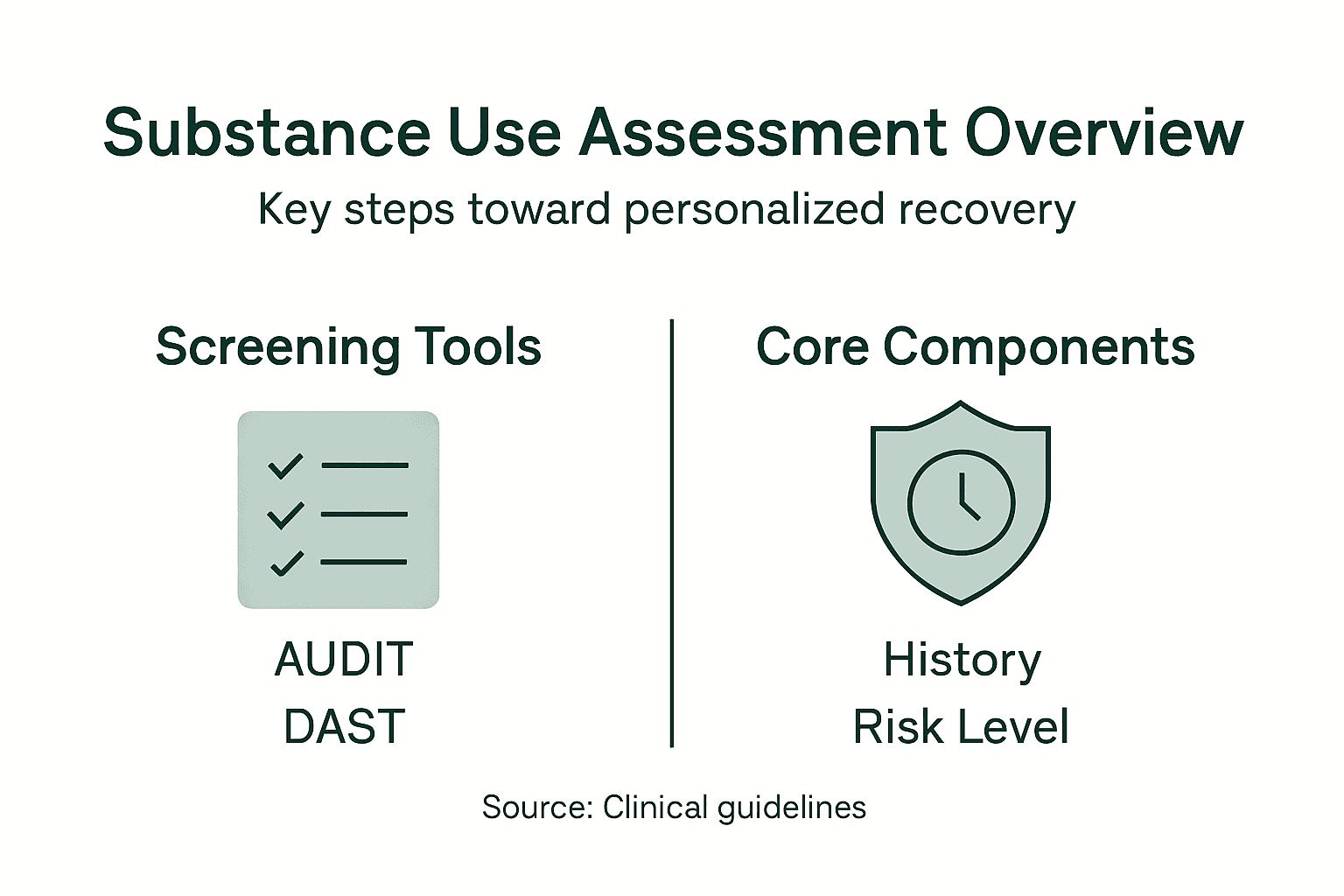
Substance use screening represents a systematic approach to identifying potential addiction risks through comprehensive evaluation methods. These specialized tools help healthcare professionals rapidly assess an individual’s substance consumption patterns, risk levels, and potential intervention needs.
The Screening, Brief Intervention, and Referral to Treatment (SBIRT) methodology provides a standardized framework for substance use assessment. This approach involves three critical stages:
- Universal screening to detect substance use patterns
- Brief intervention strategies for individuals showing moderate risk
- Referral to specialized treatment for those with significant substance use disorders
Multiple screening tools are utilized to ensure accurate and nuanced assessment, including:
- Tobacco, Alcohol, Prescription medication, and other Substance Use (TAPS) Tool
- Alcohol Use Disorders Identification Test (AUDIT)
- Drug Abuse Screening Test (DAST)
- Patient Health Questionnaire (PHQ)
Validated screening tools help clinicians identify substance use risks across different populations, including adolescents, pregnant women, and older adults. These instruments are designed to provide objective measurements of substance consumption, potential dependency, and associated psychological factors.

Here’s how major substance use screening tools compare:
| Screening Tool | Main Focus | Typical Setting | Population Targeted |
|---|---|---|---|
| AUDIT | Alcohol use risk | Primary care, hospitals | Adults, older teens |
| DAST | Drug misuse identification | Clinics, mental health | Adults, adolescents |
| TAPS | Tobacco and prescription misuse with substances | Primary care, wide use | Adolescents, adults |
| PHQ | Mental health and substance co-occurrence | Medical offices | Adults, general population |
Pro tip: Request a copy of your screening results and discuss them thoroughly with your healthcare provider to understand the full context of the assessment.
Different Types of Assessments for Substance Use
Substance use assessments encompass a range of evaluation methods designed to identify and understand an individual’s relationship with addictive substances. Different screening approaches help determine substance use risks across various healthcare and legal settings, each tailored to specific contexts and patient needs.
The primary types of substance use assessments include:
- Brief Screening: Quick questionnaires taking 5-10 minutes
- Comprehensive Clinical Interviews: Detailed evaluations lasting 60-90 minutes
- Standardized Questionnaires: Structured assessments with validated scoring systems
- Diagnostic Evaluations: In-depth assessments conducted by mental health professionals
Comprehensive assessment tools vary based on context and population served. Criminal justice settings might utilize different screening approaches compared to healthcare facilities, with each method designed to provide targeted insights into substance use patterns, severity, and potential intervention needs.
These assessments typically explore multiple dimensions of substance use, including:
Key differences among substance use assessment types:
| Assessment Type | Duration | Depth of Evaluation | Common Use Case |
|---|---|---|---|
| Brief Screening | 5-10 minutes | Surface-level, rapid check | Initial identification |
| Standardized Questionnaire | 15-30 minutes | Structured, risk categorization | Medical, legal intake |
| Clinical Interview | 60-90 minutes | Comprehensive, in-depth | Diagnostic, treatment planning |
| Diagnostic Evaluation | Varies | Psychiatric and physical diagnosis | Complex cases, dual diagnoses |
- Frequency and quantity of substance consumption
- Duration of substance use
- Impact on personal and professional life
- Psychological and physical dependency indicators
- Co-occurring mental health conditions
- Previous treatment history
Pro tip: Be completely honest during your substance use assessment, as accurate information is crucial for developing an effective, personalized treatment plan.
Legal, Safety, and Confidentiality Factors
Confidentiality forms the cornerstone of substance use assessments, protecting individuals from potential discrimination and ensuring their personal information remains secure. Legal protocols govern how assessment information can be shared across different professional and institutional settings, balancing individual privacy with necessary treatment coordination.
Key legal and safety considerations in substance use assessments include:
- Strict patient privacy regulations
- Mandated reporting requirements
- Consent protocols for information sharing
- Protection against potential stigmatization
- Compliance with healthcare privacy laws
- Specialized guidelines for sensitive populations
Confidentiality requirements are particularly critical in child welfare contexts, where assessors must carefully navigate reporting obligations while maintaining trust and safety. Professionals are required to recognize potential signs of abuse or neglect while simultaneously protecting the individual’s right to privacy and confidential treatment.
Assessment professionals must adhere to complex legal frameworks that include:
- Health Insurance Portability and Accountability Act (HIPAA) regulations
- State-specific confidentiality laws
- Professional ethical guidelines
- Specific reporting requirements for high-risk situations
- Consent and information sharing protocols
Pro tip: Ask your healthcare provider about their specific confidentiality policies and understand exactly how your personal information will be protected during the substance use assessment.
Common Challenges and Misconceptions
Substance use assessments encounter numerous barriers that can compromise their effectiveness and accuracy. Misconceptions about screening often prevent individuals from seeking help and understanding the true nature of evaluation processes.
Common misconceptions about substance use assessments include:
- Believing only severe substance use requires professional evaluation
- Thinking assessments are punitive or judgmental
- Assuming mild substance use has no significant consequences
- Feeling the assessment process invades personal privacy
- Believing addiction is a choice rather than a complex health condition
Stigma and developmental differences significantly impact assessment accuracy, particularly among adolescents and young adults. Individuals often underreport substance use due to fear of judgment, legal consequences, or potential social repercussions. Healthcare professionals must create supportive, non-threatening environments that encourage honest communication and reduce barriers to effective assessment.
Key challenges in substance use assessment include:
- Cultural and linguistic barriers
- Individual variations in substance use patterns
- Complexity of co-occurring mental health conditions
- Limited access to comprehensive screening tools
- Resistance to acknowledging potential substance use problems
Pro tip: Approach your substance use assessment with openness and honesty, understanding that professionals are there to support your health and well-being, not to judge or punish you.
How Assessment Informs Individualized Treatment
Substance use assessments are the critical foundation for developing personalized treatment strategies that address each individual’s unique challenges. Assessment tools help identify precise intervention needs by providing comprehensive insights into an individual’s substance use patterns, psychological factors, and personal circumstances.
The assessment process generates a detailed profile that informs treatment planning through several key dimensions:
- Severity of substance use
- Frequency and quantity of consumption
- Underlying psychological triggers
- Co-occurring mental health conditions
- Social and environmental factors
- Personal motivation and readiness for change
Comprehensive assessment results support targeted treatment planning by revealing nuanced information about an individual’s substance use history. Healthcare providers can then design interventions that address specific needs, whether that means intensive outpatient programs, individual counseling, group therapy, or specialized support for concurrent mental health challenges.
The individualized treatment planning process typically involves:
- Matching intervention intensity to assessment findings
- Developing personalized recovery goals
- Creating flexible treatment approaches
- Establishing measurable progress benchmarks
- Integrating family and social support systems
Pro tip: Ask your healthcare provider to walk you through how your specific assessment results will shape your personalized treatment plan, ensuring you understand each recommended intervention.
Take the Essential Step Toward Personalized Recovery Today
Understanding your unique substance use patterns through a comprehensive substance use assessment is critical to creating an effective treatment plan that meets your needs. This article highlights how honesty and detailed evaluation help uncover both addiction challenges and co-occurring mental health conditions to design individualized recovery strategies. At Glendora Recovery Center, we specialize in providing tailored care that addresses these exact complexities.
If you are ready to move beyond stigma and barriers that hold you back from getting help, our experienced team offers supportive and compassionate services including Partial Hospitalization Programs and Intensive Outpatient Programs. We work closely with you to transform your assessment insights into a clear path toward healing. Don’t wait to take control of your health and well-being. Connect with us now to begin your journey with a trusted partner who understands the importance of your personal story and screening results. Reach out through our contact page to schedule an assessment or learn more about how Glendora Recovery Center can support your recovery goals.
Frequently Asked Questions
What is a substance use assessment?
A substance use assessment is a professional evaluation designed to understand an individual’s relationship with alcohol, drugs, and addictive substances. It involves comprehensive information gathering to identify potential substance use disorders and create personalized treatment pathways.
Why is a substance use assessment important for recovery?
A substance use assessment is crucial for recovery as it helps healthcare professionals to determine the severity of substance use, identify underlying psychological factors, and develop tailored intervention strategies that address both substance use and mental health concerns.
What types of screening tools are used in substance use assessments?
Various screening tools are used, including the Alcohol Use Disorders Identification Test (AUDIT), Drug Abuse Screening Test (DAST), Tobacco, Alcohol, Prescription medication, and other Substance Use (TAPS) Tool, and Patient Health Questionnaire (PHQ). These tools help clinicians objectively evaluate substance consumption patterns and related issues.
How does a substance use assessment inform treatment planning?
The assessment provides insights into the severity of substance use, frequency and quantity of consumption, psychological triggers, and co-occurring mental health conditions. This information aids healthcare providers in designing personalized treatment strategies that effectively address the individual’s unique challenges.