
TL;DR:
- Only 19.3% of adults with substance use disorder receive professional treatment.
- Integrated care addresses dual diagnoses effectively, improving mental health and reducing relapse.
- Self-help is helpful for mild cases but insufficient for severe or co-occurring mental health conditions.
Less than one in five Americans who need help for a substance use disorder (SUD) actually receive it. According to SAMHSA’s 2024 survey, only 19.3% of adults with SUD received any form of treatment that year. That means millions of people are trying to manage addiction and co-occurring mental health challenges largely on their own. Self-help strategies have genuine value, but they are rarely enough when conditions are severe or complex. This article explores why professional treatment works, how integrated care addresses dual diagnoses, where self-help falls short, and how to overcome the barriers that keep people from getting the support they deserve.
Table of Contents
- The real impact of professional treatment
- Self-help vs. professional care: What’s the difference?
- Why integrated care matters: Addressing dual diagnoses
- Barriers to treatment and how to overcome them
- Why lasting recovery starts with professional support: A fresh perspective
- Finding the right support: Next steps
- Frequently asked questions
Key Takeaways
| Point | Details |
|---|---|
| Treatment gap is real | Most people needing substance use help never get professional care—especially critical in LA County. |
| Professional care tackles complexity | Integrated and medical treatment is essential for severe or co-occurring substance and mental health issues. |
| Self-help has limits | While helpful for some, self-help rarely replaces the comprehensive approach needed for lasting recovery. |
| Barriers can be overcome | Awareness and small steps, like confidential screening or support lines, address stigma, cost, and recognition hurdles. |
| Recovery is a journey | Starting with professional support increases the chance of long-term wellness and life improvement. |
The real impact of professional treatment
Professional treatment is not a single service. It is a coordinated set of interventions designed around each person’s specific needs. It can include individual and group therapy, medication-assisted treatment (MAT), behavioral health counseling, psychiatric evaluation, and carefully structured aftercare planning. Unlike general wellness resources or peer support alone, comprehensive addiction treatment brings together licensed clinicians, medical staff, and behavioral specialists who work as a team to guide recovery.
Research consistently shows that people who enter professional care tend to have more severe SUD symptoms and greater mental health needs. That correlation is important to understand correctly. It does not mean professional treatment is only for the worst cases. It means that professional treatment use is associated with higher symptom severity and increased mental health treatment receipt, confirming that professional care fills a gap that nothing else adequately covers for complex presentations.
In Los Angeles County, this gap is especially significant. The region has some of the highest rates of co-occurring disorders in the state, meaning many residents are managing both addiction and conditions like depression, anxiety, PTSD, or bipolar disorder at the same time. Integrated mental health care is especially critical here, where the intersection of substance use and mental illness is widespread and treatment must address both simultaneously.
| Population | SUD treatment rate | Co-occurring mental health treatment |
|---|---|---|
| Adults with SUD | 19.3% | Under 25% |
| Youth (12 to 17) with SUD | 8.7% | Under 15% |
| Adults with dual diagnosis | 30.1% | Approximately 40% |
These numbers are sobering. Youth with SUD are the least likely group to receive any formal care, and those with dual diagnoses still face large gaps in receiving truly integrated treatment. The data underscores why simply being aware of the need for treatment is not enough. Access, outreach, and quality of care all need to improve.
“People with greater SUD severity and mental health needs are most likely to enter professional treatment, yet even among this high-need group, access remains inconsistent and outcomes vary by program quality.” This finding highlights why the nature and quality of professional care matters as much as access itself.
Pro Tip: If you or someone you care about is struggling, seeking professional assessment early, before a crisis point, significantly improves the odds of long-term success. Early intervention reduces the severity of withdrawal, lowers the risk of relapse, and allows clinicians to design a plan that fits the person rather than the diagnosis. Do not wait for things to fall apart before reaching out. Learning why not to ignore rehab help is one of the most important first steps you can take.
Self-help vs. professional care: What’s the difference?
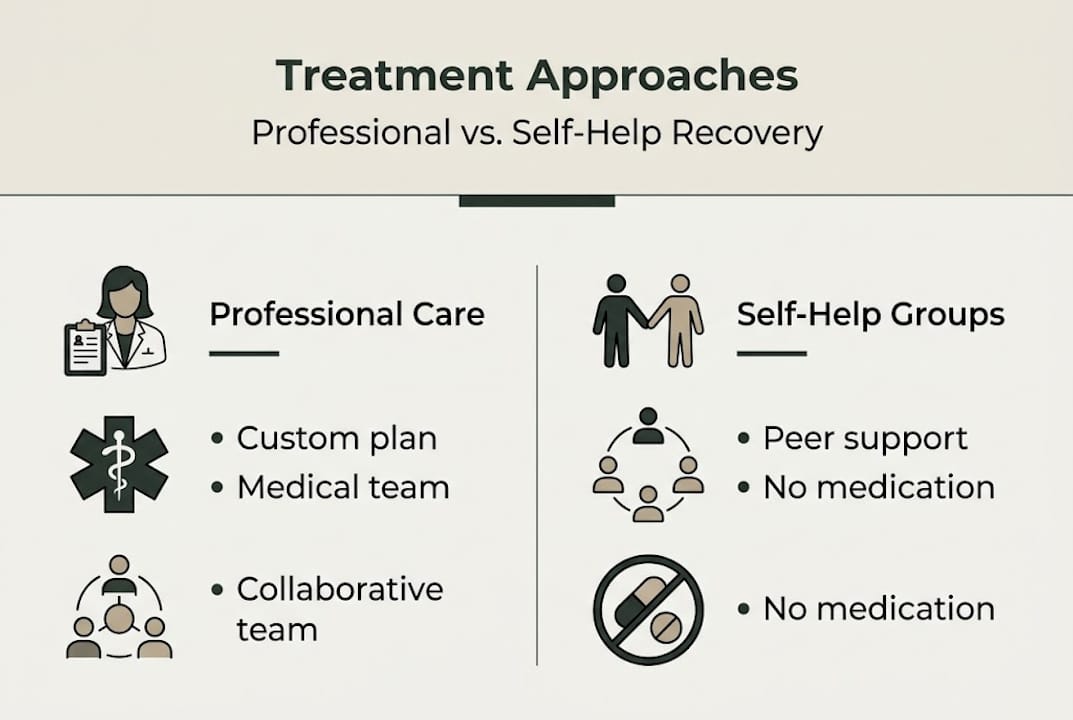
Self-help groups like Alcoholics Anonymous (AA), SMART Recovery, and Narcotics Anonymous (NA) have helped millions of people. They offer community, shared experience, peer accountability, and free access, making them valuable as part of a broader recovery ecosystem. But they are not the same as professional treatment, and understanding that distinction can be the difference between sustained recovery and repeated relapse.
| Feature | Self-help groups | Professional treatment |
|---|---|---|
| Access | Free, widely available | Requires insurance or payment |
| Structure | Peer-led, informal | Clinician-led, structured plans |
| Medical support | None | MAT, psychiatric care, medical monitoring |
| Effectiveness | Short-term benefits shown | Evidence-based, long-term outcomes |
| Dual diagnosis support | Minimal | Fully integrated assessment and treatment |
| Accountability | Sponsor-based | Clinical teams with measurable goals |
Research shows that self-help groups provide meaningful short-term benefits for alcohol use disorder (AUD) and other conditions, especially for people with mild to moderate symptoms. However, professional care is strongly recommended for complex or severe cases. This is not a criticism of self-help. It is simply an honest recognition of what peer support can and cannot do.
Self-help is well-suited for:
- Individuals with mild substance use and no co-occurring mental health disorder
- People in stable recovery who want ongoing community support
- Those using it as a supplement to professional treatment
- Individuals managing stress or early warning signs before symptoms escalate
Self-help is not sufficient when:
- A person has a dual diagnosis requiring psychiatric evaluation and medication management
- Withdrawal symptoms are severe enough to require medical supervision
- There has been repeated relapse despite good intentions and peer support
- The person has trauma, chronic mental illness, or complex medical needs driving substance use
- Legal or child welfare issues require a structured, documented treatment plan
The role of medication in recovery is one area where self-help simply cannot compete with professional care. Medications like buprenorphine, naltrexone, and methadone are proven to reduce cravings, prevent overdose, and support abstinence in opioid and alcohol use disorders. These medications require a prescribing physician, ongoing monitoring, and integration with behavioral therapy. No peer support group can provide that.
The takeaway is clear. Self-help has a meaningful place in recovery, but it works best as a complement to professional treatment, not as a substitute for it. When symptoms are severe, or when mental health and addiction are both present, getting professional help is not optional. It is essential.
Why integrated care matters: Addressing dual diagnoses
For many people in Los Angeles County, addiction does not exist in isolation. Depression, anxiety, PTSD, bipolar disorder, and other mental health conditions frequently co-occur with substance use, each feeding the other in a cycle that becomes harder to break when only one condition receives treatment. Integrated care directly addresses this by treating substance use and mental health disorders at the same time, within the same framework, with the same care team.

The evidence is clear. Integrated treatment in LA County reduces relapse risk and improves both substance and mental health outcomes compared to treating either condition in isolation. When a person stops using substances but their untreated depression remains, the risk of returning to drug or alcohol use is high. When mental health improves but the addiction goes unaddressed, symptoms often resurface. Both conditions need simultaneous, coordinated care.
California has recognized this urgency at a policy level. Under California DHCS requirements, psychiatric facilities and mental health rehabilitation centers must offer MAT for individuals with severe SUD. This requirement acknowledges that medication-based interventions are often medically necessary, not optional extras. It also raises the standard for what constitutes adequate treatment across the state.
Here is how coordinated dual diagnosis treatment typically unfolds:
- Comprehensive assessment: Clinicians evaluate both substance use history and mental health status to establish an accurate, full picture of the person’s needs.
- Individualized treatment planning: A team creates a plan that addresses both conditions together, identifying which symptoms require immediate medical attention and which respond better to behavioral therapy.
- Medication-assisted treatment: Where appropriate, medications are prescribed and monitored to manage withdrawal, reduce cravings, and stabilize mood or psychiatric symptoms.
- Integrated therapy: Evidence-based therapies like cognitive behavioral therapy (CBT) and dialectical behavior therapy (DBT) address both addiction triggers and mental health patterns simultaneously.
- Peer support integration: Group therapy and peer support are incorporated to reduce isolation and reinforce recovery skills in a community context.
- Aftercare planning: Long-term support through dual diagnosis recovery planning ensures that gains made in treatment are maintained as individuals transition back to daily life.
Pro Tip: When evaluating treatment centers, ask directly about their dual diagnosis protocols. Specifically, ask whether their clinical staff are trained to treat mental health and addiction at the same time, whether they have a psychiatrist on staff, and whether MAT is available. If a center cannot confidently answer yes to all three, look further. Quality mental health treatment pathways should always include this integrated capacity.
Barriers to treatment and how to overcome them
Understanding what professional treatment can do is one thing. Actually accessing it is another challenge entirely. Despite the clear evidence that professional care improves outcomes, the majority of people with SUD do not seek it out. The reasons are varied, but they are not insurmountable.
SAMHSA’s research identifies low perceived need, self-sufficiency beliefs, stigma, and cost as the primary barriers. Many people genuinely do not believe their substance use is serious enough to warrant professional care. Others fear judgment from family, employers, or their community. Financial concerns and lack of insurance further reduce access. And for working adults or parents, the logistics of attending treatment around work and childcare can feel impossible to navigate. Understanding partial hospitalization programs can make the road ahead feel more manageable.
Only 5.5% of people who did not receive treatment in the past year felt they needed it. This striking figure reveals the depth of denial and underrecognition that surrounds addiction and mental health conditions, making outreach and education critical first steps. For a closer look, see how the rehab enrollment process supports long-term recovery.
Practical strategies to lower these barriers include:
- Start with a confidential screening: Many organizations offer free, anonymous substance use assessments online or by phone. A screening is not a commitment to treatment. It is simply a way to get an honest picture.
- Talk to a trusted person first: A doctor, counselor, or supportive family member can help you assess what level of care might fit your situation without pressure or judgment.
- Explore sliding-scale and low-cost options: Many treatment centers adjust fees based on income. Medi-Cal and other insurance programs in California cover a range of SUD services, including outpatient and residential programs.
- Challenge the stigma internally: Seeking help for a health condition is a sign of strength. Addiction is a medical condition with established biological, psychological, and social components. Treating it is no different from treating any other chronic illness.
- Take one small step at a time: You do not have to commit to 90 days in a program to begin. A single phone call, a free consultation, or an initial assessment counts as a meaningful first step.
Recovery from addiction often requires attention to the whole person. That is why holistic recovery approaches, which address physical health, mental wellness, relationships, and purpose, tend to produce more durable outcomes than programs that focus narrowly on substance use alone. When you understand recovery as something that touches every part of life, the decision to seek professional help becomes less about crisis management and more about genuine transformation.
Why lasting recovery starts with professional support: A fresh perspective
There is a strong cultural current in the United States that values self-reliance. The idea that a person can overcome addiction through willpower, spirituality, or community alone is deeply appealing. And for some people with mild use patterns, it may even be true. But for the majority of people facing genuine SUD, particularly those with co-occurring mental health disorders, the self-reliance narrative can quietly become a barrier to getting real help.
At Glendora Recovery Center, we see this regularly. People who spent years managing their condition through sheer determination, relapsing, recovering partially, and relapsing again, only to discover that professional treatment offered something they had never experienced before: a structured, medically sound, personalized plan that treated the whole person.
The evidence reinforces this perspective. Recovery-Oriented Systems of Care (ROSCs) that combine professional counseling, peer support, and medications consistently outperform episodic or single-focus interventions. Recovery is not an event. It is a long-term process that benefits from sustained, coordinated professional involvement. Recognizing that truth is not a defeat. It is clarity. The value of ongoing recovery support cannot be overstated, and professional care is the foundation that makes it sustainable.
Finding the right support: Next steps
If this article has helped clarify why professional treatment matters, the most important next step is simple: do not wait for a crisis to act. Recovery is more effective, and frankly more manageable, when you engage support before conditions become acute. Glendora Recovery Center offers a full range of treatment options in Los Angeles County, including Partial Hospitalization Programs, Intensive Outpatient Programs, telehealth sessions, and dual diagnosis care. Whether you are just beginning to consider your options or ready to start today, our team is here to help without judgment. Explore our addiction treatment options guide or call us for a confidential consultation at any time.
Frequently asked questions
What is considered professional treatment for substance abuse?
Professional treatment includes therapies, medication-assisted programs, and integrated care plans managed by qualified clinicians. Under California DHCS standards, this encompasses MAT, psychiatric services, and structured behavioral health interventions delivered by licensed providers.
Is self-help enough for serious addiction or mental health problems?
Self-help can be effective short-term for mild cases, but it is not sufficient for serious or co-occurring conditions. Research on self-help groups for AUD confirms that professional care is recommended when symptoms are complex, severe, or involve dual diagnosis.
Why do so few people seek professional treatment?
Low perceived need, stigma, and financial concerns are the main reasons. SAMHSA’s data shows that only 5.5% of untreated individuals even recognized they needed help, reflecting how deeply underrecognized SUD remains.
How is treatment different for those with both addiction and mental health disorders?
Integrated care treats both conditions at the same time, using a coordinated clinical team rather than addressing each condition separately. This approach, recognized as essential in dual diagnosis care in Los Angeles, substantially reduces relapse risk and improves long-term outcomes compared to siloed treatment.
Recommended
- Comprehensive Addiction Treatment: Lasting Recovery Explained | Glendora Recovery Center
- How Outpatient Treatment Centers Fuel Long-Term Recovery
- Why aftercare matters for lasting recovery in 2026 | Glendora Recovery Center
- How mental health drives lasting recovery: evidence and strategies | Glendora Recovery Center