
Most American adults battling substance abuse in Los Angeles feel trapped between needing help and protecting their daily responsibilities. Facing addiction with co-occurring mental health issues can be overwhelming, especially when traditional outpatient therapy falls short. Partial Hospitalization Programs offer a structured, intensive path to recovery while letting you stay connected to work, family, and home life. Discover why this treatment style may be the bridge to sustained healing and real change.
Table of Contents
- Partial Hospitalization Defined For Mental Health
- Key Features And Treatment Structure
- Eligibility Criteria And Who Benefits Most
- Comparing Partial Hospitalization To Alternatives
- Costs, Insurance, And Common Misconceptions
- Benefits For Recovery And Lasting Change
Key Takeaways
| Point | Details |
|---|---|
| Partial Hospitalization Programs (PHPs) provide structured support | PHPs offer intensive treatment that allows patients to engage in their daily life while receiving care. |
| PHPs target moderate to severe mental health issues | They are designed for individuals needing more support than outpatient therapy but less than inpatient hospitalization. |
| Insurance often covers PHPs | Many plans, including Medicare, provide financial support for PHPs when appropriate clinical criteria are met. |
| PHPs enhance recovery through skill development | These programs emphasize coping skills and practical strategies for long-term mental health maintenance. |
Partial hospitalization defined for mental health
A Partial Hospitalization Program (PHP) represents an intensive mental health treatment approach that provides comprehensive care without requiring patients to remain overnight in a hospital setting. Partial hospitalization offers structured therapeutic support while allowing individuals to maintain their daily home routines and responsibilities.
Typically, PHP involves attending treatment at a hospital or community mental health center up to seven days per week, providing a rigorous yet flexible therapeutic environment. These programs are strategically designed for individuals experiencing moderate to severe mental health challenges who need more intensive support than traditional outpatient therapy but do not require full-time inpatient hospitalization. Patients receive comprehensive services including individual and group therapy, medication management, diagnostic evaluations, and psychosocial interventions.
The core objectives of partial hospitalization focus on stabilization, skill development, and preventing further clinical deterioration. Medicare-covered mental health services underscore the clinical importance of these programs, highlighting their role in delivering structured, evidence-based mental health interventions that support lasting recovery.
Pro tip: Consult with a mental health professional to determine whether a Partial Hospitalization Program aligns with your specific treatment needs and recovery goals.
Key features and treatment structure
Partial Hospitalization Programs (PHPs) offer a comprehensive and structured approach to mental health treatment, designed with intensive therapeutic interventions that balance rigorous support with patient flexibility. These programs typically operate five days per week, providing patients with a robust treatment framework that addresses complex mental health challenges through multiple therapeutic modalities.
The daily treatment structure commonly encompasses several key components. Patients engage in approximately 4 to 6 hours of daily treatment, which includes individual therapy, group counseling sessions, medication management, and psychoeducational programming. Evidence-based therapeutic approaches such as Dialectical Behavior Therapy (DBT), Cognitive Behavioral Therapy (CBT), and Acceptance and Commitment Therapy are frequently employed to help patients develop critical coping skills, emotional regulation techniques, and strategies for interpersonal effectiveness.
Partial hospitalization programs support gradual recovery by creating a structured yet adaptable treatment environment. The programs are strategically designed to facilitate skill-building, symptom stabilization, and progressive reintegration into daily life. Patients benefit from intensive therapeutic interventions while maintaining the ability to return home, attend work or school, and practice newly learned strategies in real-world contexts.
Pro tip: Request a detailed treatment schedule from your PHP provider to understand the specific daily structure and therapeutic activities planned for your recovery journey.
Eligibility criteria and who benefits most
Partial Hospitalization Programs are specifically designed for individuals experiencing significant mental health challenges that substantially impact daily functioning. Mental health treatment through PHP targets patients who require intensive therapeutic support beyond traditional outpatient services but do not need full inpatient hospitalization.
Typical candidates for PHP include individuals diagnosed with complex mental health conditions such as severe depression, bipolar disorder, post-traumatic stress disorder (PTSD), anxiety disorders, and eating disorders. These programs are particularly beneficial for patients who demonstrate specific criteria: experiencing moderate to severe symptoms that disrupt work or personal life, showing commitment to recovery, maintaining basic self-care abilities, and having a stable home environment that supports ongoing treatment.
The eligibility assessment typically involves a comprehensive evaluation by mental health professionals who carefully determine whether a patient’s clinical needs align with PHP’s structured treatment model. Key considerations include the patient’s current psychiatric symptoms, risk of self-harm, ability to participate in group and individual therapies, medication management requirements, and potential for stabilization through intensive outpatient treatment. Patients must be medically stable, motivated to engage in treatment, and capable of participating in daily therapeutic activities without requiring round-the-clock medical supervision.
Pro tip: Request a comprehensive psychiatric assessment to accurately determine your suitability for a Partial Hospitalization Program and discuss your specific treatment goals with a qualified mental health professional.
Comparing partial hospitalization to alternatives
Partial Hospitalization Programs (PHPs) represent a nuanced treatment approach situated between traditional inpatient and outpatient mental health services. Treatment intensity across care continuum reveals that PHPs offer a strategic middle ground for individuals requiring comprehensive support without complete residential treatment.
Unlike inpatient hospitalization, which requires 24-hour medical supervision, PHPs provide structured treatment while allowing patients to maintain their home routines. Compared to standard outpatient therapy, these programs deliver more intensive intervention, typically involving several hours of daily therapeutic activities. The key distinction lies in the program’s flexibility and depth of care. Intensive Outpatient Programs (IOPs) offer less structured support, usually providing fewer treatment hours per week, while PHPs deliver a more comprehensive, rigorous therapeutic experience.

Psychiatric treatment options comparison demonstrates that PHPs evolved from day hospital models to address critical gaps in mental health treatment. These programs are particularly effective for patients transitioning from inpatient care, those at risk of hospitalization, or individuals needing more support than traditional weekly therapy can provide. The structured yet non-residential nature of PHPs allows for intensive healing while preserving patients’ personal autonomy and real-world functioning.
Here’s a side-by-side comparison of mental health treatment levels:
| Treatment Level | Setting Type | Typical Treatment Hours | Patient Independence |
|---|---|---|---|
| Outpatient Therapy | Clinic or office | 1-2 per week | High; live at home |
| Intensive Outpatient | Clinic/community | 9-15 per week | Moderate; mostly at home |
| Partial Hospitalization | Hospital or center | 20-30 per week | Home evenings/weekends |
| Inpatient Hospitalization | Hospital (residential) | 24/7 supervision | None; continuous on-site |
Pro tip: Consult with a mental health professional to carefully assess which treatment intensity level best matches your specific clinical needs and personal circumstances.
Costs, insurance, and common misconceptions
Partial Hospitalization Programs (PHPs) often carry significant misconceptions regarding cost and insurance coverage. Medicare mental health service coverage demonstrates that many insurance plans, including Medicare Part B, can provide substantial financial support for these critical mental health services when specific clinical criteria are met.
Common misconceptions about PHPs include beliefs that they are prohibitively expensive or exclusively for severe psychiatric conditions. In reality, these programs can be more cost-effective than traditional inpatient treatments, offering intensive care while allowing patients to maintain their home and work environments. Insurance coverage typically depends on a physician’s certification that the patient requires this level of treatment to prevent hospitalization or manage recent discharge, making PHPs an economically sensible intervention for many individuals.
Navigation of insurance benefits requires careful consideration. Most private insurance providers, along with Medicare and Medicaid, offer some level of coverage for Partial Hospitalization Programs. Patients should proactively verify their specific plan’s mental health benefits, understand potential out-of-pocket expenses, and obtain pre-authorization when possible. Some key factors influencing coverage include the specific diagnosis, medical necessity, and the program’s certification status. Many treatment centers offer financial counseling to help patients understand their insurance benefits and explore alternative payment options.
Pro tip: Contact your insurance provider directly to obtain a detailed breakdown of mental health treatment coverage and ask about specific requirements for Partial Hospitalization Program reimbursement.
Benefits for recovery and lasting change
Partial Hospitalization Programs (PHPs) offer a transformative approach to mental health recovery, supporting long-term healing through intensive treatment designed to create sustainable life changes. Unlike traditional treatment models, these programs provide a comprehensive framework that addresses mental health challenges holistically while empowering patients to maintain their daily responsibilities and community connections.
The structured nature of PHPs enables patients to develop critical coping mechanisms and life skills through multiple therapeutic interventions. Comprehensive therapeutic approaches facilitate recovery by combining individual therapy, group counseling, skill-building workshops, and medication management. This multidisciplinary approach allows patients to simultaneously address underlying mental health challenges, learn adaptive strategies, and practice new behavioral patterns in a supportive environment.
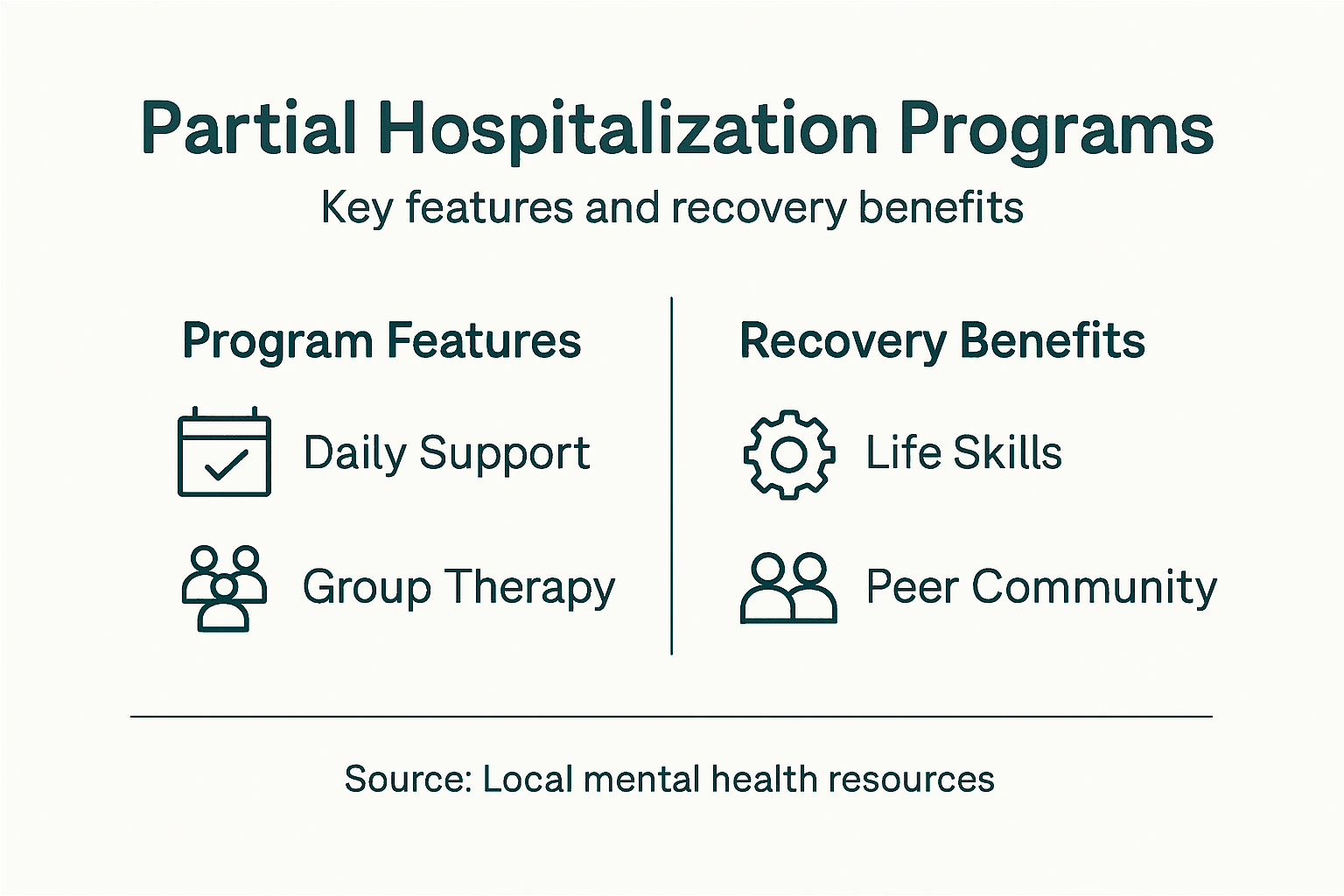
Critical benefits of PHPs include continuity of care, peer support through group therapy, and gradual reintegration into everyday life. Patients receive intensive treatment while maintaining their personal autonomy, which is crucial for building long-term resilience. The program’s design emphasizes practical skill development, emotional regulation techniques, and creating sustainable mental health strategies that extend far beyond the treatment period. By providing a balanced approach between structured intervention and personal independence, PHPs help individuals construct a robust foundation for lasting psychological wellness.
Overview of key benefits offered by Partial Hospitalization Programs (PHPs):
| Benefit | How PHPs Support Recovery | Example in Practice |
|---|---|---|
| Skill Development | Intensive group & individual therapy | Role-playing emotion regulation |
| Daily Structure | Scheduled therapeutic activities | 4-6 hour therapy blocks |
| Continuity of Care | Coordination with outpatient providers | Transition planning on discharge |
| Peer Support | Group sessions with other patients | Sharing experiences, encouragement |
| Flexibility | Return home after treatment hours | Attending school/work in evenings |
Pro tip: Document your personal progress and insights during PHP treatment to help identify recurring patterns and reinforce the therapeutic strategies you are learning.
Discover Lasting Recovery with Partial Hospitalization at Glendora Recovery Center
If you are facing moderate to severe mental health challenges that disrupt your daily life and seek structured, intensive therapeutic support without completely stepping away from your routine, Glendora Recovery Center in Los Angeles County is here to help. Our Partial Hospitalization Programs are designed to provide comprehensive care including individual and group therapy, medication management, and skill-building interventions — all while allowing you to return home each day. We understand the importance of balancing treatment with real-world responsibilities to encourage lasting change.
Take control of your recovery journey today by exploring how our Partial Hospitalization Program can support your specific needs and objectives. Connect with our compassionate and experienced team who specialize in co-occurring disorders and personalized care plans. Do not wait for symptoms to worsen or hope recovery will happen on its own. Contact us now to schedule a consultation so you can begin building the foundation for sustainable mental wellness with support that fits your life. Visit Glendora Recovery Center Contact Us and take the crucial next step toward healing.
Frequently Asked Questions
What is a Partial Hospitalization Program (PHP)?
A Partial Hospitalization Program (PHP) is an intensive mental health treatment option that provides comprehensive care without requiring overnight stays in a hospital. It focuses on stabilization, skill development, and preventing further clinical deterioration.
Who can benefit from a Partial Hospitalization Program?
Individuals experiencing moderate to severe mental health challenges, such as severe depression, bipolar disorder, PTSD, or anxiety disorders, are ideal candidates for PHPs. Candidates must also have a stable home environment and be committed to their recovery.
How does a PHP differ from traditional outpatient therapy?
Unlike traditional outpatient therapy, which involves fewer sessions per week, PHPs provide more intensive treatment with 20-30 hours per week. PHPs include structured therapeutic activities that facilitate skill-building and symptom stabilization while allowing patients to return home.
What costs are associated with Partial Hospitalization Programs, and is insurance coverage available?
PHPs can be more cost-effective than inpatient treatments, and many insurance plans, including Medicare, may cover these services. Coverage typically depends on specific clinical criteria, so it’s essential to verify your insurance provider’s mental health benefits.
Recommended
- Master the Partial Hospitalization Process in Los Angeles | Glendora Recovery Center
- Partial Hospitalization: A Flexible Path to Recovery | Glendora Recovery Center
- Partial Hospitalization Program: Why It’s Highly Effective?
- PHP | Glendora Recovery Center | Partial Hospitalization Program
- Healing After Narcissist Breakup: Essential Guide