
Starting rehab for yourself or a loved one in Los Angeles County can feel overwhelming. Between navigating insurance, understanding program types, and knowing where to turn for immediate help, many families delay seeking treatment simply because they don’t know where to begin. This guide walks you through every practical step to start rehabilitation successfully, from recognizing the need for help to selecting the right program and preparing for admission. You’ll discover local resources, legal considerations, and proven strategies to begin recovery with confidence and clarity.
Table of Contents
- Key takeaways
- Understanding the rehab process in Los Angeles County
- Legal considerations and involuntary rehab options
- Choosing the right rehab program and preparing for admission
- Aftercare and relapse prevention strategies
- Start your recovery journey with Glendora Recovery Center
- Frequently asked questions
Key Takeaways
| Point | Details |
|---|---|
| Acknowledge need and seek help | Call a 24/7 LA County crisis line to get guidance and next steps. |
| Initial and in person assessments | Licensed clinicians review substance use, mental health, medical needs, and social factors to match the right level of care. |
| Insurance verification required | Check Medi-Cal and private plans with the provider to confirm benefits and costs before admission. |
| LA County program options | LA County offers medical detox, inpatient residential, outpatient programs, and Full Service Partnership for serious mental health needs. |
| Voluntary treatment preferred | Voluntary care generally yields better outcomes, with involuntary holds used only in emergencies under legal criteria. |
Understanding the rehab process in Los Angeles County
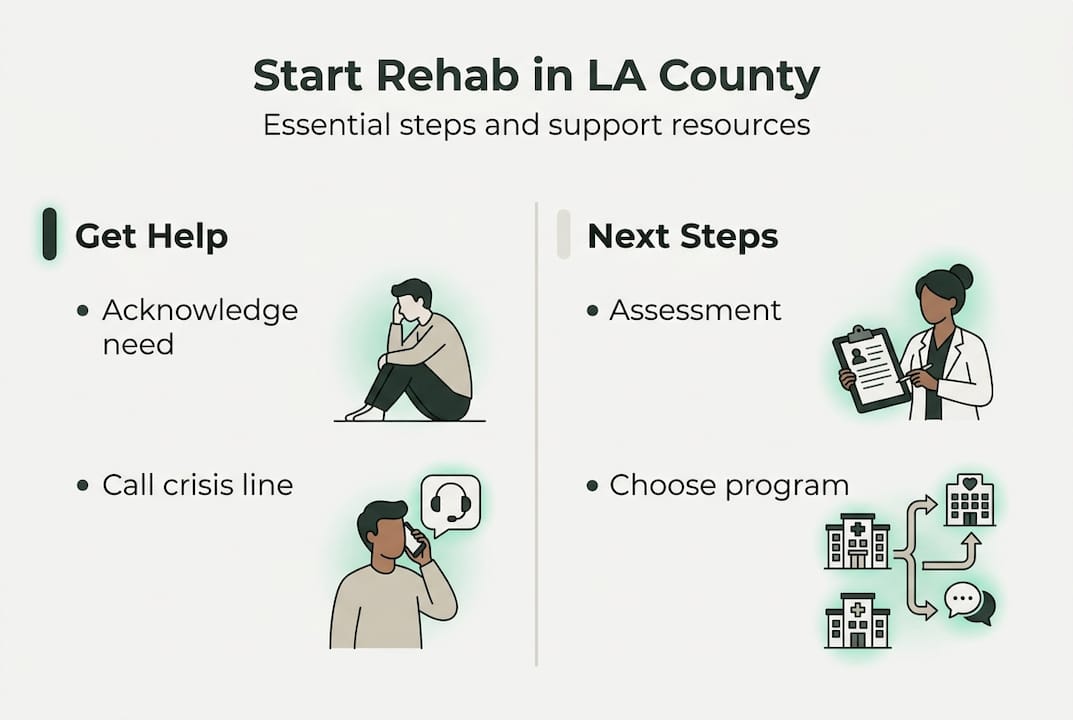
Starting rehab begins with acknowledging that you or your loved one needs professional help. This first step, though difficult, opens the door to recovery and connects you with resources designed specifically for LA County residents. Once you’ve recognized the need, immediate action becomes possible.
Contact a 24/7 helpline to receive guidance tailored to your situation. LA County Department of Mental Health operates crisis lines staffed by trained counselors who can direct you to appropriate services. These professionals conduct an initial phone assessment to understand the severity of addiction or mental health concerns and recommend next steps.
An in-person assessment determines which treatment program suits your needs. Licensed clinicians evaluate substance use history, mental health status, medical conditions, and social circumstances. This comprehensive evaluation ensures you enter the right level of care, whether that’s medical detox, residential treatment, or outpatient counseling.
Verifying insurance coverage or Medi-Cal eligibility is essential before admission. Most outpatient services in LA County accept Medi-Cal, and many private insurers cover addiction treatment. Contact your insurance provider or ask the treatment center’s admissions team to verify benefits and understand any out-of-pocket costs.
LA County offers several program types to match different needs:
- Medical detox: Supervised withdrawal management with 24/7 medical monitoring for safe stabilization
- Inpatient residential: Intensive treatment in a structured environment with round-the-clock support
- Outpatient programs: Flexible scheduling for counseling and therapy while living at home
- Full Service Partnership: Comprehensive mental health services for individuals with serious mental illness
Selecting the appropriate program depends on addiction severity, co-occurring mental health disorders, living situation, and work or family obligations. If you’re unsure which option fits best, the assessment clinician will recommend a treatment level based on evidence-based criteria. For additional guidance on finding local addiction help, explore resources that explain how to navigate LA County’s treatment landscape effectively.

Legal considerations and involuntary rehab options
Voluntary treatment produces better outcomes than involuntary commitment, and LA County prioritizes willing participation whenever possible. However, specific legal mechanisms exist for situations where individuals pose immediate danger to themselves or others due to mental health crises or severe substance use.
Minors under 18 require parental or legal guardian consent for admission to rehab programs. Parents can authorize treatment, but facilities must still conduct assessments to ensure the program meets the minor’s clinical needs. For teens struggling with addiction, specialized programs address developmental considerations while involving families in recovery planning. Learn more about teen addiction recovery steps to understand age-appropriate treatment approaches.
Adults experiencing acute psychiatric emergencies may be placed on involuntary holds under specific legal codes. A 5150 hold allows 72-hour evaluation and treatment when someone is gravely disabled or a danger to self or others. If the crisis continues, clinicians may extend this to a 5250 hold for 14 additional days. These short-term interventions stabilize immediate crises but don’t constitute long-term forced rehab.
CARE Court and Laura’s Law provide court-ordered outpatient treatment for adults with serious mental illness who aren’t engaging in voluntary care. These programs require a legal petition process, psychiatric evaluation, and judicial review before any mandate takes effect. The court can order participation in outpatient services, medication management, and case management, but cannot force someone into locked inpatient facilities for extended periods.
Key points about involuntary treatment:
- Limited duration: Holds are time-limited and require ongoing clinical justification for extensions
- Outpatient focus: Court orders emphasize community-based treatment, not hospitalization
- Legal protections: Individuals have rights to legal representation and judicial review of any involuntary order
- Crisis intervention: These mechanisms address immediate safety concerns, not punishment
Pro Tip: If you’re concerned about a loved one who refuses help, contact LA County’s Department of Mental Health crisis line for guidance on appropriate interventions rather than attempting to force treatment independently.
Choosing the right rehab program and preparing for admission
Selecting the appropriate treatment program requires understanding how different options match your specific situation. LA County provides multiple levels of care, each designed for particular addiction severities and life circumstances.
Outpatient services range from standard counseling sessions to intensive daily programs. Detoxification programs offer medical supervision during withdrawal, inpatient residential treatment provides 24/7 structured care, and Full Service Partnership programs deliver comprehensive support for individuals with co-occurring mental health disorders.
| Program type | Intensity | Typical duration | Best for |
|---|---|---|---|
| Medical detox | Highest medical supervision | 3-7 days | Severe physical dependence requiring monitored withdrawal |
| Inpatient residential | 24/7 structured care | 30-90 days | Moderate to severe addiction needing immersive environment |
| Intensive outpatient | 9-20 hours weekly | 8-12 weeks | Stable housing, ability to maintain work/school commitments |
| Standard outpatient | 1-3 hours weekly | Ongoing | Mild addiction or step-down from higher care levels |
| Full Service Partnership | Comprehensive wraparound | Long-term | Serious mental illness with housing, health, social needs |
Prepare for admission by gathering essential documents and arranging practical logistics:
- Collect identification and insurance information: Bring government-issued ID, insurance card, and Medi-Cal documentation if applicable
- Complete medical history forms: List current medications, allergies, past treatments, and primary care provider contact information
- Arrange transportation: Confirm how you’ll travel to the facility and whether they provide pickup services
- Notify employer or school: Request medical leave or arrange academic accommodations as needed
- Organize childcare or pet care: Ensure dependents have supervision during your treatment stay
- Pack appropriate clothing and essentials: Most programs provide lists of allowed items; avoid valuables or restricted substances
Verify that your chosen program accepts your insurance or Medi-Cal coverage before finalizing admission. Contact the facility’s billing department to understand copays, deductibles, and any services not covered by your plan. For those considering outpatient detox, confirm whether the program includes medical monitoring and medication-assisted treatment if needed.
Pro Tip: Ask about aftercare planning during your intake appointment. Programs that integrate discharge planning from day one achieve better long-term outcomes by preparing you for life after treatment before you even begin.
Mental and emotional preparation matters as much as paperwork. Acknowledge that starting treatment represents a positive step toward health, not a personal failure. Write down questions about the program structure, therapy approaches, family involvement, and continuing care options. Bringing these questions to your intake meeting ensures you understand what to expect and can engage fully in the process. Explore intensive outpatient programs benefits to understand how structured flexibility supports recovery while maintaining daily responsibilities.
Aftercare and relapse prevention strategies
Completing an initial treatment program marks a significant achievement, but lasting recovery requires ongoing support through aftercare services. Skipping aftercare increases relapse risk substantially, while quality continuing care reduces emergency room visits and improves overall quality of life.
Partial Hospitalization Programs and Intensive Outpatient Programs serve as effective aftercare options. PHP typically involves 20 or more hours of weekly treatment while living at home, providing structure similar to inpatient care without overnight stays. IOP offers 9 to 19 hours of weekly therapy, allowing participants to work or attend school while receiving substantial clinical support.
Relapse occurs in 40 to 60% of individuals recovering from substance use disorders, similar to relapse rates for other chronic conditions like diabetes or hypertension. Understanding that relapse represents a common part of recovery, not a moral failing, helps reduce shame and encourages people to re-engage with treatment quickly if setbacks occur.
Implement these evidence-based relapse prevention strategies:
- Continue individual or group counseling: Regular therapy sessions address ongoing challenges and reinforce coping skills learned during treatment
- Participate in peer support groups: 12-step meetings, SMART Recovery, or other mutual aid groups provide community and accountability
- Identify and avoid high-risk situations: Recognize people, places, and emotional states that trigger cravings and develop plans to manage them
- Maintain physical health: Regular exercise, adequate sleep, and nutritious eating support brain healing and emotional stability
- Build sober social networks: Cultivate relationships with people who support your recovery and understand your goals
- Practice stress management: Learn and use techniques like mindfulness, deep breathing, or journaling to handle life pressures without substances
“Aftercare programs that combine clinical services with peer support reduce relapse rates by up to 65% compared to no follow-up care. Patients who engage in structured aftercare report fewer emergency department visits, better employment outcomes, and improved family relationships.”
LA County offers numerous free and low-cost aftercare resources through community mental health centers, faith-based organizations, and recovery community centers. Many programs provide evening and weekend sessions to accommodate work schedules. Telehealth options expanded significantly in recent years, making it easier to attend counseling or group meetings from home.
Stay connected with your treatment team during the transition from intensive care to aftercare. Schedule follow-up appointments before discharge, exchange contact information with supportive peers from treatment, and create a written relapse prevention plan that lists warning signs and emergency contacts. For comprehensive guidance on maintaining recovery, review the relapse prevention workflow that outlines specific steps to recognize early warning signs and intervene before full relapse occurs.
Start your recovery journey with Glendora Recovery Center
Glendora Recovery Center provides comprehensive addiction treatment and mental health services tailored to meet the unique needs of individuals and families throughout Los Angeles County. Our programs include medical detox, residential treatment, intensive outpatient services, and structured aftercare designed to support lasting recovery.
We accept Medi-Cal and most private insurance plans, making quality treatment accessible when you need it most. Our evidence-based approaches combine individual therapy, group counseling, family support, and holistic wellness practices in a compassionate environment. Whether you’re seeking help for yourself or a loved one, our experienced team guides you through every step from initial assessment to long-term recovery planning.
Our addiction treatment center in Los Angeles offers flexible scheduling with morning, evening, weekend, and telehealth options to fit your life. We specialize in dual diagnosis treatment for co-occurring mental health disorders and provide court-approved programs when legal requirements apply. The proven LA addiction relapse reduction workflow we use has helped clients reduce relapse rates by up to 65% through structured aftercare and ongoing support.
Take the first step today by contacting our admissions team for a confidential consultation. We’ll verify your insurance coverage, answer your questions, and help you understand which program best matches your needs. Recovery is possible, and you don’t have to navigate this journey alone. Discover how our intensive outpatient programs in Los Angeles provide the structure and support you need while allowing you to maintain work, school, and family commitments.
Frequently asked questions
How do I know if I need rehab in Los Angeles County?
You may need rehab if substance use interferes with work, relationships, health, or daily functioning despite attempts to cut back. Warning signs include increasing tolerance, withdrawal symptoms when not using, neglecting responsibilities, or continuing use despite negative consequences. Contact LA County’s 24/7 crisis helpline at 800-854-7771 for a confidential assessment that determines appropriate treatment levels based on your specific situation.
What types of rehab programs are available in Los Angeles County?
LA County offers medical detox for supervised withdrawal, inpatient residential treatment for intensive 24/7 care, outpatient counseling for flexible scheduling, and Full Service Partnership programs for individuals with serious mental illness requiring comprehensive support. Program selection depends on addiction severity, co-occurring mental health conditions, living stability, and personal circumstances. Licensed clinicians conduct assessments to match you with the most appropriate level of care for your recovery needs.
Can someone be forced into rehab in LA County?
Involuntary treatment is limited to crisis situations where someone poses immediate danger to themselves or others. A 5150 hold allows 72-hour psychiatric evaluation, potentially extended to 14 days under 5250 criteria. CARE Court and Laura’s Law permit court-ordered outpatient treatment after legal proceedings, but long-term forced inpatient hospitalization does not occur. Voluntary participation produces significantly better outcomes than involuntary commitment.
How can I prevent relapse after rehab?
Engage in structured aftercare programs like Partial Hospitalization or Intensive Outpatient treatment to maintain clinical support after initial treatment ends. Build a strong recovery network through peer support groups, continue individual therapy to address ongoing challenges, and identify triggers that increase relapse risk. Maintain physical health through exercise and nutrition, practice stress management techniques, and create a written relapse prevention plan with emergency contacts and warning signs to recognize early.
Recommended
- 7 Best Practices for Addiction Recovery in Los Angeles County | Glendora Recovery Center
- LA Addiction Workflow Cuts Relapse 65%: Recovery Guide | Glendora Recovery Center
- Sober Living in Los Angeles County: How Glendora creates an impact
- How to Navigate Insurance for Rehab in Los Angeles | Glendora Recovery Center