
Over 14 million American adults struggle with alcohol use disorder each year, yet myths about detox keep many from getting the help they need. For families in Los Angeles County, trying to separate fact from fiction about alcohol detox can feel overwhelming and frightening. Understanding what truly happens in a supervised detox and why professional support makes all the difference gives you a foundation for making safe, informed choices during this critical stage of recovery.
Table of Contents
- Defining Alcohol Detox and Common Myths
- Stages of Alcohol Withdrawal and Detox
- Medical vs. Outpatient Detox Approaches
- Role of Clinical Supervision and Support
- Risks of Home Detox and Mistakes to Avoid
- Transitioning from Detox to Ongoing Care
Key Takeaways
| Point | Details |
|---|---|
| Importance of Medical Supervision | Professional medical supervision during alcohol detox is essential to manage withdrawal symptoms and prevent complications. |
| Risks of Home Detox | Attempting detox at home can lead to life-threatening conditions; professional help is crucial. |
| Personalized Treatment Plans | Each individual’s detox and recovery journey is unique, requiring tailored treatment approaches. |
| Transition to Ongoing Care | Successful recovery involves transitioning from detox to comprehensive aftercare that addresses emotional and psychological needs. |
Defining Alcohol Detox and Common Myths
Alcohol detox represents a critical first step in the recovery journey for individuals struggling with alcohol use disorder. Medical supervision during detoxification helps manage potentially dangerous withdrawal symptoms and ensures patient safety. The process involves stopping alcohol consumption while managing physical and psychological challenges that emerge when the body adjusts to functioning without alcohol.
Many misconceptions surround alcohol detox and addiction recovery. Some individuals believe that detox is simply about willpower or that withdrawal symptoms are not medically serious. In reality, alcohol withdrawal can produce severe complications like seizures, hallucinations, and delirium tremens. Addiction specialists emphasize that alcohol impacts multiple body systems, not just the liver, making professional medical support essential during detoxification.
Common myths about alcohol detox include believing that cold turkey methods are safe, that all withdrawal experiences are identical, and that detox can be completed without medical intervention. Professional treatment centers understand that each person’s detox journey is unique, requiring personalized medical strategies to manage symptoms safely. Factors like overall health, duration of alcohol use, and individual physiological responses significantly influence the detox experience.
Pro tip: Always consult a medical professional before attempting alcohol detox, as unsupervised withdrawal can be life-threatening and require specialized care.
Stages of Alcohol Withdrawal and Detox
Alcohol withdrawal is a complex medical process that unfolds in distinct stages, each presenting unique challenges for individuals seeking recovery. Detox programs in Los Angeles offer specialized medical support to help patients navigate these critical stages safely and effectively. The withdrawal process typically progresses through three primary phases, characterized by specific symptoms and medical risks.
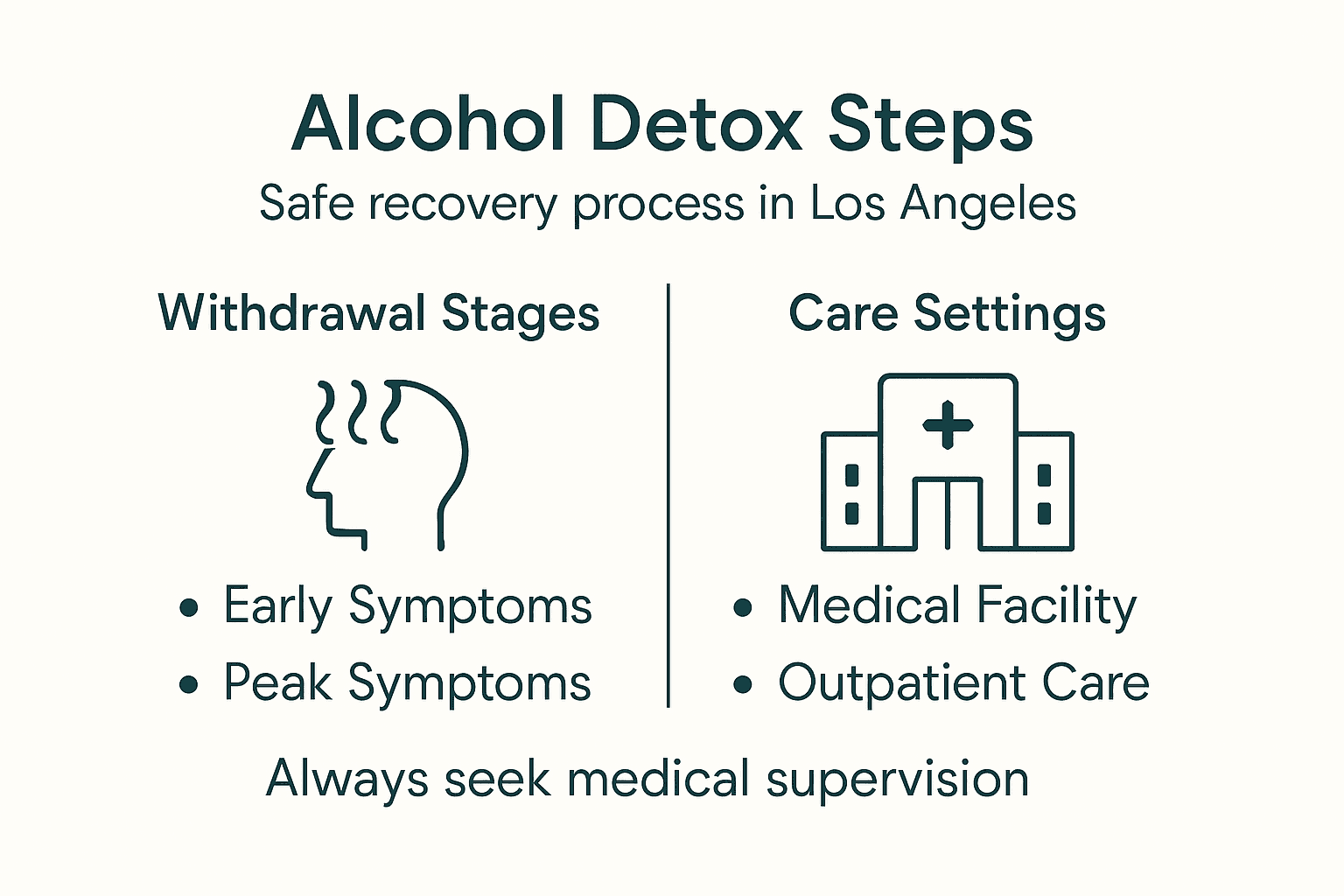
The first stage of alcohol withdrawal begins within 6-12 hours after the last drink, marked by mild to moderate symptoms like anxiety, headaches, nausea, and mild tremors. During this initial phase, medical professionals closely monitor patients for signs of escalating complications. The second stage, occurring 12-24 hours after cessation, often involves more intense symptoms such as increased heart rate, elevated blood pressure, confusion, and potential hallucinations. These stages require careful medical intervention to prevent potentially life-threatening complications.
The final and most critical stage of alcohol withdrawal occurs 48-96 hours after the last drink, where patients face the highest risk of severe symptoms like delirium tremens, seizures, and extreme psychological distress. Professional detox programs offer comprehensive safety protocols to manage these dangerous potential complications. Factors like the duration of alcohol use, overall health, and individual physiological responses significantly influence the intensity and duration of withdrawal symptoms.
Pro tip: Never attempt alcohol withdrawal alone, as medical supervision is crucial for managing potentially dangerous symptoms and ensuring safe recovery.
Medical vs. Outpatient Detox Approaches
Alcohol detox treatment offers two primary approaches: medical detox and outpatient detox, each designed to address different levels of addiction severity and individual patient needs. Medical detox provides comprehensive treatment strategies that ensure patients receive round-the-clock monitoring and immediate medical intervention during the challenging withdrawal process.
Medical detox involves admitted patients receiving intensive care in a controlled hospital or treatment facility environment. This approach is typically recommended for individuals with severe alcohol dependence, complex medical histories, or high risks of dangerous withdrawal symptoms. Medical professionals can administer medications to manage withdrawal complications, monitor vital signs, and provide immediate psychological support. In contrast, outpatient detox offers more flexible recovery options for patients with milder addiction profiles and stable home environments, allowing them to maintain work and family responsibilities while receiving structured treatment.

The selection between medical and outpatient detox depends on multiple critical factors, including the individual’s physical health, addiction severity, support system, and potential risk of complications. Patients with long-term heavy drinking, previous complicated withdrawals, co-occurring mental health disorders, or unstable living conditions are typically best served by medical detox programs. Outpatient approaches work best for motivated individuals with strong support networks, minimal medical complications, and a commitment to structured recovery protocols.
Pro tip: Consult addiction specialists to thoroughly assess your specific situation and determine the most appropriate detox approach for your individual recovery needs.
Here’s a quick comparison of medical detox and outpatient detox approaches:
| Aspect | Medical Detox | Outpatient Detox |
|---|---|---|
| Environment | Hospital or treatment facility | Patient’s home with scheduled visits |
| Supervision Level | 24/7 monitoring by medical professionals | Periodic check-ins, limited supervision |
| Suitability | Severe addiction, high medical risk | Milder addiction, stable home environment |
| Flexibility | Restricted, intensive care | Maintains work and family responsibilities |
| Medication Management | Immediate access to medications | Scheduled medication under supervision |
Role of Clinical Supervision and Support
Clinical supervision represents a critical component of successful alcohol detox, providing comprehensive medical and psychological support throughout the recovery process. Healthcare professionals monitor patient safety by continuously assessing withdrawal symptoms, administering necessary medications, and responding to potential emergencies with immediate intervention.
The multifaceted role of clinical support extends beyond immediate medical management. Qualified treatment professionals assess comprehensive patient needs by developing personalized treatment plans that address both physical and psychological aspects of alcohol dependency. Medical teams provide critical interventions such as managing medication protocols, monitoring vital signs, preventing potential complications, and offering psychological counseling to help patients navigate the challenging emotional landscape of early recovery.
Support during alcohol detox involves a holistic approach that encompasses medical, nutritional, and emotional care. Clinical supervisors work to stabilize patients physically by ensuring proper hydration, balanced nutrition, and medication management while simultaneously providing psychological support to address underlying emotional challenges. This comprehensive approach helps reduce the risk of relapse, manages withdrawal symptoms effectively, and prepares patients for long-term recovery strategies by building coping mechanisms and addressing potential mental health concerns.
Pro tip: Request a comprehensive initial assessment from your healthcare provider to ensure a personalized and thorough clinical supervision plan tailored to your specific recovery needs.
Risks of Home Detox and Mistakes to Avoid
Home detox represents an extremely dangerous approach to alcohol addiction recovery, with potentially life-threatening consequences for individuals attempting unsupervised withdrawal. Detoxification without medical supervision significantly increases the risk of severe medical complications, including seizures, cardiac irregularities, and extreme psychological distress. The human body’s complex physiological response to alcohol withdrawal demands professional medical intervention to manage symptoms safely and effectively.
Several critical mistakes frequently occur during unsupervised home detox attempts. Many individuals underestimate the intensity of withdrawal symptoms, believing they can manage the process independently through sheer willpower. These attempts often lead to dangerous scenarios where patients experience sudden, intense physical and psychological reactions without immediate medical support. Common errors include abrupt alcohol cessation, ignoring underlying health conditions, inadequate hydration, and failing to recognize early warning signs of potentially fatal withdrawal complications.
The most significant risks of home detox involve unpredictable and potentially fatal medical emergencies. Alcohol withdrawal can trigger severe conditions like delirium tremens, characterized by extreme confusion, rapid heart rate, and high fever. Individuals with pre-existing health issues, long-term alcohol dependency, or concurrent mental health disorders face exponentially higher risks when attempting unsupervised detoxification. Professional medical facilities provide comprehensive monitoring, immediate intervention, medication management, and psychological support to navigate these complex and potentially life-threatening withdrawal stages.
Pro tip: Never attempt alcohol detox alone; always seek professional medical guidance to ensure your safety and increase your chances of successful recovery.
Transitioning from Detox to Ongoing Care
Transitioning from alcohol detox to comprehensive ongoing care represents a critical phase in the long-term recovery journey. Recovery strategies extend far beyond initial detoxification, addressing the complex psychological and behavioral aspects of alcohol addiction that persist after physical stabilization. This transition requires a multifaceted approach that combines medical support, therapeutic interventions, and personal commitment to sustainable lifestyle changes.
Successful ongoing care involves developing a personalized treatment plan that addresses individual emotional triggers, underlying mental health conditions, and potential relapse risks. Why aftercare matters in addiction recovery cannot be overstated, as this phase helps individuals rebuild their lives, develop healthy coping mechanisms, and create a supportive network that sustains long-term sobriety. Treatment modalities may include individual counseling, group therapy, medication-assisted treatment, family therapy, and specialized support groups designed to address the unique challenges of alcohol addiction.
The transition from detox to ongoing care requires a holistic approach that recognizes addiction as a complex, chronic condition requiring comprehensive management. Patients learn essential skills like stress management, emotional regulation, relationship rebuilding, and developing healthy lifestyle habits. Professional treatment centers provide structured support systems, helping individuals navigate the challenging early stages of recovery, rebuild personal and professional relationships, and create meaningful strategies for maintaining long-term sobriety and mental wellness.
Pro tip: Commit to a comprehensive aftercare plan and actively participate in recommended treatment modalities to maximize your chances of sustained recovery.
Below is a summary of key factors influencing successful transition from detox to ongoing care:
| Factor | Impact on Recovery | Recommended Support |
|---|---|---|
| Emotional Triggers | Can lead to relapse | Individual counseling |
| Mental Health Issues | Affect long-term success | Medication-assisted treatment |
| Support Network | Sustains motivation | Family and group therapy |
| Coping Skills | Prevents setbacks | Stress management coaching |
| Lifestyle Changes | Builds healthier habits | Structured aftercare programs |
Start Your Safer Alcohol Detox Journey with Expert Support in Los Angeles
Facing the challenges of alcohol detox can feel overwhelming, especially when withdrawal symptoms pose serious health risks. The article highlights critical stages of withdrawal and the dangers of attempting home detox without medical supervision. If you are seeking a safe, medically supervised detox tailored to your unique needs, you are not alone. At Glendora Recovery Center, we understand that every detox experience is different and require compassionate, professional care to manage symptoms effectively and prepare you for lasting recovery.
Take the first step toward a stable and supported detox by connecting with our experienced team. Our upscale facility in Glendora offers individualized treatment plans and flexible scheduling options to fit your lifestyle. Learn more about our specialized medical detox approach designed to minimize risks and maximize safety. Discover how our comprehensive aftercare programs provide ongoing support beyond detox to help you maintain sobriety. Don’t wait until withdrawal complications put your health in danger. Reach out today via our contact page and begin your path to safer recovery with Glendora Recovery Center.
Frequently Asked Questions
What is the alcohol detox process?
Alcohol detox is the process of stopping alcohol consumption and managing withdrawal symptoms that occur as the body adjusts. It often requires medical supervision to ensure patient safety and prevent serious complications.
How long does alcohol detox typically last?
Alcohol detox usually lasts from a few days to a week, depending on various factors such as the duration of alcohol use and individual health conditions.
What are the main risks of attempting home detox?
Attempting home detox can be dangerous and may lead to severe complications like seizures or delirium tremens. It’s crucial to seek medical supervision to manage withdrawal symptoms safely.
Why is medical supervision important during alcohol detox?
Medical supervision is essential for safely managing withdrawal symptoms, preventing potential health crises, and providing immediate intervention should complications arise during the detox process.