
Most American families living in Los Angeles County face tough decisions when seeking detox programs for substance abuse recovery. With over half of those struggling with addiction needing medical support just to begin treatment, the importance of safe, supervised care cannot be overstated. This guide breaks down how professional detox programs work, the options available, and what individuals and loved ones should know to choose the safest path toward lasting change.
Table of Contents
- What Are Detox Programs and How They Work
- Types of Detox Programs for Substance Abuse
- Medical and Safety Considerations in Detox
- Costs, Insurance, and Financial Factors
- Choosing the Right Detox Program in Los Angeles
Key Takeaways
| Point | Details |
|---|---|
| Professional Detox Programs Are Essential | Detox programs offer structured medical support for safe withdrawal from substances, ensuring patient safety and tailored care. |
| Inpatient vs. Outpatient Options | Inpatient detox provides 24/7 supervision for severe dependencies, while outpatient services are suitable for milder cases, allowing daily responsibilities to continue. |
| Individualized Treatment Plans Are Crucial | Effective detox approaches must consider each patient’s unique medical history, substance use patterns, and co-occurring mental health conditions. |
| Financial Factors Impact Access to Treatment | Costs vary widely by program type, and understanding insurance coverage and financial assistance options is vital for accessing detox services. |
What Are Detox Programs and How They Work
Detox programs represent specialized medical interventions designed to safely manage withdrawal from substances while supporting an individual’s transition toward sustained recovery. Unlike popular misconceptions, professional detox is a structured medical process focused on managing potentially dangerous physiological changes that occur when someone stops using alcohol or drugs. Medical detoxification requires comprehensive clinical supervision to ensure patient safety and manage complex withdrawal symptoms.
The primary goal of a professional detox program involves stabilizing individuals physically and psychologically during the initial stages of substance cessation. This process typically includes comprehensive medical assessment, monitoring of vital signs, administration of targeted medications to reduce withdrawal complications, and developing individualized treatment strategies. Experienced healthcare professionals evaluate each patient’s unique medical history, substance use patterns, and potential co-occurring mental health conditions to create a personalized detoxification approach.
Detox programs differ significantly from popular home-based cleansing approaches. While consumer-marketed detox plans often promise quick fixes, professional medical detox provides evidence-based interventions targeting specific physiological challenges. These programs recognize that withdrawal can produce severe and potentially life-threatening symptoms requiring expert medical management. Trained clinicians understand how to mitigate risks associated with sudden substance discontinuation, ensuring patients receive appropriate pharmaceutical support and continuous health monitoring.
Pro tip: Always consult professional medical experts before attempting any detox program, as unsupervised withdrawal can produce dangerous health complications.
Types of Detox Programs for Substance Abuse
Substance abuse detox programs encompass multiple specialized approaches designed to address diverse individual needs and addiction complexities. Inpatient detoxification represents the most comprehensive treatment model, providing round-the-clock medical supervision and intensive support for individuals experiencing severe substance dependencies. These programs offer structured environments where patients receive comprehensive medical monitoring, medication management, and immediate intervention for potentially dangerous withdrawal symptoms.

Outpatient detox programs provide alternative pathways for individuals with less severe substance use disorders or those unable to commit to residential treatment. These programs typically involve scheduled medical assessments, medication-assisted treatment, and counseling sessions that allow patients to maintain their daily responsibilities while receiving professional addiction support. Intensive outpatient programs offer more frequent and rigorous treatment schedules, bridging the gap between traditional outpatient services and full residential care.
Specialized detox approaches also include medically supervised withdrawal management, medication-assisted treatment, and holistic recovery strategies. These programs recognize that addiction treatment is not one-size-fits-all and require customized interventions addressing underlying psychological, physiological, and social factors contributing to substance abuse. Comprehensive detox programs integrate multiple therapeutic modalities, including psychiatric evaluation, behavioral therapy, group counseling, and individualized treatment planning to support sustainable recovery.
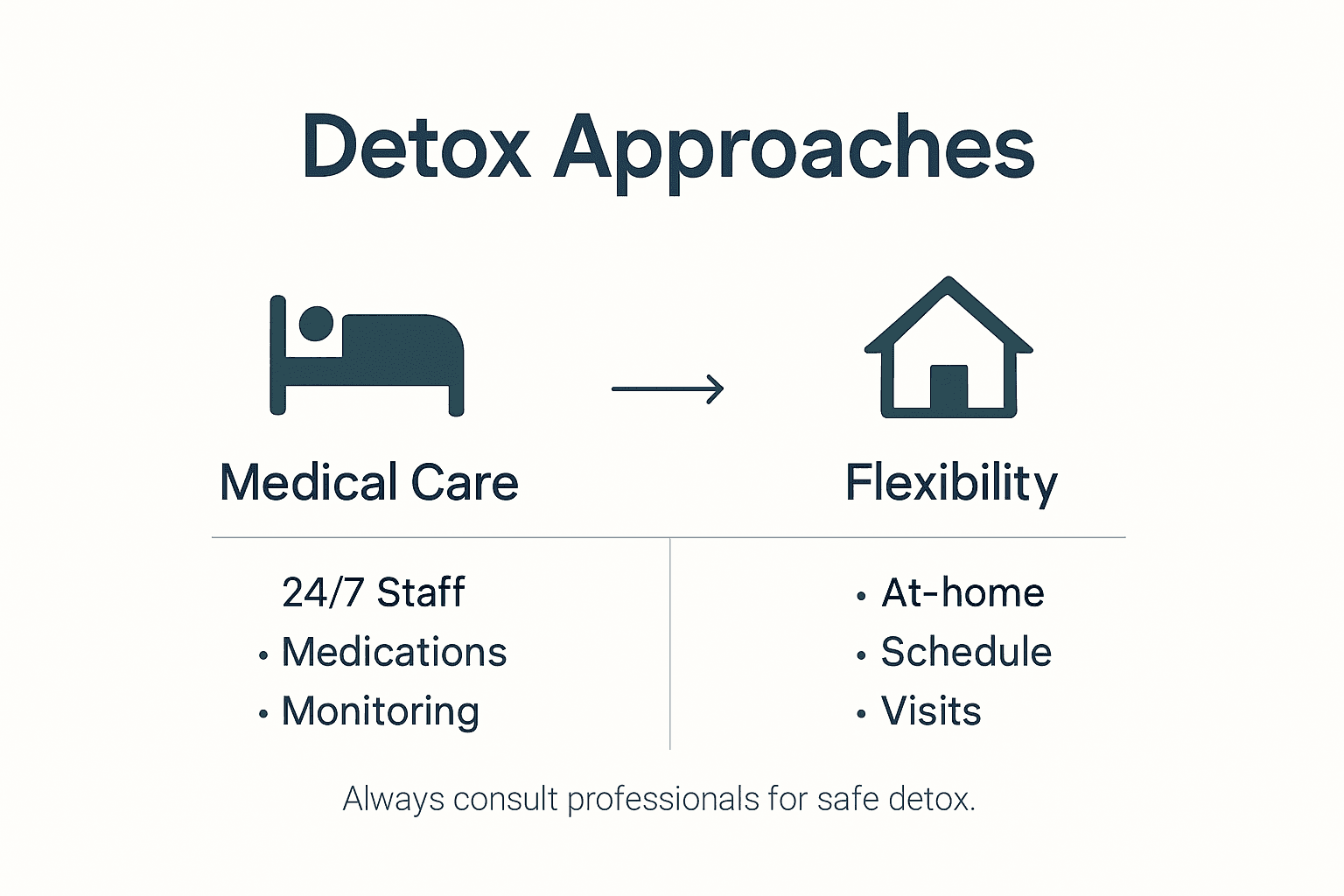
Here’s a comparison of inpatient and outpatient detox programs to clarify key differences:
| Aspect | Inpatient Detox | Outpatient Detox |
|---|---|---|
| Medical Supervision | 24/7 comprehensive care | Scheduled appointments only |
| Living Arrangements | Reside at treatment facility | Live at home during treatment |
| Suitability | Severe dependencies, high risks | Mild to moderate cases |
| Disruption to Life | Requires time away from work/home | Allows daily activities continuation |
| Typical Duration | Several days to a few weeks | Varies, often longer than inpatient |
| Cost | Higher due to intensive resources | Lower, fewer overall services |
Pro tip: Always consult addiction specialists to determine the most appropriate detox program tailored to your specific medical history and substance use patterns.
Medical and Safety Considerations in Detox
Detox programs require comprehensive medical oversight to ensure patient safety during the challenging withdrawal process. Medical detox protocols emphasize the critical importance of individualized treatment strategies that account for the specific substance, severity of dependency, and potential health complications. Healthcare professionals carefully assess each patient’s medical history, current physical condition, and potential risks to develop a tailored approach that minimizes dangerous withdrawal symptoms.
Comprehensive medical safety during detox involves continuous monitoring of physiological and psychological responses. Medical teams must be prepared to address potentially life-threatening complications such as seizures, cardiovascular instability, and severe dehydration. Inpatient detox programs integrate multidisciplinary care, including psychiatric evaluation, nursing support, and social work interventions to create a holistic safety net for individuals experiencing complex withdrawal processes.
Risk management is a fundamental aspect of medical detox, requiring sophisticated medical expertise and advanced monitoring technologies. Healthcare providers must conduct thorough initial assessments that identify pre-existing medical conditions, potential drug interactions, and underlying mental health disorders that could complicate the detoxification process. This comprehensive approach ensures that treatment plans are not only safe but also responsive to the unique physiological and psychological needs of each individual seeking recovery.
Pro tip: Always disclose your complete medical history and current medications to detox professionals to ensure the safest and most effective treatment approach.
Costs, Insurance, and Financial Factors
Detox program costs vary significantly depending on multiple complex factors, including treatment intensity, duration of stay, and specific services required. Inpatient programs typically represent the most expensive option, with comprehensive medical supervision and round-the-clock care driving higher expenses. Outpatient programs offer more affordable alternatives while still providing essential medical support and therapeutic interventions for individuals seeking recovery.
Insurance coverage plays a critical role in managing the financial burden of addiction treatment. Many private health insurance plans and government healthcare programs now recognize substance abuse treatment as an essential medical service, offering partial or full coverage for detoxification programs. Patients should carefully review their specific insurance policies, understanding nuanced details about in-network providers, pre-authorization requirements, and potential out-of-pocket expenses. Economic analyses of substance abuse treatment consistently demonstrate that investing in comprehensive addiction recovery programs can significantly reduce long-term societal healthcare and economic costs.
Financial assistance options exist for individuals facing challenges accessing addiction treatment. Many treatment centers offer sliding scale payment structures, flexible payment plans, and partnerships with financial assistance programs. Some organizations provide grants or scholarships specifically designed to support individuals seeking recovery, recognizing that financial barriers should not prevent someone from accessing critical medical care. Additional resources include state-funded programs, nonprofit organizations, and community health initiatives that aim to make detox and recovery services more accessible.
To help you review financial aspects of detox, here’s a table outlining cost variables and ways to manage expenses:
| Cost Factor | Typical Range | Strategies to Reduce Out-of-Pocket Costs |
|---|---|---|
| Inpatient Program Expense | $5,000–$20,000+ | Use insurance, seek grants or scholarships |
| Outpatient Program Expense | $1,000–$5,000 | Sliding scale fees, flexible payment plans |
| Insurance Role | Partial/full coverage | Verify in-network providers, pre-approve |
| Financial Assistance | Varies by provider | Contact local nonprofits, state programs |
Pro tip: Contact multiple treatment centers and your insurance provider to compare coverage options and explore all available financial assistance resources before making a decision.
Choosing the Right Detox Program in Los Angeles
Prevention and treatment services in Los Angeles County offer diverse detox programs designed to meet the unique needs of individuals struggling with substance abuse. Selecting the most appropriate program requires careful consideration of multiple factors, including the specific substance involved, severity of addiction, personal medical history, and individual lifestyle constraints. Understanding the nuanced differences between available treatment options is crucial for developing an effective recovery strategy.
Detox program selection involves comprehensive assessment of medical requirements and personal circumstances. Individuals must evaluate key program characteristics such as treatment approach, staff credentials, facility environment, and aftercare support. Critical considerations include the program’s accreditation status, success rates, specialized treatment methodologies, and ability to address co-occurring mental health conditions. Inpatient medical detoxification facilities offer intensive, round-the-clock care, while outpatient programs provide more flexible treatment options for those maintaining professional or family responsibilities.
Los Angeles County provides a robust network of substance abuse treatment resources tailored to diverse populations. Potential patients should investigate multiple treatment centers, request detailed program information, and schedule consultations to determine the most suitable approach. Factors such as program philosophy, treatment modalities, staff expertise, and alignment with personal recovery goals can significantly impact treatment outcomes. Consulting with addiction specialists, reviewing patient testimonials, and understanding the comprehensive support services offered can help individuals make informed decisions about their recovery journey.
Pro tip: Request comprehensive program information and schedule consultations with multiple treatment centers to compare their approaches, expertise, and support services before making a final decision.
Take the First Step Toward Safe and Effective Detox
Understanding the complexities and risks involved in detox programs is essential for anyone ready to overcome substance abuse. The challenges of withdrawal symptoms and the need for medically supervised care highlighted in the article show why professional guidance can make all the difference. If you are looking for a compassionate and individualized approach to detox and recovery, Glendora Recovery Center offers expert support designed to address your unique needs.
Our upscale facility in Los Angeles County provides flexible treatment options including Partial Hospitalization Programs and Intensive Outpatient Programs alongside court-approved care. With experienced professionals skilled in managing dual diagnosis and addiction, we focus on safety, medical oversight, and emotional well-being to help you navigate withdrawal confidently. Don’t attempt detox alone when our team is ready to ensure your journey is as safe and comfortable as possible.
Discover how you can begin your personalized recovery by reaching out to us today. Explore our available programs and speak directly with specialists by visiting our Contact Us page. Taking action now can prevent dangerous complications and set the foundation for lasting healing. Start building your recovery with trusted care tailored just for you.
Frequently Asked Questions
What is a detox program?
Detox programs are specialized medical interventions designed to manage withdrawal from substances safely while supporting individuals’ transition to recovery. They include comprehensive medical assessments and tailored treatment strategies to ensure patient safety during withdrawal.
How do inpatient and outpatient detox programs differ?
Inpatient detox programs offer round-the-clock medical supervision and are suitable for individuals with severe dependencies. Outpatient programs provide scheduled medical assessments and allow patients to maintain their daily activities, making them suitable for mild to moderate cases.
What medical considerations are involved in detox programs?
Detox programs require comprehensive medical oversight to ensure safety. This includes continuous monitoring of vital signs and addressing potentially life-threatening withdrawal symptoms like seizures or dehydration, tailored to each patient’s medical history and substance use patterns.
How much do detox programs typically cost?
Detox program costs can vary widely. Inpatient programs usually range from $5,000 to $20,000+, while outpatient programs typically cost between $1,000 and $5,000. Insurance often plays a significant role in covering these costs, so it’s essential to check individual coverage options.