
Nearly 22 million American adults struggle with substance dependence every year, yet many remain unsure where to begin their recovery journey in Los Angeles. Finding reliable medical detox options matters because safe withdrawal is often the most daunting step. Learning what medical detox truly involves—along with understanding treatment choices and ongoing support—empowers you to make informed decisions and start building a foundation for lasting recovery.
Table of Contents
- What Is Medical Detox and Its Purpose
- Types of Medical Detox and Key Differences
- The Medical Detox Process Step-by-Step
- Risks, Withdrawal Symptoms, and Safety Measures
- How Glendora Recovery Center Supports Detox
- What Happens After Detox Ends
Key Takeaways
| Point | Details |
|---|---|
| Medical Detox is Crucial for Recovery | It safely manages withdrawal symptoms while providing support for physical stabilization and preparing individuals for ongoing treatment. |
| Types of Medical Detox Vary | Options include inpatient, outpatient, medication-assisted, and rapid detox, each suited for different levels of substance dependence and health needs. |
| Comprehensive Evaluation is Essential | A thorough assessment helps to tailor a detox plan that meets individual medical requirements and manages withdrawal risks effectively. |
| Post-Detox Treatment is Vital | Transitioning to structured therapeutic programs is necessary to address the psychological aspects of addiction and ensure long-term recovery. |
What Is Medical Detox and Its Purpose
Medical detox represents the critical first stage of addiction recovery, focusing on safely managing withdrawal from substances while minimizing potential health risks. Medical detoxification involves professionally supervised treatment that helps individuals transition from active substance dependence to physical stabilization.
During medical detox, healthcare professionals carefully monitor patients experiencing withdrawal symptoms, providing targeted medical interventions to manage potential complications. The process typically involves comprehensive evaluation, stabilization, and preparation for ongoing addiction treatment. Unlike unsupervised detox attempts, medical detox ensures individuals receive appropriate medical support, reducing risks associated with sudden substance discontinuation.

The primary purpose of medical detox extends beyond simple substance elimination. It aims to address physiological challenges while creating a foundation for long-term recovery. By managing withdrawal symptoms, preventing medical complications, and supporting patients through challenging transition periods, medical detox prepares individuals for subsequent therapeutic interventions. Detox programs include critical stages of evaluation, medical management, and holistic patient support.
Pro tip: Always consult professional medical experts before attempting detox, as individual withdrawal experiences can vary significantly based on substance type, duration of use, and personal health conditions.
Types of Medical Detox and Key Differences
Medical detox encompasses several specialized approaches designed to address different levels of substance dependence and individual patient needs. Drug detoxification methods vary significantly, with each type offering unique benefits and addressing specific recovery challenges. The primary types include inpatient detox, outpatient detox, medication-assisted detox, and rapid detox, each tailored to meet distinct treatment requirements.
Inpatient medical detox provides the most comprehensive care, offering 24/7 medical supervision for individuals with severe substance dependencies or complex medical histories. These programs create a controlled environment where patients receive immediate medical intervention and support. Outpatient detox, by contrast, allows individuals more flexibility, enabling them to maintain work and family responsibilities while receiving periodic medical monitoring. The choice between these approaches depends on factors like addiction severity, personal health status, and individual treatment goals.
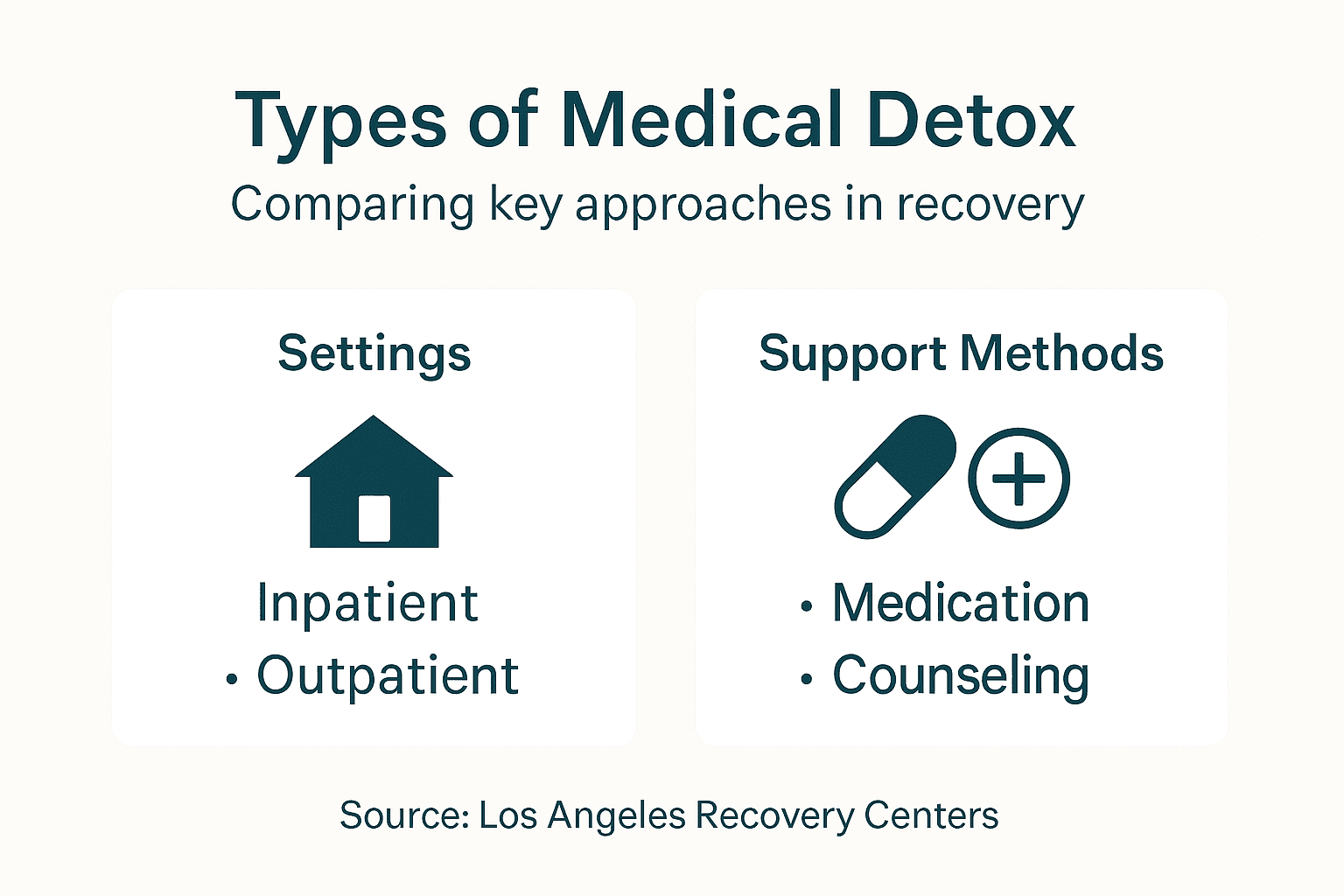
Medication-assisted detox represents a critical strategy for managing withdrawal symptoms and reducing potential health risks. Medically assisted detox programs utilize targeted medications to ease withdrawal symptoms, stabilize patients, and support their transition toward long-term recovery. This approach is particularly beneficial for individuals struggling with opioid, alcohol, or benzodiazepine dependencies, where withdrawal can pose significant medical challenges.
Pro tip: Consult addiction specialists to determine the most appropriate detox approach, as individual medical histories and substance dependencies require personalized treatment strategies.
Here is a comparison of the main types of medical detox programs:
| Detox Type | Medical Supervision Level | Patient Setting | Best For |
|---|---|---|---|
| Inpatient Detox | 24/7 full supervision | Hospital or rehab center | Severe addiction, high medical risk |
| Outpatient Detox | Periodic monitoring | Home, clinic part-time | Mild to moderate dependence, stable health |
| Medication-Assisted | Tailored medication use | Hospital or outpatient clinic | Opioids, alcohol, or benzodiazepine withdrawal |
| Rapid Detox | Intensive, short duration | Specialized clinic | Specific substances where rapid clearance is needed |
The Medical Detox Process Step-by-Step
The medical detox process is a carefully structured approach designed to safely guide individuals through substance withdrawal under professional medical supervision. Drug detoxification guidelines outline a comprehensive three-stage approach that addresses both physical and psychological aspects of addiction recovery. Understanding these stages helps patients and their families prepare for the journey toward healing.
The first critical stage is comprehensive evaluation, where medical professionals conduct thorough assessments to understand the patient’s specific substance use history, overall health status, and potential co-occurring mental health conditions. This initial screening helps create a personalized detox plan that addresses individual medical needs, potential withdrawal risks, and develops strategies for managing anticipated symptoms. Healthcare providers will typically perform physical examinations, conduct blood tests, assess mental health, and review the patient’s complete medical history to ensure the most effective treatment approach.
Stabilization represents the second crucial phase of medical detox, focusing on managing withdrawal symptoms and supporting the patient’s immediate medical needs. During this stage, medical professionals may utilize carefully prescribed medications to reduce withdrawal discomfort, prevent potential complications, and help patients transition more comfortably toward recovery. The goal is to create a safe, supportive environment that minimizes physical and psychological distress while preparing the individual for long-term addiction treatment. Depending on the specific substance and patient’s health profile, stabilization can involve medical monitoring, nutritional support, hydration management, and psychological counseling to address emotional challenges.
Pro tip: Keep a detailed health journal documenting your symptoms and experiences during detox, as this information can help medical professionals fine-tune your treatment plan and provide more personalized care.
Risks, Withdrawal Symptoms, and Safety Measures
Detox involves complex physiological challenges that require comprehensive medical understanding and expert intervention. Medical monitoring during detox is critical for managing potential health risks and ensuring patient safety throughout the withdrawal process. Understanding the potential risks and symptoms helps individuals prepare for the challenging journey of substance recovery.
Withdrawal symptoms can vary dramatically depending on the specific substance and individual health profile, ranging from mild discomfort to potentially life-threatening medical complications. Common risks include severe physical symptoms such as seizures, cardiovascular instability, extreme anxiety, and psychological distress. Specific substances like alcohol and benzodiazepines can produce particularly dangerous withdrawal symptoms, including delirium tremens, which may cause hallucinations, severe confusion, and potentially fatal complications if not professionally managed.
Professional medical detox programs implement multiple safety measures to mitigate these risks and provide comprehensive patient care. These strategies include continuous vital sign monitoring, immediate medical intervention protocols, medication management to reduce withdrawal severity, nutritional support, and psychological counseling. Healthcare professionals develop individualized treatment plans that account for each patient’s unique medical history, substance use pattern, and potential co-occurring mental health conditions. By providing round-the-clock supervision and tailored medical support, these programs significantly reduce the potential dangers associated with substance withdrawal.
Pro tip: Be completely honest with medical professionals about your substance use history and any underlying health conditions to help them create the most effective and safest detox plan possible.
The table below summarizes common withdrawal symptoms, their potential risks, and safety measures taken during detox:
| Symptom | Potential Risks | Safety Measures Employed |
|---|---|---|
| Seizures | Brain injury, death | Medication, close neurological monitoring |
| Cardiovascular Instability | Heart failure, arrhythmias | Continuous vital sign monitoring |
| Anxiety/Agitation | Self-harm, panic | Counseling, medication, calming environment |
| Delirium Tremens | Hallucinations, confusion | Hospitalization, IV fluids, sedation |
| Nausea/Vomiting | Dehydration, aspiration | Hydration therapy, nutritional support |
How Glendora Recovery Center Supports Detox
Glendora Recovery Center provides comprehensive, individualized detox support designed to address the unique challenges of substance withdrawal. Detox treatment in Glendora offers a holistic approach that combines medical expertise, compassionate care, and personalized treatment strategies. Our center understands that successful recovery requires more than just managing physical symptoms.
Our multidisciplinary team of medical professionals, therapists, and addiction specialists creates tailored treatment plans that address both the physical and psychological aspects of substance dependence. We offer flexible program options including partial hospitalization, intensive outpatient programs, and specialized support for individuals with co-occurring mental health conditions. This comprehensive approach ensures that patients receive continuous support throughout their detox journey, with strategies designed to minimize withdrawal risks and support long-term recovery.
At Glendora Recovery Center, we prioritize patient safety and comfort through advanced medical monitoring, medication-assisted treatment, and integrated mental health support. Our programs include round-the-clock medical supervision, nutritional counseling, individual and group therapy sessions, and aftercare planning. We recognize that detox is just the first step in addiction recovery, and our commitment extends beyond the initial treatment phase to help patients build sustainable strategies for maintaining sobriety and improving overall wellness.
Pro tip: Schedule a confidential consultation to discuss your specific needs and explore personalized detox treatment options that align with your individual health and recovery goals.
What Happens After Detox Ends
Completing medical detox represents a significant milestone in addiction recovery, but it is not the end of the treatment journey. Addiction treatment after detox requires a comprehensive, structured approach that addresses the complex psychological and behavioral aspects of substance use disorders. Patients must transition from physical stabilization to deeper therapeutic interventions that support long-term recovery and personal transformation.
The next phase typically involves entering more intensive treatment programs such as residential rehabilitation, partial hospitalization, or intensive outpatient programs. These structured environments provide patients with critical therapeutic resources including individual counseling, group therapy, cognitive behavioral interventions, and skill-building workshops. The goal is to help individuals understand the root causes of their addiction, develop healthy coping mechanisms, and create sustainable strategies for maintaining sobriety in real-world environments.
Professional aftercare planning becomes essential during this transition, focusing on relapse prevention, mental health support, and rebuilding personal and professional relationships. Comprehensive treatment programs often include ongoing medication management, family therapy, vocational counseling, and connection to community support networks like 12-step programs. These multifaceted approaches recognize that recovery is a continuous journey requiring consistent support, personal commitment, and adaptive strategies.
Pro tip: Engage actively in your aftercare planning and remain open to multiple support strategies, understanding that recovery is a personalized process that may require adjustments over time.
Take the First Step Toward Safe and Supported Medical Detox in Los Angeles
If you are facing the difficult challenge of medical detox, you already understand how critical professional supervision is to safely manage withdrawal symptoms and avoid serious health risks. The article “Medical Detox Explained – Safe Recovery in Los Angeles” highlights the importance of a personalized, medically monitored detox process that serves as the foundation for lasting recovery. At Glendora Recovery Center, we recognize the emotional and physical hurdles you face during detox and offer compassionate care tailored to your unique needs.
Our upscale facility delivers expert medical detox support combined with comprehensive addiction treatment and mental health services for adults and teens in Los Angeles County. We provide flexible scheduling including morning, evening, weekend, and telehealth options so your care fits your life. With our multidisciplinary team specializing in dual diagnosis and medication-assisted detox, you can feel confident that your withdrawal symptoms and co-occurring conditions will be safely managed every step of the way.
Do not wait to secure the supportive environment you deserve to begin your healing journey. Discover how we can guide you through every phase of detox and beyond. Contact us today at Glendora Recovery Center and take the critical first step toward a safer, more stable recovery starting now.
Frequently Asked Questions
What is medical detox?
Medical detox is the first stage of addiction recovery that focuses on safely managing withdrawal from substances under professional supervision. It aims to minimize health risks and create a foundation for long-term recovery.
What types of medical detox are available?
There are several types of medical detox, including inpatient detox, outpatient detox, medication-assisted detox, and rapid detox. Each type is designed to cater to different levels of substance dependence and specific patient needs.
What happens during the medical detox process?
The medical detox process typically includes three stages: comprehensive evaluation, stabilization, and preparation for ongoing treatment. These stages help address both physical and psychological aspects of addiction recovery in a structured manner.
Why is professional support important during detox?
Professional support is crucial during detox to manage potential withdrawal symptoms, prevent medical complications, and provide the necessary medical interventions. This ensures a safer and more comfortable transition toward recovery.
Recommended
- Detox Programs Explained: Pathways to Recovery | Glendora Recovery Center
- How to Prepare for Detox Naturally: A Proven Guide | Glendora Recovery Center
- Drug Detox Explained: Types, Process, and Safety | Glendora Recovery Center
- 7 Key Benefits of Detox Programs for Recovery Success | Glendora Recovery Center