
For families in Los Angeles County, watching a loved one struggle with addiction can feel confusing and overwhelming. Many believe addiction is a simple lack of willpower, but scientific research shows it is a chronic brain disorder marked by compulsive behaviors and lasting neurological changes. This article clarifies the true nature of addiction, debunks common myths, and helps adults and their families better recognize signs, differences, and the impact of addiction—empowering you with knowledge to support recovery.
Table of Contents
- Addiction Defined And Common Misconceptions
- Types Of Addiction And How They Differ
- Warning Signs And Key Characteristics
- How Addiction Impacts Health And Relationships
- Treatment Options And Recovery Challenges
Key Takeaways
| Point | Details |
|---|---|
| Understanding Addiction | Addiction is a complex neurobiological disorder that disrupts brain circuits and manifests through uncontrollable substance use or behaviors despite negative consequences. |
| Types of Addiction | Addiction can be categorized into substance use disorders and behavioral addictions, each requiring distinct treatment strategies. |
| Warning Signs | Recognizing early warning signs, including behavioral changes and psychological characteristics, is crucial for timely intervention and recovery. |
| Holistic Treatment | Successful addiction recovery involves a personalized and comprehensive approach that addresses medical, psychological, and social needs. |
Addiction Defined and Common Misconceptions
Addiction is a complex neurobiological disorder that goes far beyond simple willpower or personal choice. Characterized by compulsive behaviors, addiction fundamentally disrupts brain circuits related to reward, stress, and self-control.
At its core, addiction involves uncontrollable substance use or behavior despite significant negative consequences. Key characteristics include:
- Intense cravings for the substance or behavior
- Loss of control over usage
- Continued engagement despite clear harmful outcomes
- Neurological changes that persist even after stopping the addictive behavior
Many people misunderstand addiction as a moral failing or personal weakness. However, scientific research demonstrates addiction is a legitimate medical condition influenced by complex interactions between genetic, environmental, and psychological factors.
Neurobiological Foundations
Addiction rewires brain chemistry, creating profound changes in how reward and motivation systems function. The brain begins to prioritize the addictive substance or behavior over other essential life activities, creating a powerful neurological drive that overrides rational decision-making.
Addiction is a chronic disease that fundamentally alters brain function, comparable to other complex medical conditions like diabetes or hypertension.
Common Misconceptions About Addiction
Several persistent myths prevent people from understanding addiction’s true nature:
- Addiction is a choice
- Only illegal drugs can cause addiction
- Willpower alone can overcome addiction
- Addiction only affects certain demographics
- Relapse means treatment has failed
Pro tip: Recognize that addiction is a treatable medical condition requiring professional support, compassion, and comprehensive treatment strategies.
Types of Addiction and How They Differ
Addiction is not a one-size-fits-all condition, but a complex spectrum of disorders with distinct characteristics. Addiction manifests across multiple domains involving both substances and behaviors that fundamentally alter brain chemistry and function.

Two primary categories of addiction exist:
Substance Use Disorders
- Alcohol addiction
- Opioid dependency
- Stimulant abuse
- Nicotine addiction
- Prescription medication misuse
Behavioral Addictions
- Gambling compulsion
- Internet/technology addiction
- Shopping addiction
- Sexual behavior addiction
- Gaming disorder
While these addiction types might seem different on the surface, they share critical neurological similarities. Each addiction type triggers the brain’s reward system, creating powerful neurochemical responses that reinforce compulsive behaviors and override rational decision-making processes.
Addiction, whether substance-based or behavioral, fundamentally rewires brain circuitry, creating powerful psychological and physiological dependencies that extend beyond simple choice or willpower.
Substance addictions typically involve chemical dependencies that produce physical withdrawal symptoms, while behavioral addictions create psychological dependencies characterized by compulsive engagement despite negative consequences. Understanding these nuanced differences is crucial for developing targeted, effective treatment strategies.
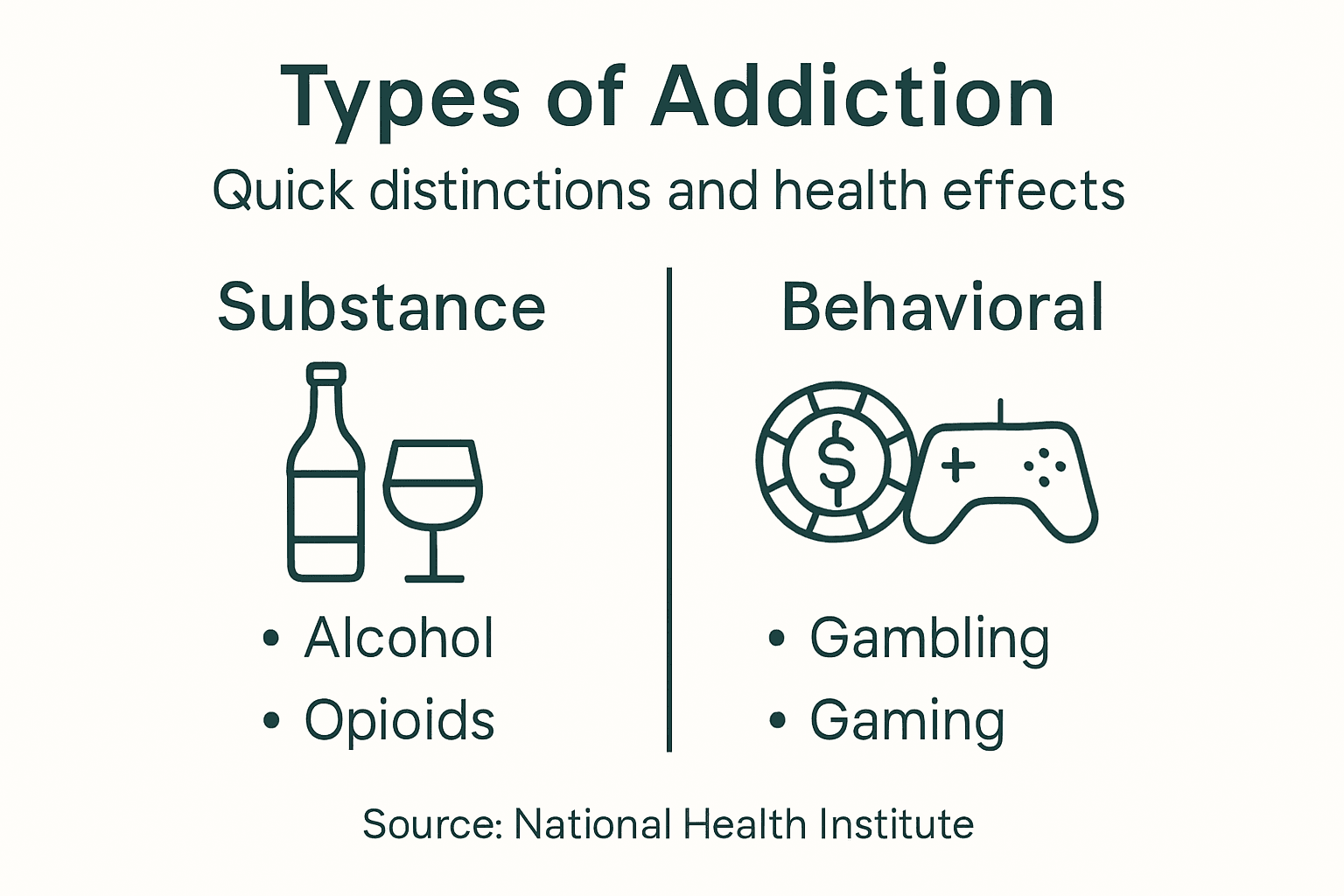
Here’s a concise summary comparing substance use disorders and behavioral addictions:
| Aspect | Substance Use Disorders | Behavioral Addictions |
|---|---|---|
| Main Trigger | Chemical substance | Repetitive behavior |
| Dependency Type | Physical and psychological | Mostly psychological |
| Withdrawal Symptoms | Often physical and acute | Primarily emotional/mental |
| Example Conditions | Alcohol, opioids, nicotine | Gambling, gaming, shopping |
| Typical Treatment | Medication + therapy | Cognitive behavioral therapy |
Key Differences Between Addiction Types
- Neurological activation patterns
- Withdrawal symptom manifestation
- Physical versus psychological dependencies
- Treatment approach requirements
- Long-term health impact mechanisms
Pro tip: Recognize that addiction is a complex medical condition requiring personalized, compassionate professional intervention tailored to individual experiences and specific addiction characteristics.
Warning Signs and Key Characteristics
Addiction can manifest through numerous complex warning signs that often develop gradually, making early detection challenging. Key indicators of addiction represent critical behavioral and physiological shifts that signal an emerging or established dependency.
Behavioral Warning Signs Include:
- Dramatic changes in social circles
- Increased secrecy and isolation
- Neglecting personal and professional responsibilities
- Continuing substance use despite clear negative consequences
- Experiencing financial difficulties related to addiction
Psychological Characteristics
Individuals struggling with addiction frequently exhibit profound psychological transformations:
- Intense and persistent cravings
- Loss of control over substance or behavior
- Developing high tolerance levels
- Experiencing withdrawal symptoms
- Using substances to manage emotional states
Addiction fundamentally rewires an individual’s decision-making processes, creating neurological patterns that prioritize the addictive behavior over rational thinking.
Physical warning signs can be equally revealing, ranging from noticeable changes in appearance to significant health deterioration. These might include sudden weight changes, bloodshot eyes, unexplained injuries, poor personal hygiene, and disrupted sleep patterns.
Critical Red Flags
Some critical red flags demand immediate attention:
- Unsuccessful attempts to quit
- Engaging in risky behaviors
- Developing financial or legal problems
- Experiencing relationship conflicts
- Showing signs of mental health decline
Pro tip: Trust your instincts and seek professional guidance if you recognize multiple warning signs, understanding that early intervention significantly improves recovery outcomes.
How Addiction Impacts Health and Relationships
Addiction is a devastating condition that extends far beyond individual substance use, creating profound ripple effects across physical health, mental well-being, and interpersonal dynamics. Comprehensive health impacts demonstrate how addiction fundamentally transforms multiple life domains.
Physical Health Consequences
Addiction can trigger severe medical complications:
- Increased risk of chronic diseases
- Compromised immune system functionality
- Higher susceptibility to infections
- Potential organ damage
- Neurological system disruptions
Relationship Deterioration Patterns
Individuals struggling with addiction often experience systematic relationship breakdowns:
- Loss of trust with family members
- Increased interpersonal conflicts
- Social isolation
- Financial strain
- Emotional distance from loved ones
Addiction transforms personal connections, creating cycles of dysfunction that extend beyond the individual’s immediate experience.
Mental health becomes intrinsically linked with addiction, with many individuals experiencing co-occurring disorders such as depression, anxiety, and complex psychological challenges. These interconnected issues frequently exacerbate both health problems and relationship tensions.
Systemic Impact Categories
Addiction’s reach extends across multiple domains:
This table summarizes how addiction can impact different areas of life:
| Impact Domain | Examples of Effects | Long-term Consequences |
|---|---|---|
| Physical Health | Chronic illness, organ damage | Early aging, reduced immunity |
| Relationships | Loss of trust, family tension | Social isolation, broken bonds |
| Mental Health | Co-occurring disorders, anxiety | Persistent emotional struggles |
| Career/Finance | Work decline, legal issues | Financial instability, job loss |
- Professional performance decline
- Legal complications
- Financial instability
- Social network disintegration
- Potential generational trauma transmission
Pro tip: Recognize that healing from addiction requires comprehensive support targeting both individual recovery and relationship reconstruction.
Treatment Options and Recovery Challenges
Addiction treatment is a complex, personalized journey that requires comprehensive and adaptive strategies. Treatment approaches must address individual needs through a multifaceted approach combining medical, psychological, and social support.
Primary Treatment Modalities
Effective addiction recovery typically involves multiple intervention strategies:
- Medication-assisted treatment
- Individual counseling
- Group therapy sessions
- Cognitive behavioral therapy
- Holistic wellness programs
Recovery Challenges
Individuals confronting addiction face numerous complex obstacles:
- Managing persistent withdrawal symptoms
- Rebuilding damaged relationships
- Developing healthy coping mechanisms
- Overcoming societal stigma
- Maintaining long-term motivation
Recovery is not a destination but a continuous journey of personal transformation and healing.
Comprehensive Treatment Components
Successful treatment integrates medical intervention with psychological support, addressing both physiological dependency and underlying emotional challenges. This holistic approach recognizes addiction as a chronic condition requiring ongoing management and compassionate care.
Key Recovery Considerations
- Personalized treatment plans
- Continuous medical supervision
- Mental health support
- Family involvement
- Relapse prevention strategies
Pro tip: Approach recovery as a collaborative process, embracing professional guidance while maintaining personal accountability and commitment to healing.
Start Your Healing Journey from Addiction and Restore Your Family
Understanding addiction as a complex medical condition that rewires the brain helps highlight why compassionate professional care is essential for lasting recovery. If you or a loved one are facing challenges like uncontrollable cravings, relationship breakdowns, or co-occurring mental health issues, personalized treatment at Glendora Recovery Center offers hope and real solutions. Our specialized programs address substance and behavioral addictions with comprehensive therapies and flexible schedules that fit your life.
Take the first step towards reclaiming your health and rebuilding trust with those who matter most. Learn how our caring team provides individualized support for adults and teens through customized treatment plans. Contact us today at Glendora Recovery Center and discover how professional guidance can make recovery possible. Your path to healing and stronger family connections begins now.
Frequently Asked Questions
What is addiction and how does it affect the brain?
Addiction is a complex neurobiological disorder that disrupts brain circuits related to reward, stress, and self-control. It rewires brain chemistry, leading to compulsive behaviors and a prioritization of the addictive substance or behavior over all else.
What are the common misconceptions about addiction?
Many people mistakenly believe that addiction is simply a choice or a moral failing. In reality, addiction is a legitimate medical condition influenced by genetic, environmental, and psychological factors, requiring professional treatment to overcome.
How does addiction impact relationships?
Addiction can lead to significant relationship deterioration, resulting in loss of trust, increased conflicts, social isolation, and emotional distance between individuals and their loved ones.
What are the challenges faced during addiction recovery?
Recovery from addiction presents many challenges, including managing withdrawal symptoms, rebuilding relationships, developing healthy coping mechanisms, overcoming societal stigma, and maintaining long-term motivation.
Recommended
- What Is Drug Addiction – Impact on Health and Life | Glendora Recovery Center
- Family Therapy Workflow Addiction: Effective Steps for Recovery | Glendora Recovery Center
- Teenage Addiction: Risks, Recovery, and Family Impact | Glendora Recovery Center
- Signs an Addict Is Relapsing – What Families Should Know | Glendora Recovery Center