
Trying to fit addiction treatment into a packed schedule can feel impossible for many families in Los Angeles County. Whether you are balancing work, school, or family responsibilities, flexible recovery options allow you to get help without putting your life on hold. This article guides you through how to assess your treatment needs, find the right sessions, and use personalized scheduling strategies so recovery becomes a realistic and sustainable part of your routine.
Table of Contents
- Step 1: Assess Treatment Needs And Session Preferences
- Step 2: Contact Glendora Recovery Center For Availability
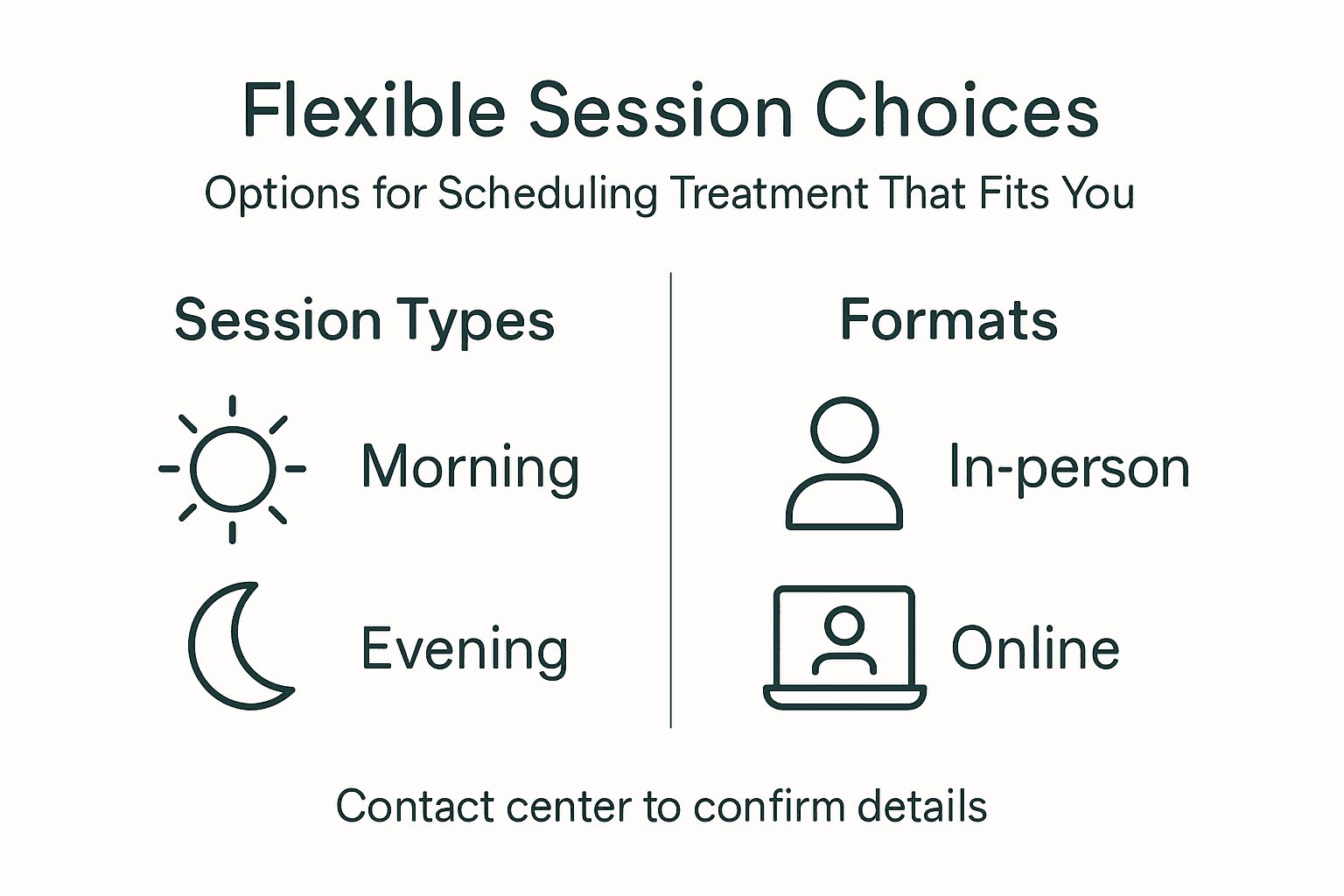
- Step 3: Select Morning, Evening, Weekend, Or Online Sessions
- Step 4: Confirm Session Schedule And Treatment Plan
- Step 5: Verify Appointment Reminders And Ongoing Support
Quick Summary
| Key Point | Explanation |
|---|---|
| 1. Assess your treatment needs first | Reflect on your schedule and responsibilities to determine the best treatment type before starting. |
| 2. Communicate your non-negotiables | Share your specific needs, such as session times and formats, during your initial consultation for effective matching. |
| 3. Choose sessions that fit your lifestyle | Opt for morning, evening, weekend, or online sessions based on your energy levels and daily obligations to enhance attendance. |
| 4. Confirm your treatment plan details | Get written confirmation of session dates and therapist contacts to ensure clarity and accountability in your recovery process. |
| 5. Set up appointment reminders and support | Verify reminder systems and crisis protocols to stay engaged and supported in your recovery journey between sessions. |
Step 1: Assess treatment needs and session preferences
Before scheduling addiction treatment, you need to understand what you’re actually looking for in recovery. This step involves honestly evaluating your situation, your schedule constraints, and what type of support will work best for your life.
Start by thinking about your current circumstances. Are you working full-time? Do you have childcare responsibilities? Are you in school? Your daily commitments will directly shape which treatment sessions fit into your routine. Someone managing a nine-to-five job will need different scheduling than someone who’s unemployed or retired.
Next, consider the severity and type of your substance use. The ASAM Criteria framework provides a comprehensive assessment that looks at biomedical, psychological, and social factors to match you with the right treatment level. Some people benefit from intensive outpatient programs that meet multiple times per week, while others do better with less frequent sessions combined with telehealth options.
Think about what appeals to you in treatment. Do you prefer in-person sessions for accountability and structure? Would you like online meetings for flexibility? Some people need a mix of both. Would you prefer morning sessions before work, evening sessions after responsibilities, or weekend slots? These preferences matter because you’re more likely to stick with treatment when it fits your natural rhythm.
Here’s what to reflect on when assessing your needs:
- Your work schedule and availability throughout the week
- Family or caregiving obligations you have
- Whether you need childcare during sessions
- Your comfort with in-person versus online therapy
- Your preferred time of day (morning, afternoon, evening, weekend)
- Whether you prefer individual counseling, group therapy, or both
- Any transportation limitations or challenges
- Your financial situation and insurance coverage
Honest self-assessment now prevents scheduling conflicts and missed appointments later, which directly impacts your recovery success.
Don’t minimize any barriers you face. If transportation is difficult, that’s real and should guide your choice. If you work nights, morning sessions won’t work. If social anxiety is high, group settings might feel intimidating at first. Glendora Recovery Center offers morning, evening, weekend, and telehealth options specifically because people’s needs vary widely.
Pro tip: Write down your top three non-negotiable needs (like “must have evening sessions” or “need telehealth at least twice a week”) before your initial consultation, so you can clearly communicate what will help you succeed in recovery.
Step 2: Contact Glendora Recovery Center for availability
Now that you know what you need, it’s time to reach out to Glendora Recovery Center directly. This step connects your assessment to real scheduling options and gets you concrete answers about what programs fit your timeline.
Glendora Recovery Center makes initial contact straightforward. You can call their office to speak with an intake specialist who will discuss your needs, answer questions about program options, and check real-time availability. They also accept inquiries through online forms if you prefer to start the conversation in writing.
When you reach out, have your assessment notes handy. Share the non-negotiable needs you identified earlier—your work schedule, preferred session times, transportation situation, and whether you need in-person or telehealth options. The intake team uses this information to match you with available slots that actually work for your life.
Glendora Recovery Center offers various treatment program levels including partial hospitalization and intensive outpatient programs, so there’s flexibility built into their scheduling system. They also have a dedicated court liaison if your treatment is court-mandated, which simplifies coordination.
Here’s what to communicate during your initial contact:
- Your preferred session times and days of the week
- Whether you need in-person, online, or hybrid scheduling
- Any transportation limitations or childcare needs
- Your insurance information (they accept most major plans)
- Timeline urgency if you need to start soon
- Any court requirements if applicable
Being upfront about your constraints during intake means the center can immediately offer you available slots that match your actual life, not hypothetical availability.
Don’t hesitate to ask questions about their scheduling system. Can you adjust your session times if your work schedule changes? How quickly can they accommodate you? What happens if you need to reschedule? Understanding their flexibility policies prevents frustration later.
The center’s team understands that life happens. People’s availability shifts. Treatment schedules need to adapt. This conversation is where you establish that understanding and confirm they can genuinely accommodate your needs.
Pro tip: Call during business hours to speak directly with an intake specialist rather than relying solely on email—you’ll get immediate answers about availability and can ask follow-up questions on the spot, accelerating your enrollment process.
Step 3: Select morning, evening, weekend, or online sessions
This is where flexibility becomes real. You now get to choose the session schedule that actually fits your life, not the other way around. The right timing makes the difference between consistent attendance and struggling to show up.

Morning sessions work best if you’re a natural early riser or need structure at the start of your day. They let you complete treatment before work or other responsibilities consume your energy. If you work nights or sleep late, morning probably isn’t realistic, and that’s fine.
Evening sessions suit people with full-time jobs, school commitments, or daytime caregiving duties. You handle your day, then focus on recovery after five o’clock. Evening slots tend to be popular because they align with how many people’s schedules work, so ask about availability early.
Weekend sessions offer another layer of flexibility. Some people prefer grouping their treatment time into fewer, more intensive days. Others use weekends to supplement weekday sessions without missing work. Choosing between morning and evening sessions involves considering your peak energy levels and which times let you show up most consistently.
Online sessions eliminate transportation barriers entirely. You attend from home, your car, or anywhere with internet access. This works for people with mobility challenges, unpredictable schedules, or social anxiety about in-person settings. Many people combine online and in-person sessions for maximum flexibility.
Here’s a comparison of the different session timing options available:
| Session Time | Best For | Flexibility Level | Typical Benefits |
|---|---|---|---|
| Morning | Early risers, pre-work structure | Moderate | Energy boost, structured day |
| Evening | Full-time workers, students | High | Fits after daily obligations |
| Weekend | Busy weekdays, need intensive time | High | Less work conflict, flexible |
| Online | Mobility challenges, remote needs | Very high | No commute, attend anywhere |
Consider these factors when selecting your session times:
- Your natural energy and focus patterns throughout the day
- When you’re least likely to have scheduling conflicts
- Whether you need commute time built into your schedule
- Your comfort level with in-person group settings
- Childcare or eldercare responsibilities at specific times
- Whether you prefer accountability of in-person or flexibility of online
- Your work schedule and any shift changes that might occur
The best treatment schedule is the one you’ll actually attend, not the one that sounds ideal in theory.
Remember that your schedule doesn’t have to stay the same forever. If morning sessions aren’t working after two weeks, you can adjust. If online therapy feels isolating, switch to in-person. Glendora Recovery Center builds flexibility into their system because they understand that life changes and preferences shift.
Don’t overthink this decision. Your initial choice gets you started, and you can always modify it. The important thing is selecting something realistic for right now.
Pro tip: Schedule your first sessions when you know you’ll be in a good headspace—not during a stressful work week or when other major life changes are happening—so you can build positive momentum without additional competing demands.
Step 4: Confirm session schedule and treatment plan
Before you leave your intake appointment or conclude your initial consultation, you need written confirmation of everything you’ve discussed. This documentation becomes your roadmap and holds everyone accountable to the plan you’ve created together.
Your treatment plan should specify exactly when you’ll attend sessions. Write down the specific days and times for your first two weeks. Include whether sessions are in-person or online, where they’re located if applicable, and what you need to bring. This clarity prevents confusion and last-minute scrambling.
An effective treatment plan documents your therapy schedule, individual and group sessions, treatment goals, and how progress will be monitored throughout your recovery. Your plan should also outline what happens if you need to reschedule, how to contact your counselor, and what to do in a crisis.
Review the following items with your treatment team before leaving:
- Exact session dates, times, and locations for the first four weeks
- Whether sessions are individual therapy, group therapy, or a combination
- Your primary therapist or counselor’s name and contact information
- Specific treatment goals you’re working toward
- How often your plan will be reviewed and adjusted
- Medication management details if applicable
- Emergency contact procedures outside regular hours
- Cost, payment plans, and insurance coverage details
A documented treatment plan turns vague intentions into concrete commitments, making it far more likely you’ll follow through.
Don’t be shy about asking questions if anything is unclear. If you don’t understand your treatment goals, ask for clarification. If the schedule doesn’t work after reviewing it carefully, speak up now rather than later. This is collaboration between you and your treatment team.
Request a printed or digital copy of your treatment plan. You’re entitled to this documentation, and having it at home means you can reference it whenever doubts creep in. It also serves as a record of what was agreed upon if circumstances change.
Before you leave, confirm that you have your counselor’s contact information and understand how to reach someone if you’re in crisis. Knowing you have that safety net reduces anxiety about starting treatment.
Pro tip: Add your session times to your phone calendar immediately and set reminders for 24 hours before each appointment so nothing catches you off guard and scheduling becomes automatic rather than something you have to remember.
Step 5: Verify appointment reminders and ongoing support
Now that your schedule is confirmed, set up systems to keep you on track. Appointment reminders and ongoing support are what separate people who stay committed to recovery from those who drift away.
Ask Glendora Recovery Center what reminder systems they use. Many treatment centers send text message reminders or email notifications before your scheduled sessions. These automated touchpoints make a real difference in attendance rates because they catch you before life gets in the way.
Confirm how you’ll receive reminders and what information they’ll include. You want enough notice to plan your day without so much advance notice that you forget by appointment time. Most people find 24 hours before the session optimal for actually showing up.
Appointment reminders via text or email significantly improve treatment attendance by reducing the mental load of remembering. Beyond reminders, you need to understand what ongoing support looks like between sessions.
Understanding your support system between appointments matters as much as the appointments themselves. Here’s what to verify with your treatment team:
Here’s a summary of key support and reminder features to verify with your provider:
| Support Feature | Purpose | What to Ask |
|---|---|---|
| Appointment Reminders | Prevent missed sessions | Timing, channel, rescheduling |
| Crisis Contact Access | Help during emergencies | 24/7 line, direct therapist |
| Progress Updates | Track recovery goals and adjustments | Review schedule, feedback |
| Family Communication | Involve loved ones as needed | Permission, frequency |
- How often you’ll receive appointment reminders and through which channel
- Whether you can reschedule through text, email, or phone
- Who to contact if you’re struggling between sessions
- Whether crisis support is available outside regular business hours
- If you can reach your therapist for urgent concerns
- What happens if you miss an appointment
- Whether family members can attend sessions or receive updates
- How your progress will be monitored and communicated to you
Good treatment centers don’t just see you once a week—they’re available when you need support most, which is often the moments between sessions.
Many people underestimate the importance of ongoing support. Recovery isn’t something that happens only during scheduled appointments. You need access to your treatment team when cravings hit at midnight or when a situation triggers old patterns.
Ask specifically about crisis protocols. What do you do if you relapse or feel like you might? Can you call your therapist? Is there a crisis line? Knowing these answers before crisis hits removes barriers to seeking help when you need it most.
Also clarify how your treatment plan will evolve. Will you meet monthly to review progress? How often do treatment goals get reassessed? Your plan should adjust as you grow, not stay static for months.
Pro tip: Add your therapist’s direct contact number and crisis resources to your phone contacts with descriptive labels so you can find help instantly when emotions run high, without having to search for information during a difficult moment.
Find the Flexible Addiction Treatment Schedule That Fits Your Life
Facing challenges in scheduling addiction treatment is common. You want a recovery plan that respects your work hours, family responsibilities, and personal comfort with online or in-person therapy. The pain points of balancing session timing, transportation, and childcare can feel overwhelming. Glendora Recovery Center understands these concerns and offers flexible options including morning, evening, weekend, and telehealth sessions. Their skilled team specializes in personalized plans using a compassionate harm-reduction approach that adapts as your needs change.
Take control of your recovery schedule today by connecting with experts who prioritize your unique situation and goals. Don’t wait until conflicts cause missed appointments that delay your progress. Visit Contact Glendora Recovery Center now to discuss your ideal schedule and find available sessions that fit your life. With dedicated support every step of the way, you can build consistency and confidence on your path to healing.
Frequently Asked Questions
How do I assess my treatment needs before scheduling addiction treatment sessions?
Before scheduling, honestly evaluate your daily commitments, such as work or childcare responsibilities. Consider the type and severity of your substance use to determine which sessions will work best for you, and outline your preferences for session times and formats.
What options are available for the timing of my addiction treatment sessions?
You can choose from morning, evening, weekend, or online sessions based on what fits your life best. Identify when you are most likely to attend consistently—whether that’s early mornings, after work, or on weekends—to select the option that suits your routine.
How can I confirm the availability of my preferred treatment sessions?
Contact the treatment center directly and discuss your assessment notes with an intake specialist. Provide your preferred days and times, and ask about their flexibility in scheduling to ensure you get slots that work for your lifestyle.
What should I expect to receive in my treatment plan after scheduling?
Your treatment plan should detail the specific days, times, and formats of your sessions, along with your treatment goals. Request a written copy for reference so you have a clear roadmap for your recovery journey.
How do I set up appointment reminders for my addiction treatment sessions?
Check with the treatment center about their reminder systems, which often include text or email notifications before each session. Establish a reminder system that works for you to help prevent missed appointments and keep you on track for recovery.
What ongoing support is available between my treatment sessions?
Ongoing support typically includes access to your counselor for urgent concerns and systems for tracking your progress. Verify the details during your intake appointment to ensure you have the support you need between sessions.
Recommended
- Morning vs Evening Rehab – Choosing the Right Program | Glendora Recovery Center
- 7 Key Advantages of Outpatient Programs for Recovery | Glendora Recovery Center
- Family Therapy Workflow Addiction: Effective Steps for Recovery | Glendora Recovery Center
- How to Manage Addiction Triggers for Lasting Recovery | Glendora Recovery Center