
Nearly 21 million Americans struggle with substance use or mental health challenges each year, yet only a fraction find the support they need. Recovery centers have stepped in to fill this critical gap, offering more than just clinical care. These centers are built around holistic healing that empowers people to rebuild every aspect of their lives. Whether you are searching for answers or exploring support options, understanding what recovery centers really offer can shape the path to lasting wellness.
Table of Contents
- Recovery Centers: Definition and Core Concepts
- Types of Recovery Centers and Services Provided
- How Recovery Centers Operate Day-to-Day
- Key Features of Effective Recovery Centers
- Costs, Insurance, and Access Considerations
Key Takeaways
| Point | Details |
|---|---|
| Comprehensive Approach | Recovery centers provide holistic, person-centered care that integrates medical, psychological, and social support. |
| Types of Services | Various recovery center types, including outpatient, residential, and inpatient services, cater to different needs in the recovery journey. |
| Effective Operations | Daily operations at recovery centers emphasize group therapy, individual counseling, and skill-building activities to foster sustainable recovery. |
| Financial Accessibility | Understanding insurance coverage and exploring flexible payment options are essential for accessing recovery services. |
Recovery Centers: Definition and Core Concepts
A recovery center is a specialized facility dedicated to supporting individuals battling substance use disorders and mental health challenges. According to SAMHSA, these centers focus on providing comprehensive services that help individuals achieve holistic wellness beyond traditional medical treatment.
Recovery centers offer a multifaceted approach to healing, addressing more than just the immediate symptoms of addiction or mental health disorders. As SAMHSA explains, they provide critical recovery support services that extend far beyond clinical interventions. These non-clinical services include:
- Social support networks
- Connections to allied service providers
- Assistance with accessing human services
- Guidance toward stable living environments
- Support for developing meaningful daily activities
The core mission of a recovery center is to create a comprehensive support system that empowers individuals to rebuild their lives. Discover more about addiction recovery in our detailed guide on addiction recovery centers. These centers recognize that successful recovery involves addressing physical health, psychological well-being, social connections, and personal growth simultaneously.
What sets recovery centers apart is their holistic, person-centered approach. They understand that addiction and mental health challenges are complex issues requiring personalized, compassionate care. By offering a range of services tailored to individual needs, these centers help people not just overcome their immediate struggles, but develop long-term strategies for sustained wellness and personal transformation.
Types of Recovery Centers and Services Provided
Recovery centers offer diverse services tailored to meet the complex needs of individuals struggling with substance use disorders and mental health challenges. According to OASAS, these centers provide a comprehensive range of interventions designed to support individuals at various stages of their recovery journey.
The primary types of recovery centers and their core services include:
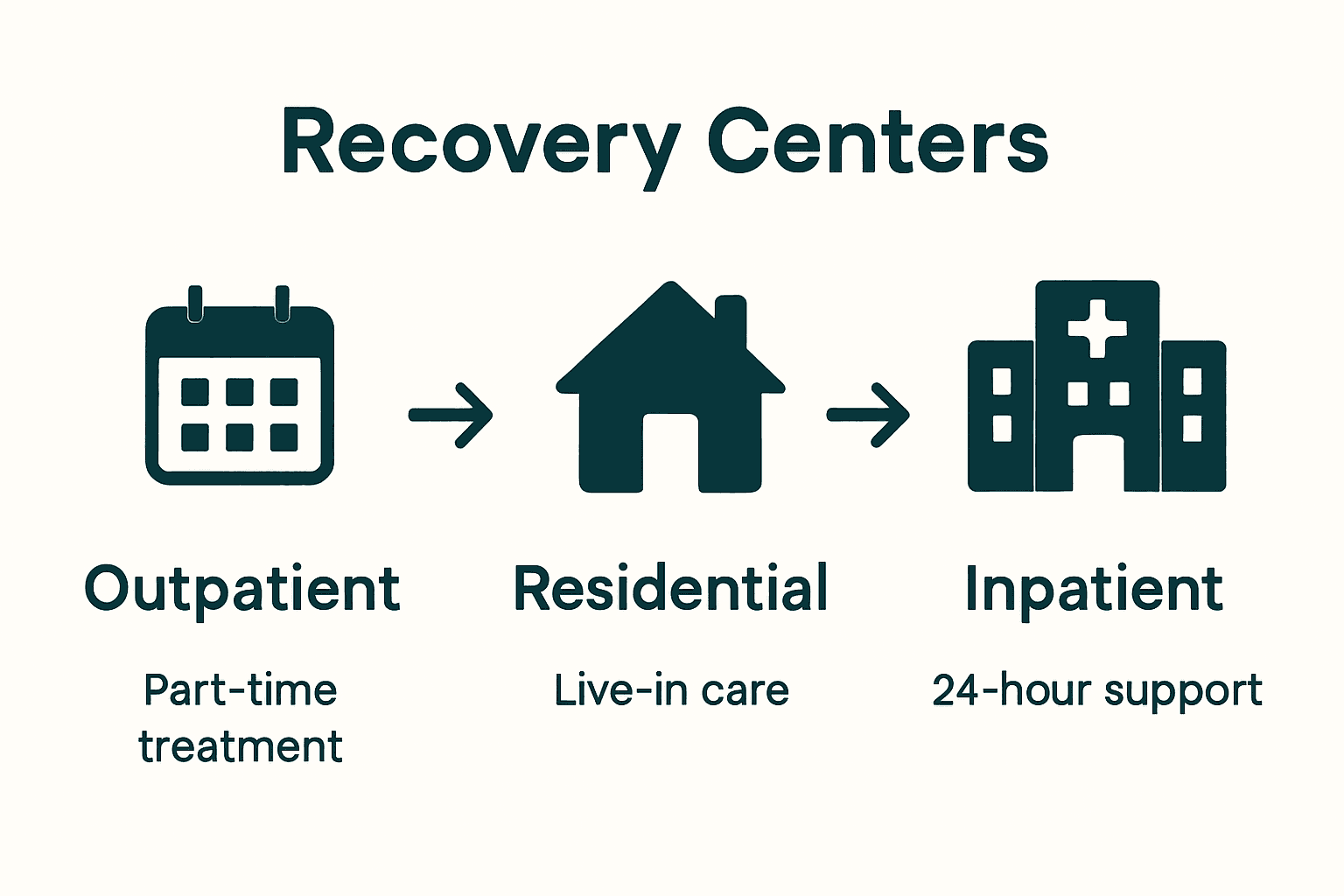
- Outpatient Services: Flexible treatment programs allowing individuals to maintain daily responsibilities
- Residential Treatment: Structured, immersive environments providing 24/7 comprehensive care
- Inpatient Rehabilitation: Intensive medical and psychological support for complex recovery needs
- Opioid Treatment Programs: Specialized interventions targeting specific substance use disorders
As DrugFreeCT highlights, recovery programs are structured around recovery-oriented systems of care. These systems encompass not just clinical treatments, but also crucial support services that address broader life challenges. Learn more about how residential treatment services can accelerate recovery.
What truly distinguishes modern recovery centers is their holistic approach. They recognize that successful recovery extends beyond medical intervention, integrating social support networks, recreational activities, and personalized strategies to help individuals rebuild their lives. By offering a comprehensive suite of services, these centers provide the tools, support, and guidance necessary for sustainable, long-term wellness and personal transformation.

How Recovery Centers Operate Day-to-Day
Recovery centers function through meticulously structured daily operations designed to support individuals in their journey toward healing and wellness. According to NAATP, these centers provide multiple levels of care, each with unique daily protocols tailored to individual recovery needs.
A typical day in a recovery center might include:
- Morning Group Therapy: Collaborative sessions focusing on shared experiences and emotional support
- Individual Counseling: One-on-one therapeutic interactions addressing personal challenges
- Educational Workshops: Sessions teaching coping mechanisms and life skills
- Recreational Activities: Structured programs promoting physical and mental well-being
- Evening Support Groups: Peer-led discussions reinforcing recovery principles
As Help.org explains, inpatient rehabilitation programs provide 24-hour comprehensive care, with medical professionals continuously monitoring participants’ progress and emotional states. Learn more about how our recovery programs provide long-term benefits.
The core philosophy driving daily operations is holistic healing. Recovery centers recognize that sustainable recovery extends beyond traditional treatment, integrating medical supervision, psychological support, skill-building, and personal development into a comprehensive daily framework. By creating structured yet compassionate environments, these centers empower individuals to rebuild their lives, develop resilience, and create sustainable pathways to long-term wellness.
Key Features of Effective Recovery Centers
Effective recovery centers go beyond traditional treatment models, providing comprehensive support that addresses multiple dimensions of an individual’s life and recovery journey. According to SAMHSA, these centers focus on four critical core dimensions: health, home, purpose, and community, creating a holistic approach to sustainable wellness.
The essential features of top-tier recovery centers include:
- Personalized Treatment Plans: Tailored approaches addressing individual needs
- Comprehensive Support Services: Addressing physical, mental, and social challenges
- Integrated Care Models: Combining medical, psychological, and social interventions
- Continuous Monitoring: Regular assessment and adaptive treatment strategies
- Supportive Environment: Compassionate, non-judgmental healing spaces
As SAMHSA highlights, recovery centers provide critical support services that extend far beyond traditional treatment. Discover the core benefits of our drug and alcohol rehabilitation approach.
The most transformative recovery centers recognize that true healing is a multifaceted journey. They offer comprehensive support including transportation assistance, employment services, case management, and peer-to-peer support. By creating a nurturing ecosystem that addresses medical, psychological, social, and personal development needs, these centers empower individuals to rebuild their lives, develop resilience, and create meaningful, sustainable paths to long-term recovery.
Costs, Insurance, and Access Considerations
Navigating the financial aspects of recovery centers can be challenging, with multiple factors influencing accessibility and affordability. According to OASAS, access to recovery services varies significantly based on insurance coverage, financial resources, and specific program offerings, making it crucial for individuals to understand their options.
Key financial considerations for recovery center access include:
- Insurance Coverage: Verifying in-network providers and extent of treatment coverage
- Payment Plans: Exploring flexible financing options
- State-Funded Programs: Investigating government assistance resources
- Sliding Scale Fees: Seeking centers with income-based pricing
- Out-of-Pocket Expenses: Understanding potential additional costs
As Help.org explains, rehabilitation program costs can vary dramatically, and not all facilities provide comprehensive services. Learn more about our approach to accessible recovery services.
The most effective approach to managing recovery center costs involves proactive research and communication. Potential patients should contact their insurance providers, explore multiple treatment centers, and discuss financial options directly with facility administrators. Many centers offer free consultations, financial counseling, and can help individuals develop personalized strategies to make treatment both accessible and affordable, ensuring that financial barriers do not prevent anyone from receiving the critical support they need for recovery.
Find the Support You Need at Glendora Recovery Center
Understanding what a recovery center truly offers is the first step toward healing from addiction or mental health challenges. If you are seeking comprehensive, personalized care that goes beyond basic treatment to address your physical, emotional, and social needs, Glendora Recovery Center stands ready to guide you. We specialize in tailored programs such as Partial Hospitalization and Intensive Outpatient options designed to fit your unique journey.
Don’t let uncertainty hold you back from the holistic healing you deserve. Connect with our compassionate team today and discover how our flexible scheduling and expert addiction and dual diagnosis care can unlock your path to long-term wellness. Take decisive action now and reach out through our contact page to begin your transformation. Learn more about the benefits of professional outpatient care at our detailed program overview and start building a stronger future today.
Frequently Asked Questions
What services do recovery centers provide?
Recovery centers offer a wide range of services, including outpatient services, residential treatment, inpatient rehabilitation, opioid treatment programs, social support networks, and assistance with accessing essential human services.
How do recovery centers support individuals in their recovery journey?
Recovery centers support individuals by providing personalized treatment plans, comprehensive support services, educational workshops, and recreational activities, all aiming to address physical, mental, and social challenges.
What are the key features of effective recovery centers?
Effective recovery centers typically feature personalized treatment plans, integrated care models, continuous monitoring, and a supportive environment that fosters healing and resilience.
How can I navigate the costs associated with recovery centers?
To navigate costs, consider verifying insurance coverage, exploring payment plans, investigating state-funded programs, asking about sliding scale fees, and communicating directly with facility administrators for financial options.