
TL;DR:
- Dual diagnosis centers treat both mental health and substance use disorders simultaneously for better outcomes.
- Integrated care reduces relapse rates and improves long-term recovery by addressing interconnected conditions.
- Treatment plans are personalized, involving multidisciplinary teams and flexible care options based on individual needs.
Over 21.2 million U.S. adults live with both a substance use disorder and a mental health condition at the same time. Yet for years, most treatment programs addressed only one problem at a time, leaving the other untreated and setting people up for relapse. If you or someone you love has cycled through treatment without lasting results, there may be a reason: the full picture was never treated. Dual diagnosis centers exist to change that. This guide explains what these centers do, how they work, and why their integrated approach gives people a genuinely better shot at lasting recovery.
Table of Contents
- What is a dual diagnosis center?
- Core services and team approach
- How integrated treatment improves outcomes
- What to expect at a dual diagnosis center in Los Angeles County
- Why integrated dual diagnosis treatment isn’t ‘one-size-fits-all’
- Start your integrated recovery journey today
- Frequently asked questions
Key Takeaways
| Point | Details |
|---|---|
| Integrated care is essential | Treating both substance use and mental health issues at the same time improves outcomes and reduces relapse. |
| Multidisciplinary teams matter | Effective dual diagnosis centers use experts from several fields to build personalized treatment plans. |
| Treatment is tailored | Dual diagnosis centers adjust levels of care and therapy based on individual needs. |
| Not all cases are the same | While integrated treatment helps most people, complex cases may need more customized approaches. |
What is a dual diagnosis center?
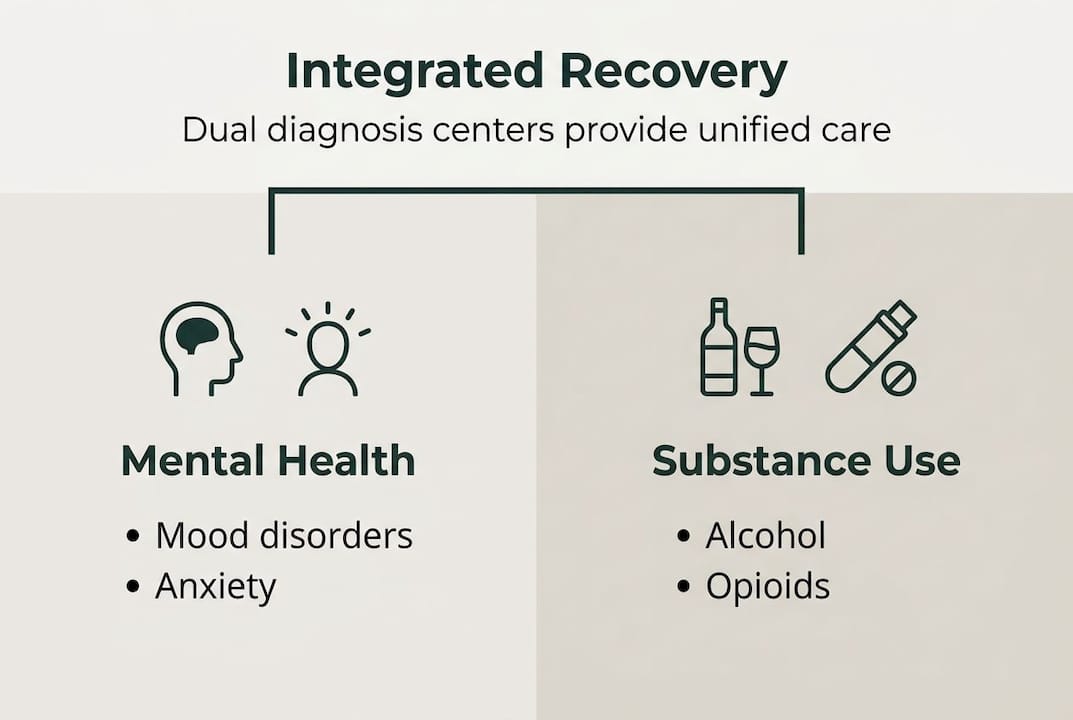
A dual diagnosis center is a specialized treatment facility that addresses both a substance use disorder and a mental health disorder at the same time. The term “dual diagnosis” simply means that two conditions are present together, for example, alcohol use disorder alongside depression, or opioid addiction alongside post-traumatic stress disorder. These conditions are deeply connected. One often fuels the other, creating a cycle that is very hard to break when only one condition gets attention.
Integrated treatment for both substance use and mental health disorders is considered the gold standard because it addresses their interconnected effects rather than treating them in isolation. When someone receives care for addiction without addressing the anxiety or trauma underneath it, the emotional pain remains. That unresolved pain is one of the most common triggers for relapse.
Here is what sets a dual diagnosis center apart from a standard rehab or mental health clinic:
- Both conditions are diagnosed and treated at the same time by the same care team
- Treatment plans are built around how the two conditions interact in each individual
- Mental health therapy and addiction treatment are fully coordinated, not scheduled separately
- Medication management for mental health is integrated into the overall recovery plan
- Family education and support are included as part of the process
If you are exploring your options, learning more about managing dual diagnosis recovery can help you understand what to look for in a program. The core idea is simple: you cannot fully treat one condition while ignoring the other.
Core services and team approach
Dual diagnosis centers offer a range of services designed to meet people wherever they are in their recovery journey. The level of care someone needs depends on the severity of both their substance use and their mental health symptoms. Teams include psychiatrists, therapists, and addiction counselors who deliver comprehensive assessment, detox, multiple levels of care, evidence-based therapy, and medication management.

Here is a breakdown of the typical service levels and what they involve:
| Level of care | Description | Best suited for |
|---|---|---|
| Medical detox | 24/7 supervised withdrawal management | Individuals with physical dependence |
| Residential | Full-time, structured inpatient care | Severe symptoms requiring constant support |
| Partial Hospitalization (PHP) | Intensive daily programming, return home at night | Moderate to severe cases with home stability |
| Intensive Outpatient (IOP) | Several hours of therapy per week | Individuals stepping down from higher care |
| Standard outpatient | Weekly therapy sessions | Mild symptoms or ongoing maintenance |
Evidence-based therapies used in dual diagnosis centers include Cognitive Behavioral Therapy (CBT), which helps people identify and change thought patterns that drive both substance use and mental health symptoms. Dialectical Behavior Therapy (DBT) is another common approach, particularly effective for emotional regulation and self-harm behaviors. Medication management may include antidepressants, mood stabilizers, or medications that reduce cravings.
Pro Tip: When evaluating a dual diagnosis center, ask specifically whether the psychiatrist and the addiction counselor communicate regularly about your care. Coordinated communication between providers is one of the clearest signs that a center practices genuine integration rather than just offering both services side by side.
For those dealing with conditions like bipolar disorder and addiction, having a team that understands how mood episodes interact with substance use is especially important. Centers offering comprehensive mental health treatment alongside addiction care provide that coordinated foundation.
How integrated treatment improves outcomes
One of the most important questions people ask is whether integrated care actually works better. The evidence is clear. Integrated care significantly reduces relapse, improves quality of life, and decreases hospitalizations compared to treating disorders separately. SAMHSA’s Treatment Improvement Protocol 42 has long recommended integrated care as the preferred model for co-occurring disorders.
Here is a direct comparison of treatment approaches:
| Approach | How it works | Typical outcome |
|---|---|---|
| Sequential treatment | Treat one disorder first, then the other | Higher relapse risk; unaddressed disorder resurfaces |
| Parallel treatment | Both treated separately by different providers | Poor coordination; conflicting recommendations |
| Integrated treatment | Both treated together by one coordinated team | Lower relapse rates; better long-term functioning |
“When mental health and addiction treatment are coordinated rather than siloed, patients experience fewer hospitalizations, lower relapse rates, and measurably better quality of life.” This reflects the consistent finding across studies reviewed by SAMHSA and supported by outcomes research in peer-reviewed literature.
The reasons integrated care works better come down to a few key factors:
- Mental health symptoms that drive substance use are treated directly, removing a core relapse trigger
- Medication for mental health conditions is monitored alongside addiction treatment to avoid interactions
- Therapists and psychiatrists share information, so care decisions are made with the full picture in mind
- Patients do not have to repeat their story to multiple disconnected providers
Understanding the treatment workflow at a dual diagnosis center and the key dual diagnosis benefits can help you feel more prepared before starting. The data supports the approach, and the lived experience of patients confirms it.
What to expect at a dual diagnosis center in Los Angeles County
Knowing what actually happens during treatment can reduce anxiety for both individuals and their families. The process is structured but also flexible, because no two people arrive with the same combination of challenges. Levels of care range from detox and residential through outpatient programs, and each step is customized for the patient’s needs.
Here is a typical step-by-step overview of what to expect:
- Initial assessment: A clinical team evaluates both mental health history and substance use patterns. This is the foundation for everything that follows.
- Personalized treatment plan: Based on the assessment, a plan is created that outlines the level of care, therapy types, and medication needs.
- Medical detox (if needed): For individuals with physical dependence, medically supervised detox ensures safety during withdrawal.
- Active treatment phase: This may include residential care, a Partial Hospitalization Program, or an Intensive Outpatient Program depending on severity.
- Ongoing therapy: Individual therapy, group sessions, and family therapy run throughout treatment to address both conditions.
- Aftercare planning: Before discharge, a continuing care plan is created to support long-term recovery and prevent relapse.
For families in Los Angeles County, it helps to know that most reputable centers work with private insurance, Medi-Cal, and other coverage options. Privacy protections under HIPAA apply fully, so your information stays confidential. Preparing mentally means accepting that recovery is a process, not a single event.
Pro Tip: Before your first appointment, write down a timeline of when mental health symptoms and substance use began. Knowing which came first can help clinicians identify the primary driver and design a more targeted treatment plan.
Exploring outpatient recovery options is a good starting point if you are unsure whether inpatient care is necessary. Many people in Los Angeles County successfully recover through outpatient programs when their situation allows for it.
Why integrated dual diagnosis treatment isn’t ‘one-size-fits-all’
Integrated care is the right foundation for most people with co-occurring disorders. But it is worth being honest about its limits. Not every person responds the same way to standard integrated protocols, and assuming that one model works for everyone can actually slow recovery for those with more complex needs.
Some research suggests that for complex cases involving opioid use disorder alongside PTSD or severe depression, collaborative care models may not always outperform enhanced standard care, and emerging treatments are still being studied. This is not a reason to avoid integrated treatment. It is a reason to look for centers that are willing to adapt.
At Glendora Recovery Center, we believe the best dual diagnosis programs are those that treat the person, not just the diagnosis. That means staying open to emerging therapies, adjusting the plan when something is not working, and never assuming that a standard protocol is enough for someone with layered trauma and complex substance use history. Exploring holistic recovery approaches alongside evidence-based care gives individuals the most complete path forward. Flexibility is not a weakness in a treatment program. It is a sign of clinical maturity.
Start your integrated recovery journey today
If you or someone you care about is living with both addiction and a mental health condition, you do not have to figure this out alone. Glendora Recovery Center offers fully integrated dual diagnosis treatment serving all of Los Angeles County, with flexible scheduling that includes morning, evening, weekend, and telehealth options. Our experienced team of psychiatrists, therapists, and addiction counselors builds individualized plans that address both conditions from day one. Explore your treatment options in Los Angeles, review our dual diagnosis workflow, or connect with a recovery specialist today to take the first step toward lasting recovery.
Frequently asked questions
Who qualifies for dual diagnosis treatment in Los Angeles County?
Anyone with both a co-occurring mental health and substance use condition may qualify, and a professional clinical assessment is the first step to determining the right level of care.
Is dual diagnosis care covered by insurance?
Many dual diagnosis centers in Los Angeles County accept private insurance, Medi-Cal, and other coverage options, though specific benefits vary by plan and provider.
How long does dual diagnosis treatment usually last?
Treatment duration varies from a few weeks in outpatient settings to several months in residential care, and the timeline is always tailored to the individual’s progress and needs.
What if someone has tried addiction treatment before and still relapsed?
Previous relapse often signals that an underlying mental health condition was never fully treated, and integrated dual diagnosis care addresses both the addiction and its emotional triggers together.
Are family members involved in dual diagnosis treatment?
Yes. Family education, therapy sessions, and ongoing involvement are actively encouraged because a strong support system is one of the most reliable factors in long-term recovery.
Recommended
- 7 Key Benefits of Dual Diagnosis for Effective Recovery | Glendora Recovery Center
- How to Manage Dual Diagnosis for Long-Term Recovery | Glendora Recovery Center
- Dual Diagnosis Treatment Workflow for Lasting Recovery | Glendora Recovery Center
- Addiction Treatment Glossary: Demystifying Recovery Terms | Glendora Recovery Center