
Every household in Glendora faces moments when the signs of substance abuse feel overwhelming and confusing. Understanding addiction is vital because it is not just a personal choice but a chronic brain disease characterized by compulsive behaviors. Recognizing these misperceptions and early warning signs empowers families to offer meaningful support, begin compassionate intervention, and help loved ones start their recovery journey.
Table of Contents
- Addiction Defined And Common Misconceptions
- Behavioral And Emotional Signs To Watch For
- Physical And Health-Related Warning Indicators
- Stages Of Addiction Progression And Risk Factors
- How Families Can Intervene Effectively
Key Takeaways
| Point | Details |
|---|---|
| Addiction is a Medical Condition | Understanding addiction as a chronic brain disease is essential for compassion and effective treatment. |
| Recognizing Warning Signs | Behavioral, emotional, and physical indicators can provide early intervention opportunities for addressing substance abuse. |
| Stages of Addiction Progression | Addiction develops through distinct stages, each requiring tailored interventions for successful recovery. |
| Family Involvement is Crucial | Successful interventions benefit from educated and compassionate family support, fostering a healthier recovery environment. |
Addiction Defined and Common Misconceptions
Addiction is a complex and often misunderstood medical condition that goes far beyond simple personal choice. Chronic brain disease characterized by compulsive behaviors represents a more accurate understanding of this challenging health issue.
At its core, addiction involves profound neurological changes that fundamentally alter an individual’s capacity for self-control. Unlike popular misconceptions, addiction is not a moral failing or sign of weakness. Instead, it’s a sophisticated medical disorder involving intricate brain chemistry and psychological mechanisms.
Common myths about addiction persist, creating significant barriers to understanding and treatment. Here are key misconceptions people often believe:
- Addiction is a choice people can simply stop if they try hard enough
- Only illegal drugs can cause addiction
- People with addiction lack willpower or moral strength
- Addiction only affects certain demographic groups
- Treatment is ineffective and people cannot recover
The reality is far more nuanced. Addiction represents a chronic condition involving complex interactions between biological, psychological, and environmental factors. Psychological and physical rewards reinforce addictive behaviors, making recovery a challenging but achievable process that requires comprehensive support.
Pro tip: Recognizing addiction as a medical condition rather than a personal failing is the first step toward compassionate, effective treatment.
Behavioral and Emotional Signs to Watch For
Recognizing addiction’s subtle signs can be challenging, but understanding behavioral indicators of substance abuse provides crucial early intervention opportunities. These signs often manifest through complex emotional and behavioral patterns that extend far beyond stereotypical addiction representations.
Addiction frequently transforms an individual’s typical behavioral landscape, creating noticeable shifts in personality, relationships, and personal responsibilities. Emotional signs can be particularly nuanced, often masked by denial or attempts to appear functional.
Key behavioral and emotional warning signs include:
- Dramatic mood swings and unexplained emotional volatility
- Increasing secrecy and withdrawal from family and friends
- Neglecting personal hygiene and appearance
- Significant changes in sleep patterns
- Unexplained financial problems or stealing
- Loss of interest in previously enjoyable activities
- Increased tolerance and need for larger substance quantities
- Experiencing withdrawal symptoms when substances are unavailable
Psychological warning signs are equally critical. These might include persistent anxiety, depression, paranoia, and sudden irrational behaviors that seem disconnected from an individual’s typical personality. The transformation can be gradual, making early detection challenging but essential.
Addiction’s emotional landscape is complex, with warning signs often hidden behind a facade of normalcy.
Professional assessment becomes crucial when multiple behavioral indicators consistently manifest. Understanding that these signs represent a medical condition rather than personal weakness is fundamental to compassionate intervention.
Pro tip: Document observable behavioral changes systematically and consult addiction professionals for comprehensive evaluation.
Physical and Health-Related Warning Indicators
Physical health indicators can reveal critical insights into potential substance abuse, with profound impacts on multiple organ systems often serving as key warning signs. These changes extend far beyond surface-level symptoms, representing deeper physiological transformations triggered by prolonged substance use.

Addiction’s physical manifestations vary widely depending on the specific substance, but certain universal warning signs emerge across different types of substance abuse. Dramatic physical changes can signal the body’s progressive deterioration and the urgent need for professional intervention.
Key physical warning indicators include:
- Unexplained and significant weight fluctuations
- Frequent and prolonged illness
- Deteriorating skin, hair, and nail conditions
- Bloodshot or glazed eyes
- Poor coordination and muscle tremors
- Unexplained bruises or track marks
- Chronic respiratory issues
- Sudden changes in sleep patterns
- Compromised immune system function
Chronic health risks associated with long-term substance abuse can be particularly devastating. Drug use profoundly affects overall health status, potentially leading to serious medical complications including cardiovascular disease, liver dysfunction, and increased infection risks.
Physical warning signs are the body’s desperate communication about underlying substance abuse challenges.
Understanding these indicators requires a holistic perspective. Each physical change represents a complex interaction between substance use, bodily systems, and individual health history. Professional medical assessment becomes crucial in interpreting these warning signs accurately.
This table outlines key differences between behavioral, emotional, and physical addiction indicators:
| Indicator Type | Common Manifestations | Detection Challenge |
|---|---|---|
| Behavioral | Secrecy, neglect, withdrawal | Often masked by denial |
| Emotional | Mood swings, anxiety, paranoia | Subtle or gradual |
| Physical | Weight changes, poor health signs | May mimic other illnesses |
Understanding these types helps in early identification and intervention.
Pro tip: Maintain a confidential health journal documenting physical changes to share with healthcare professionals during comprehensive evaluations.
Stages of Addiction Progression and Risk Factors
Addiction does not happen overnight but develops through a complex series of progressive stages with distinct neurological transformations. Understanding these stages provides critical insights into how substance use evolves from experimental behavior to compulsive dependency.
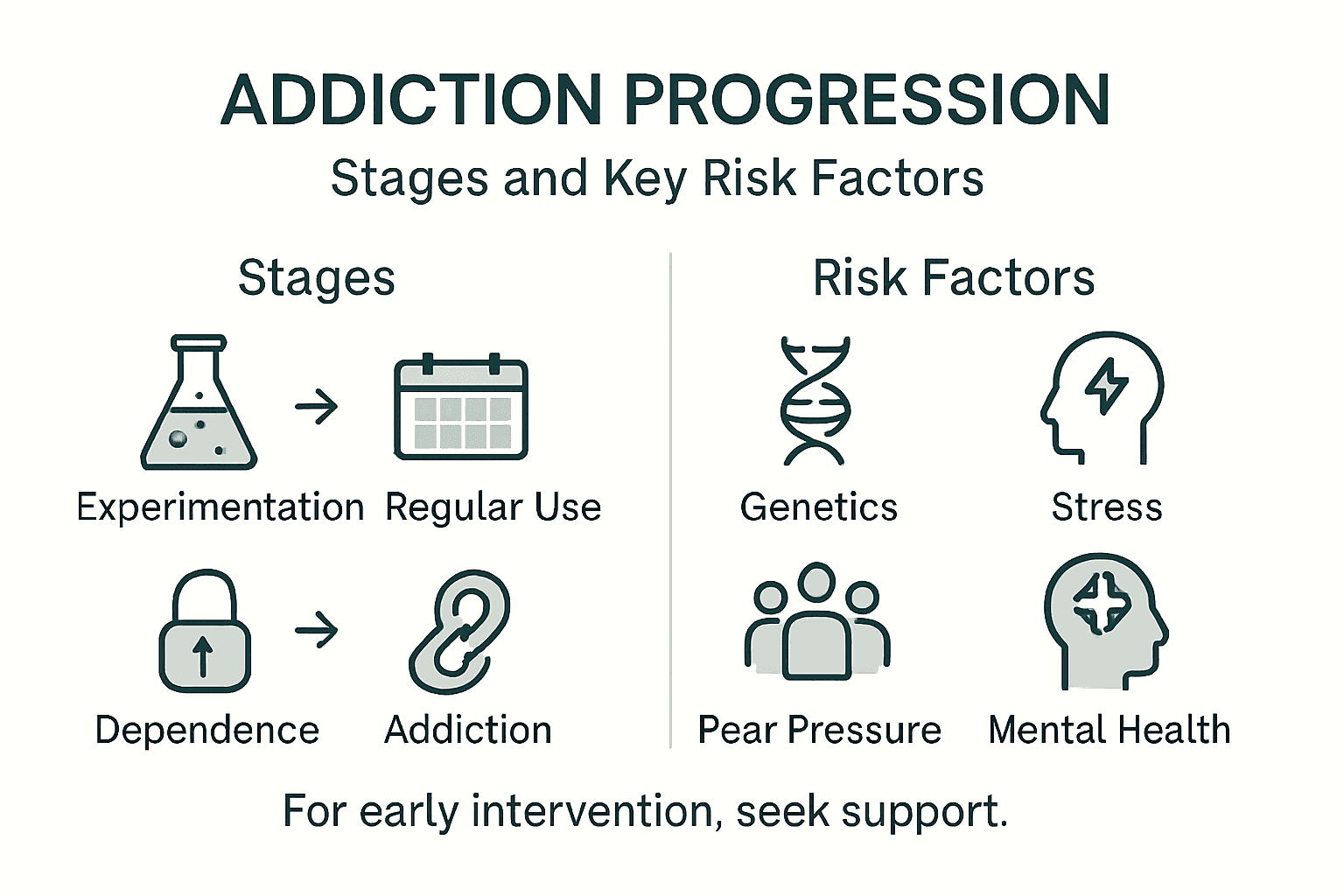
The progression of addiction typically follows a nuanced trajectory that involves multiple interconnected psychological and physiological changes. Each stage represents a deepening relationship between the individual and the substance, characterized by increasingly complex neurochemical adaptations.
The typical stages of addiction progression include:
- Experimentation: Initial voluntary substance use driven by curiosity
- Regular Use: Increasing frequency and potential social/recreational patterns
- Risky Use: Emerging negative consequences with continued consumption
- Dependence: Physical and psychological reliance developing
- Addiction: Compulsive use despite significant harmful consequences
Multiple risk factors contribute to an individual’s vulnerability to addiction, including:
Here’s a summary of how different factors contribute to addiction risk:
| Risk Factor | Description | Impact on Addiction Risk |
|---|---|---|
| Genetics | Family-related predisposition | Can accelerate onset |
| Mental Health | Depression, anxiety, trauma | Increases vulnerability |
| Environment | Peer and social influences | Raises exposure opportunities |
| Early Substance Exposure | Use in adolescence | Heightens long-term risk |
| Family History | Substance use in relatives | May normalize addictive behavior |
These distinctions clarify the role each factor plays in an individual’s susceptibility to addiction.
- Genetic predisposition
- Family history of substance abuse
- Childhood trauma or adverse experiences
- Mental health conditions
- Environmental stressors
- Peer pressure and social influences
- Age of initial substance exposure
Biological vulnerability plays a significant role in addiction development. Some individuals possess genetic markers that increase their susceptibility to developing substance use disorders more rapidly than others.
Addiction is a complex journey influenced by biological, psychological, and environmental intersections.
Recognizing these stages allows for earlier intervention and more targeted treatment strategies. Professional assessment becomes crucial in understanding an individual’s specific progression and developing personalized recovery approaches.
Pro tip: Seek professional evaluation if you recognize multiple progression stages or risk factors in yourself or a loved one.
How Families Can Intervene Effectively
Navigating addiction intervention requires a delicate balance of compassion and strategic communication, guided by professional intervention strategies. Families facing a loved one’s substance abuse must approach the situation with empathy, education, and a clear understanding of effective support mechanisms.
Successful intervention goes beyond a single conversation. It involves a comprehensive approach that addresses the complex emotional, psychological, and practical dimensions of addiction. Families must prepare themselves emotionally and strategically to provide meaningful support while maintaining healthy boundaries.
Key strategies for effective family intervention include:
- Educate yourself about addiction as a medical condition
- Approach the conversation with compassion, not judgment
- Communicate specific concerns with concrete examples
- Establish clear and consistent boundaries
- Avoid enabling destructive behaviors
- Offer specific treatment options and support
- Maintain a united family front
Professional guidance becomes crucial in orchestrating a successful intervention. Family involvement significantly improves treatment outcomes by creating a supportive environment that encourages recovery and healing.
Intervention is not about confrontation, but compassionate redirection toward healing.
Emotional preparation is as important as logistical planning. Family members must recognize their own emotional triggers, potential codependency patterns, and the need for personal support throughout the intervention and recovery process.
Pro tip: Attend family support groups to develop resilience and learn effective communication strategies for supporting your loved one’s recovery journey.
Take Action on Early Signs of Addiction Today
Recognizing the behavioral, emotional, and physical signs of addiction as explained in the article is a critical step toward recovery. If you have noticed mood swings, secrecy, or health changes in yourself or a loved one these are not just challenges but urgent calls for professional help. At Glendora Recovery Center, we understand the complex nature of addiction as a chronic brain disease and provide compassionate, individualized care tailored to your unique journey.
Don’t wait for the situation to worsen. Our Intensive Outpatient Programs and flexible treatment options including telehealth sessions are designed to fit your life without compromise. Learn more about how family involvement and expert support improve outcomes by connecting with us. Take the first step now by visiting our Contact Us page. Early intervention can make all the difference in overcoming addiction. Your path to healing starts here.
Frequently Asked Questions
What are the common behavioral signs of addiction?
Common behavioral signs of addiction include secrecy, withdrawal from family and friends, neglect of personal hygiene, significant changes in sleep patterns, and loss of interest in previously enjoyable activities.
How can I recognize emotional signs of addiction?
Emotional signs of addiction may include dramatic mood swings, anxiety, depression, irrational behaviors, and unexplained emotional volatility that is often hidden behind a facade of normalcy.
What physical symptoms should I look for as signs of addiction?
Physical symptoms of addiction can include significant weight changes, frequent illnesses, poor coordination, bloodshot eyes, chronic health issues, and sudden changes in sleep patterns.
What stages does addiction progress through?
Addiction typically progresses through stages including experimentation, regular use, risky use, dependence, and finally addiction characterized by compulsive substance use despite adverse consequences.
Recommended
- Signs an Addict Is Relapsing – What Families Should Know | Glendora Recovery Center
- Teenage Addiction: Risks, Recovery, and Family Impact | Glendora Recovery Center
- 7 Key Teen Addiction Warning Signs for Parents to Know | Glendora Recovery Center
- Adolescent Addiction Facts – Impact on Teens’ Lives | Glendora Recovery Center
- Early Male Pattern Baldness: Causes, Signs, and Smart Solutions for 2025 | MyHair