
Over half of American teenagers have tried at least one addictive substance by twelfth grade, according to recent studies. This trend highlights how adolescent addiction impacts not just individuals but also families and entire communities across the United States. By understanding what truly drives teenage substance use and questioning the most common myths, parents and educators can make informed choices that protect youth and promote healthier futures.
Table of Contents
- Defining Adolescent Addiction And Common Myths
- Types Of Substances Teens Commonly Misuse
- Warning Signs And Behavioral Patterns In Teens
- Major Risk Factors For Adolescent Addiction
- Effective Prevention And Treatment Approaches
Key Takeaways
| Point | Details |
|---|---|
| Adolescent Addiction Is Complex | It involves neurobiological and psychological factors, rather than simple moral choices or personal failings. |
| Variety of Substances Misused | Teens commonly misuse alcohol, nicotine, cannabis, and prescription drugs, each carrying unique risks. |
| Warning Signs Are Nuanced | Behavioral changes such as mood swings and secretive actions may indicate potential substance misuse. |
| Prevention Requires Engagement | Open communication and supportive environments are crucial in preventing adolescent substance abuse. |
Defining Adolescent Addiction and Common Myths
Adolescent addiction represents a complex neurobiological and psychological condition that extends far beyond simple substance misuse. Substance use disorders among youth involve harmful patterns of consuming substances like alcohol, tobacco, prescription medications, and illicit drugs that create significant impairments in emotional, social, and developmental functioning.
Contrary to popular misconceptions, adolescent addiction is not merely a result of poor personal choices or moral failings. Research indicates that substance use disorders emerge from a sophisticated interplay of individual, genetic, familial, and environmental factors. Teenagers are particularly vulnerable due to ongoing brain development, heightened emotional sensitivity, and social pressures that can accelerate addictive behaviors.
Some persistent myths about adolescent addiction include the dangerous belief that occasional substance use is harmless or that addiction only affects individuals from specific socioeconomic backgrounds. In reality, even sporadic drug or alcohol consumption can trigger significant neurological changes, potentially leading to long term health consequences and increased risk of developing chronic substance use disorders. Genetic predispositions, mental health conditions, and exposure to traumatic experiences can dramatically increase a teenager’s susceptibility to addiction.
Pro Tip: Early Intervention Strategy: Engage teenagers in open, non-judgmental conversations about substance use, creating safe spaces for honest dialogue and understanding their unique emotional challenges before addiction takes root.
Types of Substances Teens Commonly Misuse
Substance abuse among teenagers represents a critical public health concern with a wide range of potentially dangerous substances threatening adolescent health and development. Alcohol, nicotine, and cannabis remain the most prevalent substances misused by teenagers, creating significant risks for long-term physical and psychological harm.
Beyond these common substances, teens increasingly experiment with more complex and dangerous drugs. Teens commonly misuse prescription medications, inhalants, club drugs like MDMA, and stimulants such as amphetamines. Prescription opioids and depressants pose particularly insidious risks, as teenagers may mistakenly believe these substances are safer because they are medically prescribed.
The landscape of teen substance abuse continues to evolve, with emerging synthetic drugs and increasingly sophisticated methods of obtaining and concealing substance use. Stimulants like methamphetamine, hallucinogens, anabolic steroids, and even seemingly innocuous substances like cold medications can become gateways to more serious addiction patterns. Each substance carries unique neurological and physiological risks that can dramatically alter brain chemistry and developmental trajectories during these critical adolescent years.
Here’s a summary comparing common substances misused by teens, their effects, and potential risks:
| Substance Type | Common Effects | Long-Term Risks |
|---|---|---|
| Alcohol | Reduced inhibition, drowsiness | Liver damage, dependence |
| Nicotine | Increased alertness, relaxation | Addiction, lung and heart issues |
| Cannabis | Mood changes, altered senses | Memory loss, mental health decline |
| Prescription Drugs | Pain relief, sedation | Overdose, brain development issues |
| Synthetic Drugs | Intense euphoria, confusion | Psychosis, organ failure |
Pro Tip: Early Warning Signs: Pay close attention to sudden changes in behavior, unexplained mood swings, declining academic performance, and secretive communication patterns, which could indicate potential substance misuse among teenagers.
Warning Signs and Behavioral Patterns in Teens
Warning signs of teen substance abuse represent complex behavioral shifts that often emerge subtly, challenging parents and educators to remain vigilant. Behavioral changes can manifest through dramatic alterations in social interactions, academic performance, and personal hygiene, signaling potential underlying substance misuse issues.

Indicators of substance misuse extend beyond obvious physical symptoms, encompassing psychological and social transformations. Teenagers struggling with addiction might display sudden mood swings, withdraw from family activities, experience unexplained financial challenges, and demonstrate a marked decline in previously enjoyed hobbies or extracurricular interests. Secretive behavior, unusual sleep patterns, and significant changes in friend groups can also indicate potential substance abuse problems.
The progression of teen substance abuse often follows nuanced patterns that require careful observation. Physiological signs might include bloodshot eyes, unexpected weight changes, impaired coordination, and neglected personal appearance. Emotional indicators frequently involve increased irritability, unexplained anxiety, depression-like symptoms, and dramatic shifts in motivation or commitment to previously important life goals. Financial irregularities, such as unexplained money loss or requests for additional funds, can also signal potential substance abuse challenges.
Pro Tip: Observation Strategy: Maintain open, non-judgmental communication with teenagers, creating safe spaces for honest dialogue while systematically documenting behavioral changes that might indicate emerging substance abuse risks.
Major Risk Factors for Adolescent Addiction
Risk factors for adolescent substance use represent a complex interplay of biological, psychological, and social dynamics that significantly increase vulnerability to addiction. Genetic predisposition plays a critical role, with teenagers who have family histories of substance abuse demonstrating substantially higher risks of developing similar behavioral patterns.
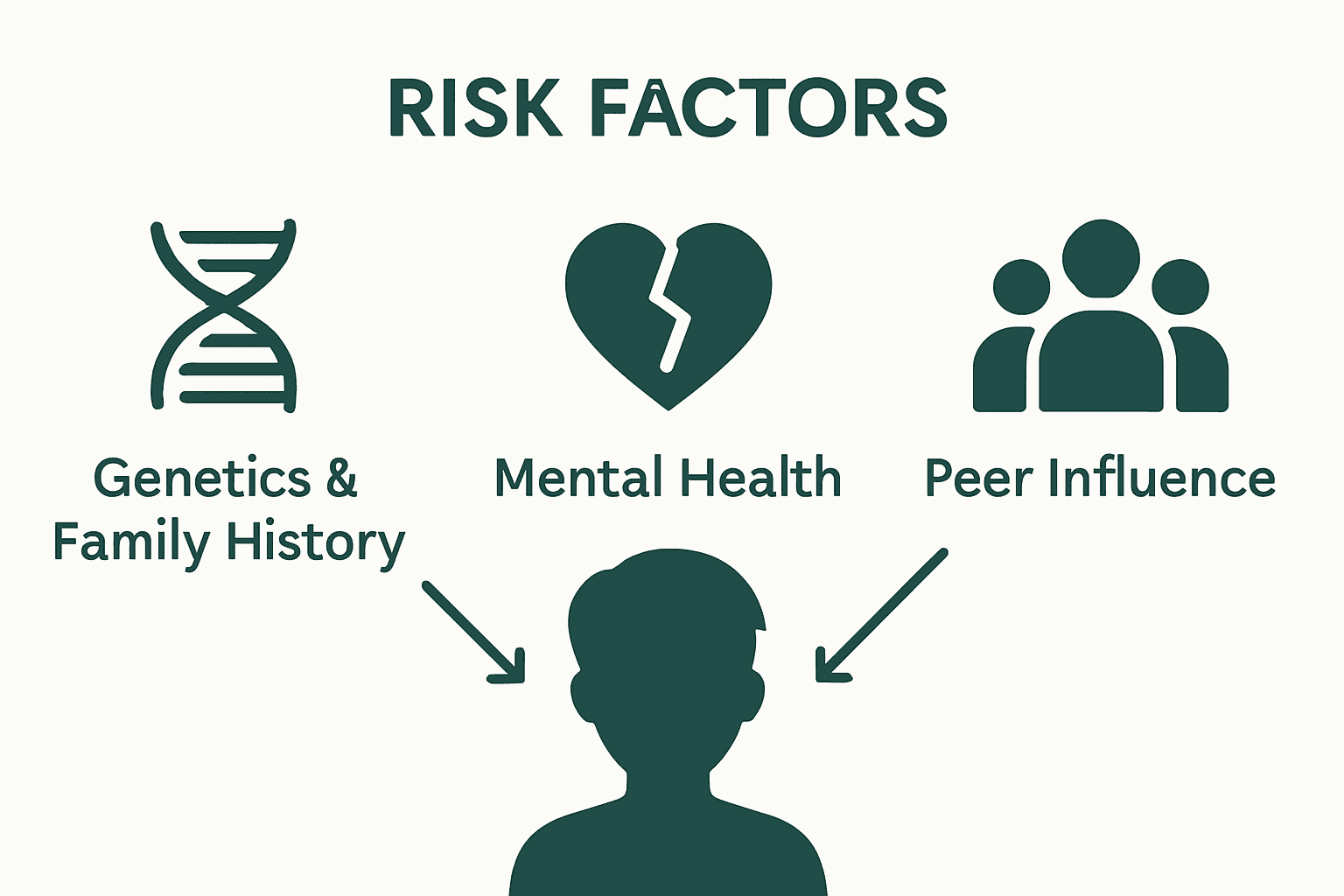
Social influences emerge as another pivotal factor in adolescent addiction development. Contributing factors to youth substance abuse include peer pressure, limited parental supervision, and exposure to environments where substance use is normalized or celebrated. Teenagers navigating complex social landscapes often encounter situations that challenge their decision-making abilities, making them particularly susceptible to experimental behaviors that can rapidly escalate into addictive patterns.
Psychological vulnerabilities represent a significant dimension of adolescent addiction risk. Mental health disorders such as depression, anxiety, and undiagnosed trauma can create powerful emotional triggers that teenagers might attempt to self-medicate through substance use. Environmental stressors, including academic pressure, family conflicts, socioeconomic challenges, and limited access to mental health resources, can further compound these psychological vulnerabilities and increase the likelihood of substance abuse as a maladaptive coping mechanism.
To better understand adolescent addiction, here is a table outlining key risk factors and why they matter:
| Risk Factor | Role in Addiction Development | Example Impact |
|---|---|---|
| Genetic Predisposition | Increases vulnerability to substance use | Family history of addiction |
| Peer Influence | Encourages experimentation, normalizes use | Friends who use substances |
| Mental Health Challenges | Leads to self-medication attempts | Depression or anxiety coping |
| Environmental Stressors | Heightens stress, reduces resilience | Academic or family pressures |
Pro Tip: Prevention Approach: Cultivate open communication channels with teenagers, providing consistent emotional support and professional guidance to help them develop healthy stress management and emotional regulation skills.
Effective Prevention and Treatment Approaches
Prevention strategies for adolescent substance abuse require a multifaceted approach that addresses the complex psychological, social, and environmental factors contributing to teenage addiction. Early intervention stands as the most critical component, focusing on education, emotional support, and developing healthy coping mechanisms before substance abuse patterns can take root.
Comprehensive treatment for adolescent substance use involves a holistic framework that combines individual counseling, family therapy, and targeted behavioral interventions. Treatment approaches must be tailored to each teenager’s unique circumstances, recognizing that addiction is a complex disorder influenced by multiple interconnected factors such as mental health, family dynamics, social pressures, and individual psychological resilience.
Successful prevention and treatment strategies typically incorporate evidence-based approaches that go beyond traditional punitive models. These include building emotional intelligence, teaching stress management techniques, creating supportive family environments, and providing adolescents with alternative positive experiences that can replace destructive behavioral patterns. Support groups, educational programs, and mental health resources play crucial roles in helping teenagers develop the skills and support networks necessary to resist substance abuse and maintain long-term recovery.
Pro Tip: Supportive Approach: Create non-judgmental, open communication channels with teenagers, actively listening to their experiences and challenges while consistently demonstrating unconditional emotional support and guidance.
Support for Teens Facing Addiction Challenges
Understanding the complex nature of adolescent addiction is the first step toward helping teens overcome these struggles. The article highlights how brain development, social pressures, and emotional challenges contribute to substance misuse and common misconceptions that can delay intervention. Teens experiencing behavioral changes, mental health struggles, or peer influences deserve compassionate support tailored to their unique needs.
At Glendora Recovery Center, we specialize in delivering individualized treatment programs that address both addiction and co-occurring mental health issues. Our holistic approach includes family therapy and flexible scheduling options designed to fit the demanding lives of teenagers and their families. If you are concerned about warning signs or want to learn about effective prevention and treatment, start the conversation today by visiting our Contact Us page. Early intervention can make a powerful difference in a teen’s recovery journey. Don’t wait to provide the support your loved one needs—reach out to Glendora Recovery Center now.
Frequently Asked Questions
What is adolescent addiction?
Adolescent addiction refers to a complex condition that involves harmful substance use, significantly impacting emotional, social, and developmental functioning in teenagers.
What substances do teens commonly misuse?
Teens commonly misuse alcohol, nicotine, cannabis, prescription medications, and increasingly, synthetic drugs.
What are the warning signs of substance abuse in teenagers?
Warning signs include sudden mood swings, social withdrawal, declining academic performance, financial issues, and changes in personal hygiene and appearance.
What factors contribute to adolescent addiction?
Key factors include genetic predisposition, peer pressure, mental health challenges, and environmental stressors, which all contribute to increased vulnerability to substance misuse.