Finding genuine support during recovery can feel overwhelming, especially when addiction or mental health challenges leave you feeling isolated in Los Angeles. Support groups offer more than just conversation—they create a safe space for connection and healing where shared experience bridges the gap between clinical treatment and daily life. This overview explains how different types of support groups work, their practical benefits, and what you can expect when choosing a group to strengthen your recovery journey.
Table of Contents
- What Are Support Groups In Recovery?
- Types Of Support Groups And Their Differences
- Key Benefits For Individuals In Recovery
- Support Groups And Professional Treatment Integration
- Risks, Barriers, And How To Overcome Them
Key Takeaways
| Point | Details |
|---|---|
| Support Groups Provide Essential Emotional Support | They create a community where individuals can share experiences, reducing feelings of isolation and shame related to recovery. |
| Different Group Types Offer Varied Structures | Understanding the distinctions between peer-led, therapy groups, and 12-step programs helps you choose the best fit for your needs. |
| Integration with Professional Treatment Enhances Recovery | Combining support groups with clinical therapy provides a comprehensive approach to sustained recovery and emotional well-being. |
| Overcoming Barriers is Crucial for Participation | Address potential logistical and stigma-related challenges by exploring multiple group options, including online formats, to find the right environment. |
What Are Support Groups in Recovery?
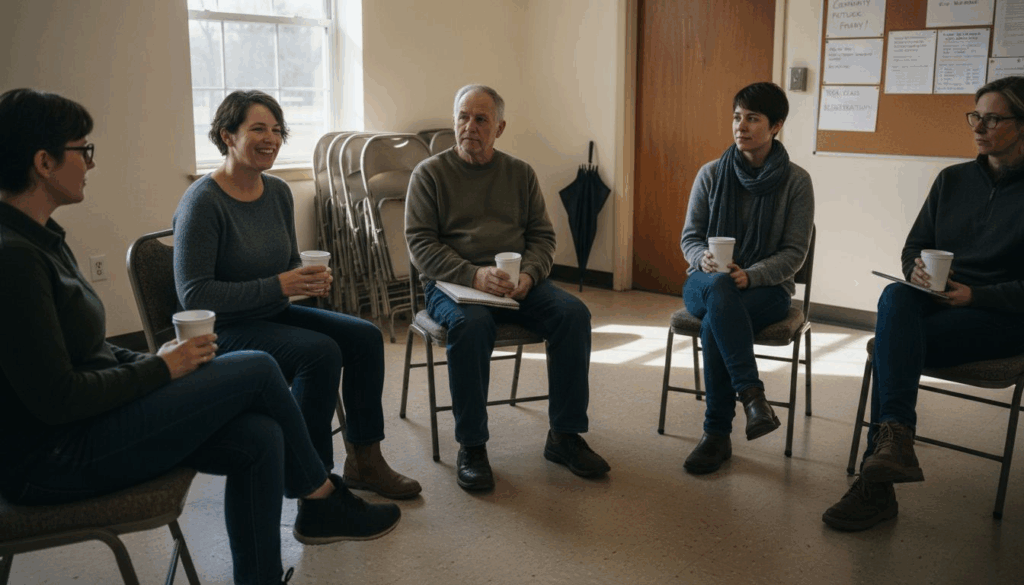
Support groups are gatherings where people facing similar challenges, especially those in recovery from substance abuse or mental health issues, come together to share experiences and support one another. Support groups fill important gaps between clinical treatment and the ongoing emotional support needed for lasting recovery. Unlike traditional therapy with a professional clinician, these groups operate on the principle that peer understanding and shared experience create a unique healing environment that complements formal treatment.
The structure of support groups varies significantly. Some are peer-led, meaning members organize and facilitate the meetings themselves, while others are run by trained professionals or mental health specialists. Many groups follow established formats like the 12-step model, though others take more flexible, open-discussion approaches. What binds them together is the core mission: creating a safe space where individuals can express their struggles without judgment, learn coping strategies from others who truly understand the recovery journey, and build meaningful connections with people who share similar battles. Some groups meet in-person at community centers, churches, or treatment facilities, while others operate entirely online or through hybrid formats, making them accessible regardless of your schedule or location in Los Angeles County.
The power of support groups lies in their ability to reduce isolation, which is one of the biggest threats to sustained recovery. When you’re sitting in a room (or video call) with others who have faced addiction or mental health challenges, you realize you’re not alone in your struggle. This sense of belonging combats the shame and secrecy that often accompanies substance abuse and mental health disorders. Additionally, hearing how others have navigated similar obstacles provides practical insights and hope. Someone who has already found effective coping strategies can show you what’s possible, while someone earlier in their recovery journey reminds you why the work matters. Many people find that aftercare support through groups becomes as important as the initial treatment itself, providing the consistent encouragement needed to maintain sobriety and mental wellness long after structured programs end.
Pro tip: When exploring support groups, try at least three different ones before deciding which feels right for you, as the group’s personality and format should match your comfort level and recovery needs.
Types of Support Groups and Their Differences
Not all support groups operate the same way, and understanding the differences can help you find the right fit for your recovery journey. The main distinction comes down to leadership and structure. Peer-led support groups are organized and facilitated by people in recovery themselves, creating an environment where everyone has equal footing and shared authority. These groups emphasize mutual support, emotional connection, and the power of relating to others who truly understand the struggle. On the other hand, therapy groups are led by licensed mental health professionals like counselors or therapists who follow clinical treatment protocols and have specific therapeutic goals. While both serve recovery, they offer different experiences.
The 12-step model represents one of the most well-known structured approaches you’ll encounter in Los Angeles County recovery communities. Groups like Alcoholics Anonymous and Narcotics Anonymous follow a specific framework focused on spiritual principles, accountability, and working through numbered steps with a sponsor. These groups tend to be highly organized, have established traditions, and attract people looking for a clear roadmap to recovery. Beyond 12-step programs, you’ll find mutual support groups that take more flexible approaches, focusing primarily on sharing experiences and providing encouragement without adhering to any particular step-based system. Online support groups have also expanded significantly, offering anonymity and accessibility for people who prefer meeting remotely or have scheduling constraints. Support groups complement professional treatment but should not replace it, especially when dealing with dual diagnosis or complex mental health needs.
Here’s a practical breakdown of what to expect. Peer-led groups are typically free or ask for small voluntary donations, making them accessible regardless of financial situation. They provide emotional support and community but don’t involve clinical treatment. Therapy groups, often recommended as part of Glendora Recovery Center’s comprehensive treatment approach, cost more but offer structured mental health intervention from professionals. Online groups remove geographic and scheduling barriers, making recovery support available 24/7. Specialty groups focus on specific populations or challenges, like groups for parents in recovery or individuals dealing with trauma alongside addiction. The key is recognizing that your needs may evolve, and trying different group types at different stages of recovery is completely normal.
Here is a side-by-side comparison of common support group types and their approaches:
| Group Type | Typical Leadership | Structure & Format | Ideal For |
|---|---|---|---|
| Peer-Led | Individuals in recovery | Open discussion, flexible agenda | Seeking peer connection |
| Therapy Group | Licensed professional | Clinician-led, set goals | Requiring clinical guidance |
| 12-Step Program | Senior members/sponsors | Step-based, spiritual principles | Desiring structured plan |
| Online Support | Varies (peers/pros) | Virtual meetings, anonymous | Needing convenience |
| Specialty Groups | Professionals or peers | Tailored to unique challenges | Specific population needs |
Pro tip: Ask your treatment provider which group type aligns best with your recovery stage and personal preferences, as starting with a recommendation increases your likelihood of consistent attendance and meaningful connections.
Key Benefits for Individuals in Recovery
Support groups offer tangible, measurable benefits that extend far beyond simply having people to talk to. One of the most powerful advantages is the reduction of isolation, which addiction and mental health disorders thrive on. When you’re struggling alone, the shame and secrecy can feel overwhelming and insurmountable. Being part of a group where others genuinely understand your experience transforms that dynamic completely. You realize that your struggles are not unique, and that realization alone can lift a tremendous weight. Beyond emotional relief, peer support strengthens confidence and coping skills that directly contribute to long-term wellness and sustained recovery. Members learn practical strategies from others who have successfully navigated similar challenges, creating a real-world library of solutions.
Support groups also provide what no individual can accomplish alone: accountability and encouragement during the hardest moments. Recovery is not linear. There will be days when staying sober feels impossible, when cravings intensify, or when mental health symptoms spike. Having a group that checks in on you, celebrates your milestones, and supports you through setbacks creates a safety net that keeps you moving forward. Recovery services through social networks offer hope, encouragement, and skills while reducing the stigma that often prevents people from seeking help in the first place. When you see others like you succeeding, you begin to believe that success is possible for you too. This hopeful perspective is contagious and transformative.

The benefits also extend to practical life skills and wellness. Support groups help you rebuild relationships damaged by addiction, develop healthier communication patterns, and create meaning beyond substance use. Members often discover new hobbies, career paths, and life goals through conversations and connections formed within the group. Many people find that group participation complements formal treatment programs, reinforcing the therapeutic work done in individual sessions or Intensive Outpatient Programs. The combination of professional treatment and peer support creates a comprehensive recovery approach that addresses both clinical needs and emotional well-being. Over time, the group becomes more than a recovery tool; it becomes a community that believes in your transformation.
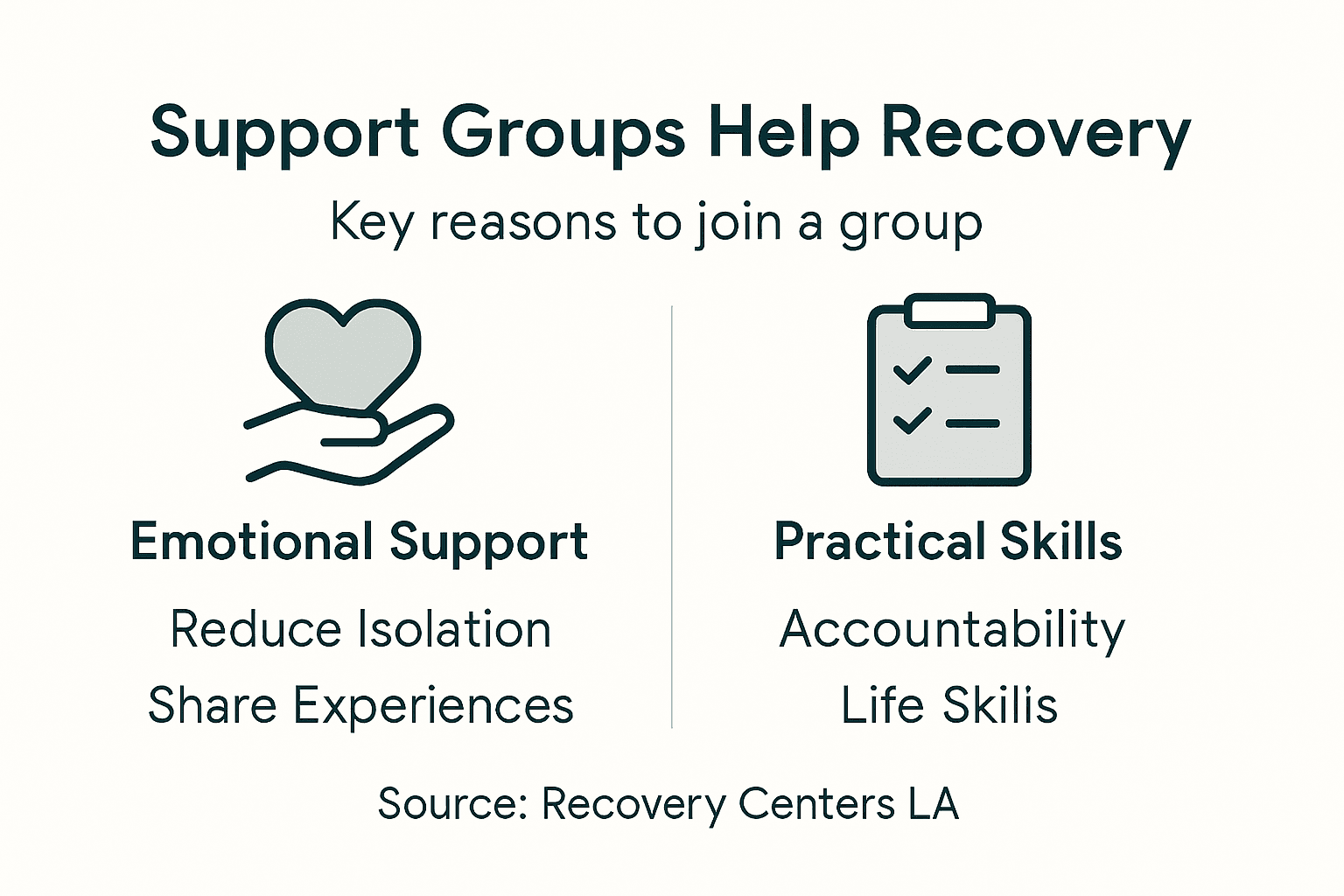
To help visualize the benefits, here is a condensed summary of how support groups foster recovery:
| Benefit | How It Helps Recovery | Example Positive Outcome |
|---|---|---|
| Emotional Support | Reduces isolation, shame | Increased confidence, less stigma |
| Practical Strategies | Shares coping skills | Better stress management |
| Accountability | Encouragement for attendance | Fewer relapses, stronger routines |
| Community Building | Creates lasting relationships | New friendships, peer mentorship |
Pro tip: Commit to attending at least six consecutive meetings before deciding if a group is right for you, as meaningful connections and real benefits typically emerge after the initial adjustment period.
Support Groups and Professional Treatment Integration
The most effective recovery rarely happens through a single approach alone. Support groups complement professional treatment by filling gaps that clinical therapy cannot address on its own. When you’re in a structured program like Glendora Recovery Center’s Partial Hospitalization Program or Intensive Outpatient Program, you receive evidence-based treatment from licensed clinicians who diagnose, treat co-occurring mental health disorders, and prescribe medications if needed. These professionals bring clinical expertise and structured intervention. However, the clinical setting has boundaries. Once your session ends, you return to your daily life where triggers exist, relationships need rebuilding, and the work of staying sober continues. This is where peer support groups become invaluable. They provide the continuous, community-based encouragement that sustains the momentum created in formal treatment.
Integration typically happens in a few ways. Many treatment programs actively incorporate support groups into their curriculum or strongly recommend specific groups as part of your aftercare plan. You might attend a therapy session on Tuesday addressing specific trauma or addiction triggers, then attend a peer-led support group on Thursday where you practice the skills you learned in a real community setting. Some people find that group therapy offered within a treatment facility serves as a bridge to peer-led groups, helping them build confidence before joining larger community groups. The key difference is that while group therapy offers clinician-led structured interventions with specific therapeutic goals, peer support groups emphasize shared experience and mutual connection. Both have value. Both work better together than apart. Think of professional treatment as the foundation that identifies and addresses the roots of your addiction or mental health condition, while support groups provide the daily structure and community that helps you live within that foundation long-term.
Support groups serve as a bridge between formal treatment and ongoing emotional support, making them essential components of comprehensive aftercare. Many people discover that attending support groups throughout and especially after formal treatment significantly reduces relapse risk and improves long-term outcomes. The integration doesn’t require choosing one over the other. Instead, individuals benefit most when they use both simultaneously. For instance, you might have individual therapy addressing trauma, group therapy for skill-building with others facing similar challenges, and peer support groups for daily accountability and community. This layered approach addresses your recovery from multiple angles. As your needs evolve and your recovery strengthens, the balance between formal treatment and peer support naturally shifts, but both typically remain important parts of your wellness routine.
Pro tip: Ask your treatment team to recommend specific support groups that align with your diagnosis and recovery goals, and attend at least one meeting while still in active treatment to establish the connection before completing your program.
Risks, Barriers, and How to Overcome Them
While support groups offer significant benefits, they’re not without challenges. Understanding potential obstacles helps you navigate them strategically rather than letting them derail your recovery. One of the most common barriers is stigma and fear of judgment. Even though you know intellectually that addiction and mental health struggles are medical conditions, the emotional weight of shame can make walking through those doors feel impossible. You might worry about running into someone you know, being recognized, or having your recovery exposed. Common barriers include fear of stigma and disclosure concerns, which prevent many people from seeking the help they desperately need. The reality is that confidentiality is taken seriously in most groups. Members follow strict unwritten rules about what’s shared in the room staying in the room. Starting with an online group or attending a location outside your immediate neighborhood can help ease these initial fears while you build confidence.
Logistical barriers are equally real. Finding a group that meets at a time compatible with your work schedule, childcare responsibilities, or other commitments can feel impossible, especially in Los Angeles County where traffic and distance add complexity. Transportation challenges, limited availability of groups for your specific needs, or simply not knowing where to start create additional friction. Creating safe environments and addressing transportation challenges are essential for effective group participation. The solution here is flexibility. Online and hybrid groups have exploded in availability, offering meetings at various times including evenings and weekends. If you’re struggling with scheduling, ask your treatment provider about groups that accommodate your specific situation. Many groups also offer virtual attendance options, eliminating transportation concerns entirely. Some treatment facilities like Glendora Recovery Center offer flexible scheduling including morning, evening, and telehealth sessions that can align with group participation.
Another risk involves group dynamics. You might encounter a group where one person dominates conversations, where the energy feels negative or cultish, where there’s conflict between members, or where the group’s approach simply doesn’t match your values. This is actually valuable information. Not every group is the right fit, and that’s completely normal. Try different groups until you find one that feels welcoming and genuinely supportive. Pay attention to whether the facilitator actively manages discussions, maintains focus, and ensures everyone has space to speak. Look for groups with clear guidelines about confidentiality, respect, and appropriate behavior. If you attend a group and something feels off, you’re not obligated to return. Finding the right group is like finding the right therapist; sometimes it takes trying a few before you discover the right match. The investment of trying multiple groups is worth the effort to find your community.
Pro tip: Start with an online group if in-person meetings feel too intimidating, then gradually transition to in-person attendance as your comfort grows, giving yourself permission to try several groups before deciding which one serves your recovery best.
Strengthen Your Recovery Journey with Expert Support and Community
Navigating recovery involves overcoming isolation, managing triggers, and building lasting support systems. The article highlights how peer-led support groups provide a vital space for connection, accountability, and practical strategies that complement professional care. If you are seeking to bridge the gap between clinical treatment and ongoing peer encouragement, understanding how to integrate these resources can transform your path to wellness.
At Glendora Recovery Center, we specialize in providing flexible, individualized programs that align perfectly with your recovery needs. Our Partial Hospitalization Programs and Intensive Outpatient Programs include encouragement to engage with support groups tailored to your goals. Whether you prefer in-person, online, or a hybrid model, our compassionate team coordinates your access to the right community to reduce stigma and strengthen accountability. Take the next step today by contacting us to explore how our comprehensive services paired with targeted support groups can help you build a sustainable recovery.
Discover the difference a combined treatment and support group approach can make by reaching out through our Contact Us page now. Learn more about aftercare support options that keep you connected beyond initial treatment. Your recovery deserves both professional guidance and peer understanding—start your personalized plan today.
Frequently Asked Questions
What are support groups in recovery?
Support groups are gatherings where individuals facing similar challenges, particularly those in recovery from substance abuse or mental health issues, can share experiences and support one another. They offer emotional support and practical coping strategies in a safe environment.
How do support groups differ from therapy groups?
Support groups are often peer-led, focusing on shared experiences and mutual connection, while therapy groups are led by licensed mental health professionals with specific clinical goals. Both serve important roles in the recovery process but offer different experiences.
What are the benefits of attending a support group during recovery?
Attending a support group can reduce feelings of isolation, provide emotional support, strengthen coping skills, and promote accountability. Group members often learn practical strategies and find encouragement from shared experiences, which enhances long-term recovery success.
How can I overcome barriers to joining a support group?
To overcome barriers such as stigma, scheduling conflicts, or discomfort in group dynamics, consider starting with online groups for anonymity and flexibility. It’s also helpful to try multiple groups to find one that feels welcoming and supportive, ensuring you’re comfortable in your recovery journey.
Recommended
- The Power of Friendship During Alcohol Recovery
- Questions to Ask Addicts in Recovery – Supporting Lasting Change | Glendora Recovery Center
- What Is a Recovery Coach and Their Role in Addiction Support | Glendora Recovery Center
- 7 Practical Ways to Support Someone in Recovery | Glendora Recovery Center
- Post-Workout Recovery Workflow for Optimal Results – MyGymSupplements