
Nearly one in five American adults experiences a mood disorder at some point in their lives. These complex conditions go far beyond ordinary emotional ups and downs, often shaping how people think, feel, and connect with others every day. Understanding the core definitions of mood disorders provides practical insight into how they affect millions and helps to clarify what sets these medical conditions apart from everyday stress or sadness.
Table of Contents
- Mood Disorders Explained – Core Definitions
- Common Types of Mood Disorders
- Key Symptoms and Diagnostic Criteria
- Mood Disorders and Substance Abuse Risks
- Treatment Approaches in Los Angeles County
Key Takeaways
| Point | Details |
|---|---|
| Understanding Mood Disorders | Mood disorders are complex medical conditions that severely affect emotional regulation and quality of life, requiring professional intervention for effective management. |
| Categories of Mood Disorders | Major depressive disorder, bipolar disorder, persistent depressive disorder, and cyclothymic disorder are primary categories, each presenting unique challenges related to emotional stability. |
| Connection to Substance Abuse | There is a bidirectional relationship between mood disorders and substance abuse, where each exacerbates the other, necessitating integrated treatment approaches. |
| Treatment Strategies | Comprehensive treatment plans should integrate pharmacological methods, psychotherapy, and support systems tailored to individual needs for sustained recovery and emotional resilience. |
Mood Disorders Explained – Core Definitions
Mental health professionals understand mood disorders as complex psychological conditions characterized by significant disturbances in emotional regulation and overall emotional experience. These disorders go far beyond typical emotional fluctuations, representing persistent patterns that dramatically impact an individual’s daily functioning, relationships, and quality of life. Mood disorders fundamentally alter how a person perceives and interacts with their internal emotional landscape.
At their core, mood disorders represent significant disruptions in emotional processing mechanisms. They involve persistent emotional states that deviate substantially from typical emotional responses, creating challenges in maintaining stable psychological equilibrium. Neurological research suggests these disorders emerge from intricate interactions between genetic predispositions, neurochemical imbalances, environmental stressors, and individual psychological dynamics.
The primary categories of mood disorders include major depressive disorder, bipolar disorder, persistent depressive disorder, and cyclothymic disorder. Each presents unique symptomatic patterns that manifest differently across individuals. Symptoms might range from prolonged periods of intense sadness and hopelessness to dramatic mood swings involving extreme emotional highs and lows. These conditions are not simple emotional states but complex neuropsychiatric experiences that require professional understanding and targeted therapeutic interventions.
Understanding mood disorders requires recognizing their multifaceted nature. They are not personal weaknesses or character flaws but legitimate medical conditions involving intricate neurological and psychological mechanisms. Effective treatment demands comprehensive approaches that integrate medical, psychological, and lifestyle interventions. For individuals struggling with these challenges, professional support represents a critical pathway toward emotional stabilization and improved mental wellness.
Common Types of Mood Disorders
Mood disorders encompass a range of complex psychological conditions that profoundly impact emotional experiences and mental health functioning. Comprehensive medical research identifies several primary categories of mood disorders, each presenting unique challenges for individuals experiencing emotional regulation difficulties.
The most prominent mood disorder categories include major depressive disorder, characterized by persistent feelings of extreme sadness and loss of interest in daily activities. Bipolar disorder represents another significant condition, marked by dramatic mood fluctuations involving emotional highs (mania) and severe lows (depression). Psychiatric experts recognize these disorders as complex neurological experiences that extend far beyond typical emotional variations.

Additional significant mood disorder types include persistent depressive disorder (dysthymia), which involves chronic low-grade depression lasting two years or more, and cyclothymic disorder, a milder but chronic form of bipolar disorder featuring numerous periods of hypomanic and depressive symptoms. These conditions share common characteristics of disrupted emotional processing, significantly impacting an individual’s ability to maintain consistent psychological stability and overall quality of life.
Understanding these mood disorders requires recognizing their nuanced nature. They are not simply emotional states but complex neuropsychiatric conditions involving intricate interactions between genetic predispositions, neurochemical systems, and environmental influences. Professional assessment and personalized treatment strategies are crucial for effectively managing these challenging psychological experiences. For individuals struggling with mood disorders, seeking professional support represents the most important step toward emotional healing and psychological wellness.
Key Symptoms and Diagnostic Criteria
Diagnostic criteria for mood disorders represent complex psychological assessments that require comprehensive evaluation of an individual’s emotional experiences and behavioral patterns. Clinical research indicates that professional mental health practitioners follow rigorous diagnostic protocols to accurately identify and categorize these intricate emotional conditions.
For major depressive disorder, mental health professionals look for a specific constellation of symptoms persisting for at least two weeks. These diagnostic indicators typically include: persistent depressed mood, significant loss of interest in previously enjoyable activities, notable changes in sleep patterns, substantial weight fluctuations, pronounced fatigue, feelings of worthlessness, diminished concentration, and recurring thoughts of death or suicide. Psychiatric diagnostic standards emphasize that individuals must experience at least five of these symptoms to receive a clinical diagnosis, with at least one symptom being either depressed mood or loss of interest.
Bipolar disorder diagnostic criteria involve more nuanced assessments, focusing on distinctive mood episode patterns. These include manic episodes characterized by elevated mood, increased energy, reduced need for sleep, grandiose thinking, and impulsive behaviors, contrasted with depressive episodes mirroring major depressive disorder symptoms. Mental health professionals carefully track the duration, frequency, and intensity of these mood shifts to distinguish between different bipolar spectrum disorders.
Understanding these diagnostic criteria requires recognizing that mood disorders are legitimate medical conditions, not personal weaknesses. Accurate diagnosis demands professional expertise, considering the complex interplay of biological, psychological, and environmental factors. For individuals experiencing persistent emotional challenges, professional assessment represents the critical first step toward understanding and managing their mental health journey.
Mood Disorders and Substance Abuse Risks
Mood disorders and substance abuse represent a critically interconnected psychological phenomenon that significantly challenges mental health treatment and individual recovery processes. Scientific research demonstrates a complex bidirectional relationship where mood disorders dramatically increase an individual’s vulnerability to substance abuse, and conversely, substance abuse can exacerbate underlying mood disorder symptoms.
Individuals experiencing mood disorders frequently turn to substances as a form of self-medication, attempting to manage overwhelming emotional experiences. This dangerous coping mechanism creates a destructive cycle where substance use temporarily masks emotional pain while ultimately intensifying underlying psychological distress. Comprehensive clinical studies indicate that people with mood disorders are substantially more likely to develop substance use disorders, with the risk varying across different mood disorder types such as major depression, bipolar disorder, and persistent depressive disorder.
The neurobiological mechanisms underlying this relationship are intricate and multifaceted. Mood disorders and substance abuse both involve complex disruptions in neurotransmitter systems, particularly impacting brain regions responsible for emotional regulation, reward processing, and impulse control. These shared neurological vulnerabilities explain why individuals with mood disorders experience such profound challenges in maintaining consistent psychological stability and resisting addictive behaviors. Substance abuse and depression treatment approaches emphasize the critical importance of integrated treatment strategies that simultaneously address both the mood disorder and substance abuse components.
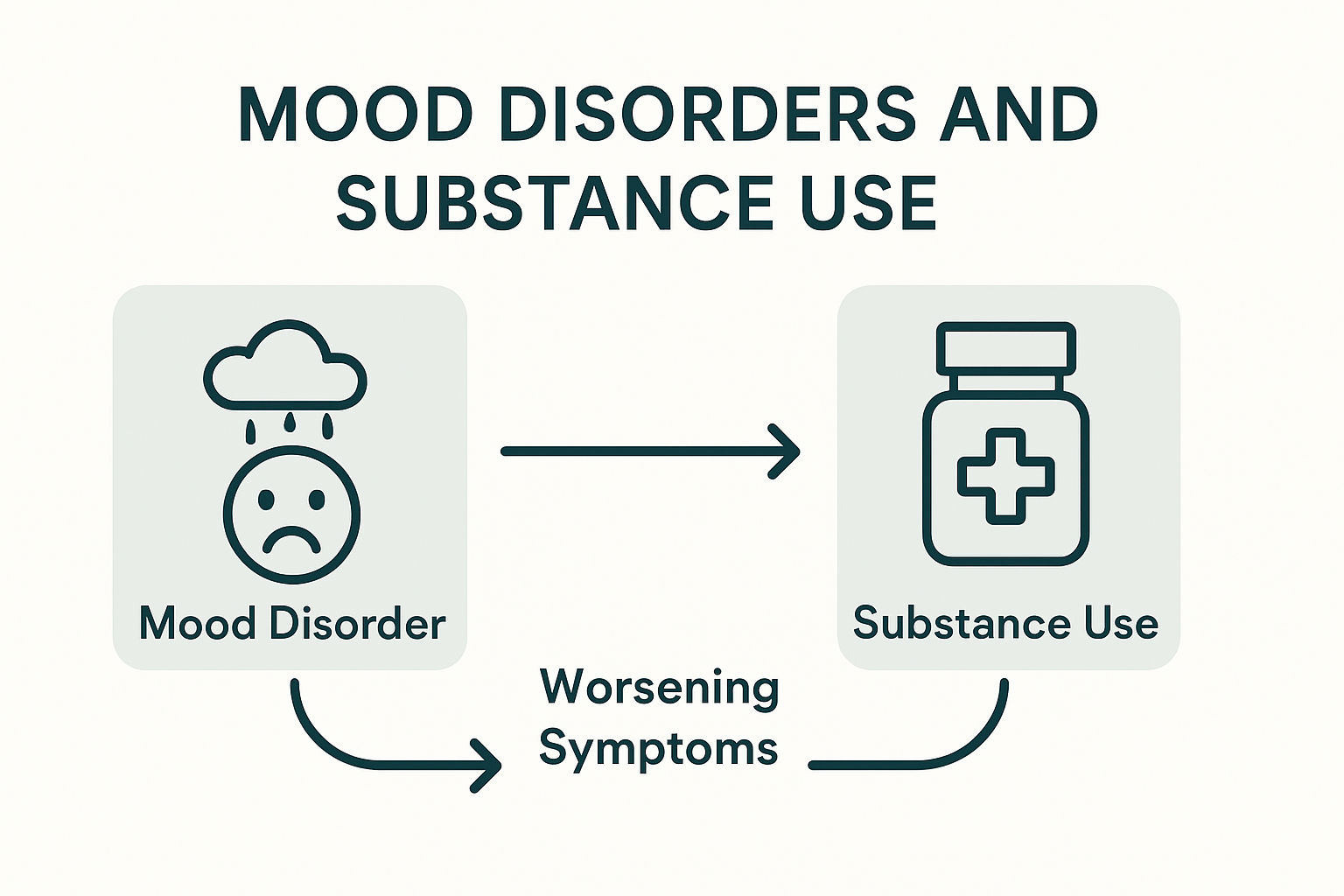
Recognizing the interplay between mood disorders and substance abuse requires a compassionate, holistic approach to mental health. Treatment must move beyond traditional symptom management, focusing instead on comprehensive healing that addresses underlying psychological mechanisms, environmental stressors, and individual emotional experiences. For individuals navigating these complex psychological challenges, professional support represents the most crucial pathway toward sustainable recovery and emotional wellness.
Treatment Approaches in Los Angeles County
Treatment for mood disorders and substance abuse requires a comprehensive, nuanced approach that addresses the complex interplay between psychological and neurobiological factors. Los Angeles County treatment services offer a diverse range of interventions designed to support individuals struggling with these interconnected mental health challenges, recognizing the unique needs of each person seeking recovery.
Clinical treatment protocols in Los Angeles emphasize integrated care models that combine multiple therapeutic strategies. These typically include pharmacological interventions to stabilize mood and manage neurochemical imbalances, evidence-based psychotherapy approaches such as cognitive behavioral therapy and dialectical behavior therapy, and comprehensive support systems that address underlying psychological and environmental stressors. The goal is to create a holistic treatment plan that not only manages symptoms but also empowers individuals to develop sustainable coping mechanisms and emotional resilience.
Mental health professionals in Los Angeles County recognize the critical importance of personalized treatment approaches. Recovery support resources play a crucial role in supporting individuals through their healing journey, offering various levels of care including early intervention programs, outpatient services, intensive outpatient programs, and comprehensive aftercare support. These multifaceted approaches acknowledge that recovery is not a linear process but a complex, ongoing journey of personal growth and psychological healing.
The most effective treatment strategies in Los Angeles County embrace a harm reduction model, focusing on individual empowerment, compassionate care, and comprehensive support. This approach recognizes that each person’s path to recovery is unique, requiring flexible, personalized interventions that address the intricate connections between mood disorders and substance abuse. For individuals seeking a transformative path forward, professional guidance represents the first crucial step toward sustainable mental health and emotional wellness.
Take Control of Mood Disorders and Addiction Recovery Today
Mood disorders create deep emotional challenges that can intensify the struggle with addiction. When persistent feelings like depression, mood swings, or emotional instability impact your daily life, treating both mood disorders and substance abuse together is essential. At Glendora Recovery Center, we understand the critical need for integrated care that addresses these interconnected issues with compassion and expert guidance.
If you are facing the complex symptoms described in mood disorder definitions or worried about how these emotional struggles affect your recovery, do not wait. Our comprehensive programs offer personalized treatment through Partial Hospitalization, Intensive Outpatient, and aftercare support designed specifically for individuals coping with co-occurring disorders. Start your path toward emotional stability and freedom from addiction by speaking with our experienced team today. Visit our contact page now to take the first vital step toward healing.
Frequently Asked Questions
What are mood disorders?
Mood disorders are complex psychological conditions characterized by significant disturbances in emotional regulation and overall emotional experience, impacting daily functioning and quality of life.
How do mood disorders affect addiction recovery?
Mood disorders can increase vulnerability to substance use and complicate recovery by creating a cycle of self-medication, where individuals use substances to mask emotional pain, which can exacerbate their mood disorder symptoms.
What are the main types of mood disorders?
The primary types of mood disorders include major depressive disorder, bipolar disorder, persistent depressive disorder, and cyclothymic disorder, each exhibiting distinct symptoms and challenges.
How can treatment effectively address mood disorders and substance abuse?
Effective treatment for mood disorders and substance abuse requires an integrated approach, combining pharmacological interventions, psychotherapy, and support systems to address the underlying emotional and psychological factors.
Recommended
- Depression in Recovery – How It Impacts Healing | Glendora Recovery Center
- Seasonal Depression and Addiction – Impact on Recovery | Glendora Recovery Center
- Bipolar Disorder and Addiction: Complete Guide | Glendora Recovery Center
- What Is Drug Addiction – Impact on Health and Life | Glendora Recovery Center