
Over one in five American adults face depression at some point, yet for those in recovery, its impact is even more profound. Battling depression during sobriety adds another layer of difficulty to an already challenging process, creating obstacles that are emotional and physical. Gaining a clear understanding of how depression shapes the recovery journey empowers individuals and families to recognize warning signs, seek effective support, and build lasting resilience.
Table of Contents
- Defining Depression in Recovery
- Symptoms and Causes During Sobriety
- Dual Diagnosis and Co-Occurring Disorders
- Treatment Approaches and Therapies Available
- Managing Relapse Risks and Triggers
Key Takeaways
| Point | Details |
|---|---|
| Understanding Depression | Depression in recovery is a persistent condition that complicates rehabilitation, requiring comprehensive and personalized treatment approaches. |
| Symptoms and Triggers | Common symptoms include hopelessness and fatigue, often worsened by neurological imbalances and unresolved trauma from substance use. |
| Dual Diagnosis | Co-occurring disorders, such as anxiety and PTSD, present significant treatment challenges that necessitate integrated care strategies. |
| Relapse Management | Effective relapse prevention focuses on identifying triggers, maintaining support systems, and employing proactive mental health strategies. |
Defining Depression in Recovery
Recovery from addiction is rarely a straightforward journey, and depression frequently emerges as a complex companion that significantly impacts healing. Understanding depression within the context of recovery requires examining its multifaceted nature and how it intertwines with substance use disorders. Empirical research on depression definitions highlights the nuanced challenges in precisely characterizing this mental health condition.
Depression in recovery represents more than just a temporary emotional state – it is a persistent psychological condition that can profoundly disrupt an individual’s rehabilitation process. Researchers have identified that achieving complete remission from depression is a complex therapeutic goal, with many patients experiencing ongoing challenges even after initial treatment. Full recovery from depression involves addressing not just symptoms, but underlying psychological and neurological factors that contribute to mental health struggles.
Key aspects of depression in recovery include:
- Potential triggers from past trauma
- Neurochemical imbalances related to substance use
- Persistent negative thought patterns
- Challenges in developing healthy coping mechanisms
Understanding depression within the recovery framework requires recognizing its dynamic nature. Unlike a linear healing process, depression can emerge at various stages, presenting unique obstacles that demand personalized, comprehensive treatment approaches. Successful navigation of depression during recovery involves integrated mental health support, targeted therapeutic interventions, and a holistic approach that addresses both psychological and physiological dimensions of healing.
Symptoms and Causes During Sobriety
Sobriety presents a complex psychological landscape where depression and anxiety often emerge as significant challenges for individuals recovering from substance use disorders. Research involving over 1,000 individuals in alcohol treatment revealed that nearly one-third of participants experienced persistent mental health symptoms during early recovery, highlighting the intricate relationship between addiction and psychological well-being.
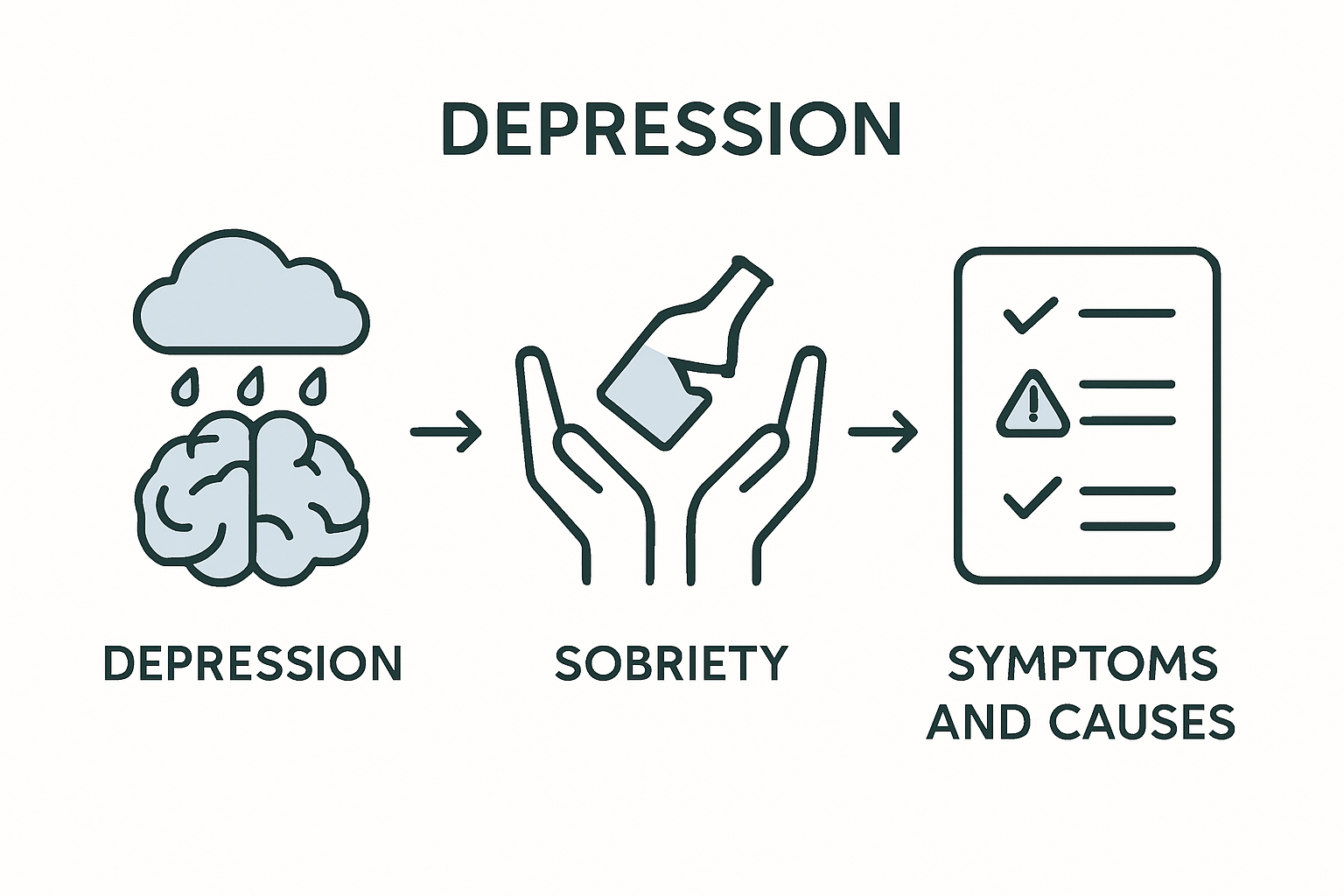
The symptoms of depression during sobriety can manifest in multiple dimensions, extending far beyond typical emotional experiences. These may include profound feelings of hopelessness, persistent fatigue, significant changes in sleep patterns, dramatic shifts in appetite, and intense emotional volatility. Neurochemical imbalances caused by prolonged substance use frequently contribute to these symptoms, as the brain gradually recalibrates its chemical equilibrium during the recovery process.
Key symptoms and potential causes include:
- Neurological rewiring from substance dependency
- Unresolved trauma resurfacing during recovery
- Biological predispositions to mood disorders
- Chronic stress from lifestyle transitions
- Potential genetic vulnerabilities to depression
The research highlighting recovery trajectories demonstrates that approximately 5% of individuals experience sustained high symptom levels, often interconnected with severe mental health diagnoses like PTSD. This underscores the critical importance of comprehensive, personalized treatment approaches that address both addiction and underlying psychological challenges. Successful navigation through these symptoms requires integrated support, targeted therapeutic interventions, and a holistic understanding of an individual’s unique mental health landscape.
Dual Diagnosis and Co-Occurring Disorders
Dual diagnosis represents a complex intersection of mental health and substance use disorders, where individuals experience simultaneous challenges that significantly complicate recovery efforts. The Tripartite Model of Anxiety and Depression provides critical insights into understanding how different psychological conditions interact, categorizing symptoms into negative affect, positive affect, and physiological hyperarousal, which helps clinicians more accurately diagnose and treat these intricate conditions.
In the context of recovery, co-occurring disorders create multilayered treatment challenges that demand comprehensive, integrated approaches. Mental health conditions like depression, anxiety, bipolar disorder, and post-traumatic stress disorder frequently coexist with substance use disorders, creating a complex web of psychological and physiological interactions. Recent clinical research demonstrates that individuals with moderate to severe anxiety experience reduced probabilities of recovery from depression, underscoring the critical need for nuanced, personalized treatment strategies.
Key characteristics of dual diagnosis include:
- Interconnected psychological and physiological symptoms
- Increased complexity in treatment planning
- Higher risks of treatment resistance
- Potential for compounded mental health challenges
- Greater likelihood of relapse without comprehensive intervention
Navigating dual diagnosis requires a holistic treatment approach that simultaneously addresses substance use and underlying mental health conditions. Substance abuse and mental health guides emphasize the importance of integrated treatment models that recognize the intricate relationships between different psychological disorders. Successful management involves multidisciplinary teams, personalized therapeutic interventions, and a deep understanding of how different mental health conditions interact and influence each other during the recovery process.
Treatment Approaches and Therapies Available
Depression treatment in recovery demands a multifaceted approach that addresses the complex psychological and neurological challenges individuals face. Self-control therapy emerges as a promising behavioral intervention, focusing on three critical processes: self-monitoring, self-evaluation, and self-reinforcement. This approach helps individuals develop robust self-regulation skills that are essential for managing depressive symptoms and supporting long-term recovery.

Comprehensive depression treatment integrates both pharmacological and non-pharmacological therapies, recognizing that healing requires a holistic approach. Therapeutic modalities may include cognitive behavioral therapy, dialectical behavior therapy, group counseling, individual psychotherapy, and potentially medication management. Each treatment plan is uniquely tailored to address the individual’s specific psychological needs, underlying trauma, and recovery goals.
Key treatment approaches include:
- Cognitive Behavioral Therapy (CBT)
- Dialectical Behavior Therapy (DBT)
- Art therapy interventions for emotional processing
- Mindfulness and meditation techniques
- Trauma-informed counseling
- Medication-assisted treatment
- Holistic wellness strategies
Successful treatment requires a dynamic, personalized approach that adapts to an individual’s evolving psychological landscape. Integrated care models emphasize addressing not just symptoms, but underlying emotional patterns, behavioral triggers, and neurochemical imbalances. By combining evidence-based therapeutic techniques with compassionate, individualized support, individuals can develop powerful coping mechanisms and create sustainable pathways to mental health and recovery.
Managing Relapse Risks and Triggers
Depression relapse represents a complex psychological challenge that demands proactive, strategic management. Innovative cognitive frameworks are emerging to detect potential relapse markers, utilizing advanced techniques like social media analysis to identify early warning signs. These approaches help individuals and healthcare professionals recognize subtle shifts in emotional patterns that might indicate increased vulnerability to depressive episodes.
Research examining recovery experiences highlights that managing relapse risks is fundamentally a personal journey deeply influenced by social support and individual context. Understanding one’s unique emotional landscape becomes crucial in developing effective prevention strategies. This involves recognizing personal triggers, building robust coping mechanisms, and creating a supportive environment that promotes psychological resilience.
Key strategies for managing relapse risks include:
- Identifying personal emotional triggers
- Developing consistent self-monitoring techniques
- Maintaining structured addiction recovery plans
- Building strong support networks
- Practicing mindfulness and emotional regulation
- Engaging in regular therapeutic interventions
- Creating comprehensive relapse prevention plans
Successful relapse prevention requires a holistic approach that combines self-awareness, professional support, and proactive mental health strategies. By understanding individual psychological patterns, developing personalized coping mechanisms, and maintaining consistent therapeutic engagement, individuals can significantly reduce their vulnerability to depressive episodes and maintain sustainable emotional well-being.
Overcoming Depression in Recovery with Personalized Support
Depression can feel like an overwhelming obstacle during your journey of addiction recovery. The article reveals how persistent symptoms, neurological changes, and co-occurring disorders create complex emotional challenges that disrupt healing. If you are struggling with these intense feelings or worried about relapse risks, know you are not alone. At Glendora Recovery Center, we understand the critical need for integrated treatment that addresses both substance use and mental health concerns like depression and anxiety.
Our upscale facility provides tailored programs such as Partial Hospitalization Programs and Intensive Outpatient Programs designed to help you develop effective coping mechanisms and manage triggers. Our compassionate team focuses on creating a supportive environment that embraces behavioral therapies, trauma-informed care, and flexible scheduling options including online sessions.
Take the next step toward lasting healing by reaching out today. Whether you want to learn more about our dual diagnosis treatment or explore how our comprehensive services can support your mental health and sobriety, we are here to guide you. Contact us now at Glendora Recovery Center for a confidential consultation and start building resilience against depression in your recovery journey.
Frequently Asked Questions
What is depression in the context of recovery?
Depression in recovery is a persistent psychological condition that can significantly disrupt the healing process for individuals recovering from addiction, often presenting ongoing challenges beyond initial treatment.
What are common symptoms of depression during sobriety?
Common symptoms of depression during sobriety include feelings of hopelessness, persistent fatigue, changes in sleep patterns, appetite fluctuations, and emotional volatility, often stemming from neurochemical imbalances.
How does dual diagnosis affect recovery from depression?
Dual diagnosis complicates recovery as individuals face simultaneous mental health and substance use disorders, often requiring integrated treatment approaches to effectively address both conditions.
What strategies can help manage relapse risks associated with depression?
Managing relapse risks involves identifying personal emotional triggers, developing self-monitoring techniques, maintaining structured recovery plans, building strong support networks, and engaging in regular therapeutic interventions.