
TL;DR:
- Family support improves treatment retention and lowers relapse risk in addiction recovery.
- Effective family involvement includes emotional, practical, and structural support with healthy boundaries.
- Families should prioritize their own healing through resources like peer groups, therapy, and self-care.
When a loved one enters addiction recovery, the people closest to them often face their own wave of uncertainty, guilt, and confusion. Knowing what helps and what hurts is rarely obvious. Research confirms that strong family involvement improves treatment retention, reduces relapse risk, and raises overall quality of life for people with substance use disorder (SUD). This guide breaks down the most effective, evidence-based strategies for families and friends in the Los Angeles area, covering local resources, proven therapy models, and honest advice on how to support without losing yourself in the process.
Table of Contents
- Understanding the family’s role in recovery
- Preparing for recovery: Tools, resources, and mindset
- Step-by-step support strategies: Evidence-based approaches
- Troubleshooting and edge cases: Handling relapse and resistance
- Our take: What most guides miss about family recovery
- Next steps with LA recovery resources
- Frequently asked questions
Key Takeaways
| Point | Details |
|---|---|
| Family networks boost recovery | Strong family support increases treatment retention and lowers relapse risk. |
| LA resources available | Families can access dedicated groups, helplines, and apps in Los Angeles. |
| Therapy models matter | Evidence-based family therapies outperform individual methods for recovery. |
| Prepare for challenges | Relapse and resistance require calm, safety-focused responses and expert guidance. |
| Next steps are local | Professional help and peer support in Los Angeles are vital for sustained progress. |
Understanding the family’s role in recovery
Family members are not just bystanders in addiction recovery. They are active participants whose behavior, communication, and presence can shape whether a loved one stays in treatment or drifts back toward substance use. Understanding that role clearly is the first step toward being genuinely helpful.
One of the most important things to recognize is the difference between supporting and enabling. Supporting means encouraging healthy behavior, showing up consistently, and reinforcing treatment goals. Enabling means shielding a person from the consequences of their substance use, which can actually slow down recovery. Many families, acting out of love, fall into enabling patterns without realizing it. Learning to recognize this difference protects both you and your loved one.
Family’s impact on recovery goes far beyond emotional comfort. Strong family networks are linked to sustained recovery outcomes, including longer treatment retention, more days of abstinence, and better quality of life. These are not small improvements. They represent real, measurable differences in a person’s ability to build a stable life after addiction.
Formal family therapy adds another layer of support. Family-based therapies like Multidimensional Family Therapy (MDFT) and Behavioral Couples Therapy (BCT) show clinically significant reductions in substance use symptoms and family conflict. These models work because they treat the family system, not just the individual.
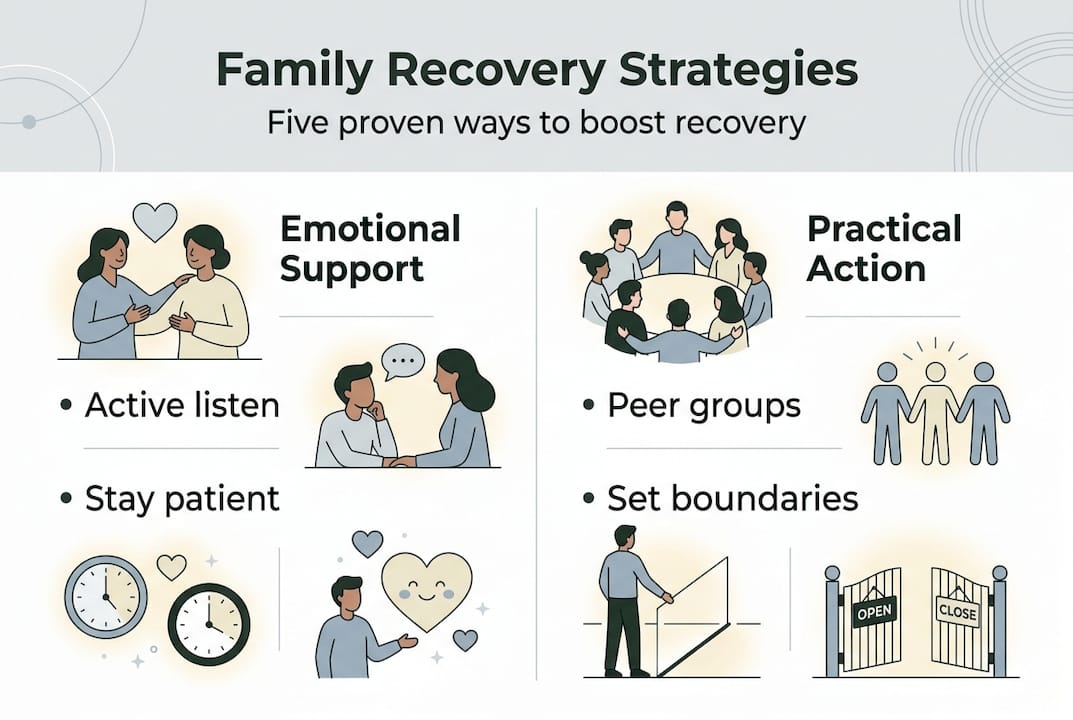
The types of support families offer fall into three broad categories:
- Emotional support: Active listening, expressing care without judgment, validating feelings
- Practical support: Helping with transportation to appointments, managing household logistics
- Structural support: Creating a stable, substance-free home environment and consistent routines
| Support type | Example actions | Common pitfall |
|---|---|---|
| Emotional | Listening without fixing | Taking on excessive guilt |
| Practical | Driving to treatment sessions | Overstepping boundaries |
| Structural | Removing substances from home | Becoming controlling |
Pro Tip: Read about family challenges with addiction before attending your first family therapy session. Understanding what you are walking into helps you engage more effectively and reduces the shock of hearing difficult truths.
The importance of family involvement is well-documented, but involvement has to be intentional. Showing up emotionally unprepared or without boundaries can create friction instead of healing. The good news is that preparation makes a real difference, and the resources to get that preparation exist right here in Los Angeles.
Preparing for recovery: Tools, resources, and mindset
Before you can effectively support someone in recovery, you need to invest in your own preparation. That means building the right mindset, accessing real resources, and developing a personal toolkit for the long road ahead.

The right mindset starts with three commitments: holding hope even when progress is slow, maintaining boundaries even when it is uncomfortable, and practicing self-care so you do not burn out. Recovery is rarely linear. There will be hard weeks, moments of doubt, and times when it feels like nothing is working. Families who prepare for this reality are far better equipped to stay steady.
In Los Angeles, families have access to a strong network of community support. Al-Anon and Nar-Anon meetings are available throughout the county, along with the SAMHSA National Helpline, local treatment centers, and tools like the RecoverLA app, which connects users to LA County-specific resources. These are not just backup options. They are frontline tools for families learning to navigate recovery together.
Here is a breakdown of the most useful resources available to LA-area families:
| Resource | What it offers | Access |
|---|---|---|
| Al-Anon / Nar-Anon | Peer support groups for family members | alanonla.org, local meetings |
| SAMHSA Helpline | 24/7 referrals and information | 1-800-662-4357 |
| RecoverLA app | LA County treatment and support locator | Free download |
| Local treatment centers | Structured family therapy and education | In-person or telehealth |
Families should also explore SAMHSA coping resources designed specifically for families navigating mental health and substance use challenges. These tools offer structured guidance on communication, stress management, and emotional regulation.
Some practical steps to get started:
- Attend one Al-Anon or Nar-Anon meeting this week to connect with others in similar situations
- Save the SAMHSA Helpline number in your phone for moments of crisis
- Download the RecoverLA app and explore local treatment options
- Review LA recovery resources to identify which services are closest to you
The adult recovery strategies most likely to succeed are built on consistent effort, not occasional involvement. Explore ways to support recovery in LA that fit your family’s schedule and comfort level, then commit to showing up regularly.
Step-by-step support strategies: Evidence-based approaches
Once you have your mindset and resources in place, the next step is putting specific, proven strategies into action. These approaches are grounded in clinical research and real-world practice.
- Learn about substance use disorder. Psychoeducation, which means learning how SUD affects the brain and behavior, reduces blame and builds empathy. Understanding that addiction is a medical condition, not a moral failure, changes how families interact with their loved one.
- Engage in structured family therapy. Evidence-based approaches like MDFT, BCT, Brief Strategic Family Therapy (BSFT), and Functional Family Therapy address the relational patterns that fuel substance use. These therapies create a safe space to rebuild trust and communication.
- Practice healthy communication. Use “I” statements instead of accusations. Listen more than you speak. Avoid ultimatums during emotionally charged moments.
- Join a peer support group. Connecting with others who understand your experience reduces isolation and gives you access to practical strategies that have worked for real families.
- Establish and maintain boundaries. Boundaries are not punishments. They are clear statements about what you will and will not accept, communicated with consistency and compassion.
Some families struggle most with avoiding codependency, the pattern of organizing your own emotional wellbeing around another person’s behavior. Codependency feels like love, but it often prevents your loved one from facing the natural consequences that motivate change.
Pro Tip: Walk through effective family therapy steps before your first session so you know what to expect and can engage more confidently from day one.
Avoid these common mistakes:
- Rescuing your loved one from every consequence of their behavior
- Making recovery the only topic of conversation at home
- Neglecting your own mental health needs
- Offering unsolicited advice during moments of stress
The goal is not to manage your loved one’s recovery. It is to create conditions where recovery becomes more possible.
Troubleshooting and edge cases: Handling relapse and resistance
Even with strong support in place, setbacks happen. Relapse is common in recovery from substance use disorder, and resistance to treatment is equally prevalent. Knowing how to respond without panic or blame is critical.
When a relapse occurs, your first priority is safety. Make sure your loved one is physically safe, then approach the situation calmly. Avoid lecturing or expressing disappointment in the moment. Instead, respond to relapse by framing it as a learning opportunity, using encouragement, and seeking professional support rather than reacting with panic or withdrawal.
Motivational interviewing is a technique worth understanding as a family member. It involves asking open-ended questions that help your loved one explore their own reasons for wanting change. You do not need to be a therapist to use its basic principles. Asking “What would life look like if things were different?” is more effective than telling someone what they should do.
Relapse does not mean failure. It means the treatment plan may need adjustment. Families who stay calm and engaged through relapse are far more likely to help their loved one return to recovery quickly. Understanding supporting someone with alcoholism can make the road ahead feel more manageable.
Some specific situations to prepare for:
- Resistance to treatment: Avoid power struggles. Express concern without ultimatums when possible. Seek guidance from a counselor on how to approach the conversation.
- Safety concerns: If your loved one is in immediate danger due to substance use, call 911 or a crisis line. Safety always comes first.
- Intergenerational patterns: If addiction runs in your family, a therapist can use tools like genograms to identify generational patterns and build prevention strategies for younger family members.
- Emotional exhaustion in caregivers: Recognizing relapse signs early helps you act before a crisis escalates, which protects both your loved one and your own wellbeing.
Building trust after a relapse takes time. Stay consistent, keep your boundaries intact, and continue attending your own support groups. Your steadiness communicates more than any words can. We explore this further in our guide to celebrating sobriety milestones.
Our take: What most guides miss about family recovery
Most guides focus entirely on the person in recovery. They offer advice about what to say, what not to say, and how to structure the home environment. That is all useful. But here is what often gets overlooked: families need their own recovery process too.
At Glendora Recovery Center, we see this regularly. Family members arrive exhausted, having spent years managing crises, absorbing emotional damage, and putting their own needs last. The idea that support is only about what you do for your loved one misses the deeper truth: your healing matters just as much.
We believe the families who make the most lasting impact on recovery are the ones who invest in peer groups, therapy, and honest self-reflection alongside their loved one. Not instead of supporting them, but in addition to it. Boundaries are not just strategies. They are expressions of your own self-worth. Local resources are valuable, but they only work if families actually use them and keep showing up consistently. The hardest part of family recovery is accepting that you cannot control the outcome, only the quality of your own involvement.
Next steps with LA recovery resources
If you are ready to take the next step, Glendora Recovery Center is here to support your entire family through the recovery process. Our addiction treatment programs in Glendora serve Los Angeles County with Partial Hospitalization Programs, Intensive Outpatient Programs, and family therapy designed to address the full picture of recovery. We offer flexible scheduling, including telehealth, to meet families where they are. Our comprehensive recovery approach combines clinical expertise with genuine compassion, making it easier for families to engage without feeling overwhelmed. Reach out today through our contact page and speak with someone who understands what you are facing and how to help.
Frequently asked questions
What is the most effective way to support a loved one in addiction recovery?
The most effective approach combines peer support, evidence-based therapy, and consistent emotional and practical involvement with clear personal boundaries. Strong family networks are directly linked to longer treatment retention and lower relapse risk.
What resources are available for families in Los Angeles?
Families in Los Angeles can access Al-Anon and Nar-Anon groups, the SAMHSA National Helpline, local treatment centers, and the RecoverLA app for county-specific guidance. These resources are available at little or no cost.
How should families handle relapse during recovery?
Respond calmly, ensure physical safety first, avoid blame, and frame the relapse as a signal to revisit the treatment plan. Seeking guidance from a professional counselor or support group right away helps prevent further crisis.
What are evidence-based family therapies for addiction?
Proven approaches include psychoeducation, MDFT, BCT, and Functional Family Therapy, all of which show measurable reductions in substance use and family conflict. These therapies are available through licensed treatment centers and outpatient programs across Los Angeles County.
Recommended
- 7 Practical Ways to Support Someone in Recovery | Glendora Recovery Center
- Role of Family in Recovery – Supporting Lasting Change | Glendora Recovery Center
- Coping Strategies for Loved Ones: 35% Lower Relapse Risk | Glendora Recovery Center
- Communication strategies to support someone in recovery | Glendora Recovery Center
- How Music Supports Mental Health: Evidence-based Benefits