
Over half of American adults who finish detox face relapse within the first few months without a solid aftercare plan. Living in Los Angeles County, the path to lasting recovery is not just about stopping substance use, but about rebuilding your health, rebuilding your mental strength, and creating a safe life space. This guide offers clear post-detox strategies, real support, and practical tips to help you maintain sobriety and protect your mental well being.
Table of Contents
- Step 1: Assess Immediate Needs After Detox
- Step 2: Establish A Personalized Aftercare Plan
- Step 3: Engage With Ongoing Therapy And Support
- Step 4: Monitor Progress And Adjust Strategies
- Step 5: Verify Stability And Celebrate Milestones
Quick Summary
| Key Point | Explanation |
|---|---|
| 1. Assess Needs After Detox | Evaluate medical, psychological, and environmental factors to create a personalized recovery plan. |
| 2. Develop an Aftercare Plan | Create a tailored aftercare roadmap with support networks and consistent therapy to maintain sobriety. |
| 3. Engage in Ongoing Therapy | Continue therapy, including individual and group sessions, to strengthen recovery and manage triggers. |
| 4. Monitor Progress Regularly | Set measurable goals and regularly check in with healthcare providers to adapt strategies as needed. |
| 5. Celebrate Recovery Milestones | Recognize and reward your achievements to reinforce commitment and motivation in your sobriety journey. |
Step 1: Assess immediate needs after detox
After completing detox, your first critical task is understanding your immediate medical, psychological, and environmental requirements. Comprehensive post-detox assessment helps identify potential risks and develop a targeted recovery strategy.
The assessment process involves multiple dimensions. Medical professionals will evaluate your physical health, checking for potential withdrawal complications, nutritional deficiencies, and underlying health conditions that might impact your recovery. Simultaneously, they will conduct a psychological evaluation to determine your mental health status, screening for potential co-occurring disorders like depression or anxiety that frequently accompany substance use disorders. Environmental factors are equally crucial your living situation, support system, and potential exposure to triggers will be carefully reviewed to ensure a safe and supportive recovery pathway.
Your healthcare team will work closely with you to develop a personalized care plan addressing these identified needs. This might include recommendations for ongoing therapy, medication management, lifestyle adjustments, and connection to support groups that can provide additional resources during your early recovery journey.
Here is a summary of assessment areas after detox and their key evaluation points:
| Assessment Area | Purpose | Example Evaluation |
|---|---|---|
| Medical | Identify health risks | Check for withdrawal issues |
| Psychological | Screen for mental health | Assess for anxiety or depression |
| Environmental | Ensure safe recovery space | Review support system and triggers |
Pro Tip: Be completely honest during your assessment to help professionals create the most effective and personalized recovery plan for your unique situation.
Step 2: Establish a personalized aftercare plan
Creating a personalized aftercare plan is crucial for maintaining long term recovery and preventing potential relapse. Comprehensive aftercare strategies help you develop a structured approach to managing your ongoing recovery journey.

Your aftercare plan should be a dynamic roadmap tailored specifically to your unique needs and challenges. This typically involves collaboration with addiction specialists who will help you identify potential triggers, develop coping mechanisms, and create a support network. Key components often include ongoing therapy sessions whether individual or group counseling regular check ins with a recovery coach or therapist participation in support groups like Alcoholics Anonymous or Narcotics Anonymous and establishing healthy lifestyle practices that reinforce your commitment to sobriety.
The most effective aftercare plans are flexible and responsive to your evolving needs. This means scheduling regular plan reviews with your healthcare provider to adjust strategies as you progress in your recovery. Some individuals might require medication assisted treatment while others may benefit more from intensive outpatient programs or sober living environments. Your plan should include clear milestones concrete goals and multiple layers of support to ensure you have resources available during challenging moments.
Pro Tip: Document your aftercare plan in writing and keep it accessible as a constant reminder of your commitment and the strategies you have developed to maintain your recovery.
Step 3: Engage with ongoing therapy and support
Engaging with ongoing therapy and support is a critical foundation for maintaining lasting recovery. Comprehensive recovery strategies provide the essential framework for building a sustainable path to wellness and sobriety.
Your therapy journey should include a multifaceted approach that combines professional counseling individual therapy group support sessions and targeted interventions designed to address your specific recovery needs. Individual therapy allows you to work one on one with a licensed therapist to explore underlying triggers develop coping mechanisms and process emotional challenges. Group therapy sessions offer powerful peer support creating a community of individuals who understand your experiences and can provide mutual encouragement. Support groups like Alcoholics Anonymous or Narcotics Anonymous can complement your formal therapy providing additional layers of accountability and connection.
Consistent participation is key to making therapy and support work for you. This means showing up regularly being honest with yourself and your support network and remaining open to learning and personal growth. Some individuals might benefit from multiple types of therapy including cognitive behavioral therapy dialectical behavior therapy or specialized trauma informed counseling. Your healthcare providers can help you design a personalized therapy approach that adapts to your evolving recovery journey and addresses your unique psychological and emotional needs.
This table outlines how different therapy types support long-term recovery:
| Therapy Type | Focus Area | Typical Benefit |
|---|---|---|
| Individual Counseling | Personal triggers | Deep self-insight and growth |
| Group Therapy | Peer support | Shared experience and motivation |
| Support Groups (AA/NA) | Community accountability | Ongoing encouragement |
Pro Tip: Treat your therapy and support engagement like a critical appointment with yourself always prioritize these sessions and approach them with genuine commitment and openness.
Step 4: Monitor progress and adjust strategies
Monitoring your recovery progress is a dynamic and essential component of maintaining long term sobriety. Effective recovery management requires consistent evaluation and strategic adjustments to support your ongoing healing journey.
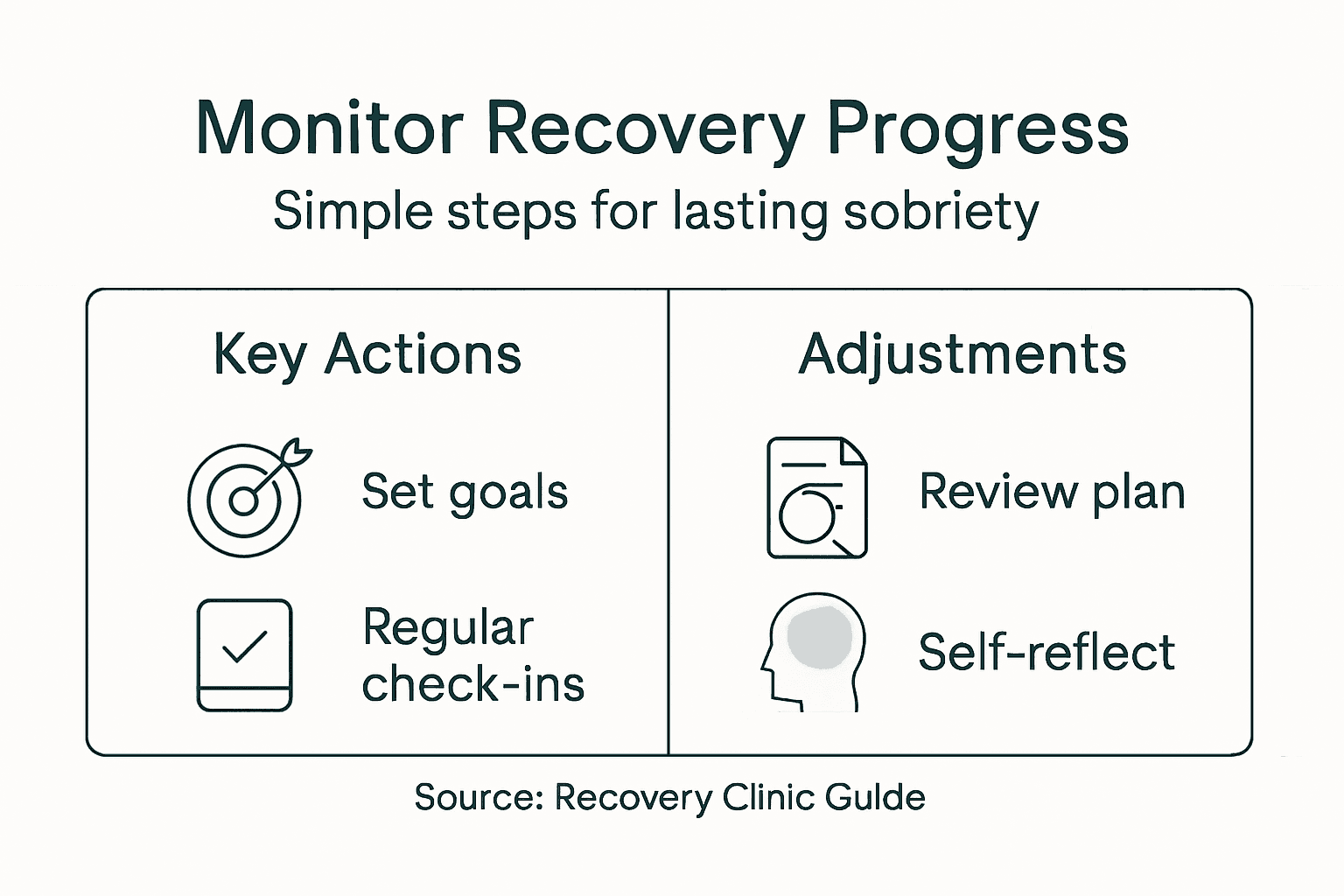
Establishing clear measurable goals serves as the foundation for tracking your progress. Work with your healthcare providers to develop specific benchmarks that reflect both your immediate and long term recovery objectives. These might include milestones like consecutive days of sobriety maintaining employment rebuilding relationships or achieving personal wellness goals. Regular check ins with your therapist or recovery coach can help you objectively assess your advancement and identify areas where additional support or strategy modifications might be necessary. This could involve adjusting your therapy approach modifying your support network or implementing new coping mechanisms based on your evolving needs.
Successful progress monitoring is about more than just tracking achievements it requires honest self reflection and a willingness to adapt. Some months might feel more challenging than others and thats completely normal. The key is maintaining flexibility and viewing each challenge as an opportunity for growth rather than a setback. Use journaling therapy sessions and support group discussions as platforms to critically evaluate your progress understand your triggers and develop more resilient strategies for maintaining your recovery.
Pro Tip: Create a personal recovery dashboard where you track both quantitative metrics like sobriety days and qualitative experiences like emotional well being to get a holistic view of your progress.
Step 5: Verify stability and celebrate milestones
Verifying your recovery stability and acknowledging your progress are powerful ways to reinforce your commitment to sobriety. Sobriety milestone recognition serves as a crucial strategy for maintaining motivation and building long term resilience.
Stability verification involves a comprehensive assessment of your physical mental and emotional well being. This means working closely with your healthcare providers to conduct regular check ins that evaluate your overall recovery progress. Look for consistent indicators such as sustained abstinence improved personal relationships increased professional stability and enhanced mental health. Each milestone whether its 24 hours a week a month or a year of sobriety represents a significant achievement that deserves thoughtful recognition. Consider creating a personal milestone tracking system that allows you to visually map your progress and reflect on the positive changes youve experienced.
Celebrating milestones is more than just a feel good exercise its a strategic approach to recovery maintenance. Different milestones can be acknowledged in various ways from personal reflections to small rewards or shared celebrations with your support network. Some individuals create memory books journal about their journey or participate in recovery community events that honor sobriety achievements. The key is to make these celebrations meaningful to you while avoiding triggers and maintaining the focus on your continued growth and healing.
Pro Tip: Design a personalized milestone reward system that motivates you without involving substances and reinforces the positive changes youre making in your life.
Secure Your Lasting Sobriety with Personalized Post-Detox Care
Managing post-detox care takes more than just willpower It requires a carefully tailored plan that addresses your medical, psychological, and environmental needs as highlighted in the article. If you are seeking to avoid relapse, build a safe recovery environment, and engage in ongoing therapy and support, Glendora Recovery Center offers the specialized programs you need. Our compassionate team understands the importance of creating an aftercare plan that adapts to your unique recovery journey.
Take control of your sobriety today by exploring our intensive outpatient programs and aftercare support services built to meet your evolving needs. Do not wait until challenges overwhelm you—connect with us now at Glendora Recovery Center for a confidential consultation. Your personalized path to sustainable recovery starts here.
Frequently Asked Questions
How can I assess my immediate needs after detox?
After detox, assess your immediate medical, psychological, and environmental needs by conducting a comprehensive evaluation with your healthcare team. Schedule an appointment to discuss any physical health concerns, mental health status, and living situation to create a tailored recovery plan.
What components should I include in my post-detox aftercare plan?
A post-detox aftercare plan should include ongoing therapy sessions, participation in support groups, and lifestyle adjustments that reinforce sobriety. Collaborate with addiction specialists to ensure your plan addresses triggers and supports your recovery journey over time.
How often should I engage in therapy and support groups during my recovery?
Engage in therapy and support groups regularly to maintain lasting recovery; attending at least once a week can provide essential support. Prioritize showing up to these sessions, as consistent participation is a critical aspect of your healing process.
How can I monitor my recovery progress effectively?
Monitor your recovery by establishing clear, measurable goals and conducting regular check-ins with your therapist or recovery coach. Aim to evaluate benchmarks such as consecutive days of sobriety or rebuilding relationships on a monthly basis to stay accountable and adjust strategies as needed.
What are some ways to celebrate my sobriety milestones?
Acknowledge your sobriety milestones through personal reflections, small rewards, or shared celebrations with your support network. Create a milestone tracking system to visualize your progress and mark achievements meaningfully, like after reaching 30 days of sobriety.
How do I verify my stability in recovery over time?
Verify your stability in recovery by conducting regular assessments of your physical, mental, and emotional well-being with your healthcare providers. Check in monthly to evaluate indicators such as sustained abstinence and improved relationships to ensure you remain on track in your recovery journey.
Recommended
- Benefits of Aftercare Support for Lasting Sobriety | Glendora Recovery Center
- 7 Key Benefits of Detox Programs for Recovery Success | Glendora Recovery Center
- Transforming Benefits Of Detox Programs You Need To Know
- Drug Detox Explained: Types, Process, and Safety | Glendora Recovery Center
- Cannaline CBD Hennep Thee Detox – Ontgiftende thee