
Choosing a rehab center is one of the most important decisions you’ll make on your recovery journey. With over 14,500 specialized substance abuse treatment facilities across the United States, finding the right fit can feel overwhelming. The quality of care, treatment approach, and facility credentials vary dramatically, making it essential to understand what separates effective programs from those that fall short. This guide walks you through the critical factors to evaluate when selecting a rehab center that addresses both addiction and mental health needs, ensuring you or your loved one receives comprehensive care that supports lasting recovery.
Table of Contents
- Key takeaways
- Understanding your needs: addiction and mental health assessment
- Evaluating rehab center credentials and treatment approaches
- Comparing luxury versus standard rehab options in Los Angeles
- Choosing the right rehab program: inpatient vs outpatient options
- Explore comprehensive addiction treatment at Glendora Recovery Center
- How to choose a rehab center: frequently asked questions
Key Takeaways
| Point | Details |
|---|---|
| Integrated dual diagnosis | Integrated care coordinates addiction and mental health services at intake and throughout treatment. |
| Pre admission assessment | Request a thorough pre admission assessment to ensure the program fits your needs. |
| Licensing and accreditation | Verify the facility has current state licensing and national accreditation. |
| Unified care team | Look for addiction counselors, therapists, and psychiatrists who work as a unified, coordinated team. |
| Inpatient or outpatient | Choose between inpatient and outpatient care based on your needs, history, and support system. |
Understanding your needs: addiction and mental health assessment
Before you start comparing facilities, you need a clear picture of what you’re treating. Many people assume rehab is only about stopping substance use, but that’s just part of the equation. Research shows that approximately half of individuals with substance use disorder have co-occurring mental health conditions like depression, anxiety, PTSD, or bipolar disorder. Treating addiction without addressing these underlying conditions is like trying to fix a leaky roof while ignoring the damaged foundation.
Integrated treatment for dual diagnosis means your care team coordinates addiction and mental health services simultaneously rather than treating them as separate issues. This approach requires psychiatric evaluation at intake to identify co-occurring conditions and medication management when appropriate. For example, someone struggling with alcohol dependence and severe anxiety might benefit from both addiction counseling and anti-anxiety medication prescribed by a psychiatrist who understands how these conditions interact.
When evaluating your needs, consider these questions:
- Have you experienced depression, anxiety, or trauma alongside substance use?
- Do you have a family history of mental health conditions?
- Have previous treatment attempts failed to address emotional or psychological issues?
- Do you use substances primarily to cope with difficult feelings or memories?
If you answered yes to any of these, prioritize facilities offering comprehensive assessments and coordinated care. Look for programs where addiction counselors, therapists, and psychiatrists work as a unified team rather than operating in silos. The benefits of dual diagnosis recovery extend far beyond initial treatment, as integrated care teaches you to recognize how mental health and substance use influence each other.
Pro Tip: Request a pre-admission assessment before committing to any program. Quality facilities will conduct thorough evaluations to determine if their services match your specific needs, and they’ll be honest if you require a different level of care. Understanding the dual diagnosis treatment workflow helps you know what to expect from comprehensive care.
“For dual diagnosis, seek integrated treatment addressing both substance use and mental health simultaneously with psychiatric assessment and medication management.” This approach significantly improves long-term recovery outcomes compared to treating conditions separately.
The assessment phase isn’t just about diagnosis. It’s about creating a personalized roadmap that addresses your unique combination of challenges, strengths, and goals. When you understand what you’re working with, you can manage dual diagnosis recovery more effectively and choose a facility equipped to support your specific journey.
Evaluating rehab center credentials and treatment approaches
Not all rehab centers operate at the same standard. Some facilities prioritize profit over patient care, operating as “rehab mills” that cycle people through programs without delivering effective treatment. Your job is to separate legitimate providers from those cutting corners.
Start with the basics: state licensing and national accreditation. Every legitimate rehab must hold a current license from the state health department, proving they meet minimum safety and operational standards. Beyond that, look for accreditation from organizations like The Joint Commission or CARF International, which conduct rigorous reviews of treatment quality, staff credentials, and patient outcomes. These aren’t just rubber stamps. Accredited facilities undergo regular audits and must demonstrate continuous improvement.
Next, investigate treatment models. Evidence-based practices have solid research backing their effectiveness. These include:
- Cognitive behavioral therapy for identifying and changing harmful thought patterns
- Dialectical behavior therapy for emotional regulation and distress tolerance
- Motivational interviewing to strengthen commitment to change
- Medication-assisted treatment for opioid and alcohol dependence
- Family therapy to repair relationships and build support systems
Beware of facilities promoting unproven methods or guaranteeing success rates. Recovery is complex, and no ethical provider promises specific outcomes. Instead, they should explain their treatment philosophy, describe typical patient journeys, and share how they measure progress.
Staff credentials matter enormously. Ask about the qualifications of therapists, counselors, and medical staff. Licensed clinical social workers, licensed professional counselors, and addiction counselors with national certification bring specialized training to your care. Medical staff should include physicians or nurse practitioners who can manage withdrawal, prescribe medications, and handle medical complications.

Pro Tip: Schedule an in-person tour before committing. Walk through living areas, therapy spaces, and common areas. Talk to staff members. Trust your gut about whether the environment feels safe and supportive. A tour also lets you verify that the facility matches what’s advertised online, helping you avoid unaccredited rehab mills that misrepresent their services.
Ask pointed questions during your visit:
- What’s your staff-to-patient ratio?
- How do you handle medical emergencies?
- What happens if treatment isn’t working after a few weeks?
- Can I see your current license and accreditation certificates?
- What percentage of your staff holds advanced degrees or specialized certifications?
Legitimate facilities welcome these questions and provide clear answers. Evasive responses or pressure to commit immediately are red flags. Quality programs want informed patients who choose their services confidently. Learning about drug rehabilitation center benefits and comprehensive mental health treatment helps you recognize what excellent care looks like.
Comparing luxury versus standard rehab options in Los Angeles
Los Angeles offers rehab options across the spectrum, from basic facilities to celebrity-favored luxury centers with resort-style amenities. Understanding what you’re paying for helps you make a choice aligned with your priorities and budget.
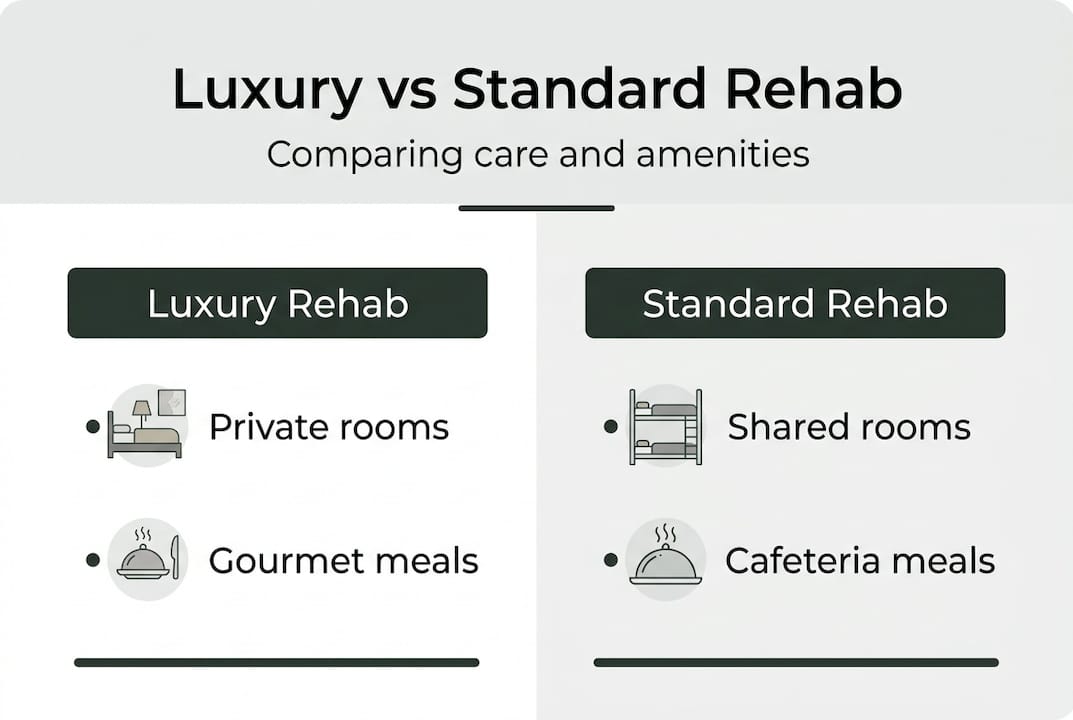
Luxury rehabs typically feature private rooms, gourmet meals, spa services, ocean views, and recreational activities like yoga, equine therapy, or art classes. These amenities create a comfortable, low-stress environment that can make early recovery more manageable. Privacy is another major draw. High-profile clients or those concerned about confidentiality appreciate the discretion luxury facilities provide.
Standard rehabs focus resources on clinical services rather than amenities. You might share a room, eat cafeteria-style meals, and have fewer recreational options. The environment is functional rather than luxurious. However, the core treatment components, staff credentials, and evidence-based therapies often match what luxury centers provide.
Here’s the reality: clinical treatment efficacy is largely similar between luxury and standard centers. Recovery outcomes depend more on treatment quality, patient engagement, and aftercare support than on thread count or meal presentation. Research consistently shows that evidence-based practices, qualified staff, and comprehensive care drive success, not fancy surroundings.
| Feature | Luxury rehab | Standard rehab |
|---|---|---|
| Accommodations | Private rooms, upscale furnishings | Shared rooms, basic furnishings |
| Privacy level | High discretion, exclusive setting | Standard confidentiality protocols |
| Amenities | Spa, gourmet meals, extensive recreation | Basic meals, limited recreation |
| Clinical quality | Evidence-based, qualified staff | Evidence-based, qualified staff |
| Cost range | $30,000 to $100,000+ per month | $5,000 to $20,000 per month |
| Best for | Those prioritizing comfort and privacy | Those prioritizing affordability and outcomes |
That said, comfort isn’t irrelevant. If luxury amenities help you stay engaged in treatment, reduce stress, or make the commitment to 30 or 60 days feel more manageable, they serve a purpose. Some people genuinely benefit from the calming environment and personalized attention luxury centers provide. This connects closely with what inpatient rehab involves, which covers the topic in more depth.
Consider these factors when deciding:
- Will amenities meaningfully improve your treatment engagement?
- Does your budget allow luxury options without creating financial stress?
- Do you need enhanced privacy for professional or personal reasons?
- Are the clinical services truly comparable, or are you paying primarily for comfort?
Pro Tip: Don’t assume higher cost equals better treatment. Review clinical credentials, treatment approaches, and staff qualifications just as carefully at luxury facilities as you would at standard ones. Some luxury centers invest heavily in marketing and amenities while skimping on clinical staff or evidence-based practices. Understanding luxury rehab center differences helps you evaluate whether premium pricing reflects superior clinical care or just nicer surroundings.
Ultimately, prioritize evidence-based care over luxury. A comfortable family rehab center can offer quality treatment in an upscale environment without the extreme costs of celebrity-focused facilities. The goal is finding a balance between comfort and clinical excellence that fits your needs and resources.
Choosing the right rehab program: inpatient vs outpatient options
Once you’ve identified the type of facility you want, you need to determine the right program intensity. Inpatient and outpatient programs serve different needs, and choosing the wrong level of care can undermine your recovery. We explore this further in our guide to medically supervised rehab.
Inpatient programs, also called residential treatment, provide 24/7 care in a structured environment. You live at the facility for 30, 60, or 90 days, participating in therapy, group sessions, and activities throughout the day. This intensive approach works best for:
- Severe addiction requiring medical detox and constant monitoring
- Co-occurring mental health conditions needing integrated psychiatric care
- Unstable living situations or environments that trigger substance use
- Previous treatment attempts that failed at lower levels of care
- Need for complete separation from substances and triggering relationships
Outpatient programs let you live at home while attending treatment sessions several times per week. Partial hospitalization programs offer the most intensive outpatient care, with sessions five to six days per week for several hours daily. Intensive outpatient programs typically involve three sessions per week for three hours each. Standard outpatient care might be one or two sessions weekly. This flexibility suits people who:
- Have stable housing and supportive relationships
- Need to maintain work, school, or family responsibilities
- Have completed inpatient treatment and need step-down care
- Struggle with mild to moderate addiction without severe complications
- Require ongoing support while transitioning back to daily life
The decision isn’t always clear cut. Many people benefit from a combination approach, starting with inpatient care for stabilization and intensive treatment, then transitioning to outpatient programs for continued support. This step-down model provides structure when you need it most while gradually building independence and real-world coping skills.
Consider your support system carefully. Outpatient treatment requires significant self-discipline and a stable environment. If you’re returning to a home where others use substances, or if you lack transportation to attend sessions reliably, outpatient care becomes much harder. Conversely, if you have a strong support network, stable housing, and genuine motivation, outpatient programs offer flexibility without sacrificing treatment quality.
Key questions to guide your decision:
- Do you need medical supervision for withdrawal or medication management?
- Can you safely remain in your current living situation during treatment?
- Will work or family obligations prevent you from attending intensive programs?
- Have you tried outpatient treatment before without success?
- Do you have reliable transportation and the ability to attend sessions consistently?
Understanding outpatient rehab programs explained helps clarify what these options involve. The guide to choosing outpatient program provides additional decision-making frameworks, while exploring the advantages of outpatient programs shows how this approach supports long-term recovery.
Remember that program intensity can change as your needs evolve. Starting at a higher level of care and stepping down is common and often recommended. The goal is matching treatment intensity to your current situation while maintaining flexibility to adjust as you progress.
Explore comprehensive addiction treatment at Glendora Recovery Center
If you’re searching for evidence-based addiction treatment center in Los Angeles that addresses both substance use and mental health, Glendora Recovery Center offers the comprehensive care this guide describes. Our upscale facility in Glendora serves Los Angeles County with individualized programs for adults and teens struggling with addiction and co-occurring disorders. We provide Partial Hospitalization Programs, Intensive Outpatient Programs, and aftercare support with flexible scheduling including morning, evening, weekend, and telehealth sessions. Our experienced staff specializes in dual diagnosis treatment using a compassionate, harm reduction approach. Learn more about our dual diagnosis treatment workflow and luxury mental health treatment center services designed to support lasting recovery in a comfortable, supportive environment.
How to choose a rehab center: frequently asked questions
What questions should I ask when touring a rehab center?
Ask about staff credentials, treatment approaches, success metrics, and what a typical day looks like. Request to see licensing and accreditation documents, inquire about staff-to-patient ratios, and ask how they handle medical emergencies or treatment adjustments. Don’t hesitate to question costs, insurance coverage, and what happens if treatment isn’t working.
How to verify if a rehab center is licensed and accredited?
Check your state health department’s website for current facility licenses. For accreditation, visit The Joint Commission or CARF International websites to search their databases. During facility tours, ask to see physical copies of licenses and certificates, which should be prominently displayed and current.
What if I need help for both addiction and mental health?
Seek facilities offering integrated dual diagnosis treatment where addiction counselors, therapists, and psychiatrists coordinate your care. This approach addresses substance use and mental health simultaneously rather than treating them separately. Comprehensive assessments at intake should identify co-occurring conditions, and treatment plans should include both therapeutic interventions and medication management when appropriate. Understanding managing dual diagnosis recovery helps you recognize quality integrated care.
Are luxury rehabs worth the cost?
Luxury rehabs offer enhanced comfort, privacy, and amenities but don’t necessarily provide better clinical outcomes than standard facilities. If premium surroundings help you engage more fully in treatment and you can afford them without financial strain, they may be worthwhile. However, prioritize evidence-based practices and qualified staff over fancy amenities, as treatment quality drives recovery success more than luxury features.
When is outpatient better than inpatient treatment?
Outpatient treatment works best when you have stable housing, a supportive home environment, mild to moderate addiction, and the ability to maintain daily responsibilities while attending treatment. It’s also ideal for step-down care after completing inpatient programs. Choose inpatient care if you need medical detox, have severe addiction, lack stable housing, or have co-occurring conditions requiring intensive comprehensive mental health treatment and 24/7 monitoring.