Finding steady ground after substance abuse treatment can feel overwhelming, especially when day-to-day stress in Los Angeles threatens your hard-earned progress. Without continued guidance, the risk of slipping back into old patterns grows, making long-term sobriety and better mental health harder to reach. Understanding the role of aftercare support gives you access to both structured resources and a compassionate community, offering a more powerful foundation for personal growth and lasting change.
Table of Contents
- Defining Aftercare Support In Recovery
- Types Of Aftercare Programs And Distinctions
- How Aftercare Prevents Relapse And Supports Mental Health
- Core Features: What To Expect From Aftercare
- Risks Of Skipping Aftercare And Common Missteps
- Comparing Aftercare To Alternatives For Ongoing Recovery
Key Takeaways
| Point | Details |
|---|---|
| Importance of Aftercare Support | Aftercare is essential for maintaining long-term sobriety and promoting personal development. |
| Diverse Program Options | Various aftercare programs, including outpatient services and sober living homes, provide tailored support. |
| Preventing Relapse | Aftercare helps develop coping strategies and trigger management techniques crucial for relapse prevention. |
| Consequences of Skipping Aftercare | Abandoning aftercare can significantly increase the risk of relapse and hinder personal stability and relationships. |
Defining Aftercare Support in Recovery
Aftercare support represents a critical component in the journey of sustained addiction recovery, providing individuals with structured guidance and resources after completing initial treatment. Understanding the fundamental framework of aftercare helps individuals recognize its transformative potential in maintaining long term sobriety.
At its core, aftercare support is a comprehensive, personalized approach designed to help recovering individuals transition smoothly from intensive treatment back into everyday life. This systematic strategy involves ongoing therapeutic interventions, support group participation, counseling sessions, and strategic life management techniques that address potential relapse triggers. The primary goal is not just abstinence, but holistic personal development and emotional resilience.
Successful aftercare programs typically incorporate multiple interconnected support mechanisms. These can include individual therapy, group counseling sessions, skills training workshops, family therapy, vocational rehabilitation, and mental health management. Each element is carefully tailored to address the unique psychological, social, and emotional challenges that individuals face during recovery. By providing consistent professional guidance and community support, aftercare programs create a protective ecosystem that significantly reduces the risk of relapse.
Pro tip: Develop a personalized aftercare plan within the first month of completing initial treatment to maximize your long-term recovery success and establish a proactive support network.
Types of Aftercare Programs and Distinctions
Aftercare programs offer diverse approaches to supporting individuals in maintaining long-term recovery, with each type designed to address specific needs and recovery stages. Comprehensive aftercare strategies provide a nuanced framework for sustained healing and personal growth.
Traditionally, aftercare programs fall into several primary categories. Outpatient programs allow individuals to live at home while attending scheduled therapy sessions, providing flexibility for those balancing work and recovery. Sober living homes offer a structured, drug-free environment that bridges the gap between intensive treatment and independent living. These residential settings create a supportive community where residents can develop crucial life skills and maintain accountability.
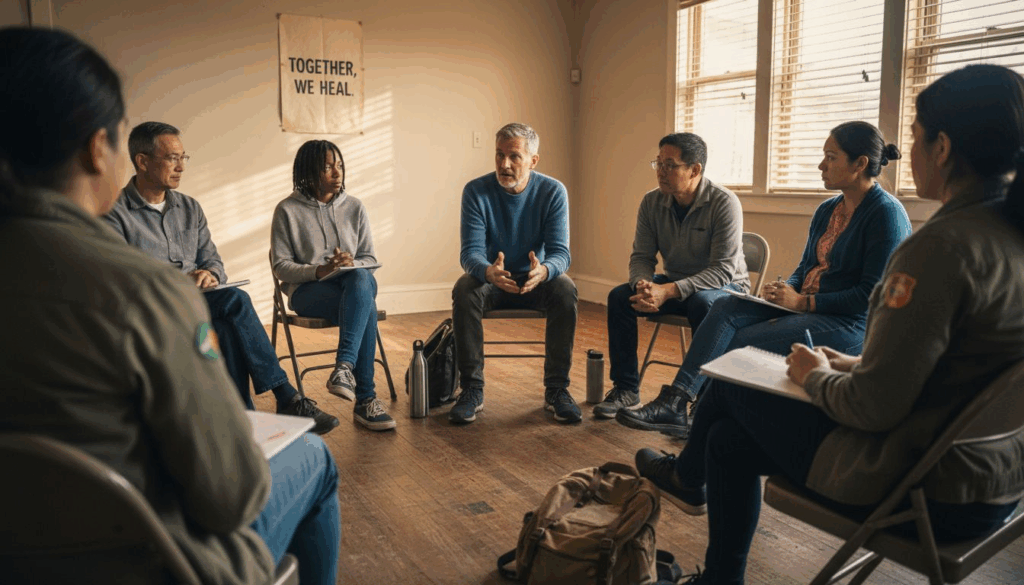
Peer support groups represent another critical dimension of aftercare support. Twelve-step programs like Alcoholics Anonymous and Narcotics Anonymous provide free, community-based support systems that complement professional treatment. These groups offer ongoing connection, shared experiences, and a sense of belonging that can be instrumental in preventing relapse. Additionally, specialized support groups focusing on specific demographics or addiction types can provide more targeted emotional and social support.
Here is a side-by-side overview of different aftercare program types and their unique strengths:
| Program Type | Living Arrangement | Main Benefit | Ideal For |
|---|---|---|---|
| Outpatient | Resides at home | Flexible scheduling | Working adults |
| Sober Living Home | Structured residence | Accountability, life skills | Transitioning individuals |
| Peer Support Groups | Community-based | Ongoing emotional connection | Anyone needing support |
| Individual Therapy | Personalized sessions | Deep-rooted issue resolution | Complex mental health |
Pro tip: Explore multiple aftercare program types to find the most compatible approach that aligns with your personal recovery goals and lifestyle needs.
How Aftercare Prevents Relapse and Supports Mental Health
Aftercare programs are essential in creating a comprehensive safety net that addresses both psychological vulnerabilities and practical challenges in addiction recovery. Preventing relapse through strategic mental health support is fundamental to sustainable long-term healing and personal transformation.
The core mechanism of aftercare in preventing relapse involves developing robust coping skills and trigger management strategies. By providing ongoing therapeutic interventions, individuals learn to recognize potential relapse warning signs, develop healthy emotional regulation techniques, and build resilience against stressful life circumstances. Cognitive behavioral therapy and individual counseling sessions help recovering individuals reframe negative thought patterns, address underlying mental health conditions like anxiety and depression, and create personalized strategies for maintaining emotional stability.
Support systems play a critical role in reinforcing recovery efforts. Group therapy, peer support networks, and structured counseling create multiple layers of accountability and emotional support. These interconnected resources help individuals navigate challenging life transitions, rebuild personal relationships, and develop a sense of community that counteracts the isolation often associated with addiction. Mental health professionals work collaboratively to address co-occurring disorders, ensuring that psychological healing occurs simultaneously with substance abuse recovery.
Pro tip: Create a detailed relapse prevention plan with your therapist that includes specific coping mechanisms, emergency contact strategies, and personalized stress management techniques.
Core Features: What to Expect from Aftercare
Aftercare programs are meticulously designed to provide comprehensive support during the critical transition from intensive treatment to independent recovery. Personalized recovery support strategies form the foundation of effective long-term healing and personal transformation.
The core features of aftercare typically encompass several key components. Individual therapy remains a crucial element, offering one-on-one counseling that addresses personal challenges, underlying mental health conditions, and unique recovery needs. Group counseling sessions provide additional support, creating opportunities for shared experiences and mutual accountability. These therapeutic approaches are complemented by practical life skills training, which helps individuals rebuild professional and personal relationships, develop healthy coping mechanisms, and navigate the complexities of reintegration into daily life.

Case management represents another critical aspect of comprehensive aftercare support. Professionals work closely with recovering individuals to address practical challenges such as housing stability, employment opportunities, and financial planning. Ongoing medical and psychiatric support ensures that co-occurring mental health conditions are carefully managed, reducing the risk of relapse and promoting holistic healing. Specialized resources may include vocational rehabilitation, family counseling, legal support, and connection to community resources that support sustained recovery.
Pro tip: Document your progress and challenges during aftercare, creating a personal recovery journal that helps track growth, identify triggers, and celebrate milestones in your healing journey.
Risks of Skipping Aftercare and Common Missteps
Abandoning aftercare support can transform a hard-won recovery into a perilous journey back toward addiction. Critical risks of post-treatment challenges highlight the profound importance of continuous professional guidance and structured support systems.
Without aftercare, individuals face dramatically increased relapse risks driven by untreated psychological vulnerabilities. Emotional triggers and unresolved mental health issues can quickly destabilize recovery progress, creating a high-stakes environment where past substance abuse patterns may reemerge. Common missteps include isolating oneself, avoiding professional counseling, neglecting established coping strategies, and underestimating addiction’s complex psychological roots. These behaviors create dangerous emotional landscapes where stress, anxiety, and unprocessed trauma can rapidly undermine hard-earned sobriety.
The consequences of skipping aftercare extend beyond individual psychological challenges. Social relationships, professional opportunities, and personal stability can rapidly deteriorate without consistent support and accountability. Recovering individuals who disconnect from structured aftercare programs often struggle to rebuild trust with family, maintain employment, and develop healthy life management skills. The absence of ongoing therapeutic intervention leaves individuals vulnerable to recurring cycles of addiction, potentially reversing years of personal growth and rehabilitation efforts.
Pro tip: Schedule monthly check-ins with your recovery support network, even after completing formal aftercare programs, to maintain continuous accountability and emotional resilience.
Comparing Aftercare to Alternatives for Ongoing Recovery
Recovery support extends far beyond traditional approaches, with aftercare programs offering a comprehensive and scientifically validated pathway to sustained healing. Comprehensive recovery support strategies demonstrate the critical differences between structured interventions and more informal alternatives.
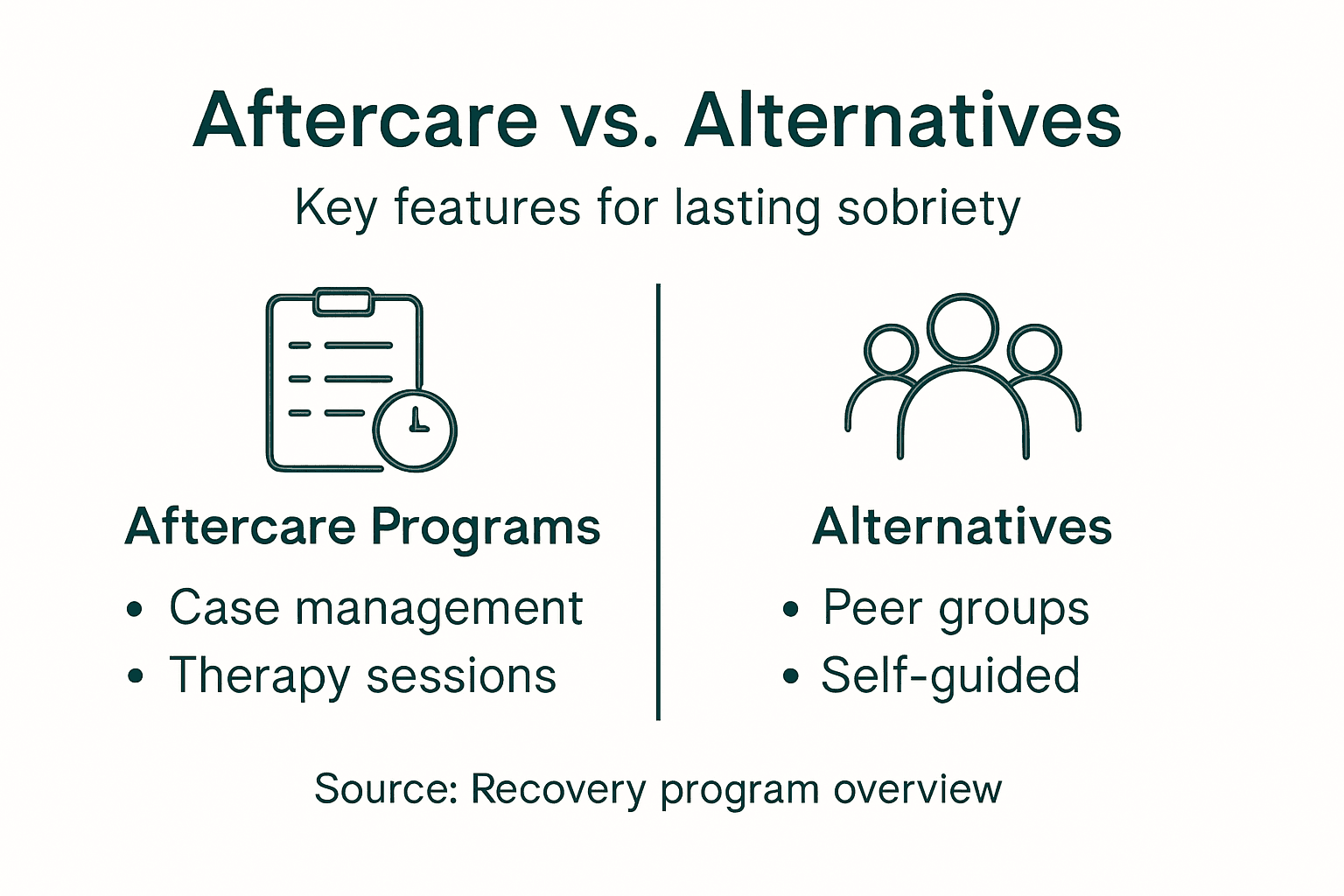
Traditional alternatives like standalone 12-Step meetings and peer support groups provide valuable community connection, but they often lack the clinical depth and personalized care characteristic of professional aftercare programs. Professional aftercare integrates multiple support dimensions, including individual therapy, medical management, case coordination, and targeted mental health interventions. These structured approaches address underlying psychological patterns, provide ongoing skill development, and create adaptive strategies that generic support groups cannot consistently deliver.
The most significant distinction lies in the depth and breadth of support. While self-guided recovery methods rely primarily on personal motivation and community support, aftercare programs offer a holistic ecosystem of professional guidance. Specialized clinical teams develop individualized treatment plans that evolve with the recovering individual’s changing needs, providing medical oversight, psychiatric support, vocational counseling, and family systems therapy. This multifaceted approach creates a robust safety network that dramatically increases the probability of long-term recovery success compared to more limited alternatives.
This table highlights key differences between professional aftercare and informal alternatives:
| Aspect | Professional Aftercare | Informal Support Groups |
|---|---|---|
| Clinical Depth | Therapy and medical care | Peer-led, non-clinical |
| Personalization | Individualized planning | General approach |
| Accountability | Regular coordination | Voluntary attendance |
| Scope of Support | Psychological, social, vocational | Emotional support only |
Pro tip: Evaluate recovery support options through a comprehensive lens, prioritizing programs that offer integrated clinical, psychological, and social support rather than single-dimension approaches.
Secure Lasting Sobriety with Expert Aftercare Support
Struggling to maintain sobriety after initial treatment is a common challenge. The article highlights critical pain points like managing emotional triggers, avoiding relapse, and finding personalized support through comprehensive aftercare programs. At Glendora Recovery Center, we understand that building resilience and developing coping strategies are essential for lasting recovery. Our aftercare support complements your healing journey with tailored therapy, group counseling, and practical life skills training designed for your unique needs.
Don’t let the risk of relapse threaten your progress. Take control today with our compassionate and flexible aftercare solutions. Learn more about how our aftercare support services can safeguard your recovery. Your next step starts with reaching out. Connect with our dedicated team at Glendora Recovery Center to create your personalized aftercare plan and secure a brighter, sober future.
Frequently Asked Questions
What is aftercare support in recovery?
Aftercare support is a personalized, structured approach designed to help individuals transition from intensive addiction treatment to everyday life, focusing on sustained sobriety and personal development.
How does aftercare prevent relapse?
Aftercare prevents relapse by providing ongoing therapeutic interventions, coping strategies, and support systems that help individuals manage triggers and maintain emotional stability during recovery.
What types of aftercare programs are available?
Aftercare programs include outpatient therapy, sober living homes, peer support groups, and individual therapy, each tailored to address specific recovery needs and challenges.
Why is it important to have a personalized aftercare plan?
A personalized aftercare plan maximizes recovery success by addressing individual needs, vulnerabilities, and triggers, ensuring consistent support and guidance during the critical transition period.
Recommended
- Benefits of Aftercare Support for Lasting Sobriety | Glendora Recovery Center
- What Is Aftercare and Why It Matters in Recovery | Glendora Recovery Center
- Why Aftercare Matters in Addiction Recovery Success | Glendora Recovery Center
- Aftercare Plan After Addiction Treatment: What Is It & Its Advantages