
Most American families supporting a loved one through addiction recovery face moments of uncertainty, especially when it comes to spotting relapse signs. Roughly half of all people in addiction recovery experience at least one relapse. Recognizing early warning signals matters because relapse is not sudden, but unfolds over time through subtle emotional, mental, and physical changes. By learning what to watch for, families can respond effectively and help maintain lasting recovery.
Table of Contents
- Relapse Signs In Addiction Recovery Explained
- Behavioral And Emotional Changes To Watch For
- Physical And Social Warning Signs Of Relapse
- Common Triggers And Risk Factors For Relapse
- Steps Families Can Take For Early Intervention
Key Takeaways
| Point | Details |
|---|---|
| Understanding Relapse Dynamics | Relapse is not a failure but an opportunity to adjust treatment approaches and strengthen recovery strategies. |
| Recognizing Warning Signs | Emotional and behavioral changes serve as critical early indicators for potential relapse, requiring proactive attention from families. |
| Importance of Support Systems | Continuous professional and familial support is essential for navigating the challenges of recovery and preventing relapse. |
| Proactive Family Involvement | Families should engage in open communication, avoid enabling behaviors, and encourage professional support for effective early intervention. |
Relapse Signs in Addiction Recovery Explained
Recovery is rarely a linear journey, and understanding relapse is critical for families and individuals navigating addiction treatment. Returning to substance use after a period of abstinence represents a complex process that involves emotional, mental, and physical stages. Relapse should not be viewed as a failure, but as an opportunity to adjust treatment approaches and strengthen recovery strategies.
Addiction specialists recognize that relapse often follows predictable patterns. Typically, individuals experience emotional relapse before actual substance use occurs. During this phase, people might not be actively thinking about using, but their behaviors and emotional states start creating vulnerability. Warning signs include isolation, poor self-care, stopping therapy or support group attendance, and experiencing increased stress or emotional turbulence.
The mental relapse stage represents a critical turning point where an individual begins experiencing internal conflict. Part of them wants to maintain recovery, while another part starts romanticizing past substance use. Recognizing these early warning signs becomes crucial for intervention. Some key indicators include:
- Glamorizing past drug or alcohol experiences
- Spending time with people associated with previous substance use
- Lying or being secretive about activities
- Planning opportunities to use substances
- Experiencing intense cravings
Prevention requires proactive engagement. Ongoing recovery support plays a significant role in maintaining long term sobriety. Families can help by staying alert, maintaining open communication, and encouraging continued treatment engagement. Professional support remains essential in navigating these challenging transitions and developing personalized relapse prevention strategies.
Behavioral and Emotional Changes to Watch For
Recognizing potential relapse warning signs requires understanding the subtle shifts in behavior and emotional states that often precede substance use. Behavioral patterns identified by research experts reveal critical indicators that family members and support networks should monitor closely.
Stress emerges as a primary trigger for potential relapse. Individuals may demonstrate increased anxiety, sudden mood swings, or significant changes in daily functioning. These emotional disruptions can manifest through various observable signs, such as withdrawing from social support systems, neglecting personal hygiene, experiencing dramatic changes in sleep patterns, or displaying unusual irritability. Family members should pay special attention when their loved one starts exhibiting consistent patterns of emotional instability or seems disconnected from their previous recovery commitments.
Critical behavioral warning signs include:
- Sudden secrecy or reluctance to discuss personal feelings
- Significant changes in eating or sleeping habits
- Abandoning structured daily routines
- Reconnecting with previous substance-using social circles
- Expressing nostalgia or romanticizing past substance use experiences
- Stopping participation in therapy or support group meetings
- Increased financial stress or unexplained monetary issues
Emotional vulnerability represents a complex landscape during recovery. Aftercare support becomes crucial in helping individuals navigate these challenging transitions. Professional intervention can provide structured strategies for managing emotional triggers, rebuilding coping mechanisms, and maintaining long-term recovery momentum. Families should approach these observations with compassion, understanding that relapse prevention requires consistent, supportive engagement rather than judgment or criticism.
Physical and Social Warning Signs of Relapse
Recognizing the physical and social manifestations of potential relapse becomes crucial for families supporting a loved one in recovery. Physical relapse indicators documented by behavioral health experts reveal complex warning signs that extend beyond individual behaviors into broader social and personal dysfunction.

Physical warning signs often emerge through noticeable changes in appearance, health, and personal maintenance. These may include sudden weight fluctuations, neglected personal hygiene, bloodshot eyes, unexplained bruises or track marks, dramatic shifts in energy levels, or inconsistent sleep patterns. Individuals might demonstrate physical symptoms of substance use such as tremors, excessive sweating, unexplained injuries, or rapid mood swings that suggest potential chemical intervention.
Social warning signs represent equally critical indicators of potential relapse:
- Withdrawing from family and established support networks
- Returning to environments or social circles associated with previous substance use
- Becoming defensive or secretive about daily activities
- Experiencing sudden financial difficulties
- Displaying inconsistent work or academic performance
- Unexplained absences or frequent disappearances
- Losing previously established positive social connections
Social isolation frequently signals deeper psychological struggles during recovery. Understanding crystal meth relapse patterns helps families recognize that these warning signs are not personal failures but complex psychological responses. Professional intervention remains essential in providing structured support, rebuilding healthy communication patterns, and preventing full-scale relapse through compassionate, proactive engagement.
Common Triggers and Risk Factors for Relapse
Understanding the complex landscape of addiction recovery requires recognizing the multifaceted triggers that can potentially derail an individual’s progress. Emotional vulnerabilities and environmental pressures create a nuanced network of challenges that can compromise even the most committed recovery efforts.
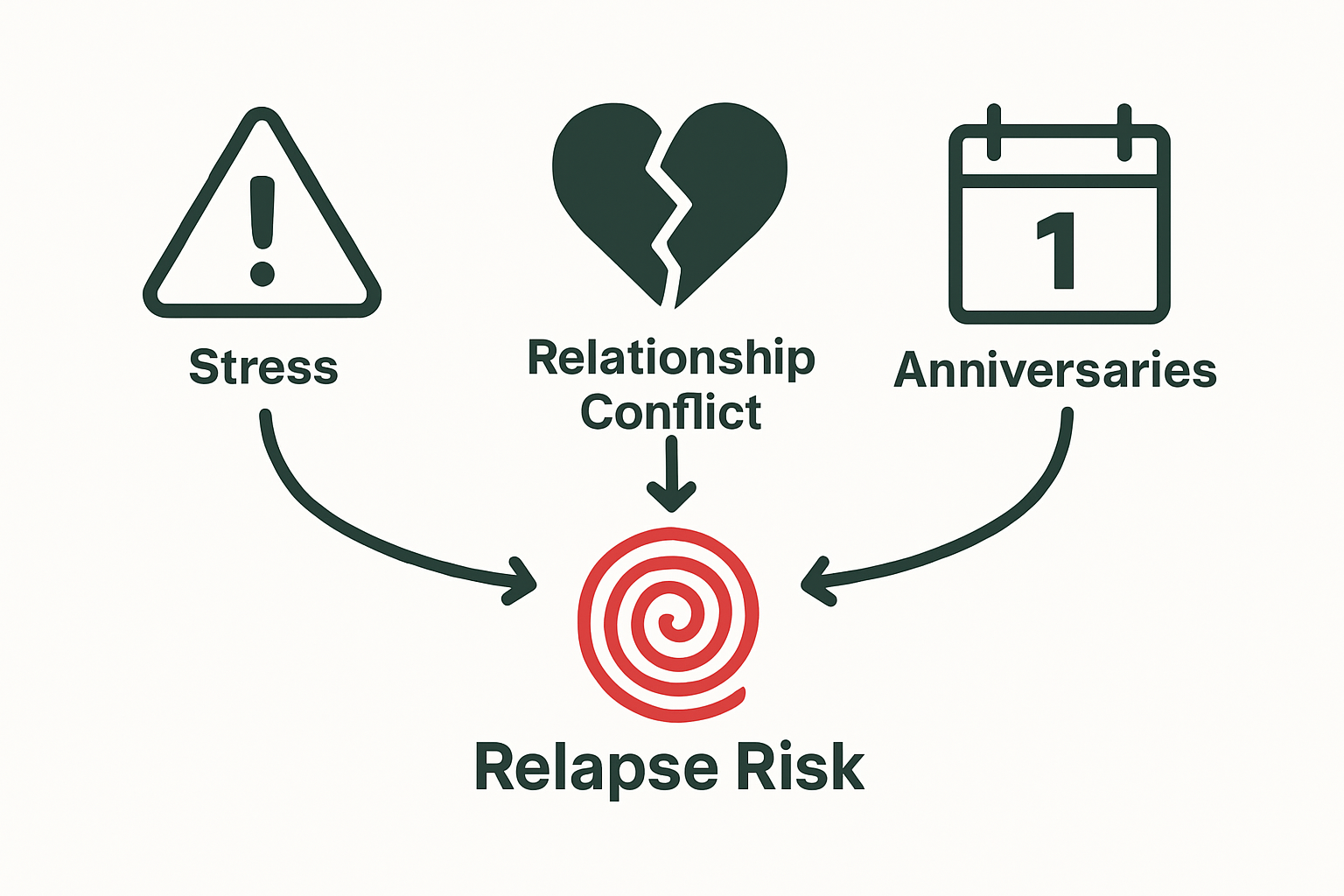
Psychological triggers often emerge from deeply personal experiences and emotional states. Stress, unresolved trauma, depression, and anxiety represent significant internal risk factors that can weaken an individual’s resolve. Individuals may find themselves confronting intense emotional pain, loneliness, or unprocessed grief that creates a powerful psychological pull toward previous coping mechanisms. External stressors such as financial difficulties, relationship conflicts, work pressures, and sudden life transitions can further amplify these internal emotional struggles.
Key triggers and risk factors include:
- Unresolved mental health conditions
- Chronic stress and emotional instability
- Social environments that normalize substance use
- Experiencing significant life transitions
- Untreated underlying psychological trauma
- Lack of robust support systems
- Persistent feelings of isolation or loneliness
- Unmanaged chronic pain or physical health challenges
Ongoing recovery support plays a crucial role in developing resilience against these complex triggers. Professional intervention can help individuals build comprehensive coping strategies, process underlying emotional challenges, and create sustainable mechanisms for managing potential relapse risks. Families and support networks become instrumental in recognizing early warning signs and providing consistent, compassionate support throughout the recovery journey.
Steps Families Can Take for Early Intervention
Early intervention strategies outlined by addiction experts emphasize the critical role families play in supporting a loved one’s recovery journey. Recognizing and responding to potential relapse warning signs requires a proactive, compassionate approach that balances support with healthy boundaries.
Effective intervention begins with creating an environment of open, non-judgmental communication. Families must learn to approach potential relapse concerns with empathy, avoiding accusatory language or reactive behaviors that might push their loved one further into isolation. This means developing active listening skills, expressing concern without criticism, and demonstrating consistent emotional support. Trained professionals can help families develop communication strategies that encourage honesty, validate the individual’s struggles, and maintain a sense of hope and connection.
Key steps for early intervention include:
- Educate yourself about addiction and recovery processes
- Learn to recognize specific relapse warning signs
- Maintain open and honest communication channels
- Avoid enabling behaviors
- Encourage professional support and treatment engagement
- Create a supportive home environment
- Develop healthy personal boundaries
- Practice self-care and seek support for yourself
- Attend family therapy or support groups
Whole health strategies for reducing relapse risk highlight the importance of holistic support. Professional intervention remains crucial, as families can provide critical emotional support but should not attempt to manage recovery independently. Connecting with addiction specialists, participating in family counseling, and developing a comprehensive support plan can significantly improve the chances of successful long-term recovery.
Helping Families Recognize and Respond to Signs of Relapse
Understanding the emotional, behavioral, and physical warning signs of relapse is a crucial step for families supporting a loved one in recovery. This article highlights common challenges like emotional vulnerability, social isolation, and returning to risky environments that can increase relapse risk. If you have noticed any signs such as secrecy, mood swings, or disconnection from support groups it is important to take action early with professional guidance.
At Glendora Recovery Center, we specialize in providing compassionate, personalized care through programs like Intensive Outpatient and aftercare support designed to address relapse triggers and build resilience. We work closely with families to foster open communication and teach effective early intervention strategies. Take the next step today by reaching out to us for expert help in protecting your loved one’s recovery journey. Contact our team now at Glendora Recovery Center to learn more about how ongoing support can prevent relapse and restore hope.
Frequently Asked Questions
What are the early signs of relapse in addiction recovery?
Early signs of relapse include emotional instability, isolation, poor self-care, increased stress, and discontinuation of therapy or support group attendance. Recognizing these indicators can help intervene before substance use occurs.
How can families support a loved one in recovery to prevent relapse?
Families can support their loved ones by maintaining open communication, educating themselves about addiction, recognizing warning signs, encouraging participation in ongoing treatment, and fostering a supportive home environment.
What role does stress play in relapse for individuals recovering from addiction?
Stress is a primary trigger for relapse, often leading to increased anxiety, mood swings, and withdrawal from supportive relationships. Managing stress through healthy coping mechanisms and support is crucial for maintaining recovery.
What should families do if they suspect a loved one is relapsing?
If families suspect relapse, they should approach the situation with empathy, maintain open communication, avoid enabling behaviors, and encourage professional support while setting healthy personal boundaries.
Recommended
- Questions to Ask Addicts in Recovery – Supporting Lasting Change | Glendora Recovery Center
- Understanding Crystal Meth Relapse (and What Can Be Done)
- How A Rehab For Marijuana Addiction Saves Relationships
- Is Rehab For Marijuana Addiction Effective?
- Sleep Regression Explained: Causes, Signs, and Solutions