Finding the right support during addiction recovery can feel overwhelming in a place as busy as Los Angeles County. Many adults and their families worry about which treatment options truly work. Group therapy stands out because research shows it is as effective as individual therapy for addiction and mental health challenges, offering efficiency and a sense of community. This article clearly explains what group therapy is, why it matters, and how it helps individuals and their loved ones build strength together in recovery.
Table of Contents
- Defining Group Therapy For Addiction Recovery
- Different Types Of Group Therapy Sessions
- How Group Therapy Works At Glendora Recovery
- Benefits Of Group Therapy For Addiction
- Common Challenges And How To Overcome Them
Key Takeaways
| Point | Details |
|---|---|
| Effective Collaboration | Group therapy fosters a sense of community and shared experience, enhancing individual recovery efforts. |
| Diverse Session Types | Different group therapy formats address various recovery needs, allowing participants to choose the best fit for their journey. |
| Holistic Support | Integrating elements like art therapy and mindfulness into group sessions promotes overall well-being and recovery. |
| Overcoming Challenges | Addressing potential challenges such as confidentiality and interpersonal dynamics is crucial for a successful group experience. |
Defining Group Therapy for Addiction Recovery
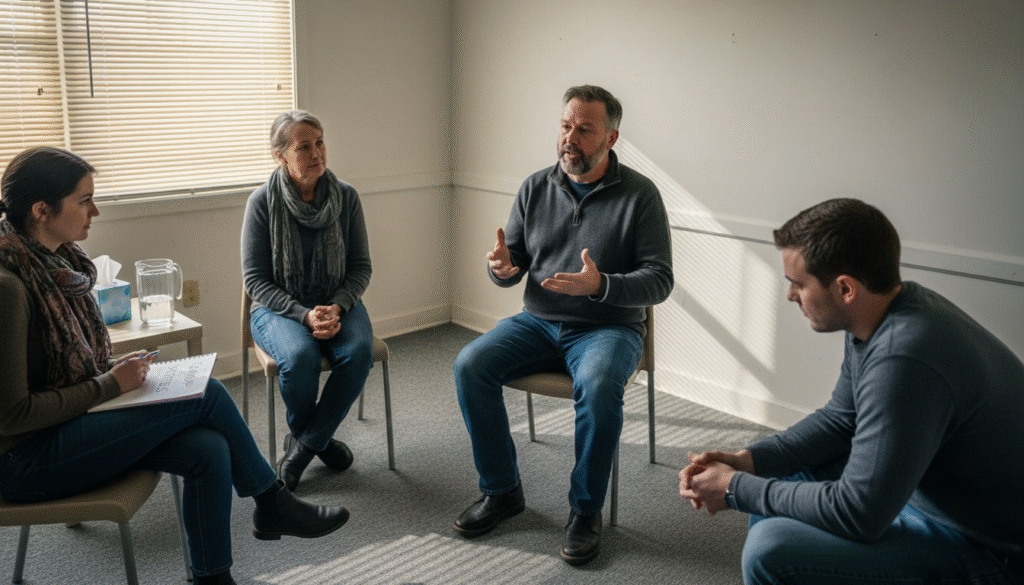
Group therapy represents a powerful therapeutic approach where individuals battling substance use disorders come together under professional guidance to support each other’s recovery journey. Psychological research demonstrates that this collaborative treatment model can be as effective as individual therapy for addressing addiction and mental health challenges.
At its core, group therapy is a structured treatment method where multiple individuals with similar experiences share their struggles, insights, and strategies for healing. The core components include:
- A trained therapist facilitating discussions
- A supportive peer environment
- Structured yet interactive therapeutic sessions
- Opportunities for shared learning and emotional processing
- A sense of community and mutual understanding
Unlike individual counseling, group therapy creates a unique dynamic where participants realize they are not alone in their recovery. Group therapy functions as more than just a treatment—it becomes a forum for belonging, knowledge exchange, and emotional validation.
Group therapy transforms isolation into connection, turning individual struggles into collective strength.
Participants benefit from hearing others’ experiences, gaining perspective, and developing coping skills through shared narratives. The group setting helps reduce stigma, normalize recovery experiences, and provide accountability in a compassionate environment.
Pro tip: When considering group therapy, approach the first few sessions with an open mind and commitment to listening and learning from fellow participants.
Different Types of Group Therapy Sessions
Group therapy is a versatile treatment approach with multiple formats designed to address diverse recovery needs. Mental health professionals offer various therapeutic group models that cater to specific psychological and emotional challenges individuals face during addiction recovery.
The primary types of group therapy sessions include:
-
Psychoeducational Groups
- Focus on teaching specific recovery skills
- Provide information about addiction and mental health
- Help participants understand underlying behavioral patterns
-
Skill Development Groups
- Teach practical coping mechanisms
- Develop communication and emotional regulation techniques
- Build resilience and stress management strategies
-
Cognitive Behavioral Groups
- Address negative thought patterns
- Challenge destructive belief systems
- Promote healthier thinking and behavioral responses
-
Support and Interpersonal Process Groups
- Emphasize emotional sharing and mutual support
- Create space for vulnerability and connection
- Enable participants to process personal experiences
Group therapy sessions transform individual struggles into collective healing opportunities.
Each group type offers unique benefits, allowing participants to choose an approach that resonates with their personal recovery journey. The structured yet compassionate environment helps individuals develop meaningful connections while working toward sustainable recovery.
Here’s a comparison of common group therapy types and their ideal participant needs:
| Group Type | Focus Area | Best For Participants Who… | Example Outcome |
|---|---|---|---|
| Psychoeducational | Recovery education | Need understanding of addiction | Greater awareness of triggers |
| Skill Development | Coping and life skills | Want practical relapse prevention tools | Improved stress management |
| Cognitive Behavioral | Thought/behavior patterns | Struggle with negative self-talk | Healthier mindset |
| Support/Interpersonal | Peer connection/support | Seek emotional validation and sharing | Stronger sense of belonging |
Pro tip: Experiment with different group therapy formats to find the approach that most effectively supports your personal healing and growth.
How Group Therapy Works at Glendora Recovery
At Glendora Recovery Center, group therapy is a comprehensive and dynamic component of our integrated treatment approach. Our intensive outpatient program combines evidence-based strategies with holistic therapeutic techniques designed to support individuals throughout their recovery journey.
The group therapy process at our center involves several key elements:
-
Structured Session Framework
- Professionally facilitated discussions
- Consistent meeting schedules
- Safe and confidential environment
-
Therapeutic Approach Components
- Process-oriented group interactions
- Skill-building workshops
- Emotional regulation techniques
- Relapse prevention strategies
-
Holistic Integration
- Complementary therapies like yoga
- Art therapy sessions
- Mind-body wellness practices
- Stress management techniques
Recovery is a collective journey where shared experiences become powerful healing tools.
Our experienced therapists design group sessions to address multiple dimensions of addiction recovery, ensuring participants receive comprehensive support. Each group is carefully curated to create meaningful connections, promote personal growth, and develop sustainable coping mechanisms.

The following table summarizes how group therapy at Glendora Recovery integrates therapeutic elements:
| Element | Description | Impact on Recovery |
|---|---|---|
| Structured Sessions | Regular, therapist-led meetings | Builds routine and trust |
| Holistic Integration | Includes yoga & art therapy | Addresses mind and body |
| Skill Workshops | Focused on practical techniques | Strengthens real-life skills |
| Confidentiality | Emphasized for all participants | Encourages open sharing |
Pro tip: Approach group therapy with openness and willingness to share, recognizing that vulnerability is a strength in the recovery process.
Benefits of Group Therapy for Addiction
Group therapy offers a transformative approach to addiction recovery, providing multiple psychological and practical advantages. Research demonstrates significant therapeutic benefits that extend far beyond traditional individual counseling methods, creating a powerful environment for healing and personal growth.
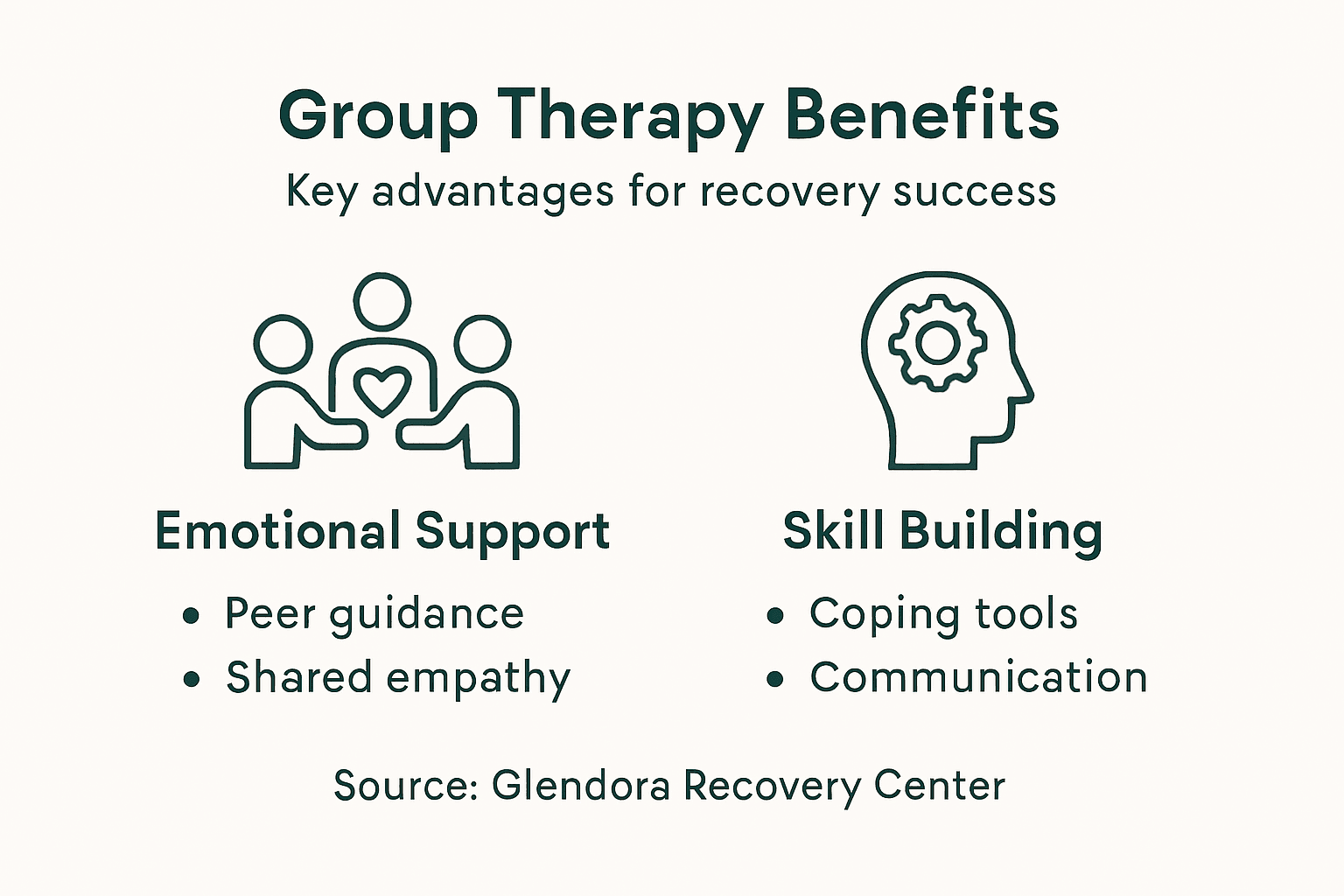
The key benefits of group therapy for addiction include:
-
Emotional Support
- Reduces feelings of isolation
- Provides a sense of belonging
- Creates a non-judgmental community
-
Skill Development
- Learn coping mechanisms from peers
- Practice communication skills
- Develop emotional regulation techniques
-
Accountability and Motivation
- Shared recovery goals
- Mutual encouragement
- Positive peer pressure
-
Cost-Effective Treatment
- More affordable than individual therapy
- Allows more people to access support
- Maximizes therapeutic resources
Healing happens when individuals realize they are not alone in their struggle.
Understanding that recovery is a collective journey helps participants build resilience and develop sustainable strategies for long-term sobriety. Group therapy creates a supportive ecosystem where members can learn from each other’s experiences, challenges, and successes.
Pro tip: Commit to consistent participation and approach group sessions with genuine openness, recognizing that your story can inspire and help others in their recovery journey.
Common Challenges and How to Overcome Them
Group therapy, while immensely beneficial, presents unique challenges that participants must navigate thoughtfully. Psychological research highlights critical dynamics that can impact the effectiveness of therapeutic interactions and group cohesion.
The most common challenges in group therapy include:
-
Confidentiality Concerns
- Fear of personal information spreading
- Anxiety about judgment from group members
- Potential breaches of privacy
-
Interpersonal Conflicts
- Personality clashes
- Differing communication styles
- Potential triggering interactions
-
Emotional Vulnerability
- Difficulty sharing personal experiences
- Fear of being misunderstood
- Resistance to emotional openness
-
Group Dynamics
- Managing dominant personalities
- Ensuring equal participation
- Maintaining respectful interactions
Trust is the foundation of transformative group therapy experiences.
Overcoming these challenges requires active participation, commitment to personal growth, and guidance from skilled facilitators. Successful group therapy depends on creating a safe, supportive environment where members feel comfortable sharing and learning from each other’s experiences.
Professional therapists play a crucial role in managing group dynamics, establishing clear boundaries, and fostering an atmosphere of mutual respect and understanding.
Pro tip: Approach group therapy with patience and an open mind, understanding that building trust and comfort takes time and consistent effort.
Experience the Strength of Healing Together at Glendora Recovery Center
Group therapy addresses the very real challenges of addiction recovery such as emotional vulnerability, the need for peer support, and developing practical coping skills. If you find yourself struggling with feelings of isolation or the difficulty of sharing your experiences, know that these are common hurdles overcome through structured, compassionate group interactions. At Glendora Recovery Center, we understand the importance of a safe and supportive environment where your journey is met with empathy and expert guidance.
Our comprehensive addiction treatment programs incorporate varied group therapy formats tailored to your unique recovery goals. Whether you want to build new coping mechanisms, gain knowledge about addiction, or connect with others facing similar challenges, our intensive group sessions facilitate meaningful growth and connection. Don’t wait until hesitation holds you back from the powerful benefits of healing together. Take the first step today by reaching out to learn how our Intensive Outpatient Program and supportive group therapies can transform your path to recovery.
Discover strength in community with Glendora Recovery Center’s expert team by contacting us here and start your journey towards lasting change now.
Frequently Asked Questions
What is group therapy for addiction recovery?
Group therapy for addiction recovery is a structured therapeutic approach where individuals with substance use disorders come together to share their experiences and support one another under the guidance of a trained therapist.
What are the different types of group therapy sessions?
The main types of group therapy include psychoeducational groups, skill development groups, cognitive behavioral groups, and support/interpersonal process groups, each addressing different aspects of recovery and personal growth.
How does group therapy work at Glendora Recovery?
At Glendora Recovery, group therapy involves structured sessions facilitated by professional therapists, focusing on emotional support, skill-building, and incorporating holistic practices to enhance the recovery journey.
What are the benefits of participating in group therapy?
The benefits of group therapy include emotional support, skill development, accountability and motivation, and cost-effectiveness, creating a positive environment for healing and personal growth.
Recommended
- Teen Group Therapy | Where Teens Can Heal, Learn, & Grow
- Role of Support Groups in Recovery Success | Glendora Recovery Center
- Family Therapy Workflow Addiction: Effective Steps for Recovery | Glendora Recovery Center
- 7 Effective Therapy Techniques for Teens in Recovery | Glendora Recovery Center
- Dialectical Behavior Therapy Groups: A Guide to Building Emotional Skills