
Nearly one in four adults living with a mental health condition also struggles with substance use. This powerful statistic shows how closely tied anxiety disorders and addiction truly are. When both challenges appear together, they can disrupt daily life and make recovery feel out of reach. Understanding how substance abuse and anxiety often overlap is a vital step for anyone hoping to break the cycle and find the right support.
Table of Contents
- Defining Substance Abuse And Anxiety Disorders
- Types Of Anxiety Disorders And Addictions
- Dual Diagnosis: Co-Occurring Disorders Explained
- Identifying Symptoms And Risk Factors
- Treatment Approaches And Recovery Options
- Support Resources In Los Angeles County
Key Takeaways
| Point | Details |
|---|---|
| Co-occurrence Complexity | Substance abuse and anxiety disorders often intersect, necessitating integrated treatment approaches to address both conditions effectively. |
| Types of Disorders | Common anxiety disorders include Generalized Anxiety Disorder, Panic Disorder, Social Anxiety Disorder, and PTSD, each linked to specific substance addictions. |
| Dual Diagnosis Importance | Understanding dual diagnosis is crucial; mental health disorders and substance use disorders are interrelated and require comprehensive assessment and simultaneous intervention. |
| Effective Treatment Approaches | Multi-faceted treatment strategies, such as integrated cognitive behavioral therapy and support networks, are vital for sustainable recovery from co-occurring disorders. |
Defining Substance Abuse and Anxiety Disorders
Substance abuse and anxiety disorders represent complex mental health challenges that frequently intersect, creating significant emotional and physiological disruptions for individuals. According to NIDA, substance use disorders (SUDs) and mental health conditions like anxiety often co-occur, demonstrating a profound interconnection that requires comprehensive understanding.
At its core, substance abuse refers to the harmful or hazardous use of psychoactive substances, including alcohol and illicit drugs. These substances trigger neurochemical changes that can dramatically impact an individual’s brain function, emotional regulation, and behavioral patterns. PMC research highlights that substance abuse isn’t merely about consumption but represents a complex interplay between biological, psychological, and social factors that contribute to addictive behaviors.
Anxiety disorders, in contrast, are characterized by persistent and excessive worry, fear, or panic that interferes with daily functioning. These mental health conditions can manifest in various forms such as generalized anxiety disorder, social anxiety, panic disorder, and specific phobias. When substance abuse and anxiety disorders coexist, they create a challenging cycle where individuals might use substances to temporarily alleviate anxiety symptoms, ultimately exacerbating both conditions. This intricate relationship underscores the critical need for integrated treatment approaches that simultaneously address both the substance use and underlying mental health challenges.
Key characteristics that define these disorders include:
- Persistent and compulsive behaviors
- Significant impairment in personal, professional, and social functioning
- Neurobiological alterations affecting brain chemistry
- Potential genetic and environmental predispositions
Understanding these definitions is the first step toward recognizing the complexity of these disorders and the importance of seeking professional, compassionate care. If you or a loved one are struggling with substance abuse or anxiety, contact our experts who can provide personalized support and guidance.
Types of Anxiety Disorders and Addictions
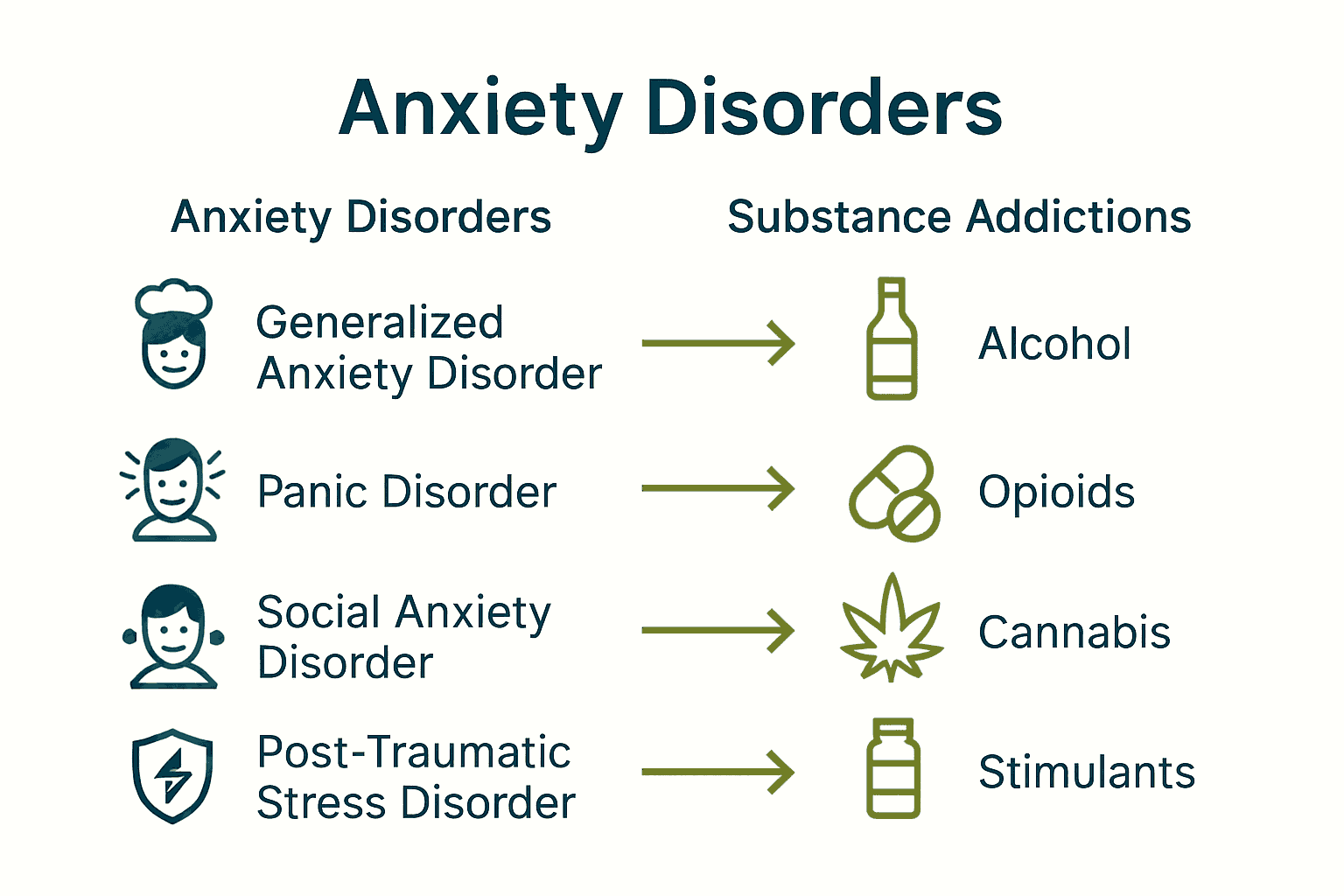
Anxiety disorders and substance use disorders frequently intersect, creating a complex landscape of mental health challenges. PubMed research reveals that individuals experiencing anxiety disorders are significantly more likely to develop substance use disorders, with each condition potentially exacerbating the symptoms of the other.
The primary types of anxiety disorders that commonly co-occur with addiction include:
- Generalized Anxiety Disorder (GAD): Characterized by persistent and excessive worry about various life aspects
- Panic Disorder: Marked by recurring unexpected panic attacks and intense fear
- Social Anxiety Disorder: Involving overwhelming anxiety in social interactions and performance situations
- Post-Traumatic Stress Disorder (PTSD): Triggered by experiencing or witnessing traumatic events
PubMed research highlights that each anxiety disorder subtype demonstrates unique interactions with substance abuse. For instance, individuals with PTSD might turn to alcohol or prescription medications to manage intrusive memories, while those with social anxiety might use substances to reduce social inhibitions and perceived interpersonal stress.
Substance addictions that frequently co-occur with anxiety disorders include:
Here’s a summary of common co-occurring anxiety disorders and addictions:
| Anxiety Disorder | Typical Symptoms | Frequently Co-occurring Addictions |
|---|---|---|
| Generalized Anxiety | Excessive worry Restlessness |
Alcohol Marijuana |
| Panic Disorder | Sudden panic attacks Heart racing |
Benzodiazepines Stimulants |
| Social Anxiety Disorder | Fear in social settings | Alcohol Marijuana |
| PTSD | Flashbacks Hypervigilance |
Prescription opioids Alcohol Benzodiazepines |
- Alcohol addiction
- Benzodiazepine dependency
- Prescription opioid misuse
- Marijuana dependency
- Stimulant abuse
Understanding these complex relationships is crucial for developing effective treatment strategies.
 When anxiety and substance use disorders coexist, integrated treatment approaches become essential. Learn more about our anxiety treatment options to discover comprehensive care tailored to your unique needs.
Dual Diagnosis: Co-Occurring Disorders Explained
Dual diagnosis represents a complex medical condition where an individual simultaneously experiences a mental health disorder and a substance use disorder. PubMed research highlights the intricate nature of these co-occurring disorders, emphasizing that these conditions are far more than simple coincidental diagnoses but deeply interconnected psychological challenges that require sophisticated, integrated treatment approaches.
The complexity of dual diagnosis stems from the intricate ways mental health disorders and substance abuse interact and influence each other. Individuals might initially use substances as a form of self-medication, attempting to manage overwhelming anxiety, depression, or trauma symptoms. Conversely, prolonged substance abuse can trigger or exacerbate underlying mental health conditions, creating a challenging cyclical pattern that becomes increasingly difficult to interrupt.
PubMed research underscores the critical importance of comprehensive assessment and simultaneous treatment for both conditions. Traditional treatment models that address mental health and substance abuse separately often prove ineffective, as the disorders are fundamentally intertwined. Effective dual diagnosis treatment requires a holistic approach that:
- Provides integrated mental health and addiction support
- Addresses underlying psychological triggers
- Develops personalized coping strategies
- Offers continuous, adaptive treatment protocols
Recognizing the unique challenges of dual diagnosis is the first step toward meaningful recovery. Learn more about our substance abuse and depression treatment guide to understand how integrated care can transform lives and provide hope for individuals facing these complex challenges.
Identifying Symptoms and Risk Factors
Identifying the symptoms and risk factors of co-occurring substance abuse and anxiety disorders is crucial for early intervention and effective treatment. PubMed research reveals that social anxiety can significantly influence substance use behaviors, creating a complex web of psychological and behavioral indicators that require careful professional assessment.
Key symptoms that may signal the presence of co-occurring disorders include:
- Persistent intense anxiety or panic attacks
- Increased substance use as a coping mechanism
- Dramatic shifts in mood and behavior
- Difficulty maintaining personal and professional relationships
- Significant changes in sleep patterns
- Unexplained physical symptoms like tremors or rapid heartbeat
- Withdrawal from social interactions
- Inability to control substance consumption
PMC research highlights several critical risk factors that increase the likelihood of developing co-occurring disorders, particularly in young adults:
- Family history of mental health disorders or addiction
- Experiencing trauma or chronic stress
- Genetic predisposition to mental health conditions
- Early exposure to substance use
- Chronic medical conditions
- Social isolation or lack of support systems
- Untreated mental health conditions
Understanding these symptoms and risk factors is just the beginning of the recovery journey. Early recognition and professional intervention can dramatically improve treatment outcomes and help individuals regain control of their lives. Learn more about our substance abuse and depression treatment guide to gain deeper insights into comprehensive mental health support.
Treatment Approaches and Recovery Options
Comprehensive treatment for co-occurring anxiety and substance use disorders requires a multifaceted approach that addresses both conditions simultaneously. PubMed research emphasizes the critical need for integrated, evidence-based interventions that can effectively manage the complex interplay between mental health and addiction.
Key treatment approaches for dual diagnosis typically include:
- Integrated Cognitive Behavioral Therapy (CBT)
- Medication-assisted treatment
- Individual counseling
- Group therapy sessions
- Family therapy and support
- Holistic wellness programs
- Trauma-informed care
- Stress management techniques
The most effective treatment strategies focus on developing personalized care plans that recognize the unique psychological and physiological challenges of each individual.
 This approach involves a comprehensive assessment that explores the root causes of both anxiety and substance use, creating a tailored intervention that addresses underlying triggers and provides sustainable coping mechanisms.
Recovery is a journey of holistic healing that extends beyond traditional treatment methods. Successful outcomes often depend on:
- Continuous professional support
- Building robust support networks
- Developing healthy lifestyle strategies
- Learning emotional regulation skills
- Addressing potential relapse triggers
- Promoting mental and physical wellness
Explore our comprehensive addiction treatment options to understand how personalized, integrated care can transform lives and provide a path to lasting recovery.
Support Resources in Los Angeles County
Navigating substance abuse and anxiety disorders can feel overwhelming, but Los Angeles County offers a robust network of support resources designed to help individuals and families struggling with these challenges. SAMHSA provides confidential, free support through their national helpline, serving as a critical first point of contact for those seeking guidance and connection to local treatment options.
Local support resources in Los Angeles County include:
- Community mental health centers
- Support group networks
- County-sponsored counseling services
- Sliding scale treatment programs
- Peer recovery support groups
- Emergency mental health crisis intervention
- Free and low-cost counseling services
- Online and telehealth support platforms
For individuals seeking comprehensive support, several key strategies can help navigate available resources effectively. This includes understanding insurance coverage, exploring government and nonprofit assistance programs, and connecting with local support networks that specialize in dual diagnosis treatment. Building a personalized support ecosystem is crucial for sustainable recovery and long-term mental wellness.
Support is more than just professional intervention. It’s about creating a compassionate, understanding environment that empowers individuals to heal and grow. Discover essential recovery support resources designed specifically for Los Angeles residents to start your journey toward comprehensive healing and recovery.
Find Hope and Healing for Substance Abuse and Anxiety Disorders
Struggling with the complex challenges of substance abuse and anxiety disorders can feel overwhelming. The persistent anxiety, the urge to self-medicate, and the cycle of dual diagnosis affect every part of life. You are not alone in this battle. At Glendora Recovery Center, we understand the pain of co-occurring disorders and offer compassionate, individualized care designed to restore balance and hope. Our experienced team provides integrated treatment that targets both anxiety and addiction, helping you regain control through proven therapies and flexible scheduling.
If you are ready to break free from this difficult cycle and begin a journey toward lasting recovery, reach out today. Explore how our tailored programs, including Partial Hospitalization and Intensive Outpatient options, can support your unique needs. Take the first step now by contacting our dedicated professionals who are here to listen and help you rebuild your life. Visit Contact Us for immediate guidance and start your path to healing with Glendora Recovery Center.
Frequently Asked Questions
What is the relationship between substance abuse and anxiety disorders?
Substance abuse and anxiety disorders often co-occur, forming a complex interplay where individuals may use substances to temporarily alleviate anxiety symptoms, which can ultimately exacerbate both conditions.
What are the main types of anxiety disorders that can co-occur with substance abuse?
The primary types of anxiety disorders that frequently co-occur with substance abuse include Generalized Anxiety Disorder (GAD), Panic Disorder, Social Anxiety Disorder, and Post-Traumatic Stress Disorder (PTSD).
How can dual diagnosis treatment help individuals with substance abuse and anxiety disorders?
Dual diagnosis treatment involves integrated, comprehensive care that addresses both the mental health disorder and the substance use disorder simultaneously, focusing on tailored interventions, coping strategies, and support networks.
What are the common symptoms of co-occurring substance abuse and anxiety disorders?
Common symptoms include persistent intense anxiety, increased substance use as a coping mechanism, mood and behavior changes, difficulty in relationships, and significant changes in sleep patterns.