
Maintaining long-term sobriety in a city like Los Angeles comes with daily challenges. Between managing cravings, rebuilding your life, and avoiding old triggers, the path forward can seem overwhelming. Facing it without a plan makes those challenges even tougher.
A solid routine, supportive relationships, and practical coping skills can make all the difference. When you know what works for others in recovery, you can avoid common setbacks and set yourself up for success. You’re about to discover powerful, actionable steps to turn your living environment and daily experiences into pillars of strong, lasting recovery.
Get ready for practical tips you can start using right away. Each one is designed to help you reduce stress, build resilience, and celebrate real progress on your sober journey.
Table of Contents
- 1. Set Clear Daily Routines and Goals
- 2. Build a Supportive Social Network
- 3. Develop Healthy Coping Skills
- 4. Prioritize Physical and Mental Health
- 5. Create a Safe, Substance-Free Environment
- 6. Stay Involved in Aftercare Programs
- 7. Monitor Progress and Celebrate Milestones
Quick Summary
| Takeaway | Explanation |
|---|---|
| 1. Establish a Daily Routine | A structured daily routine reduces stress and provides stability during recovery, helping you avoid triggers and cravings. |
| 2. Build a Supportive Network | Surround yourself with understanding individuals, sponsors, and peers committed to sobriety to strengthen your recovery efforts. |
| 3. Develop Healthy Coping Skills | Adopt diverse coping mechanisms to manage stress and triggers without resorting to substances, ensuring better emotional resilience. |
| 4. Prioritize Physical and Mental Health | Treat both physical health and mental wellness as essentials in recovery, ensuring balanced well-being that supports long-term sobriety. |
| 5. Monitor Progress and Celebrate Milestones | Track your growth and celebrate all achievements, both big and small, to reinforce motivation and commitment to your recovery journey. |
1. Set Clear Daily Routines and Goals
Structure is your foundation for lasting sobriety. A predictable daily routine reduces stress, prevents triggers, and gives your mind something concrete to focus on instead of cravings.
When your days lack structure, you create mental space for old thought patterns to resurface. Your brain needs rhythm and purpose. Think of routine as scaffolding that holds everything in place while you rebuild your life in Los Angeles.
Why Routines Work in Recovery
Establishing a structured daily routine provides predictability and emotional stability during the vulnerability of early recovery. Consistency signals to your mind that you’re in control, not your addiction.
Routines also fill the hours that used to fuel substance use. Without a plan, idle time becomes dangerous territory.
Building Your Daily Framework
Start with the basics:
- Consistent wake-up time: Set an alarm for the same time every day, even weekends. Your body craves predictability.
- Sleep schedule: Aim for bed at the same time nightly. Quality sleep strengthens your mental resilience.
- Regular meals: Eating at set times stabilizes your mood and energy.
- Physical activity: Exercise releases natural chemicals that combat cravings and anxiety.
- Therapeutic activities: Schedule time for journaling, meditation, or counseling sessions.
- Supportive connections: Block time for meetings, calls with sponsors, or trusted friends.
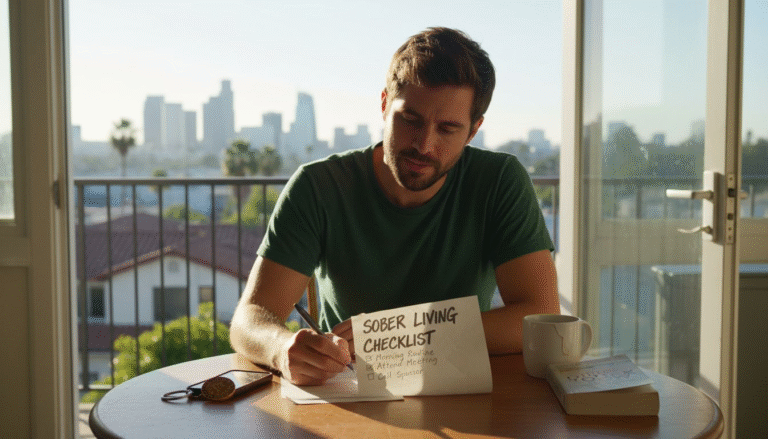
A calm, organized living space combined with structured daily activities fosters emotional well-being and resilience in long-term recovery.
Your routine doesn’t need to be rigid. Build flexibility for unexpected events, but anchor yourself with non-negotiable core habits.
Setting Goals That Stick
Goals give your routine direction and meaning. Instead of vague aspirations, create specific, measurable objectives you can track weekly.
Examples include attending three recovery meetings per week, completing a job search task daily, or reconnecting with one family member monthly. These concrete goals create accountability and forward momentum.
Pro tip: Write your daily routine on paper and post it where you see it first thing in the morning. The visual reminder anchors you to your commitments before the day pulls you in different directions.
2. Build a Supportive Social Network
You cannot recover alone. A strong social network becomes your safety net during difficult moments and your celebration crew during wins. The right people around you make the difference between staying sober and relapsing.
When you’re in recovery, isolation feeds cravings. Your brain looks for comfort in old habits when no one is around. Building a supportive network means surrounding yourself with people who understand your journey and actively invest in your success.
Who Should Be in Your Circle
Not all relationships serve your recovery equally. Be intentional about who gets close access to you.
Your network should include:
- Recovery peers: People working toward sobriety who understand the struggle firsthand
- Sponsors or mentors: Someone with solid recovery experience who can guide you through tough days
- Family members: Those willing to support your sobriety, not enable old behaviors
- Professional support: Therapists, counselors, and group leaders you trust
- Accountability partners: People who check in on your progress and help you stay honest
Authentic connections built on shared commitment to recovery create a foundation stronger than any individual willpower.
Starting Your Network in Los Angeles
Los Angeles offers abundant recovery resources. Attend recovery meetings regularly where you’ll naturally meet people on similar paths. Peer support in rehab programs creates lasting friendships built on genuine understanding and mutual growth.
Join community groups beyond meetings too. Volunteering, fitness classes, or hobby clubs connect you with people who support healthy living. These environments naturally discourage substance use and celebrate sober milestones.
Don’t wait for perfect friendships to appear. Start conversations, exchange numbers, and make regular contact a priority.
Maintaining Your Network
Building relationships takes effort. Show up consistently to meetings and social gatherings. Return calls and messages. Celebrate others’ sobriety anniversaries as enthusiastically as you want yours celebrated.
Boundaries matter too. Distance yourself from people who use substances or encourage old behaviors, even if you’ve known them for years. Protecting your network means protecting your recovery.
Pro tip: Schedule weekly coffee or calls with your accountability partner before cravings hit. Regular, planned contact prevents the isolation that triggers relapse and keeps your commitment visible.
3. Develop Healthy Coping Skills
Coping skills are your defense system against relapse. When stress, boredom, or emotions hit hard, you need tools to manage those feelings without turning to substances. Without healthy coping mechanisms, you’re vulnerable to old patterns.
Your brain spent years using substances to escape discomfort. Now you must teach it new ways to handle life. This takes practice, patience, and intentional effort to replace destructive habits with constructive ones.
Understanding Your Triggers
Coping skills work best when you understand what you’re coping with. Identify your personal triggers, whether they’re specific people, places, emotions, or situations. Common triggers include stress, loneliness, boredom, conflict, or seeing old friends.
Once you know your triggers, you can prepare responses in advance. You won’t have to figure out what to do in the moment when your defenses are weakest.
Essential Coping Strategies
Different situations call for different tools. Build a diverse toolkit so you always have something available.
Effective coping skills include:
- Physical activity: Exercise reduces stress hormones and releases natural mood boosters
- Mindfulness and meditation: These practices anchor you in the present moment, away from cravings
- Creative outlets: Writing, art, music, or crafts channel emotions productively
- Deep breathing: Simple techniques calm your nervous system when anxiety spikes
- Social connection: Reaching out to your support network interrupts isolation
- Time management: Structured days eliminate boredom that feeds cravings
- Problem-solving: Addressing issues directly beats dwelling on them
Building healthy coping skills means learning to sit with discomfort instead of escaping it, transforming how you respond to life’s challenges.
Practicing Skills Before Crisis Hits
Healthy coping skills develop through repetition in calm moments. Don’t wait for crisis to try them. Practice your breathing technique weekly. Use your creative outlet regularly. Go for walks when you feel fine, so running is automatic when stress arrives.
This practice creates neural pathways that activate instinctively when you need them most. Your brain learns that these alternatives work.
Making Skills Stick
Keep a written list of your coping strategies and post it where you’ll see it daily. Track which skills help most with different situations. Adjust your toolkit based on what actually works for you in real Los Angeles life.
Sober living requires building emotional resilience through consistent practice. The more you use healthy coping skills, the more automatic they become.
Pro tip: Create a “coping skills card” with your top five strategies and keep it in your wallet or phone. In high-stress moments, you won’t have to remember what to do. You’ll just pull out your card and follow the plan.
4. Prioritize Physical and Mental Health
Your body and mind are interconnected. Neglecting either one undermines your entire recovery. Prioritizing your health means treating your physical wellness and mental stability as non-negotiable parts of sobriety.
Substance abuse damages both your brain chemistry and physical health. Recovery requires intentional healing in both areas. You cannot ignore one while focusing on the other and expect lasting success.
The Physical Health Connection
Your body craves recovery as much as your mind does. Regular physical activity reduces cravings, improves sleep, and boosts mood through natural neurochemical changes.
Exercise doesn’t mean joining a gym or training for marathons. Walking, yoga, swimming, or dancing all count. Find movement you actually enjoy so you’ll stick with it consistently.
Mental Health Takes Active Work
Mental health recovery tips emphasize treating underlying depression, anxiety, and trauma that often fuel addiction. Many people self-medicated with substances because they were struggling with undiagnosed mental health conditions.
Working with a therapist helps you understand your mental patterns and develop genuine healing. Medication may be appropriate for some conditions. Therapy addresses root causes instead of just managing symptoms.
Daily Actions That Matter
Small, consistent actions compound into major health improvements.
Prioritize these fundamentals:
- Sleep: Aim for 7 to 9 hours nightly. Quality sleep strengthens emotional resilience and reduces cravings.
- Nutrition: Eat balanced meals with vegetables, protein, and whole grains. Your brain needs fuel to function optimally.
- Hydration: Drink water consistently. Dehydration intensifies anxiety and fatigue.
- Medical checkups: Schedule regular appointments to address any health issues early.
- Mental health appointments: Treat therapy and counseling as mandatory, not optional.
- Stress management: Use breathing exercises, meditation, or time in nature daily.
Physical health and mental wellness work together to create the strong foundation your recovery needs to thrive.
Building Your Health Routine
Integrate health practices into your daily schedule alongside your other recovery commitments. Your schedule should already include meetings and supportive relationships. Add exercise, therapy appointments, meals, and sleep as priorities.
Track your health habits to see patterns. Celebrate wins like completing therapy sessions or hitting a week of consistent exercise. These victories reinforce your commitment to overall wellness.
Pro tip: Pair exercise with your recovery meetings by arriving early and taking a 15-minute walk before sessions, turning movement into part of your recovery ritual rather than another task to squeeze in.
5. Create a Safe, Substance-Free Environment
Your physical environment shapes your mental state and recovery success. A space free from substance triggers, paraphernalia, and reminders of your past use becomes a sanctuary where healing can happen. Your home should support sobriety, not sabotage it.
Environment is powerful. When your surroundings constantly remind you of drug use or contain people who use, staying sober becomes exponentially harder. Creating a safe, clean space removes obstacles and reduces daily temptation.
Removing Physical Triggers
Start by eliminating anything connected to substance use. This includes alcohol, drugs, paraphernalia, and items associated with old using patterns. Don’t keep “just in case” supplies or medications you abuse.
Clean your space thoroughly. This symbolic act marks a fresh start. Rearrange furniture or repaint walls if budget allows. Physical changes signal new beginnings to your brain.
Making Your Space Inviting
A substance-free environment isn’t just about removing negatives. Add elements that support wellness and recovery.
Transform your home with:
- Natural light: Open curtains daily to regulate mood and sleep cycles
- Plants: Living plants improve air quality and provide calming green space
- Comfortable seating: Create areas for relaxation, reading, or reflection
- Inspirational items: Hang recovery quotes, sobriety coins, or meaningful art
- Exercise space: Designate even a small corner for movement and stretching
- Organization: Clutter causes stress. Simple organization reduces daily anxiety
- Healthy snacks: Stock foods that nourish rather than tempt
Your home environment directly influences your emotional state, stress levels, and ability to maintain sobriety day after day.
Managing People in Your Space
Creating a home environment for recovery includes being intentional about who you invite inside. Set clear boundaries with people who use substances or encourage old behaviors.
Welcome people who support your sobriety. Host recovery meetings, invite sponsor calls, or gather with sober friends. Your home becomes a sanctuary built on healthy connections.
If you live with roommates or family who use, establishing boundaries requires difficult conversations. You may need to spend more time outside your home or find alternative living arrangements if your safety is at risk.
Maintaining Your Safe Space
Keeping your environment clean and organized takes ongoing effort. Build maintenance into your routine. A 15-minute daily tidying session keeps chaos from building. Weekly deep cleaning prevents the space from feeling neglected or depressing.
Pro tip: Assign specific rooms or areas as “recovery zones” where substance use discussion and negativity are off-limits, making those spaces your retreat when stress hits.
6. Stay Involved in Aftercare Programs
Treatment doesn’t end when you leave the facility. Aftercare programs bridge the gap between structured treatment and independent sober living. Staying connected to professional support and peer networks dramatically increases your chances of long-term recovery.
Many people relapse after treatment because they stop accessing support too early. Your brain is still rewiring itself. Your coping skills are still developing. Professional guidance and structured accountability keep you accountable during vulnerable months.
Understanding Aftercare Options
Aftercare looks different for everyone. Programs range from weekly individual therapy and group counseling to intensive outpatient services and recovery coaching.
Common aftercare options include:
- Individual therapy: One-on-one sessions with a therapist addressing your specific needs
- Group counseling: Sessions with peers working through similar challenges
- Intensive Outpatient Programs (IOP): Multiple sessions weekly maintaining therapeutic structure
- Support groups: Peer-led meetings like Alcoholics Anonymous or Narcotics Anonymous
- Recovery coaching: One-on-one guidance focused on practical life skills and accountability
- Family therapy: Sessions rebuilding relationships damaged by substance abuse
- Specialized programs: Services addressing trauma, mental health, or specific substances
Aftercare programs foster recovery and independence by providing ongoing structure, accountability, and professional guidance during the critical months after treatment.
Why Aftercare Matters Now
Your brain is still healing during early recovery. Neurochemistry changes take months. Habit patterns require time to solidify. Aftercare provides scaffolding while your brain reorganizes itself around sobriety.
Beyond biology, aftercare addresses practical challenges. Returning to work, rebuilding relationships, managing stress, and navigating social situations all require guidance. You’re learning to live sober in a world designed for use.
Making Aftercare a Priority
Treat aftercare commitments with the same seriousness as you treated treatment. Schedule appointments like non-negotiable meetings. Show up even when you feel good. Progress comes from consistency, not convenience.
Choose programs that fit your schedule and personality. If you hate group settings, prioritize individual therapy. If you thrive on peer connection, focus on support groups. You’re more likely to stay involved when the format works for you.
Document your progress. Track what you’re learning, how you’re changing, and victories you’re celebrating. This record becomes powerful evidence of your recovery transformation.
Pro tip: Schedule your next aftercare appointment before leaving your current session, removing the decision-making barrier that often prevents people from rescheduling when motivation dips.
7. Monitor Progress and Celebrate Milestones
Progress in recovery happens gradually, sometimes so slowly you don’t notice the changes accumulating. Tracking your growth and celebrating milestones keeps motivation alive and provides tangible proof that your hard work matters. Without acknowledgment, recovery can feel like an endless uphill climb.
Milestones aren’t just about sobriety dates. They include improved relationships, new coping skills, better health, career advancement, and emotional healing. Recognizing all forms of progress strengthens your commitment and reinforces the benefits of staying sober.
What Counts as a Milestone
Recovery milestones range from early sobriety anniversaries to personal growth achievements that have nothing to do with time. Both matter equally in your overall transformation.
Track these wins:
- Time-based milestones: 30 days, 90 days, six months, one year, multiple years sober
- Relationship milestones: Reconnecting with family, earning trust back, deepening friendships
- Health improvements: Better sleep, increased energy, weight loss, or reduced anxiety
- Career progress: New job, promotion, completing training, or increased income
- Emotional wins: Managing anger without rage, handling disappointment without despair, feeling genuine joy
- Skill development: Completing therapy goals, mastering meditation, learning new hobbies
- Financial stability: Paying off debt, building savings, or achieving financial goals
Celebrating milestones reinforces continued commitment to recovery and strengthens your emotional resilience during challenging times.
Tracking Your Progress Effectively
Write down your goals and progress regularly. A recovery journal or simple checklist keeps wins visible. Date your entries so you can review how far you’ve come when doubt creeps in.
Photo journals work well too. Take pictures at milestone moments. Flip through them when you need visual reminders of your transformation. Seeing yourself smile again proves recovery is real.
Making Celebration Meaningful
Celebrations don’t require money. Meaningful recognition involves acknowledgment and gratitude. Call your sponsor or therapist to share your win. Host a sober dinner with friends who support you. Treat yourself to something you enjoy that doesn’t involve substances.
Share your milestones with your support network. Tell people who invested in your recovery. Their joy becomes contagious and deepens your connections. You give them hope that recovery works when they see your progress.
Using Milestones During Tough Times
When cravings hit or motivation drops, review your milestone list. Remind yourself what you’ve already accomplished and what you’re protecting. That 90-day mark wasn’t easy to reach. Going back would mean starting over and losing everything you’ve built.
Your progress is proof that sobriety works. Hold that close during difficult moments.
Pro tip: Create a “milestone jar” where you write down wins on slips of paper, then pull them out on hard days to physically remind yourself of your accomplishments and why your recovery matters.
Below is a detailed table summarizing the essential strategies for sustaining sobriety as discussed in the article.
Take Control of Your Sober Living Journey in Los Angeles Today
Struggling to build lasting sobriety can feel overwhelming when facing challenges like unstructured days and the absence of a supportive network. The 7-step checklist for sober living success highlights common obstacles such as managing triggers, developing healthy coping skills, and creating a safe environment. If these are the goals you want to achieve, you do not have to face them alone.
At Glendora Recovery Center, we specialize in personalized addiction treatment and aftercare support tailored to your needs. Our compassionate team provides comprehensive programs including Partial Hospitalization and Intensive Outpatient, designed to help you establish healthy routines, maintain accountability, and rebuild your life with confidence. Discover how our aftercare programs and expert counseling can guide you through every step of recovery. Take the first step toward a healthier future by reaching out today to Glendora Recovery Center. Your sober living success starts now.
Frequently Asked Questions
How can I create a daily routine that supports sober living in Los Angeles?
Establish a predictable daily routine by setting consistent wake-up and sleep times, planning regular meals, and incorporating exercise. Aim to structure your day around non-negotiable activities that maintain focus and reduce idle time, which can lead to cravings.
What should I include in my support network during recovery?
Your support network should consist of recovery peers, sponsors, trusted family members, and mental health professionals. Engage with individuals who understand your journey and can provide encouragement during both challenges and milestones in your recovery.
What coping skills should I develop to maintain my sobriety?
Focus on creating a diverse toolkit of coping skills, including physical activity, mindfulness, and social connection. Practice these skills regularly and keep a list of effective strategies to quickly access them during stressful moments.
How can I prioritize my physical and mental health while living sober?
To prioritize health, aim for 7 to 9 hours of sleep, maintain a balanced diet, and schedule regular exercise. Ensure mental health appointments and stress management techniques are part of your routine to support both aspects of well-being simultaneously.
Why is aftercare important for long-term sobriety?
Aftercare provides essential support and guidance as you transition from structured treatment to independent sober living. Participating in aftercare programs can significantly increase your chances of maintaining sobriety as you continue to develop coping skills and navigate everyday life challenges.
How can I measure and celebrate my progress in recovery?
Track your progress by documenting milestones, such as sobriety anniversaries and personal achievements. Celebrate these milestones with meaningful acknowledgments or gatherings to reinforce your commitment and remind yourself of how far you’ve come.
Recommended
- Sober Living in Los Angeles County: How Glendora creates an impact
- 7 Effective Ways to Support Recovery in Los Angeles | Glendora Recovery Center
- 7 Essential Recovery Strategies for Adults in Los Angeles | Glendora Recovery Center
- 7 Best Practices for Addiction Recovery in Los Angeles County | Glendora Recovery Center