
Over 43 million American adults face mental health concerns every year, yet many still struggle to find flexible solutions for addiction recovery. In Los Angeles County, balancing work, family, and health can make traditional rehab programs feel out of reach. Outpatient rehab delivers a practical path, empowering people to seek expert support while continuing daily routines. Discover how outpatient care addresses addiction and co-occurring disorders with approaches designed for real American lives.
Table of Contents
- What Outpatient Rehab Really Means
- Major Outpatient Program Types Explained
- How Treatment Approaches Support Recovery
- Success Factors and Common Pitfalls
- Comparing Outpatient Care With Other Options
Key Takeaways
| Point | Details |
|---|---|
| Flexible Outpatient Care | Outpatient rehab allows individuals to receive treatment while managing daily responsibilities, offering a structured yet adaptable approach to recovery. |
| Program Types Vary | Options like Partial Hospitalization, Intensive Outpatient, and Standard Outpatient cater to different recovery needs and levels of support. |
| Personalized Treatment is Key | Successful recovery hinges on tailored strategies addressing both addiction and co-occurring issues, emphasizing ongoing support and motivation. |
| Engagement and Support Are Crucial | Active participation in therapy and having a strong support network significantly increase the likelihood of long-term sobriety. |
What Outpatient Rehab Really Means
Outpatient rehab represents a flexible, structured addiction treatment approach that allows individuals to receive professional support while maintaining their daily life responsibilities. Unlike residential programs that require 24/7 facility stays, outpatient treatment provides comprehensive care that adapts to each person’s unique recovery journey.
At its core, outpatient rehab involves scheduled therapeutic sessions where patients receive medical monitoring, counseling, and skill-building interventions without disrupting work, education, or family commitments. These programs typically offer group therapy, individual counseling, mental health support, and evidence-based treatment strategies designed to address substance use disorders while enabling participants to practice recovery skills in their real-world environment.
The structure of outpatient rehabilitation varies depending on individual needs, ranging from intensive programs requiring multiple weekly sessions to more flexible arrangements with less frequent meetings. Participants engage in structured treatment protocols that might include cognitive behavioral therapy, relapse prevention training, substance abuse education, and holistic wellness approaches. This personalized strategy helps individuals develop coping mechanisms, understand addiction triggers, and build sustainable recovery strategies without complete separation from their support networks.
Pro tip: Before committing to an outpatient program, schedule consultations with multiple treatment centers to understand their specific approaches and find the best match for your personal recovery goals.
Major Outpatient Program Types Explained
Outpatient rehabilitation encompasses several specialized program types designed to meet diverse recovery needs, with each approach offering unique treatment strategies. Intensive outpatient programs represent one of the most comprehensive outpatient treatment models, providing structured support for individuals requiring more rigorous intervention while maintaining their daily responsibilities.
The primary outpatient program types include Partial Hospitalization Programs (PHPs), Intensive Outpatient Programs (IOPs), and Standard Outpatient Programs. Partial Hospitalization Programs offer the most structured approach, typically involving 4-6 hours of daily treatment, allowing participants to return home each evening. These programs are ideal for individuals transitioning from inpatient care or those requiring more comprehensive medical and psychological support without full residential treatment.
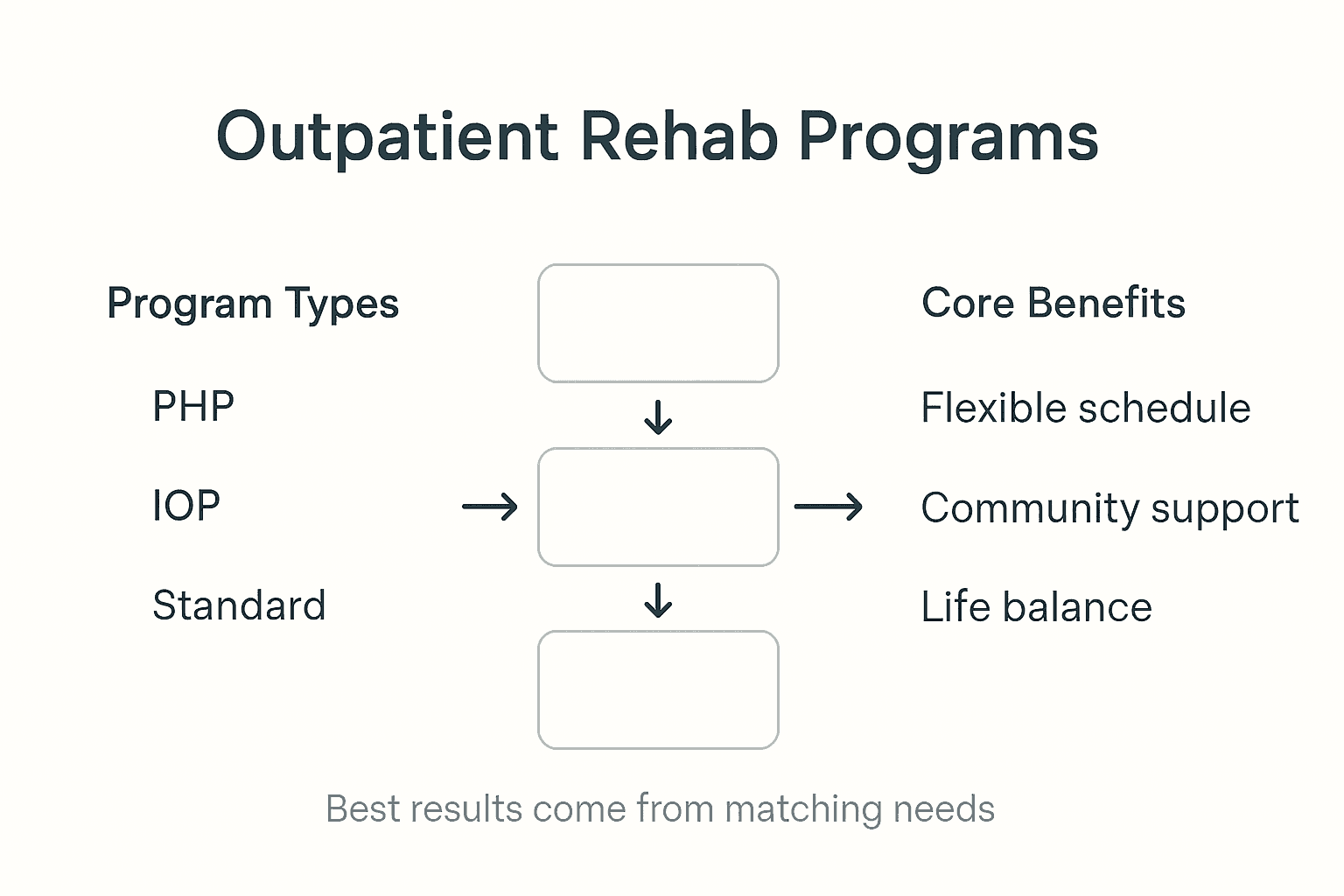
Intensive Outpatient Programs provide a more flexible treatment model, usually involving 9-12 hours of weekly therapy and counseling sessions. These programs are particularly effective for individuals with moderate substance use disorders who can maintain work or educational commitments while receiving consistent therapeutic support. Standard Outpatient Programs represent the most flexible option, offering weekly or bi-weekly counseling sessions that focus on maintaining recovery progress and preventing relapse.

Here’s a summary comparing the main outpatient rehab program types:
| Program Type | Weekly Time Commitment | Target Participants | Typical Benefits |
|---|---|---|---|
| Partial Hospitalization (PHP) | 20-30 hours | Recent inpatient discharges, complex cases | Highest structure, daily medical support |
| Intensive Outpatient (IOP) | 9-12 hours | Moderate addiction, motivated for change | Balance of structure and flexibility |
| Standard Outpatient | 2-4 hours | Stable in recovery, strong support network | Maximizes independence and work/family balance |
Pro tip: Consult with addiction treatment professionals to assess which outpatient program type best matches your specific recovery needs, personal schedule, and treatment goals.
How Treatment Approaches Support Recovery
Addiction recovery is a complex journey that requires comprehensive, personalized treatment strategies designed to address both psychological and physiological components of substance use disorders. Outpatient addiction programs offer a multifaceted approach that supports individuals through structured interventions targeting holistic healing and sustainable behavioral change.
These treatment approaches typically incorporate several key therapeutic modalities, including individual counseling, group therapy sessions, and specialized educational programs. Cognitive Behavioral Therapy plays a crucial role in helping patients identify and modify destructive thought patterns, while motivational interviewing techniques encourage personal accountability and intrinsic motivation for recovery. By addressing underlying psychological triggers and developing healthy coping mechanisms, these interventions provide individuals with practical tools to manage addiction and prevent potential relapse.
The most effective treatment approaches recognize addiction as a chronic condition requiring ongoing support and personalized care. Comprehensive programs integrate medical monitoring, mental health counseling, and skill-building workshops that empower individuals to rebuild their lives. This holistic strategy addresses not just substance use, but also co-occurring mental health challenges, family dynamics, and personal wellness goals that contribute to long-term recovery success.
Pro tip: Engage actively in your treatment plan by maintaining open communication with your counselors and being honest about your challenges and progress.
Success Factors and Common Pitfalls
Successful addiction recovery hinges on understanding the nuanced interplay between treatment approaches and individual circumstances. Research on treatment outcomes reveals that outpatient programs can be highly effective when carefully tailored to individual needs, though they present unique challenges compared to residential treatment models.
Key success factors include consistent engagement, strong support networks, and personalized treatment strategies. Motivation and personal accountability emerge as critical elements that distinguish successful recovery journeys. Individuals who actively participate in their treatment, attend regular counseling sessions, and develop robust coping mechanisms are more likely to maintain long-term sobriety. Conversely, common pitfalls include minimizing the complexity of addiction, failing to address underlying mental health issues, and underestimating the importance of comprehensive, ongoing support.
The most significant challenges in outpatient treatment often relate to managing external triggers and maintaining recovery while navigating daily life responsibilities. Patients must develop sophisticated strategies for avoiding relapse, which includes creating strong boundaries, identifying potential risk situations, and building a supportive environment that reinforces recovery goals. Successful participants typically create detailed relapse prevention plans, maintain open communication with counselors, and remain committed to continuous personal growth and self-improvement.
Review key factors that promote success or risk in outpatient recovery:
| Factor | Positive Impact | Potential Pitfall |
|---|---|---|
| Family Support | Increased accountability, emotional safety | Enabling destructive behaviors |
| Engagement in Therapy | Skill-building, relapse prevention | Irregular attendance, loss of progress |
| Coping Strategies | Manage triggers, reduce relapse risk | Limited skills increase vulnerability |
Pro tip: Create a detailed personal support network that includes family, friends, and recovery professionals who can provide accountability and assistance during challenging moments.
Comparing Outpatient Care With Other Options
Treatment approaches for addiction recovery vary significantly, with each option offering unique advantages and challenges designed to meet diverse individual needs. Outpatient care represents a flexible alternative to traditional residential treatment, providing individuals with the opportunity to maintain their daily responsibilities while actively pursuing recovery.
The primary distinctions between treatment options center on intensity, living environment, and support structures. Inpatient treatment requires individuals to reside at a specialized facility, offering 24-hour medical supervision and comprehensive psychological support. This approach is typically recommended for severe addiction cases or individuals requiring intensive detoxification. In contrast, outpatient programs allow participants to live at home, attending scheduled therapy sessions and treatment meetings that integrate seamlessly with their existing personal and professional commitments.
Each treatment model presents distinct advantages and potential limitations. Residential programs provide a controlled environment with constant professional support, which can be crucial for individuals with complex addiction histories or unstable living situations. Outpatient care, however, offers greater flexibility, allowing individuals to apply recovery skills in real-world contexts, maintain employment, and sustain family relationships. The most successful approach depends on carefully assessing individual clinical needs, personal circumstances, motivation levels, and support systems.
Pro tip: Consult with addiction treatment professionals to conduct a comprehensive personal assessment that will help determine the most appropriate treatment approach for your specific recovery journey.
Discover the Power of Personalized Outpatient Rehab at Glendora Recovery Center
Outpatient rehab offers the flexibility and structured support needed to balance addiction treatment with life’s daily demands. If you are facing challenges like managing triggers, maintaining accountability, or finding the right balance between therapy and your responsibilities, Glendora Recovery Center provides individualized solutions tailored to your unique recovery journey. Our Partial Hospitalization Programs and Intensive Outpatient Programs combine medical monitoring, counseling, and skill-building designed to meet your specific needs while you stay connected to your support network.
Experience compassionate care in an upscale setting with flexible scheduling options including morning, evening, weekend, and online telehealth sessions. Take the next step toward sustainable recovery by contacting our experienced team today. Learn more about our programs and begin your path to lasting sobriety by visiting Glendora Recovery Center Contact Us. Your personalized healing plan awaits at Glendora Recovery Center Contact Us. Don’t wait to regain control — reach out now and start transforming your future.
Frequently Asked Questions
What is outpatient rehab, and how does it work?
Outpatient rehab is a flexible addiction treatment program that allows individuals to receive professional support while managing daily responsibilities. It involves scheduled therapy sessions without the need for a 24/7 facility stay, offering treatments like counseling, medical monitoring, and skill-building interventions.
How effective are outpatient programs compared to inpatient rehab?
Outpatient programs can be highly effective, especially for individuals with moderate addiction levels who can maintain responsibilities while receiving support. They offer flexibility and allow people to practice recovery skills in real-world environments, while inpatient rehab provides intensive care suited for severe addiction cases.
What types of outpatient programs are available?
The main types of outpatient programs include Partial Hospitalization Programs (PHPs), Intensive Outpatient Programs (IOPs), and Standard Outpatient Programs. PHPs offer structured daily treatment, IOPs provide flexible sessions multiple times a week, and Standard Outpatient Programs focus on maintaining recovery with less frequent counseling.
What are the success factors for outpatient rehab?
Key success factors include consistent engagement in therapy, strong support networks, and personalized treatment strategies. Motivation and personal accountability are crucial, along with effective coping mechanisms to manage triggers and avoid relapse.