
Many people in recovery think aftercare is optional or only necessary after a relapse. The truth challenges this belief. Structured aftercare can reduce relapse rates by nearly 40%, making it one of the most powerful tools for maintaining long-term wellness. This guide explains what aftercare support is, how it works, and why it matters for individuals in Los Angeles County seeking lasting recovery from addiction and mental health disorders.
Table of Contents
- Understanding Aftercare Support: Definition And Importance
- Types Of Aftercare Programs And Their Functions
- Effectiveness Of Aftercare In Sustaining Recovery
- Common Misconceptions About Aftercare And Relapse
- Tailoring Aftercare To Individual Needs
- Innovations And Emerging Trends In Aftercare Delivery
- Applying Aftercare Support For Long-Term Wellness In Los Angeles County
- Discover Tailored Aftercare Support At Glendora Recovery Center
- Frequently Asked Questions
Key takeaways
| Point | Details |
|---|---|
| Aftercare definition | Structured support bridging treatment and independent recovery, focusing on relapse prevention and skill development. |
| Program types | Options include PHP, IOP, telehealth, family therapy, and peer support groups with varying intensity levels. |
| Proven effectiveness | Proactive aftercare lowers relapse risk by nearly 50% and reduces emergency visits by 25% within 12 months. |
| Common myths | Aftercare is not just for post-relapse, not all programs are identical, and it involves clinical care beyond support groups. |
| Personalized plans | Tailoring aftercare to individual risk factors and recovery stages significantly improves engagement and outcomes. |
Understanding aftercare support: definition and importance
Aftercare support refers to structured clinical and peer services designed specifically for individuals transitioning from intensive addiction or mental health treatment to independent living. It creates a bridge between the controlled environment of inpatient care and the challenges of everyday life. This continuum of care is not optional but essential for maintaining recovery momentum.
Aftercare serves to bridge initial treatment and long-term recovery by offering relapse prevention, coping skill development, and social support. The core functions include:
- Relapse prevention strategies tailored to individual triggers
- Development of practical coping skills for stress and cravings
- Building robust social support networks
- Ongoing clinical monitoring and intervention
- Integration of recovery principles into daily routines
Pro Tip: Starting your aftercare plan before discharge from primary treatment boosts long-term retention rates and significantly reduces the likelihood of early relapse.
The importance of ongoing support cannot be overstated. Without structured aftercare, many individuals face overwhelming challenges when returning to environments where substances were previously used or mental health struggles occurred. Continuous clinical oversight helps identify warning signs early, while peer connections provide emotional reinforcement that family and friends may not fully understand.
Types of aftercare programs and their functions
Los Angeles County residents have access to several aftercare program models, each designed for different recovery stages and intensity needs. Understanding these options helps you select the right fit.
Partial Hospitalization Programs (PHP) offer the most intensive aftercare option. These partial hospitalization programs provide 20 or more hours of structured treatment weekly, typically in a day hospital setting. You attend during the day and return home each evening. PHP works well for individuals stepping down from residential treatment who still need significant clinical support.
Intensive Outpatient Programs (IOP) provide moderate intensity care, usually 9 to 19 hours per week. Intensive outpatient programs allow greater flexibility for work, school, or family responsibilities while maintaining structured therapy sessions. IOP focuses on skill application in real-world settings, making it ideal for individuals reintegrating into daily life.
Telehealth aftercare services have transformed access to recovery support. Remote counseling, group therapy, and monitoring through video platforms eliminate transportation barriers and reduce stigma. Telehealth increases retention by 30% in urban areas by making care more convenient and private.
Family therapy aftercare addresses relationship dynamics that may contribute to relapse risk. When families understand addiction as a disease and learn healthy communication patterns, the entire support system strengthens. This approach proves especially valuable for individuals returning to family homes.
| Program Type | Intensity | Setting | Ideal For |
|---|---|---|---|
| PHP | 20+ hours/week | Day hospital | Recent discharge needing high support |
| IOP | 9-19 hours/week | Community clinic | Balancing recovery with responsibilities |
| Telehealth | Flexible | Remote/home | Transportation or stigma barriers |
| Family Therapy | 2-4 hours/week | Clinic or telehealth | Relationship repair and education |
| Peer Support | 1-3 hours/week | Community or online | Ongoing connection and accountability |
Effectiveness of aftercare in sustaining recovery
Research consistently demonstrates that aftercare dramatically improves recovery outcomes. Proactive aftercare lowers relapse risk by nearly 50% compared to interventions after relapse. This statistic alone should convince anyone in recovery that ongoing support is worth the commitment.
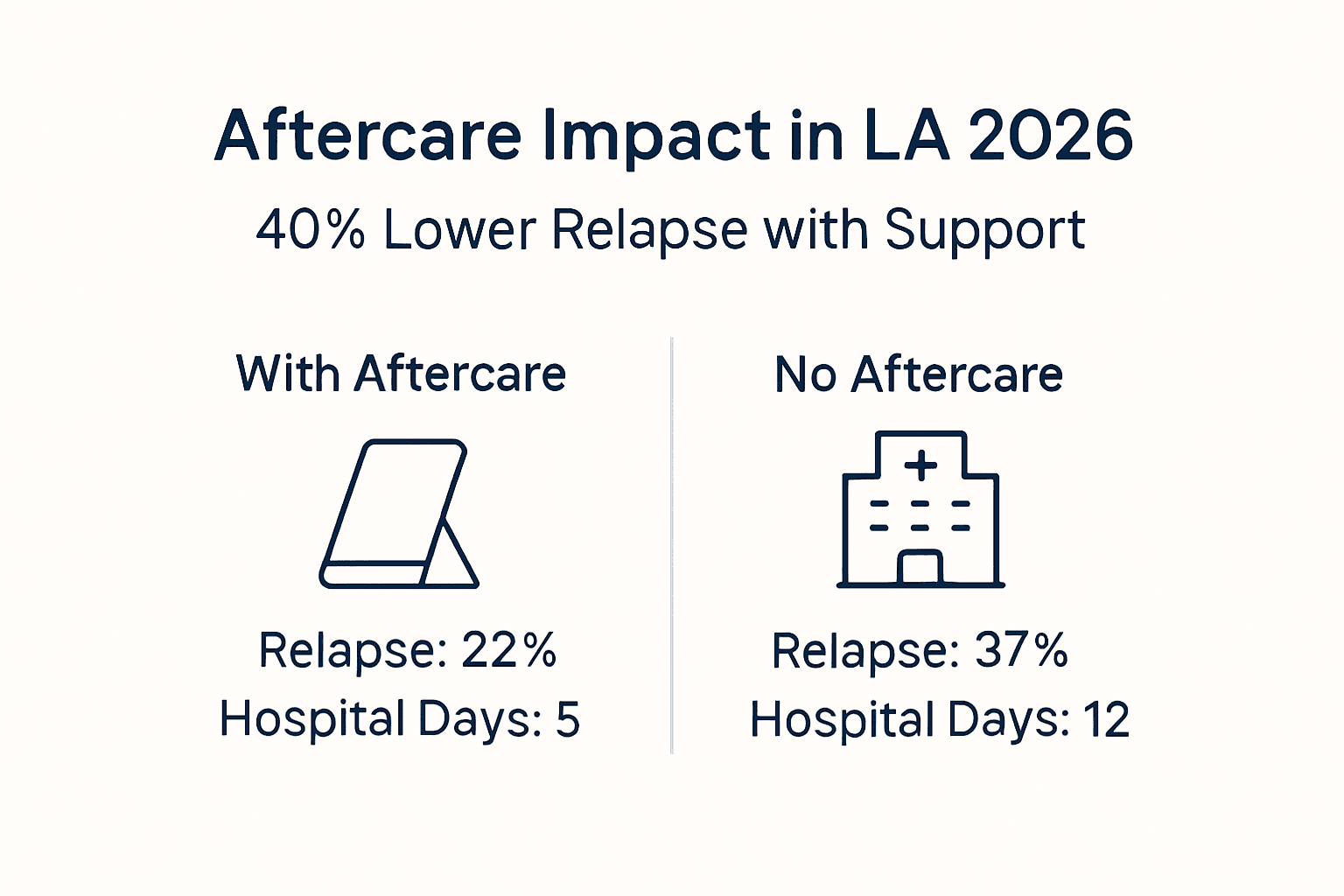
Beyond relapse prevention, aftercare reduces healthcare utilization. Individuals engaged in structured aftercare experience 25% fewer emergency room visits within 12 months post-discharge. This reduction reflects better crisis management, early intervention when warning signs emerge, and continuous access to professional guidance.
| Outcome Measure | With Aftercare | Without Aftercare | Improvement |
|---|---|---|---|
| Relapse Rate | 25-30% | 50-60% | 50% reduction |
| ER Visits (12 months) | 15% | 40% | 25% fewer visits |
| Treatment Retention | 70% | 40% | 75% increase |
| Mental Health Stability | 65% stable | 35% stable | 86% improvement |
For individuals with co-occurring mental health and substance use disorders, aftercare proves especially critical. Dual diagnosis cases require ongoing medication management, therapy adjustments, and monitoring for symptom changes. The integrated approach of what is aftercare and why it matters addresses both conditions simultaneously, preventing the cycle where untreated mental health symptoms trigger substance use.

Pro Tip: Consistency matters more than intensity. Regular weekly engagement, even at lower intensity levels, produces better long-term outcomes than sporadic high-intensity episodes.
Continuous clinical and peer support creates accountability and reinforcement that isolated individuals cannot maintain alone. Weekly check-ins normalize the recovery process, reduce isolation, and provide safe spaces to discuss challenges before they escalate into crises.
Common misconceptions about aftercare and relapse
Several myths prevent individuals from fully engaging with aftercare services. Correcting these misconceptions can dramatically improve recovery outcomes.
Myth: Aftercare is only needed after relapse occurs. Many people believe they should wait until they struggle before seeking additional support. The truth contradicts this entirely. Aftercare is not optional and is essential for preventing relapse proactively, not responding to it. Waiting until relapse happens wastes the most effective intervention window.
Myth: All aftercare programs are identical. Some assume one support group meeting weekly equals comprehensive aftercare. In reality, personalized plans matching individual risk factors, recovery stage, and co-occurring conditions produce significantly better engagement and outcomes. Generic approaches fail to address unique challenges.
Myth: Aftercare is just attending support groups. While peer support offers valuable connection, effective aftercare includes professional clinical care, therapy, medication management, and structured skill development. Support groups complement but cannot replace clinical intervention.
“Proactive aftercare creates a safety net that catches warning signs before they become full relapses. Waiting until crisis strikes means rebuilding from a much harder starting point.”
How do these corrections enhance engagement? When individuals understand that aftercare prevents problems rather than fixing them, they approach it with urgency. Knowing that personalized plans exist reduces the frustration of mismatched services. Recognizing the clinical component validates the seriousness of ongoing recovery work.
These myths also perpetuate stigma. Viewing aftercare as a sign of weakness rather than strength discourages participation. Reframing aftercare as proactive wellness maintenance, similar to managing any chronic condition, normalizes the process and removes shame.
Tailoring aftercare to individual needs
Personalized aftercare plans significantly outperform generic approaches. The key is assessing individual risk factors and matching services to recovery stages.
Step one involves evaluating specific risk factors. These include co-occurring mental health disorders like depression or anxiety, limited social support networks, environmental triggers such as substance-using friends or high-stress work, history of trauma, and previous relapse patterns. Each factor influences which aftercare services will prove most effective.
Step two matches services to identified needs. Someone with severe social anxiety might benefit from telehealth options initially, gradually transitioning to in-person groups. An individual with strong family involvement could prioritize family therapy sessions. Those with dual diagnoses require integrated treatment addressing both conditions simultaneously.
- Complete a comprehensive risk assessment with your treatment team before discharge.
- Select aftercare intensity matching your current stability level and external support.
- Identify specific triggers and ensure your plan includes strategies addressing each one.
- Build in family or peer involvement based on available support systems.
- Schedule regular plan reviews to adjust services as recovery progresses.
The harm reduction approach recognizes that recovery is not always linear. Aftercare plan advantages include flexibility to adjust intensity up or down based on current needs. If stress increases or warning signs emerge, you can temporarily increase session frequency. During stable periods, you might reduce intensity while maintaining connection.
Pro Tip: Request a written aftercare plan before discharge that specifies services, frequency, providers, and emergency contacts. Having this document reduces confusion and increases follow-through during vulnerable transition periods.
Personalization also improves retention. When services match your schedule, communication preferences, and specific challenges, you’re far more likely to attend consistently. Generic programs feel irrelevant, leading to dropout and increased relapse risk.
Innovations and emerging trends in aftercare delivery
Technology is transforming how aftercare reaches individuals in urban areas like Los Angeles County. These innovations increase access while maintaining clinical quality.
Telehealth services now offer comprehensive remote counseling, group therapy, and psychiatry appointments. You can attend sessions from home, work, or anywhere with internet access. This flexibility eliminates transportation barriers that previously prevented many from accessing care. Telehealth aftercare increases retention by 30% by reducing logistical obstacles and stigma concerns.
- Video counseling sessions provide the same therapeutic relationship as in-person meetings
- Online support groups connect you with peers across wider geographic areas
- Smartphone apps enable daily check-ins and mood tracking for early warning detection
- Secure messaging allows quick questions to counselors between appointments
- Virtual family therapy includes relatives who live far away
Continuous recovery monitoring through technology catches warning signs earlier. Apps can track sleep patterns, mood changes, stress levels, and cravings. When patterns indicate increased risk, your care team receives alerts and can proactively reach out. This early intervention prevents small setbacks from becoming full relapses.
Challenges exist with digital delivery. Not everyone has reliable internet access or comfort with technology. Privacy concerns arise when attending video sessions from shared living spaces. Digital literacy varies, and some individuals struggle with app navigation or video platforms.
The optimal approach combines telehealth with in-person care. You might attend weekly video counseling but visit the clinic monthly for comprehensive assessments. This hybrid model maximizes convenience while maintaining the human connection that supports recovery. As technology improves and becomes more accessible, expect aftercare delivery to increasingly blend digital and traditional methods.
Applying aftercare support for long-term wellness in Los Angeles County
Taking action on aftercare requires practical steps tailored to Los Angeles County resources and your specific recovery needs.
Start by identifying suitable programs before discharge from primary treatment. Ask your current treatment team for referrals to aftercare support in LA County providers. Research programs offering the intensity level you need, whether PHP, IOP, or standard outpatient. Verify insurance acceptance and location convenience. Schedule your first aftercare appointment before leaving primary treatment to eliminate gaps in care.
- Contact multiple programs to compare services, schedules, and therapeutic approaches
- Prioritize providers with dual diagnosis expertise if you have co-occurring conditions
- Consider telehealth options if transportation or scheduling creates barriers
- Ask about family therapy availability if relationship repair is a priority
- Verify the program offers flexible scheduling for work or school commitments
Strategies for sustained engagement include treating aftercare appointments as non-negotiable, similar to medical appointments for chronic conditions. Participate actively in family therapy sessions to strengthen your support network. Join peer support groups to build connections with others who understand recovery challenges. Share your schedule with trusted family or friends who can provide accountability.
Family and peer involvement amplifies aftercare effectiveness. When loved ones understand your triggers, warning signs, and coping strategies, they become part of your safety net. Family therapy educates them about addiction as a disease, reducing judgment and improving communication. Peer connections through support groups provide 24/7 access to people who have navigated similar challenges.
Pro Tip: Identify your personal support team early. This includes your therapist, psychiatrist if applicable, a peer sponsor or accountability partner, and at least one trusted family member or friend. Share your aftercare plan with this team so everyone understands how to support you.
Continuous evaluation matters. Schedule quarterly reviews with your aftercare provider to assess what’s working and what needs adjustment. Be honest about attendance challenges, effectiveness of current strategies, and any emerging concerns. Your plan should evolve as your recovery strengthens and circumstances change. This ongoing refinement ensures aftercare remains relevant and effective throughout your recovery journey.
Discover tailored aftercare support at Glendora Recovery Center
Glendora Recovery Center provides comprehensive aftercare programs specifically designed for Los Angeles County residents committed to long-term recovery. Our personalized plans include flexible partial hospitalization programs, intensive outpatient programs, and convenient telehealth options that fit your schedule and recovery stage.
Our experienced team specializes in dual diagnosis treatment, addressing both addiction and co-occurring mental health conditions through integrated care. We offer morning, evening, weekend, and online sessions to accommodate work, school, and family responsibilities. Our compassionate harm-reduction approach recognizes that recovery is a journey, not a destination.
Located in Glendora and serving all of LA County, our upscale addiction treatment center in Los Angeles provides the continuous clinical support and peer connection that dramatically reduce relapse risk. Contact us today to discuss your aftercare options and build a personalized plan that supports your long-term wellness goals.
Frequently asked questions
What services are included in aftercare support?
Aftercare typically includes individual therapy, group counseling, medication management for co-occurring disorders, family therapy sessions, peer support groups, and relapse prevention planning. Many programs now offer telehealth options for remote access. The specific combination depends on your personalized plan based on risk factors and recovery stage.
How long should someone stay in aftercare?
Most experts recommend at least 12 months of structured aftercare following primary treatment, though many individuals benefit from ongoing support for several years. Duration depends on individual stability, co-occurring conditions, and environmental risk factors. Think of aftercare like managing any chronic condition where ongoing monitoring prevents relapse.
Can aftercare support prevent relapse completely?
While aftercare dramatically reduces relapse risk by nearly 50%, it cannot guarantee complete prevention. Recovery involves managing a chronic condition that requires ongoing attention. Aftercare provides tools, support, and early intervention that catch warning signs before they become full relapses, giving you the best possible chance at sustained wellness.
Is telehealth as effective as in-person aftercare?
Research shows telehealth produces comparable outcomes to in-person care while improving retention through greater accessibility. The key is consistent engagement regardless of format. Many individuals benefit from hybrid approaches that combine video counseling with periodic in-person visits. Choose the delivery method that you’ll actually attend regularly.
How can family members support aftercare efforts?
Family members can participate in family therapy sessions to understand addiction and improve communication patterns. They can provide accountability by knowing your schedule and checking in without judgment. Learning to recognize warning signs allows them to alert your care team early. Most importantly, they should educate themselves about recovery as an ongoing process that requires patience and support.
Recommended
- Aftercare Support Tips: 30% Relapse Drop & Mental Health Gains | Glendora Recovery Center
- Why Choose Aftercare – Key Benefits for LA Recovery | Glendora Recovery Center
- Benefits of Aftercare Support for Lasting Sobriety | Glendora Recovery Center
- Why Choose Aftercare Support for Lasting Sobriety | Glendora Recovery Center