
Sobriety milestones represent critical markers in the recovery journey, yet many people struggle to understand their true purpose or how to celebrate them meaningfully. These time-based achievements serve as powerful motivators, offering tangible proof of progress when the path feels uncertain. Whether you’re navigating your first 24 hours of sobriety or celebrating multiple years of sustained recovery, understanding what these milestones mean and how to honor them can strengthen your commitment to lasting change. This guide explores the significance of sobriety milestones, common markers you’ll encounter, practical celebration strategies, and how to navigate challenges along the way.
Table of Contents
- Key takeaways
- Understanding sobriety milestones and their importance
- Common sobriety milestones and what they symbolize
- How to celebrate and use sobriety milestones to strengthen recovery
- Challenges and nuances in tracking sobriety milestones
- How Glendora Recovery Center supports your sobriety journey
- Frequently asked questions about sobriety milestones
Key Takeaways
| Point | Details |
|---|---|
| Milestones motivate progress | They serve as psychological victories that reinforce the ability to resist cravings and build healthier patterns. |
| Social recognition boosts accountability | Sharing progress with support groups, therapists, or trusted family strengthens accountability and reduces isolation. |
| Practical milestone functions | Milestones help visualize progress, set realistic short term goals, identify triggers and strengths, and adjust treatment plans. |
| Recovery journal benefits | Keeping a journal around milestone dates and feelings provides a durable record to draw on during tough periods. |
Understanding sobriety milestones and their importance
Sobriety milestones function as checkpoints that measure time spent in recovery from substance abuse. These markers go beyond simple calendar dates. They represent psychological victories, demonstrating your ability to resist cravings, rebuild relationships, and create healthier patterns. Each milestone reached proves that change is possible, even when doubt creeps in during difficult moments.
The psychological impact of sobriety milestones as powerful motivators cannot be overstated. When you acknowledge reaching 30 days or six months sober, you’re activating reward pathways in your brain that reinforce positive behavior. This recognition creates a feedback loop where success breeds more success. Your brain begins to associate sobriety with achievement rather than deprivation, fundamentally shifting how you view recovery.
Social recognition amplifies the power of milestones. Sharing your progress with support groups, therapists, or trusted family members strengthens accountability. When others acknowledge your achievement, it validates your effort and reminds you that you’re not alone in this journey. This external validation often matters most during vulnerable moments when internal motivation wavers.
Milestones also serve practical functions in recovery programs. They help you:
- Visualize progress when recovery feels abstract or overwhelming
- Set realistic short-term goals instead of focusing only on lifelong sobriety
- Identify patterns in your recovery journey, including triggers and strengths
- Create natural opportunities to reassess your treatment plan and adjust strategies
- Build confidence through accumulated evidence of your capability
Pro Tip: Keep a recovery journal where you note not just milestone dates, but also how you felt reaching them. This record becomes a powerful tool during challenging periods, reminding you of your resilience when you need it most.
The momentum generated by celebrating milestones sustains long-term sobriety. Each achievement becomes a foundation for the next, creating a staircase effect where progress builds upon itself. This structure transforms the daunting concept of “forever sober” into manageable, achievable steps that feel within reach.
Common sobriety milestones and what they symbolize
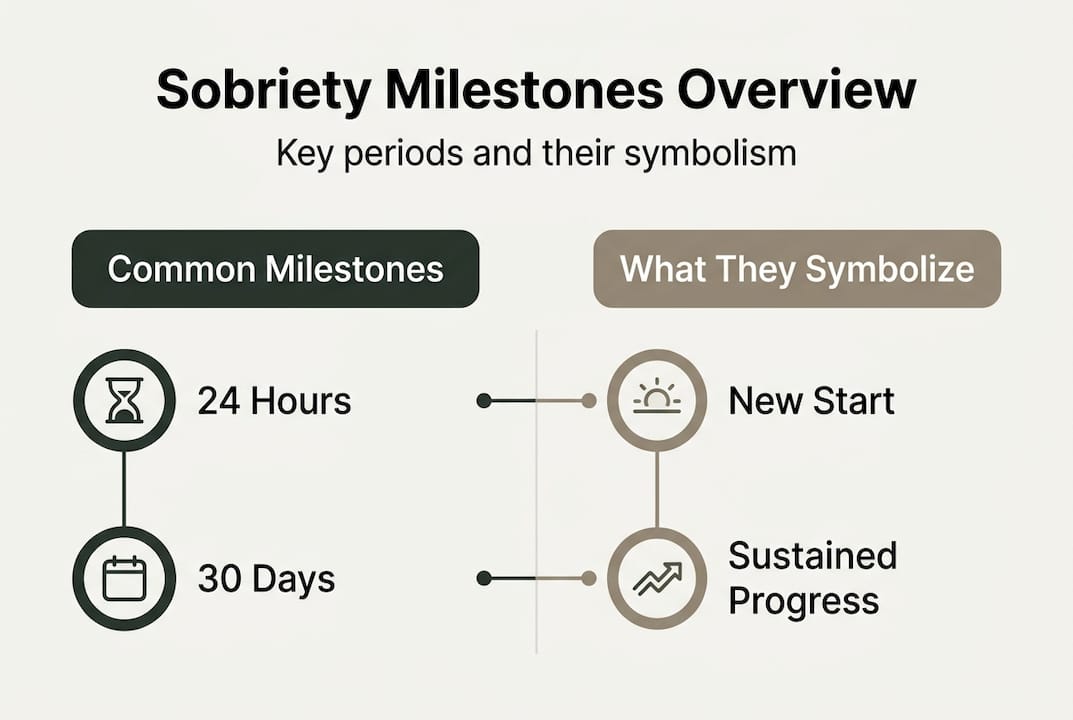
The first 24 hours of sobriety represents the most challenging and courageous milestone. This initial day requires immense strength as your body begins adjusting to the absence of substances. Physical withdrawal symptoms often peak during this period, making every hour a victory. Reaching this milestone signals your commitment to change and marks the official start of your recovery journey.
The 30-day milestone carries profound significance in recovery communities. Most recovery programs acknowledge milestones beginning at this point because one month demonstrates your ability to establish new routines. By 30 days, acute withdrawal symptoms typically subside, and you’ve navigated at least one full cycle of weekly triggers and social situations. This achievement shows you can maintain sobriety beyond the initial crisis phase.
Six months of sobriety marks a transformation period. At this stage, you’ve experienced multiple seasons, holidays, and life events without substances. Your brain chemistry begins stabilizing, and you’ve likely rebuilt some damaged relationships. This milestone reflects substantial lifestyle changes rather than just abstinence. You’re not simply avoiding substances; you’re actively creating a new life.

The one-year milestone represents a complete revolution around the calendar. You’ve faced every holiday, birthday, and anniversary sober. This achievement signifies an identity shift from “person in early recovery” to “person living in sustained recovery.” Many treatment programs mark this milestone with special recognition because it demonstrates long-term commitment and resilience.
| Milestone | Typical Challenges | What It Symbolizes |
|---|---|---|
| 24 Hours | Acute withdrawal, intense cravings | Initial commitment and courage |
| 30 Days | Establishing new routines, social pressure | Breaking old patterns successfully |
| 6 Months | Complacency risk, lifestyle adjustment | Substantial healing and change |
| 1 Year | Identity integration, ongoing maintenance | Long-term commitment and growth |
| Multiple Years | Sustained vigilance, life transitions | Mastery and lifestyle integration |
Multiple-year milestones (2, 5, 10, 20 years) demonstrate mastery over addiction. These achievements show that recovery has become integrated into your identity rather than remaining a daily struggle. People at this stage often become mentors, using their experience to guide others through early recovery challenges.
Pro Tip: Celebrate micro-milestones between major markers. Acknowledge one week, 100 days, or 18 months. These smaller celebrations maintain motivation during longer stretches between traditional milestones and remind you that every day matters.
Each milestone builds upon previous achievements while presenting new growth opportunities. The symbolic meaning evolves as you progress, shifting from survival to thriving, from avoiding substances to building a fulfilling life that naturally excludes them.
How to celebrate and use sobriety milestones to strengthen recovery
Celebrating milestones effectively requires intentionality and personal meaning. Generic celebrations feel hollow, while personalized recognition resonates deeply and reinforces your commitment. The goal is creating memorable experiences that honor your achievement without triggering risk.
Sharing milestones with your support network amplifies their impact. Consider these celebration approaches:
- Attend a support group meeting and share your milestone story, inspiring others while reinforcing your own progress
- Request a milestone medallion or certificate from your treatment program, creating a physical reminder of your achievement
- Plan a sober activity you enjoy, such as hiking, attending a concert, or trying a new restaurant with supportive friends
- Write a reflection letter to your past self, acknowledging the journey and expressing gratitude for your decision to pursue recovery
- Create a milestone ritual, like lighting a candle or visiting a meaningful location, that you repeat at each marker
- Update your recovery vision board or goal list, setting new intentions for the next phase of your journey
Using milestones as goal-setting opportunities transforms them from endpoints into launching pads. When you reach 30 days, set specific objectives for your next 30. Perhaps you’ll attend more support meetings, repair a particular relationship, or develop a new healthy habit. This forward momentum prevents complacency and maintains engagement with your recovery process.
Professional aftercare following milestones proves crucial for sustained success. Celebrating milestones enhances motivation and prevents relapse when combined with ongoing support. Schedule a check-in with your therapist or counselor after reaching each milestone. These sessions help you process the achievement, address any emerging challenges, and adjust your treatment plan as needed.
Pro Tip: Balance celebration with honest reflection. While honoring your achievement, also acknowledge areas where you still struggle. This balanced approach prevents overconfidence while maintaining motivation. Recovery requires both recognizing progress and remaining vigilant about ongoing challenges.
Involving family members in milestone celebrations strengthens relationships damaged by addiction. When loved ones witness your progress, they begin rebuilding trust and seeing you as someone committed to change. Their participation in benefits of aftercare support celebrations also educates them about recovery, helping them understand the ongoing nature of your journey.
Document your milestones through photos, journal entries, or video messages to your future self. These records serve multiple purposes: they provide evidence of progress during difficult periods, create a narrative of your recovery journey, and offer inspiration when you mentor others later in your sobriety.
Challenges and nuances in tracking sobriety milestones
Relapse complicates milestone tracking, but it doesn’t erase your progress or learning. Many people struggle with the concept of “resetting the clock” after a slip, feeling like they’ve lost all previous achievements. This all-or-nothing thinking can actually increase relapse risk by creating shame and hopelessness. Instead, view your recovery as cumulative learning rather than a simple timeline.
Some individuals experience complex emotions around milestones, including:
- Pressure to feel more grateful or accomplished than they actually do
- Guilt about celebrating when others are still struggling
- Anxiety about maintaining their streak and fear of disappointing supporters
- Ambivalence about public recognition, preferring private acknowledgment
- Frustration that life challenges persist despite sobriety
These feelings are normal and valid. Relapse and complex emotions require compassionate management rather than judgment. Discussing mixed feelings with your therapist or support group prevents them from undermining your recovery.
Different recovery philosophies define sobriety milestones variably, creating confusion about what “counts.” Some programs require complete abstinence from all substances, while harm reduction approaches may acknowledge milestones based on reduced use or avoiding specific substances. Understanding these perspectives helps you choose an approach aligned with your values and treatment goals.
| Milestone Type | Definition | Best For |
|---|---|---|
| Complete Abstinence | No use of any mood-altering substances | Traditional 12-step programs, court-mandated recovery |
| Substance-Specific | Abstinence from primary drug of abuse | People managing prescribed medications for co-occurring disorders |
| Harm Reduction | Significant reduction in use or risk behaviors | Individuals working toward abstinence gradually |
| Behavioral Milestones | Days without specific behaviors (gambling, etc.) | Process addictions or co-occurring behavioral issues |
Flexible goal-setting accommodates the reality that recovery rarely follows a perfectly linear path. If you experience a slip, you might track both your longest sobriety period and your current streak. This dual approach honors past achievements while motivating current progress. Some people also track “days engaged in recovery” rather than just abstinence, acknowledging that attending therapy, practicing coping skills, and participating in support groups all constitute recovery work.
Managing expectations around milestones prevents disappointment. Reaching 30 days doesn’t magically resolve all life problems or eliminate cravings entirely. Each milestone represents progress, not perfection. Maintaining realistic expectations helps you appreciate achievements without becoming disillusioned when challenges persist.
Seeking support specifically around milestone-related struggles strengthens your recovery. If you feel pressure, guilt, or confusion about how to approach milestones, discuss these concerns with your treatment team. They can help you develop a personalized approach to tracking and celebrating progress that feels authentic and motivating rather than burdensome.
How Glendora Recovery Center supports your sobriety journey
Navigating sobriety milestones becomes significantly easier with professional support tailored to your unique needs. Glendora Recovery Center offers comprehensive addiction treatment in Los Angeles that guides you through every stage of recovery, from initial detox through long-term aftercare. Our experienced team understands that reaching milestones requires more than willpower; it demands structured support, evidence-based treatment, and compassionate care.
Our aftercare support programs specifically focus on helping you maintain gains after reaching major milestones. We recognize that the period following a milestone achievement can be vulnerable, as complacency or overconfidence sometimes emerges. Our flexible scheduling, including evening and weekend sessions, ensures you can access support when you need it most.
Glendora’s recovery programs incorporate milestone recognition into treatment plans, celebrating your achievements while setting new goals for continued growth. Whether you’re working toward your first 24 hours or celebrating multiple years of sobriety, our team provides the accountability, encouragement, and clinical expertise necessary for lasting success. Contact us today to learn how our individualized approach can support your journey toward meaningful, sustainable recovery.
Frequently asked questions about sobriety milestones
What exactly are sobriety milestones?
Sobriety milestones are specific time markers that measure continuous periods of abstinence or reduced substance use during recovery. They typically include 24 hours, one week, 30 days, 90 days, six months, one year, and subsequent yearly anniversaries. These milestones serve as tangible evidence of progress, providing motivation and accountability throughout the recovery journey.
How do I track milestones after experiencing a relapse?
After a relapse, you can track both your longest previous sobriety period and your current streak, honoring past achievements while focusing on present progress. Some people also track cumulative sober days or “days engaged in recovery work” to acknowledge that learning and growth continue even after setbacks. Discuss tracking methods with your therapist to find an approach that motivates rather than shames you.
How can family members support milestone celebrations?
Family members can support milestone celebrations by attending recognition events, expressing genuine pride in your progress, and participating in sober activities you’ve planned. They should avoid minimizing achievements or expressing skepticism about your ability to maintain sobriety. Educating themselves about recovery helps them understand why these markers matter and how to offer meaningful encouragement without pressure.
What’s the difference between time-based and achievement-based milestones?
Time-based milestones measure continuous sobriety periods (days, months, years), while achievement-based milestones recognize specific accomplishments like completing a treatment program, repairing a key relationship, or maintaining employment for a set period. Both types matter in recovery. Time-based milestones provide structure and measurable progress, while achievement-based milestones acknowledge the broader life changes that support sustained sobriety.
How can I celebrate milestones without triggering relapse risk?
Celebrate milestones through sober activities that align with your recovery values, such as outdoor adventures, creative pursuits, or meaningful time with supportive people. Avoid celebrations in environments where substances are present or where you might encounter triggering situations. Plan celebrations in advance with input from your support network, and schedule a therapy session shortly after major milestones to process any unexpected emotions that arise.