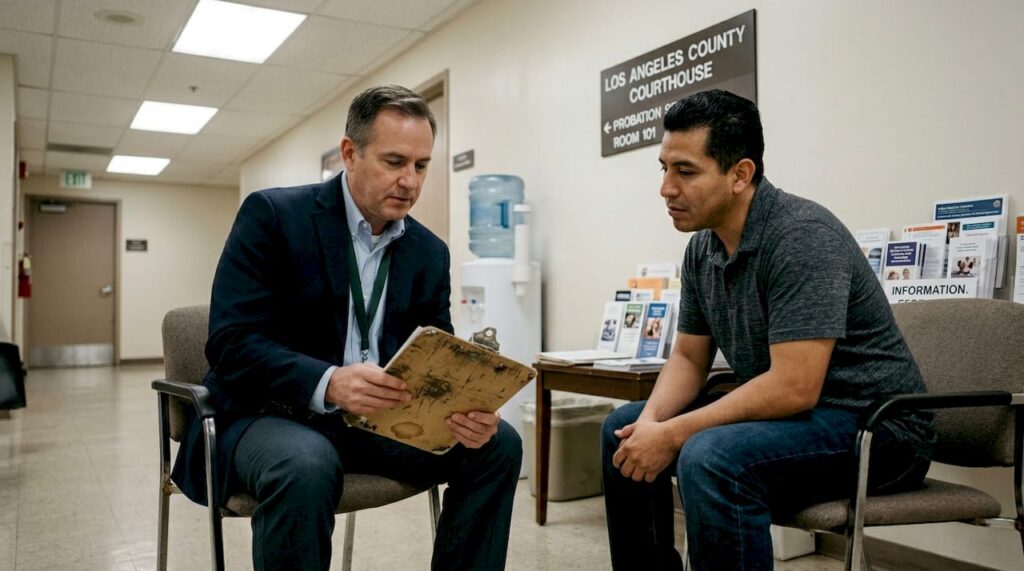
When legal issues intersect with addiction or mental health challenges, understanding court-approved programs becomes essential. These programs offer a structured path to recovery while satisfying judicial requirements in Los Angeles County. Whether you’re facing a court mandate or exploring voluntary treatment options with legal oversight, knowing how these programs work, what they require, and how to access them can significantly impact both your legal standing and your journey toward wellness. This guide clarifies the essentials so you can make informed decisions.
Table of Contents
- Key takeaways
- What are court-approved programs? Defining the basics
- Types of court-approved programs in Los Angeles County
- How to determine if a program is court-approved and what standards it must meet
- Accessing court-approved programs in Los Angeles County: What you need to know
- Explore court-approved treatment options at Glendora Recovery Center
- Frequently asked questions
Key Takeaways
| Point | Details |
|---|---|
| Court approved programs | They are verified by courts to meet addiction and mental health treatment standards in Los Angeles County. |
| Legal oversight | Participation can be mandated or supervised with documented progress tied to court requirements. |
| Verify before enrolling | Always obtain written confirmation that a program is court approved to prevent compliance issues. |
| Program types | LA County courts use inpatient detox, outpatient therapy, and mental health counseling to match treatment intensity with case goals. |
What are court-approved programs? Defining the basics
Court-approved programs are specifically verified by the judicial system to meet standards for addiction and mental health treatment in LA County. These programs receive official recognition from courts, probation departments, or related legal entities, ensuring they deliver appropriate care while maintaining accountability to the justice system. Unlike general treatment programs, court-approved options undergo scrutiny to confirm they meet specific criteria for supervision, reporting, and therapeutic effectiveness.
The legal significance of court approval extends beyond simple certification. When a judge orders treatment as part of sentencing, probation conditions, or alternative sentencing arrangements, the program must provide documented evidence of your participation and progress. This creates a direct link between your recovery efforts and your legal obligations, making program selection a critical decision that affects both your health outcomes and your standing with the court.
Typical users of these programs include individuals facing charges related to substance abuse, those offered treatment instead of incarceration, people on probation requiring ongoing support, and parents involved in dependency court cases. The common thread is a legal mandate or strong judicial recommendation to participate in structured treatment that courts can monitor and verify.
Court-approved programs bridge the gap between the justice system and healthcare, offering a pathway to address underlying issues while fulfilling legal requirements.
Eligibility typically stems from court orders or referrals from judges, probation officers, or court-appointed attorneys. Programs demonstrate compliance through regular reporting mechanisms, attendance verification, progress updates to probation officers, and completion certificates recognized by the court. This documentation creates accountability that protects both you and the legal system, ensuring treatment goals align with judicial expectations.
Pro Tip: Always request written confirmation that your chosen program is court-approved before enrolling. This simple step prevents complications if the court later questions your compliance.
Now that you know the basics, let’s look deeper into the types and variety of court-approved programs available.
Types of court-approved programs in Los Angeles County
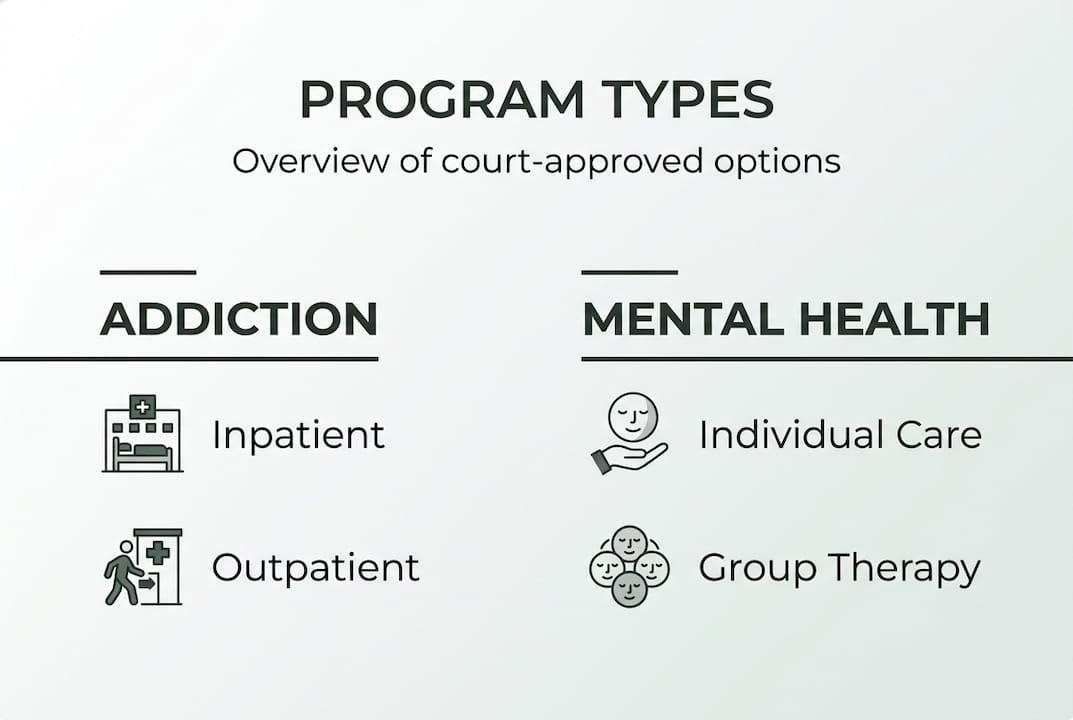
Court-approved programs include diverse treatment modalities like inpatient detox, outpatient therapy, and mental health counseling to accommodate individual needs. The variety ensures that courts can match program intensity to the severity of your situation, your risk level, and the specific goals outlined in your legal case. Understanding these distinctions helps you recognize which option aligns with both your recovery needs and judicial requirements.
Inpatient programs provide 24-hour supervised care in a residential setting, typically lasting 30 to 90 days or longer. These intensive environments work best for severe addictions, co-occurring mental health disorders, or situations where removing yourself from negative influences is essential. Courts often mandate inpatient treatment when public safety concerns exist or when previous outpatient attempts have failed.

Outpatient programs allow you to live at home while attending scheduled treatment sessions several times per week. Standard outpatient programs typically involve 6 to 10 hours of therapy weekly, while intensive outpatient programs (IOP) require 9 to 20 hours spread across multiple days. This flexibility supports people maintaining employment, family responsibilities, or educational commitments while meeting court obligations.
| Program Type | Time Commitment | Living Situation | Best For |
|---|---|---|---|
| Inpatient Rehab | 24/7 for 30-90+ days | Residential facility | Severe addiction, safety concerns, failed outpatient |
| Intensive Outpatient (IOP) | 9-20 hours/week | Home | Moderate addiction, need flexibility, strong support system |
| Standard Outpatient | 6-10 hours/week | Home | Mild to moderate issues, stable environment, maintenance |
| Mental Health Services | Varies by need | Home | Co-occurring disorders, court-mandated counseling |
Mental health court-approved options specifically address psychological conditions that may contribute to legal issues. These include individual therapy, group counseling, psychiatric medication management, and specialized programs for trauma, anger management, or domestic violence intervention. Many courts recognize that addressing mental health creates better outcomes than punishment alone, especially when conditions like depression, anxiety, or PTSD drive problematic behaviors.
Program duration and intensity vary based on judicial requirements and clinical assessments. Some courts specify minimum participation periods, such as 90 days of outpatient counseling or completion of a full inpatient program. Others tie completion to clinical milestones like sustained sobriety, medication stability, or demonstrated coping skills. The key is ensuring your chosen program can document progress in ways the court recognizes and values.
Pro Tip: If you have both addiction and mental health needs, seek programs offering integrated dual diagnosis treatment. Courts increasingly recognize that treating co-occurring disorders together produces better compliance and recovery outcomes.
Understanding these types helps you recognize which program might best fit your situation.
How to determine if a program is court-approved and what standards it must meet
Verifying court approval status protects you from enrolling in programs that won’t satisfy your legal obligations. Programs must meet judicial standards and often undergo a rigorous approval process involving documentation and compliance reviews. This verification process ensures treatment quality while confirming the program can provide the reporting and accountability courts require.
To confirm court approval, follow these verification steps:
- Contact your probation officer or court liaison to request the official list of approved programs for your jurisdiction
- Ask the treatment provider directly for their court approval documentation, including certification numbers or official letters
- Verify with the Los Angeles County Superior Court or relevant court division that the program appears on their approved provider list
- Request references from the program showing successful completion reports submitted to courts for previous clients
- Confirm the program offers the specific services your court order requires, such as drug testing, progress reports, or attendance verification
Key quality and compliance standards for court approval typically include licensed clinical staff with appropriate credentials, evidence-based treatment approaches recognized by medical and legal communities, secure systems for maintaining confidential client records, established protocols for reporting to courts and probation departments, and regular audits or reviews by regulatory agencies. Programs must also maintain liability insurance and meet facility safety standards.
The role of monitoring and reporting creates the accountability framework courts depend on. Approved programs typically provide weekly or monthly progress reports to probation officers, immediate notification if you miss sessions or violate program rules, attendance verification through sign-in sheets or electronic tracking, drug testing results when required, and formal completion certificates or progress summaries for court hearings. This documentation becomes part of your legal record, influencing decisions about probation terms, sentencing modifications, or case dismissals.
Why choosing approved programs protects your legal standing cannot be overstated. Enrolling in a non-approved program, even if clinically excellent, may not satisfy your court mandate. This can result in violation proceedings, extended probation, additional penalties, or loss of alternative sentencing benefits. Courts view compliance with approved programs as evidence of good faith effort and commitment to change, factors that significantly influence judicial decisions about your case.
Pro Tip: Keep your own records of attendance, session dates, and any certificates or progress reports you receive. If administrative errors occur, having personal documentation helps resolve disputes quickly.
Now that you know how approval works, let’s explore practical steps to access these programs in Los Angeles County.
Accessing court-approved programs in Los Angeles County: What you need to know
Court-ordered rehab and related programs in LA County often involve coordination between courts, probation officers, and approved treatment centers. Understanding this process helps you navigate enrollment efficiently while ensuring you meet all legal requirements. The pathway to accessing these programs varies depending on whether your participation is mandated or voluntary with court oversight.
Court orders or referrals typically initiate program access through several mechanisms. A judge may order treatment as a condition of probation, as part of a plea agreement, through drug court or mental health court diversion programs, or as an alternative to incarceration. Your defense attorney usually plays a crucial role in negotiating these arrangements, presenting treatment as a constructive alternative that addresses root causes while protecting public safety.
The role of treatment centers and legal representatives involves collaboration to ensure smooth enrollment and compliance. Treatment centers communicate directly with probation officers to confirm acceptance, provide intake assessments that inform treatment planning, submit required progress reports on established schedules, and notify courts immediately of any compliance issues. Your attorney may help identify appropriate programs, facilitate communication between you and the court, advocate for program modifications if clinical needs change, and represent you at review hearings where program progress is discussed.
Important documentation and timelines you should understand include:
- Court orders specifying program requirements, duration, and reporting expectations
- Intake assessment results that establish your baseline and treatment goals
- Signed consent forms allowing the program to share information with courts and probation
- Proof of enrollment to be filed with the court within specified timeframes, often 7 to 14 days
- Regular progress reports submitted monthly or as ordered by the court
- Completion certificates or status updates for probation review hearings
Timelines matter significantly in court-approved treatment. Missing enrollment deadlines can trigger violation proceedings before treatment even begins. Most courts expect you to contact approved programs within days of the order, complete intake assessments within one to two weeks, and begin active participation immediately upon acceptance. Delays require explanation and often court approval to avoid compliance issues.
| Step | Typical Timeline | Key Action |
|---|---|---|
| Receive court order | Day 1 | Review requirements with attorney |
| Contact programs | Within 3-5 days | Request intake appointments |
| Complete intake assessment | Within 7-14 days | Provide honest information for treatment planning |
| Begin participation | Within 14-21 days | Attend all scheduled sessions |
| First progress report | 30 days after start | Ensure probation officer receives documentation |
Examples of local LA County programs include facilities specializing in court-approved rehab that offer multiple levels of care, mental health programs certified for court referrals, gender-specific treatment options for women or men with legal mandates, and youth programs for minors involved in juvenile court cases. Glendora Recovery Center, for instance, provides comprehensive court-approved services including partial hospitalization, intensive outpatient programs, and outpatient mental health services designed to meet diverse judicial requirements while delivering individualized care.
With this knowledge, you can confidently navigate the process to enroll in a court-approved program aligned with your legal and recovery needs.
Explore court-approved treatment options at Glendora Recovery Center
Glendora Recovery Center specializes in court-approved programs that meet Los Angeles County judicial standards while providing compassionate, individualized care. Our facility offers multiple addiction treatment options including inpatient services, intensive outpatient programs, and flexible scheduling to accommodate your legal obligations and personal responsibilities. We understand the unique challenges of navigating both recovery and the legal system, which is why our experienced staff coordinates directly with courts and probation officers to ensure seamless compliance reporting.
Our outpatient mental health services address co-occurring disorders that often accompany addiction, providing integrated treatment that courts increasingly recognize as essential for lasting change. With morning, evening, weekend, and telehealth options, we make it possible to fulfill court mandates while maintaining employment and family commitments. Having a trusted provider like Glendora Recovery Center can make all the difference in your court-approved program journey.
Frequently asked questions
What types of court-approved programs are available for addiction recovery?
Court-approved addiction recovery programs in Los Angeles County include inpatient residential treatment, intensive outpatient programs, standard outpatient counseling, and medication-assisted treatment options. Programs vary based on addiction severity, with courts matching intensity to individual risk levels and case requirements. Some facilities offer specialized tracks for specific substances like alcohol, opioids, or stimulants, while others provide comprehensive treatment addressing multiple substance use patterns.
Can mental health treatment programs be court-approved in Los Angeles County?
Yes, mental health treatment programs can receive court approval in Los Angeles County, especially for cases involving co-occurring disorders or mental health conditions contributing to legal issues. Courts recognize that addressing underlying psychological conditions like depression, anxiety, PTSD, or bipolar disorder often prevents future legal problems more effectively than punishment alone. These programs frequently appear as conditions of probation, components of mental health court diversion, or requirements in dependency cases where parental mental health affects child welfare.
How can I verify if a program is officially court-approved?
You can verify court approval by contacting your probation officer or the court clerk for the official approved provider list, requesting written documentation directly from the treatment program showing their certification status, and checking with the Los Angeles County Superior Court website for published lists of recognized programs. Always ask programs for their court approval credentials and confirm they can provide the specific reporting your court order requires. Documentation should include certification numbers, approval dates, and confirmation that the program meets current standards.
What happens if someone does not comply with a court-approved program mandate?
Non-compliance with court-approved program mandates can result in probation violations, additional criminal charges, revocation of alternative sentencing benefits, or imposition of originally suspended jail or prison sentences. Courts view program compliance as a measure of your commitment to change and willingness to follow court orders. Even minor violations like missed sessions or late arrivals can trigger legal consequences if not properly explained and addressed. Immediate communication with your probation officer and attorney when compliance issues arise often prevents escalation, allowing you to remedy problems before formal violation proceedings begin.