Choosing the right addiction recovery path often means weighing the benefits of residential care against those of outpatient care. For many Los Angeles County families, understanding these options can feel overwhelming as both approaches shape daily routines, personal responsibilities, and long-term healing. Whether you need round-the-clock structure or flexible treatment that fits your schedule, knowing the core differences helps clarify which path offers the best support for your journey to lasting recovery.
Table of Contents
- Defining Residential and Outpatient Care
- Types of Programs and Key Features
- Treatment Processes and Daily Structure
- Who Benefits Most From Each Option
- Cost, Flexibility, and Insurance Coverage
- Common Misunderstandings and Mistakes
Key Takeaways
| Point | Details |
|---|---|
| Treatment Model Differences | Residential care provides 24/7 support, while outpatient care allows individuals to maintain their daily routines. |
| Program Suitability | Residential treatment is best for severe addiction cases, while outpatient care suits those with moderate addiction and strong support systems. |
| Cost Considerations | Residential programs are significantly more expensive, with costs ranging from $20,000 to $60,000, whereas outpatient care is more accessible, costing between $1,000 and $10,000. |
| Individual Commitment | Success in both treatment models relies on the individual’s commitment and personalized support, emphasizing the importance of choosing the right program based on specific needs. |
Defining Residential and Outpatient Care
When seeking addiction treatment, individuals often encounter two primary care models: residential and outpatient programs. These approaches differ significantly in structure, intensity, and engagement with daily life. Outpatient services represent treatment options where individuals receive care without overnight hospitalization, allowing them to maintain their regular work and home routines.
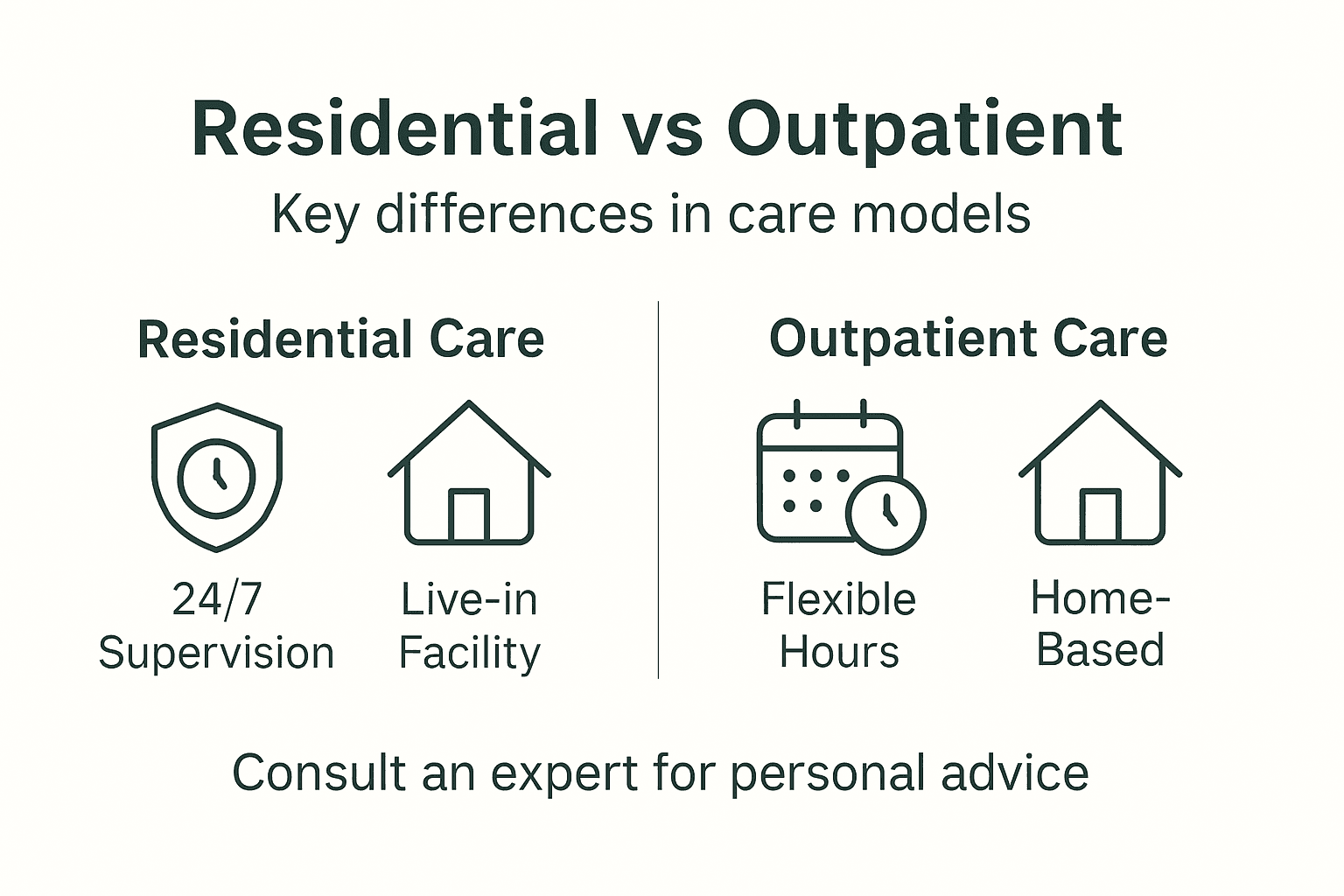
Residential care involves 24/7 treatment at a specialized facility where patients live during their recovery process. This immersive approach provides comprehensive support, removing individuals from potential environmental triggers and offering constant medical supervision. Unlike outpatient programs, residential treatment requires patients to temporarily step away from their regular lives, focusing entirely on healing and rehabilitation.
The core distinction between these treatment models lies in their level of intervention and patient commitment. Outpatient care allows for greater flexibility, typically involving scheduled therapy sessions, group meetings, and medical consultations while patients continue living at home. Residential programs, conversely, provide a structured environment with round-the-clock care, intensive therapy, and a complete separation from potential substance abuse contexts.
Here’s a side-by-side summary of key differences between residential and outpatient addiction treatment models:
| Aspect | Residential Care | Outpatient Care |
|---|---|---|
| Living Arrangement | Patient resides at facility | Patient lives at home |
| Intensity | High—24/7 supervision | Varies—scheduled sessions |
| Daily Structure | Highly scheduled, immersive | Flexible, fits personal routines |
| Separation from Triggers | Complete removal from environment | Remains exposed to daily environment |
| Typical Candidates | Severe addiction, complex cases | Moderate addiction, stable support |
Pro tip: When choosing between residential and outpatient care, consider your personal circumstances, severity of addiction, support system, and professional obligations to determine the most suitable treatment approach.
Types of Programs and Key Features
Addiction treatment encompasses various program models designed to address individual recovery needs. Healthcare facilities offer distinct treatment approaches ranging from intensive residential programs to flexible outpatient services. Each model provides unique characteristics tailored to different stages of addiction recovery and personal circumstances.
Residential treatment programs typically include several specialized formats. Inpatient Rehabilitation involves 24/7 medical supervision and structured therapeutic environments where patients live at the treatment facility. Long-Term Residential Treatment offers extended care spanning several months, providing comprehensive psychological and medical support. Short-Term Intensive Programs deliver concentrated treatment over weeks, focusing on stabilization and initial recovery strategies.
Outpatient programs similarly present diverse options for individuals seeking addiction treatment. Partial Hospitalization Programs (PHP) provide structured daytime treatment while allowing patients to return home in the evenings. Intensive Outpatient Programs (IOP) offer multiple weekly therapy sessions with greater flexibility, enabling participants to maintain work and family responsibilities. Standard Outpatient Treatment involves less frequent counseling sessions, ideal for individuals with mild addiction or those transitioning from more intensive care models.
Pro tip: Consult addiction treatment professionals to conduct a comprehensive personal assessment, which will help determine the most appropriate program type based on your specific addiction history, mental health status, and life circumstances.
Treatment Processes and Daily Structure
Addiction recovery involves carefully structured treatment approaches designed to support comprehensive healing and personal transformation. Residential treatment programs establish detailed daily schedules that address psychological, physical, and emotional rehabilitation through systematic interventions and supportive routines.
In residential treatment settings, daily structures typically include multiple therapeutic components. Mornings often begin with group meditation or wellness activities, followed by individual counseling sessions targeting personal recovery goals. Cognitive Behavioral Therapy (CBT) and group therapy sessions are strategically scheduled to help patients develop coping mechanisms, understand addiction triggers, and build resilience. Afternoons might incorporate specialized workshops on stress management, life skills training, and relapse prevention strategies.

Outpatient programs maintain similar structured approaches but with greater flexibility. These programs integrate treatment sessions around patients’ existing work and family commitments. Participants typically engage in weekly individual counseling, group therapy sessions, and skill-building workshops. Some programs offer evening and weekend sessions to accommodate diverse schedules, ensuring consistent support while allowing individuals to maintain their daily responsibilities and social connections.
Pro tip: Request a detailed daily schedule from your treatment center in advance, and prepare mentally by visualizing yourself participating in each recommended activity to reduce anxiety and increase treatment engagement.
Who Benefits Most From Each Option
Addiction treatment is not a one-size-fits-all approach, and individuals have unique needs that determine the most appropriate recovery pathway. Residential care communities demonstrate that personalized treatment models can significantly impact recovery success by matching specific individual requirements with targeted intervention strategies.
Residential treatment is typically most beneficial for individuals experiencing severe addiction, those with complex medical histories, or people struggling with multiple substance dependencies. Ideal candidates include patients who have experienced repeated treatment failures, individuals with unstable home environments, those battling co-occurring mental health disorders, and individuals requiring intensive medical supervision. The immersive nature of residential programs provides comprehensive support for individuals who need complete separation from potential triggers and require structured, round-the-clock care and intervention.
Outpatient programs offer optimal solutions for individuals with moderate addiction levels, strong support systems, and stable living environments. These programs work exceptionally well for working professionals, students, parents with childcare responsibilities, and those with less severe addiction patterns. Participants must demonstrate personal motivation, have reliable transportation, maintain consistent employment or educational commitments, and possess a supportive home environment that encourages recovery. Intensive outpatient programs particularly benefit individuals transitioning from residential treatment or those seeking to maintain their daily responsibilities while receiving structured therapeutic support.
Pro tip: Conduct an honest self-assessment of your addiction severity, support network, and personal responsibilities before selecting a treatment program, and consult addiction specialists to validate your treatment approach.
Cost, Flexibility, and Insurance Coverage
Navigating addiction treatment involves understanding complex financial considerations and insurance dynamics. Outpatient services offer significantly more cost-effective and flexible options compared to residential programs, with substantial variations in pricing and insurance coverage that can dramatically impact treatment accessibility.
Residential treatment programs typically represent the most expensive option, often costing between $20,000 to $60,000 for a 30-day program. These comprehensive programs require full-time medical supervision, specialized facilities, and intensive therapeutic interventions, which contribute to higher costs. Insurance coverage for residential treatment varies widely, with many private insurance plans covering a percentage of the total expenses, while government-sponsored programs like Medicaid may offer more limited support depending on specific state regulations and individual circumstances.
Outpatient programs provide a more financially accessible alternative, with costs ranging from $1,000 to $10,000 for complete treatment cycles. Intensive Outpatient Programs (IOPs) and standard outpatient treatments offer more flexible payment structures, often allowing patients to maintain employment and utilize health savings accounts or flexible spending arrangements. Most insurance providers offer more comprehensive coverage for outpatient services, recognizing them as a cost-effective approach to addiction treatment that reduces long-term healthcare expenses and supports sustained recovery.
This table provides a concise comparison of cost, flexibility, and insurance coverage for both treatment options:
| Factor | Residential Programs | Outpatient Programs |
|---|---|---|
| Typical Cost | $20,000–$60,000 per 30 days | $1,000–$10,000 per treatment cycle |
| Flexibility | Limited—full time commitment | High—can maintain employment |
| Insurance | Partial/private plans, Medicaid varies | Broader coverage, often more accessible |
Pro tip: Contact your insurance provider directly to obtain a detailed breakdown of addiction treatment coverage, and request a comprehensive cost comparison between residential and outpatient programs specific to your individual plan.
Common Misunderstandings and Mistakes
Addiction treatment often involves complex misconceptions that can significantly impact an individual’s recovery journey. Outpatient care safety requires careful navigation, with many individuals misunderstanding the nuanced differences between treatment approaches and their respective effectiveness.
One prevalent misunderstanding is the belief that residential treatment guarantees complete recovery, while outpatient programs are less serious or effective. In reality, successful recovery depends on individual commitment, personalized treatment strategies, and comprehensive support systems. Many people mistakenly view residential programs as a magic solution, overlooking the importance of ongoing therapy, personal accountability, and post-treatment support. Conversely, some individuals underestimate outpatient programs, failing to recognize their structured approach and ability to provide intensive treatment while maintaining daily life responsibilities.
Another critical mistake involves treatment selection based solely on cost or convenience. Patients often choose a program without thoroughly assessing their specific needs, addiction severity, mental health conditions, and personal circumstances. This can lead to ineffective treatment, repeated recovery attempts, and potential relapse. Communication barriers also play a significant role, with individuals hesitating to share complete medical histories or struggling to articulate their specific challenges, which can compromise the effectiveness of their chosen treatment approach.
Pro tip: Schedule comprehensive consultations with addiction specialists who can provide objective, personalized assessments of your treatment needs, helping you make an informed decision that aligns with your unique recovery journey.
Find the Right Treatment Path for Your Recovery Journey
Choosing between residential and outpatient care can feel overwhelming when facing addiction recovery. This article highlights the importance of matching your personal needs and circumstances with the right treatment intensity and structure. If you are dealing with severe addiction or complex challenges, a structured program with intensive support may be essential. Meanwhile, if you have a stable home environment and responsibilities that require flexibility, outpatient options like Partial Hospitalization Programs or Intensive Outpatient Programs could be the best fit.
At Glendora Recovery Center, we understand these critical differences and are here to guide you toward the most effective treatment plan. Our compassionate team offers tailored programs that respect your unique situation and goals. Whether you need flexible scheduling with morning, evening, weekend, or online sessions or require specialized care for co-occurring disorders, we provide a supportive environment to foster lasting change.
Take the next step toward reclaiming your life. Connect with our experts today by visiting Contact Us to schedule a personalized assessment. Discover how our Partial Hospitalization Programs and Intensive Outpatient Programs can fit your recovery needs. Do not wait to find the treatment program that truly fits your life and helps you build a strong foundation for success.
Frequently Asked Questions
What is the main difference between residential and outpatient care for addiction treatment?
The primary distinction between residential and outpatient care lies in the living arrangement and level of supervision. Residential care requires patients to live at a treatment facility and receive 24/7 support, while outpatient care allows individuals to receive treatment without overnight stays, fitting sessions into their daily lives.
Who benefits most from residential treatment programs?
Residential treatment is ideal for individuals with severe addiction, complex medical histories, or those who have faced multiple treatment failures. It provides a structured environment with intensive support, making it suitable for those needing complete separation from potential triggers.
How do outpatient programs accommodate daily responsibilities?
Outpatient programs offer flexible scheduling that allows individuals to attend therapy sessions and group meetings while maintaining their work, family, and social responsibilities. This flexibility contributes to their appeal for individuals with moderate addiction levels and stable support systems.
What should I consider when choosing between residential and outpatient care?
When deciding between residential and outpatient care, consider your addiction severity, support network, personal responsibilities, and professional commitments. Consulting with addiction specialists can also help evaluate your needs and recommend the appropriate treatment option.
Recommended
- Why Choose Outpatient Rehab: Complete Guide | Glendora Recovery Center
- 7 Key Advantages of Outpatient Programs for Recovery | Glendora Recovery Center
- Outpatient Treatment Explained: Key Benefits and Success | Glendora Recovery Center
- Outpatient Rehab Programs: Complete Guide for 2025 | Glendora Recovery Center