
A polished career, strong relationships, and daily routines might seem to reflect control, yet high functioning alcoholism often hides beneath the surface. For many adults in Los Angeles County, this invisible struggle carries serious risks despite outward success. Recognizing the reality of an alcohol use disorder can make all the difference, offering pathways to evidence-based recovery and healthier, more fulfilling lives. High functioning alcoholism is not just about maintaining appearances but confronting hidden challenges with the right support.
Table of Contents
- Defining High Functioning Alcoholism Clearly
- Key Signs And Behaviors To Recognize
- Common Misconceptions And Variations
- Risks To Health, Relationships, And Safety
- Recovery Options And Support Resources
Key Takeaways
| Point | Details |
|---|---|
| High Functioning Alcoholism is Complex | Individuals maintain responsibilities while struggling with alcohol dependence, often masking their addiction. |
| Recognize Key Behaviors | Signs include drinking to cope with stress, memory lapses, and relationship issues, which necessitate careful observation. |
| Health Risks Are Significant | Chronic excessive drinking can lead to severe health, relationship, and safety risks that may not be immediately apparent. |
| Personalized Recovery Is Essential | A tailored approach including therapy, support groups, and professional resources is crucial for effective recovery from high functioning alcoholism. |
Defining High Functioning Alcoholism Clearly
High functioning alcoholism represents a complex and often misunderstood form of alcohol use disorder where individuals successfully maintain external responsibilities while struggling with internal alcohol dependence. Alcohol use disorders manifest differently across individuals, with high functioning alcoholics demonstrating remarkable ability to mask their addiction.
These individuals typically present several distinctive characteristics that distinguish them from stereotypical alcohol addiction narratives:
- Maintaining stable employment
- Preserving professional reputation
- Meeting family obligations
- Appearing successful externally
- Hiding problematic drinking patterns
Contrary to common misconceptions, high functioning alcoholics experience genuine psychological and physiological addiction. They often rationalize their drinking through elaborate justifications, believing their ability to manage daily responsibilities proves their alcohol consumption is under control. This denial mechanism allows them to continue destructive drinking patterns while maintaining an appearance of normalcy.
Psychological markers of high functioning alcoholism include persistent preoccupation with alcohol, experiencing withdrawal symptoms, and developing increasing alcohol tolerance. These individuals might drink substantial quantities without exhibiting obvious impairment, creating a dangerous illusion of control.
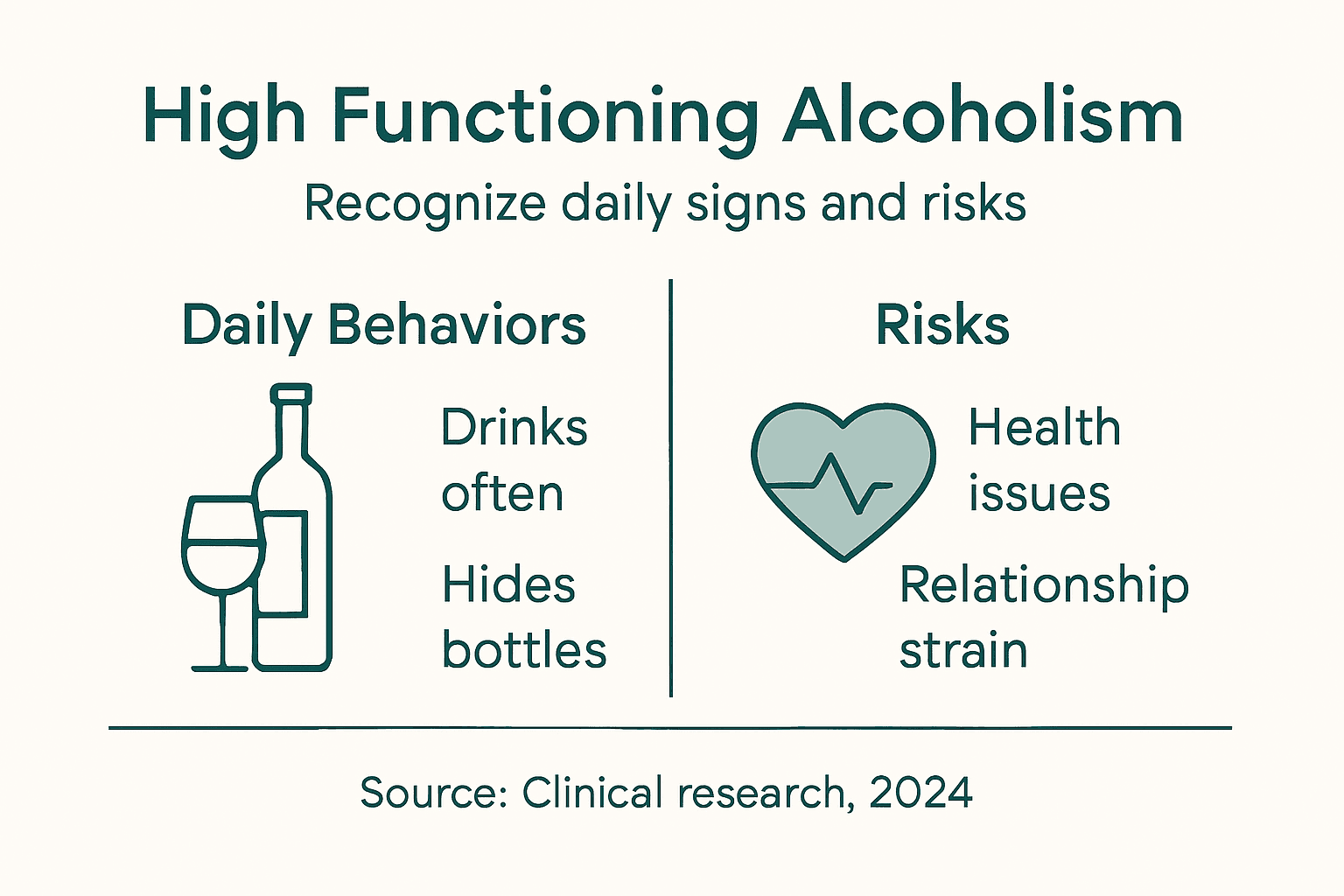
To better understand high functioning alcoholism, here is a comparison of typical traits versus traditional alcoholism:
| Aspect | High Functioning Alcoholism | Traditional Alcoholism |
|---|---|---|
| Occupational Stability | Often maintains stable employment | Frequently experiences job loss |
| Social Perception | Appears successful and competent | Often seen as impaired or unreliable |
| Drinking Patterns | Tends to conceal or compartmentalize use | Drinking tends to be more visible |
| Coping Strategies | Relies on rationalizations and denial | May show obvious coping struggles |
High functioning alcoholics are not immune to addiction’s consequences – they are simply more adept at concealing them.
Pro tip: If you recognize these patterns in yourself or a loved one, seeking professional assessment can provide critical early intervention strategies.
Key Signs And Behaviors To Recognize
Identifying a high functioning alcoholic requires careful observation of subtle yet significant behavioral patterns. Alcohol use disorders manifest through complex psychological and behavioral indicators that often remain hidden behind a veneer of professional success and personal competence.
Key behavioral signs include:
- Drinking to relieve stress or emotional discomfort
- Experiencing memory lapses or blackouts
- Becoming defensive when questioned about alcohol consumption
- Maintaining a high alcohol tolerance
- Drinking alone or in secret
- Experiencing relationship or work problems due to drinking
- Using alcohol as a primary coping mechanism
High functioning alcoholics frequently demonstrate remarkable compartmentalization, effectively separating their drinking habits from their professional and social personas. They might excel in career performance while simultaneously struggling with increasing alcohol dependency, creating a complex psychological landscape of apparent success and internal struggle.
Emotional and psychological indicators are particularly revealing. These individuals often experience persistent anxiety, mood swings, and a growing sense of isolation, despite maintaining external appearances of stability. They might rationalize excessive drinking as a reward, stress management technique, or social necessity.
Addiction does not discriminate – success and functionality cannot shield someone from its destructive potential.
Pro tip: Track patterns of alcohol consumption and emotional responses to identify potential warning signs before they escalate into more serious dependency.
Common Misconceptions And Variations
Understanding high functioning alcoholism requires challenging several deeply ingrained societal misconceptions. High functioning alcoholics represent a complex subtype of alcohol use disorder that defies traditional stereotypes about addiction, comprising nearly 20% of alcoholics in the United States.
Common misconceptions about high functioning alcoholism include:
- Believing alcoholics always lose their jobs
- Assuming alcoholics look visibly impaired
- Thinking successful people cannot be alcoholics
- Expecting alcoholics to drink continuously throughout the day
- Believing high functioning alcoholics do not need treatment
- Assuming addiction only affects certain socioeconomic groups
Contrary to popular belief, high functioning alcoholics maintain intricate survival mechanisms that allow them to navigate professional and personal responsibilities while struggling with significant alcohol dependency. These individuals often develop sophisticated coping strategies that mask their underlying addiction, making detection and intervention challenging.
Psychological variations within high functioning alcoholism reveal nuanced patterns of behavior. Some individuals might binge drink exclusively on weekends, while others consume alcohol steadily throughout the day without apparent impairment. These variations demonstrate the complex nature of alcohol use disorders and the importance of personalized assessment and treatment approaches.
Not all addictions look the same – functionality does not equal health.
Pro tip: Recognize that addiction exists on a spectrum and seek professional guidance if you suspect problematic drinking patterns, regardless of external success.
Risks To Health, Relationships, And Safety
High functioning alcoholism poses significant hidden dangers that extend far beyond immediate perception. Chronic excessive drinking creates complex, long-term health risks that can devastate personal and professional landscapes.
Key health risks include:
- Increased likelihood of liver disease
- Higher risk of heart complications
- Elevated cancer development potential
- Compromised immune system function
- Progressive neurological damage
- Potential mental health deterioration
- Cognitive decline and memory loss
Beyond physical health, high functioning alcoholics frequently experience profound relational challenges. Their addiction creates invisible emotional barriers, eroding trust and intimacy with partners, family members, and close friends. Professional relationships also suffer, with potential career derailment occurring through subtle performance degradation, reduced reliability, and unpredictable behavioral patterns.
Safety implications are particularly alarming. Individuals might engage in risky behaviors like drunk driving, experience increased accident vulnerability, and demonstrate impaired judgment in critical personal and professional scenarios. The persistent alcohol consumption gradually undermines decision-making capabilities, creating potentially dangerous situations that remain unrecognized until significant damage occurs.
Functionality masks risk – addiction does not discriminate based on external success.
Pro tip: Conduct regular self-assessments and seek professional intervention at the first sign of problematic drinking patterns.

Recovery Options And Support Resources
Recovery from high functioning alcoholism requires a comprehensive, personalized approach that addresses the complex psychological and physiological aspects of alcohol use disorder. Evidence-based treatment strategies recognize that each individual’s journey to sobriety demands tailored interventions.
Key recovery resources and treatment options include:
- Individual psychotherapy
- Group counseling sessions
- Medication-assisted treatment
- Cognitive behavioral therapy
- Intensive outpatient programs
- 12-step support groups
- Family counseling and education
- Relapse prevention strategies
Professional treatment programs offer structured environments that help high functioning alcoholics transition from denial to active recovery. These programs understand the unique challenges faced by individuals who have maintained external success while battling internal addiction, providing nuanced support that addresses both professional and personal aspects of rehabilitation.
Here is a summary of recovery approaches and their primary focus:
| Recovery Approach | Main Focus | Typical Benefits |
|---|---|---|
| Individual Therapy | Address personal triggers | Improved self-awareness |
| Group Counseling | Peer support and sharing | Encourages accountability |
| Medication-Assisted Treatment | Manage withdrawal symptoms | Reduces cravings |
| Family Counseling | Repair relationships | Strengthens support system |
Support networks play a critical role in sustained recovery. Mutual support groups like Alcoholics Anonymous create safe spaces for sharing experiences, developing coping mechanisms, and building accountability. These communities offer understanding without judgment, recognizing that addiction transcends professional achievements or social status.
Recovery is not about perfection, but progressive improvement and compassionate self-understanding.
Pro tip: Seek professional assessment to develop a personalized recovery plan that addresses your specific psychological and physiological needs.
Take Steps Toward Healing from High Functioning Alcoholism Today
Living with high functioning alcoholism means battling internal struggles while maintaining daily responsibilities. You might be experiencing denial, secrecy, or emotional isolation even as you appear successful to the outside world. At Glendora Recovery Center, we understand these unique challenges and offer personalized treatment options such as Partial Hospitalization Programs and Intensive Outpatient Programs designed to help you regain control without disrupting your life.
Don’t wait until hidden risks damage your health, relationships, or sense of safety. Start your recovery journey now by reaching out for a professional assessment. Discover compassionate care tailored to your needs at Glendora Recovery Center. Learn more about our comprehensive approach and flexible scheduling to find support that fits your lifestyle. Take the first step toward lasting healing by contacting us today at Contact Us.
Frequently Asked Questions
What is high functioning alcoholism?
High functioning alcoholism is a form of alcohol use disorder where individuals successfully manage their responsibilities while struggling with alcohol dependence, often masking their addiction behind a façade of success.
How can I identify a high functioning alcoholic?
Key signs include drinking to relieve stress, experiencing memory lapses, becoming defensive about drinking habits, and maintaining a high alcohol tolerance while struggling internally with dependency.
What are the risks associated with high functioning alcoholism?
Risks include serious health issues like liver disease and heart complications, relationship problems, compromised safety due to impaired judgment, and gradual cognitive decline.
What recovery options are available for high functioning alcoholics?
Recovery options include individual therapy, group counseling, medication-assisted treatment, and support groups like Alcoholics Anonymous, all designed to address the unique challenges of high functioning alcoholics.