
Choosing between inpatient and outpatient treatment can feel overwhelming when facing addiction or mental health challenges in Los Angeles County. Deciding how much support and structure you need is a personal process, yet understanding these two treatment paths is the first step to making an informed choice. By breaking down the key differences in daily structure, supervision, and flexibility, this guide helps you find the recovery approach that fits your life and needs best.
Table of Contents
- Defining Inpatient and Outpatient Treatment
- Levels of Care and Daily Structure
- Typical Patient Experiences and Expectations
- Comparing Costs and Insurance Coverage
- How to Choose the Right Program
Key Takeaways
| Point | Details |
|---|---|
| Inpatient Treatment | Provides 24/7 medical supervision and structured care for individuals with severe substance use disorders. |
| Outpatient Treatment | Offers flexible scheduling to allow individuals to maintain daily responsibilities while receiving professional support. |
| Cost Differences | Inpatient care is significantly more expensive, while outpatient programs generally present lower financial burdens. |
| Choosing the Right Program | Personal assessment of addiction severity, financial resources, and support systems is critical for selecting the most appropriate treatment approach. |
Defining Inpatient and Outpatient Treatment
Addiction recovery offers multiple treatment paths, but understanding the fundamental differences between inpatient and outpatient care is crucial for making informed decisions. Continuous medical treatment approaches vary significantly in structure, intensity, and patient requirements.
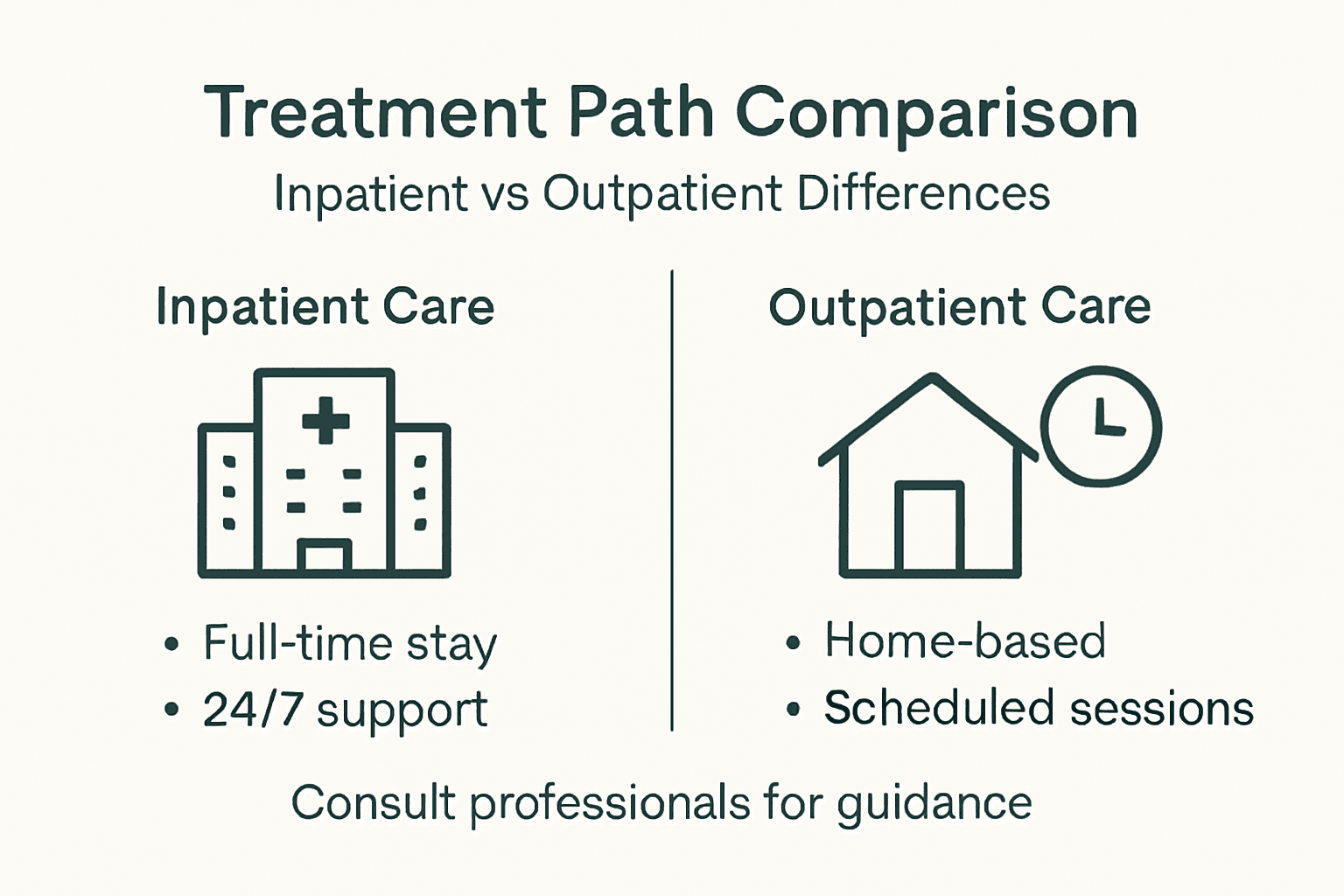
Inpatient treatment represents a comprehensive recovery approach where individuals reside full-time within a specialized medical facility. This immersive environment provides 24/7 medical supervision, structured therapy sessions, and a controlled setting designed to support comprehensive healing. Patients receive round-the-clock care, removing them from potential triggers and enabling intense, focused treatment for severe substance use disorders.
Conversely, outpatient treatment offers a more flexible recovery model that allows individuals to maintain their daily responsibilities while receiving professional support. Key characteristics of outpatient programs include:
- Scheduled therapy sessions during daytime or evening hours
- Ability to live at home and continue work/school
- Lower cost compared to residential treatment
- Gradual integration of recovery skills into real-world environments
- Varying program intensities from minimal contact to structured daily treatments
Treatment Intensity Spectrum
Outpatient programs range from minimal intervention to highly structured approaches. Ambulatory care models can include:
- Standard outpatient counseling (1-2 sessions per week)
- Intensive outpatient programs (9-12 hours of treatment weekly)
- Partial hospitalization programs (20-25 hours of treatment per week)
The primary distinction between inpatient and outpatient care lies not just in location, but in the depth and continuity of treatment provided. While inpatient programs offer immersive, comprehensive care, outpatient services provide targeted support that adapts to individual recovery needs.
Pro tip: Consult with addiction specialists to assess your specific recovery requirements and determine which treatment model aligns best with your personal health, lifestyle, and recovery goals.
Here is a comparison of key factors when choosing between inpatient and outpatient addiction treatment:
| Factor | Inpatient Treatment | Outpatient Treatment |
|---|---|---|
| Environment | Highly controlled, residential | Home-based, flexible schedule |
| Supervision Level | 24/7 medical and clinical | Occasional clinical check-ins |
| Cost Impact | High upfront and ongoing fees | Lower fees, pay per session/model |
| Daily Commitments | No outside responsibilities | Maintain work and family duties |
| Peer Interaction | Structured, recovery-focused | Diverse, less group emphasis |
Levels of Care and Daily Structure
Understanding the nuanced daily structures in addiction recovery is critical for selecting the most appropriate treatment approach. Treatment intensity varies significantly across different care levels, each designed to meet specific recovery needs and personal circumstances.
Inpatient treatment provides the most structured and comprehensive daily experience. Patients follow a meticulously planned schedule that typically includes:
- Individual and group therapy sessions
- Medication management
- Nutritional counseling
- Physical fitness activities
- Psychiatric evaluations
- Skill-building workshops
- Holistic wellness activities
Daily Routine Characteristics
Inpatient care structures create a highly controlled environment that minimizes external distractions and potential relapse triggers. The typical day might begin at 6:00 AM with wellness activities, followed by structured therapeutic interventions, meals, and evening reflection sessions.
Outpatient programs offer more flexible daily structures that accommodate work, education, and family responsibilities. These programs are categorized into different intensity levels:
- Standard Outpatient: 1-2 hours of weekly therapy
- Intensive Outpatient Program (IOP): 9-12 hours of weekly treatment
- Partial Hospitalization Program (PHP): 20-25 hours of structured weekly care
Each outpatient level provides progressively more support while allowing individuals to maintain their existing life commitments. The goal is gradual reintegration of recovery skills into everyday living, ensuring sustainable long-term recovery.
Pro tip: Evaluate your personal schedule, support system, and recovery needs when selecting a treatment structure to maximize your chances of successful rehabilitation.
Typical Patient Experiences and Expectations
Navigating addiction recovery involves understanding the emotional and practical realities of different treatment approaches. Patient care experiences differ dramatically depending on whether an individual chooses inpatient or outpatient treatment.
Inpatient treatment presents a comprehensive, immersive recovery experience characterized by significant lifestyle adjustments. Patients can expect:
- Complete removal from potentially triggering environments
- Structured daily routines with minimal external distractions
- 24/7 professional medical and psychological support
- Intensive therapeutic interventions
- Controlled social interactions focused on recovery
- Immediate access to medical care during challenging moments
Emotional Journey

Patients undergo profound personal transformations during their treatment. While inpatient care provides extensive support, it can also feel overwhelming. The highly structured environment means surrendering personal autonomy temporarily, which can provoke anxiety, resistance, and eventual acceptance as patients adapt to new routines.
Outpatient treatment offers a different experience, emphasizing integration and independence. These programs allow individuals to:
- Maintain existing work and family commitments
- Apply recovery skills in real-world contexts immediately
- Develop self-management strategies
- Receive periodic professional guidance
- Gradually build confidence in personal recovery capabilities
Both treatment models require significant emotional investment and personal commitment. The key is selecting an approach that aligns with individual psychological needs, support systems, and recovery goals. For a closer look, see how choosing an outpatient program supports long-term recovery.
Pro tip: Communicate openly with treatment professionals about your personal preferences, emotional state, and practical constraints to ensure the most suitable recovery path.
Comparing Costs and Insurance Coverage
Navigating the financial landscape of addiction recovery requires careful understanding of treatment costs and insurance complexities. Healthcare expense variations significantly impact treatment decisions for individuals seeking recovery support.
Inpatient treatment represents a more comprehensive but substantially more expensive approach. Key financial considerations include:
- Average three-day inpatient stay costs around $30,000
- Comprehensive services bundled into treatment
- Higher per-day medical resource utilization
- Extended facility maintenance expenses
- Intensive medical staff monitoring
- Integrated therapeutic and medical interventions
Cost Breakdown
Insurance coverage varies dramatically between different treatment models. Outpatient programs typically offer more affordable alternatives, with average visit costs around $500 compared to inpatient expenses. Many people also benefit from learning about residential versus outpatient care along the way.
Insurance considerations for addiction treatment often involve complex reimbursement structures:
- Verify specific plan coverage for addiction services
- Understand in-network versus out-of-network provider costs
- Check pre-authorization requirements
- Calculate potential out-of-pocket expenses
- Review co-payment and deductible responsibilities
Most health insurance plans provide partial coverage for both inpatient and outpatient addiction treatment, though specific benefits can vary widely. Patients should proactively engage with their insurance providers to understand exact coverage details, potential limitations, and financial responsibilities.
Pro tip: Contact your insurance provider’s patient advocate to get a detailed, personalized breakdown of your addiction treatment coverage and potential financial options.
The following table summarizes typical insurance and financial considerations during program selection:
| Consideration | Explanation | Impact on Choice |
|---|---|---|
| Plan Coverage | Varies by provider and program type | Limits available options |
| Pre-authorization | Often required for inpatient care | May delay admission |
| Out-of-pocket Costs | Higher for out-of-network services | Affects program affordability |
| Deductible Structure | Determines personal financial responsibility | Key to budgeting treatment |
How to Choose the Right Program
Selecting an appropriate addiction recovery program requires careful self-assessment and honest evaluation of personal needs. Treatment matching demands comprehensive consideration of multiple interconnected factors that influence recovery success.
Individuals must first conduct a thorough personal assessment across several critical dimensions:
- Current substance use frequency and intensity
- Mental health history and co-occurring disorders
- Personal and professional responsibilities
- Financial resources and insurance coverage
- Support system strength and availability
- Previous treatment experiences
Evaluation Framework
Successful program selection involves understanding your unique recovery requirements. Key considerations include assessing the severity of addiction, personal motivation levels, and potential external support systems. Some individuals might require the structured environment of inpatient treatment, while others can effectively manage recovery through outpatient programs.
Critical decision-making factors include:
- Evaluate addiction complexity and duration
- Consider work and family obligations
- Analyze personal mental health needs
- Review financial capabilities
- Understand personal learning and recovery styles
Professional guidance plays a crucial role in navigating these complex decisions. Consulting addiction specialists who can provide personalized recommendations based on a comprehensive assessment ensures the most appropriate treatment pathway.
Pro tip: Schedule an initial consultation with addiction recovery professionals to receive a comprehensive, personalized program recommendation tailored to your specific circumstances.
Find Your Ideal Recovery Path with Glendora Recovery Center
Choosing between inpatient and outpatient treatment is a critical step in your journey toward lasting recovery. The article highlights the challenges of matching your personal needs with the right level of care whether you require the structured support of an inpatient setting or the flexibility of an outpatient program. At Glendora Recovery Center, we understand these nuanced decisions and provide tailored programs like our Partial Hospitalization Programs and Intensive Outpatient Programs designed to fit your unique circumstances and recovery goals.
Take control of your healing today by exploring compassionate, individualized care that respects your lifestyle and challenges. Visit Glendora Recovery Center to learn how our expert team can help you find the right treatment intensity and schedule to support your success. Don’t wait to start a program that works with your life—contact us now for a personalized consultation and begin your path to sustained recovery.
Frequently Asked Questions
What is the main difference between inpatient and outpatient treatment?
Inpatient treatment requires patients to stay full-time in a medical facility, offering 24/7 care and a highly structured environment. Outpatient treatment allows individuals to live at home while attending scheduled therapy sessions, offering more flexibility.
How do costs compare between inpatient and outpatient treatment?
Inpatient treatment is generally more expensive, averaging around $30,000 for a three-day stay due to comprehensive services and constant medical supervision. Outpatient treatment costs are lower, with average session fees around $500.
What types of outpatient programs are available?
Outpatient programs vary in intensity, including standard outpatient counseling (1-2 sessions per week), intensive outpatient programs (9-12 hours of treatment weekly), and partial hospitalization programs (20-25 hours of care per week).
How do I decide which treatment option is best for me?
Choosing the right treatment depends on individual needs, including the severity of substance use, mental health considerations, daily responsibilities, and financial resources. Consulting with addiction specialists can help tailor a recommendation to your circumstances.
Recommended
- Why Choose Outpatient Rehab: Complete Guide | Glendora Recovery Center
- Residential vs Outpatient Care: Choosing What Fits | Glendora Recovery Center
- Outpatient Rehab Programs: Complete Guide for 2025 | Glendora Recovery Center
- Outpatient Treatment Explained: Key Benefits and Success | Glendora Recovery Center