
Over 20 million Americans struggle with a substance use disorder every year, yet lasting recovery can take up to eight years and involves more than just quitting drugs or alcohol. The path to healing in 2025 focuses on total transformation of the mind, body, and emotions. With modern understanding of addiction as a chronic brain condition, new approaches now emphasize long-term wellness, personalized care, and meaningful lifestyle change for true and lasting progress.
Key Takeaways
| Point | Details |
|---|---|
| Holistic Recovery Process | Addiction recovery is a complex, individualized journey that encompasses physical, psychological, and emotional transformation beyond just abstinence. |
| Technological Innovations | Emerging digital technologies like AI and blockchain are transforming treatment accessibility, enhancing personalized care and recovery strategies. |
| Stages of Recovery | The recovery journey involves distinct stages—precontemplation, contemplation, preparation, action, and maintenance—each requiring tailored support and personal commitment. |
| Policy Shifts | Recent legal changes in Los Angeles and California promote a compassionate approach to addiction recovery, focusing on patient support rather than punitive measures. |
Table of Contents
- Defining The Addiction Recovery Process 2025
- Latest Treatment Modalities And Approaches
- Step-By-Step Stages Of Recovery Journey
- Legal And Regulatory Changes In Los Angeles
- Common Risks, Challenges, And Pitfalls
Defining the Addiction Recovery Process 2025
Addiction recovery is far more than just stopping substance use. Recovery represents a holistic journey of physical, psychological, and emotional transformation that goes well beyond abstinence. According to research from the National Institute on Drug Abuse, this process is complex and highly individualized, often requiring multiple treatment exposures and sustained effort.
The recovery landscape in 2025 recognizes addiction as a chronic brain condition characterized by neurological changes. As NIDA-funded neuroimaging research indicates, full recovery may require up to eight years and involve significant neuroplastic brain adaptation. This means healing isn’t linear but a nuanced process with potential setbacks and continuous growth.
Key characteristics of modern addiction recovery include:
- Personalized treatment approaches
- Comprehensive mental health support
- Emphasis on long-term sustainable lifestyle changes
- Integrated therapeutic interventions
- Recognition of underlying psychological factors
Understanding recovery as a journey rather than a destination empowers individuals. It’s about rebuilding life skills, restoring relationships, and developing healthier coping mechanisms that support lasting wellness and personal transformation.
Latest Treatment Modalities and Approaches
Digital technologies are revolutionizing addiction treatment in 2025, transforming how individuals access support and receive personalized care. According to Addiction Treatment Services research, emerging innovations like blockchain, genetic testing, and AI are creating unprecedented opportunities for more targeted and effective recovery strategies.
One groundbreaking development is the ChatThero framework, an advanced AI-powered chatbot that combines cognitive behavioral therapy and motivational interviewing techniques. Research from the ChatThero study demonstrates how large language models can significantly increase patient motivation and treatment confidence by providing personalized, real-time psychological support.
Key technological treatment approaches include:
- Blockchain for secure patient data management
- Genetic testing for personalized treatment plans
- AI-enhanced relapse prediction algorithms
- Virtual support communities
- Cyber-recovery tools with automated check-ins and reminders
Here’s a comparison of the main technological innovations in addiction treatment as of 2025:
| Technology | Purpose | Key Benefits |
|---|---|---|
| Blockchain | Secure data management | Enhanced privacy Data integrity |
| Genetic Testing | Personalized treatment planning | Tailored therapies Better outcomes |
| AI-Enhanced Algorithms | Relapse prediction Support chatbots |
Early intervention Real-time feedback |
| Virtual Support Groups | Online peer/community connections | Accessibility Ongoing support |
| Cyber-Recovery Tools | Automated check-ins Reminders |
Consistency Self-monitoring |
These innovative approaches represent more than technological advancements; they symbolize a profound shift towards more accessible, personalized, and holistic addiction recovery experiences. By leveraging cutting-edge technologies, treatment providers can now offer more nuanced, responsive, and individualized support that meets patients exactly where they are in their recovery journey.

Step-By-Step Stages of Recovery Journey
The addiction recovery journey is a deeply personal and transformative process that unfolds through multiple interconnected stages. Each individual’s path is unique, but most follow a general progression that requires courage, commitment, and comprehensive support. Understanding these stages can help individuals and their loved ones navigate the complex landscape of healing and personal transformation.
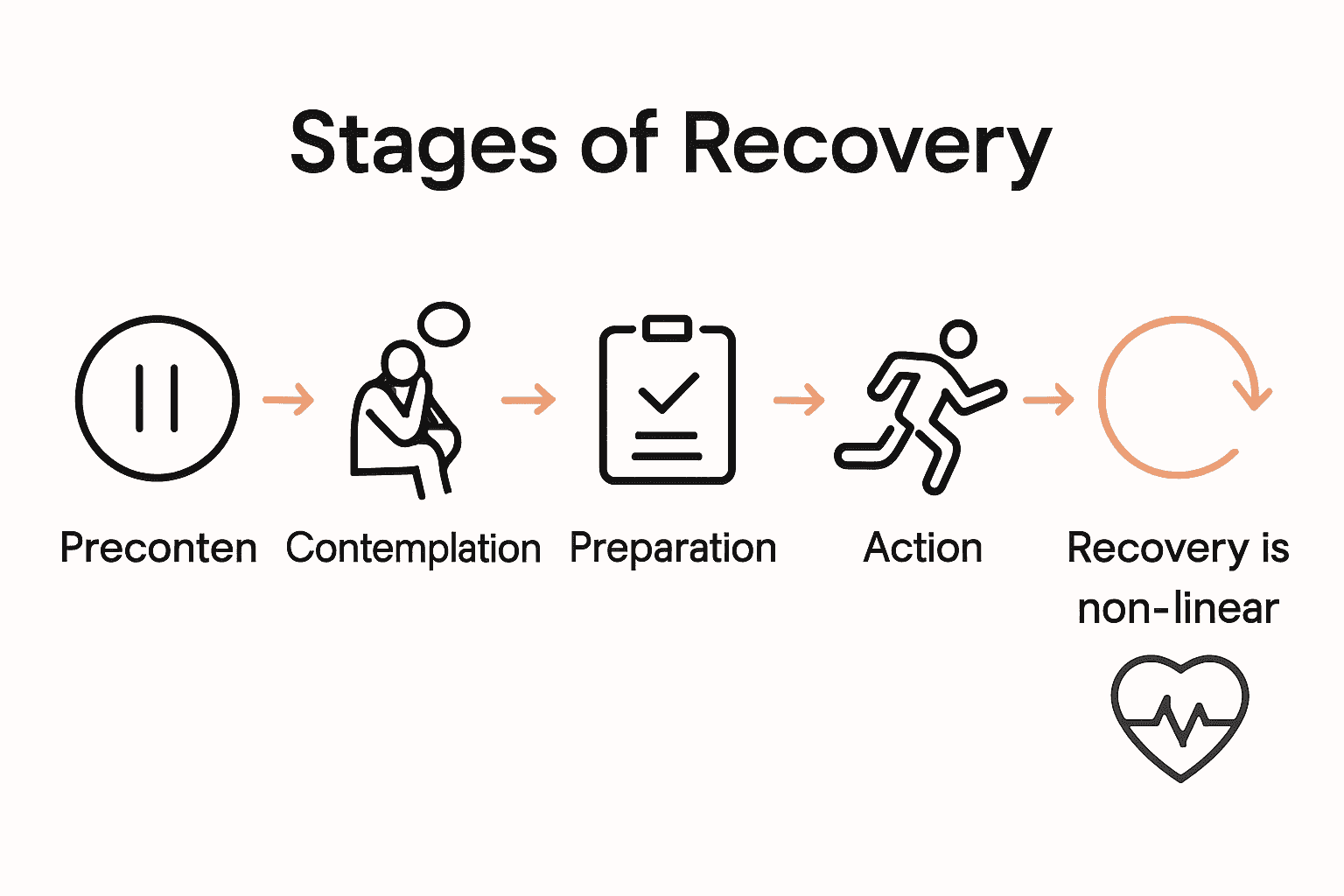
Traditionally, recovery is viewed through the lens of several key stages:
- Precontemplation: At this initial stage, individuals might not recognize their addiction as a problem or be ready to make changes. They may feel defensive or minimize the impact of their substance use.
- Contemplation: Here, individuals start acknowledging their addiction and considering potential changes. They weigh the pros and cons of seeking help, experiencing internal conflict about their substance use.
- Preparation: In this stage, individuals commit to taking action. They begin researching treatment options, seeking professional help, and developing initial strategies for recovery.
- Action: This is an active phase of implementing recovery strategies. Individuals engage in treatment programs, attend therapy, join support groups, and make significant lifestyle modifications to support their healing.
- Maintenance: After initial treatment, individuals focus on sustaining their recovery, preventing relapse, and continuing personal growth. This stage involves developing long-term coping mechanisms and rebuilding life skills.
Recovery is not a linear path but a dynamic, ongoing journey of personal development. Each stage presents unique challenges and opportunities for growth, requiring patience, self-compassion, and consistent support from professional treatment providers, family, and community resources.
Legal and Regulatory Changes in Los Angeles
The legal landscape surrounding addiction treatment and substance use in Los Angeles is experiencing significant transformations in 2025, reflecting a more nuanced and compassionate approach to recovery and rehabilitation. Policy shifts are increasingly recognizing addiction as a complex health issue rather than solely a criminal matter, creating more supportive frameworks for individuals seeking help.
In a notable regional development, California’s cannabis policy has extended its social equity program through December 31, 2025. This program provides expanded opportunities for marginalized communities to participate in cannabis-related industries, potentially creating new economic pathways for individuals historically impacted by substance-related legal challenges.
Key regulatory changes include:
- Enhanced patient privacy protections
- Expanded insurance coverage for addiction treatments
- More lenient rehabilitation-focused sentencing alternatives
- Increased funding for evidence-based recovery programs
- Reduced criminal penalties for personal substance use
Particularly promising is the regional movement towards a ‘recovery first’ approach, as demonstrated by nearby San Francisco’s policy shifts. Recent policy research indicates a strategic move from pure harm reduction toward structured, evidence-based behavioral health services. This approach prioritizes comprehensive treatment, personal accountability, and sustainable recovery over punitive measures, signaling a more compassionate and effective strategy for addressing substance use disorders.
Common Risks, Challenges, and Pitfalls
Addiction recovery is a complex journey fraught with potential challenges that can test even the most committed individuals. According to research from Britannica, relapse rates range between 40 to 60 percent, highlighting the intricate nature of sustained recovery. This statistic underscores the importance of understanding and preparing for potential obstacles along the recovery path.
National Institute on Drug Abuse research reveals that vulnerability remains high even after initial remission, with sustained recovery potentially requiring multiple treatment engagements across extended time frames. This ongoing process demands patience, resilience, and comprehensive support strategies.
Key risks and challenges include:
- Stress triggers that may provoke potential relapse
- Interpersonal conflicts disrupting recovery momentum
- Peer pressure and social environments
- Unresolved psychological underlying issues
- Neurological rewiring challenges
- Financial and employment instabilities
Understanding these challenges isn’t about creating fear, but building awareness and developing robust coping mechanisms. Recovery is a non-linear journey where setbacks are not failures but opportunities for growth, learning, and developing stronger resilience. Successful navigation requires comprehensive support systems, continuous personal development, and a compassionate approach to one’s own healing process.
Start Your Personalized Recovery Journey in 2025 With Expert Support
Facing the challenges of addiction recovery can be overwhelming, especially with today’s rapidly evolving treatment landscape. As detailed in the article, the road to recovery is not linear. You may experience setbacks, stress triggers, or encounter difficulties maintaining motivation and managing mental health along the way. These are common pain points for anyone trying to move forward in the recovery journey, especially when navigating complex stages like relapse prevention and dual diagnosis needs.
At Glendora Recovery Center, we understand that each individual’s journey is unique and may require multiple approaches before lasting change is achieved. Our team offers personalized care including innovative therapies and flexible scheduling to match modern demands for convenience and discretion. Whether you or a loved one needs a Partial Hospitalization Program, intensive outpatient support, or specialized help for co-occurring disorders, our Glendora Recovery Center facility provides both in-person and telehealth options. Do not let uncertainty or past attempts hold you back. Choose compassionate, evidence-based support today by contacting our team and take the first essential step toward a healthier, brighter future.
Frequently Asked Questions
What is the addiction recovery process in 2025?
Addiction recovery in 2025 is a holistic journey that encompasses physical, psychological, and emotional transformation. It goes beyond mere abstinence and recognizes addiction as a chronic brain condition that involves personalized treatment and comprehensive mental health support.
How long does it take to achieve full addiction recovery?
Research indicates that full recovery from addiction may require up to eight years, involving significant neurological adaptation and the need for sustained treatment engagement over time. Recovery is often non-linear, with potential setbacks along the way.
What are the latest treatment modalities used in addiction recovery?
In 2025, innovative treatment modalities include digital technologies like AI-powered chatbots, blockchain for secure data management, genetic testing for personalized treatment plans, and virtual support communities that enhance accessibility and ongoing support.
What are the common risks and challenges during the addiction recovery journey?
Common risks during recovery include stress triggers, interpersonal conflicts, peer pressure, unresolved psychological issues, financial instabilities, and neurological rewiring challenges. Understanding these risks is essential for developing robust coping mechanisms and maintaining a sustainable recovery.