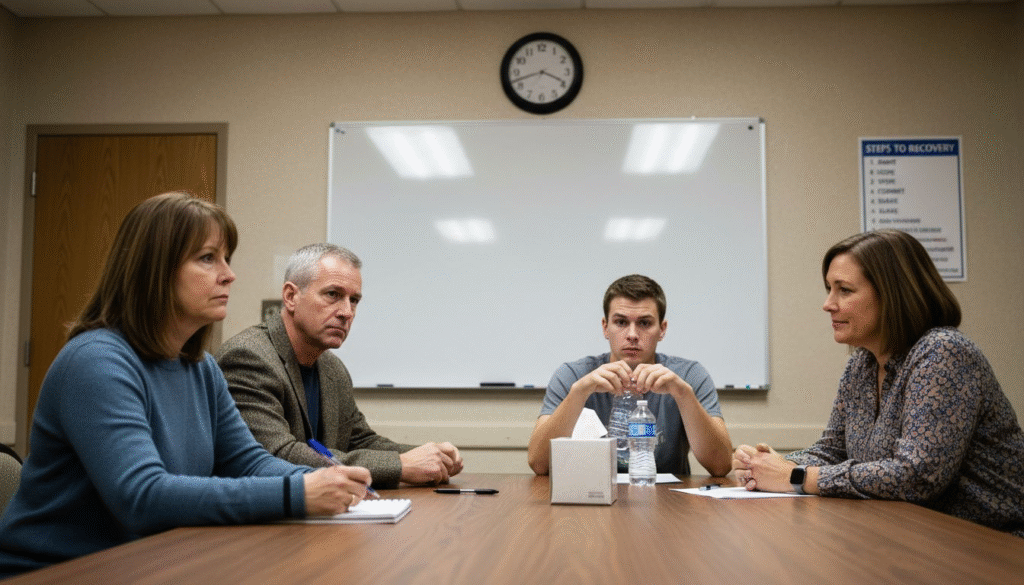
Every parent or partner in Glendora faces tough questions when a loved one enters rehab. Supporting recovery can feel confusing without clear guidance, especially when family involvement means more than just offering comfort. Active and well-defined family engagement in rehab has been shown to strengthen treatment outcomes, improve communication, and reduce setbacks during recovery. This overview breaks down the essential ways families can participate, helping you discover where your support matters most.
Table of Contents
- Defining Family Involvement In Rehab Care
- Types Of Family Participation In Recovery
- Core Roles And Responsibilities Of Families
- How Family Engagement Improves Rehab Outcomes
- Risks, Boundaries, And Common Pitfalls
Key Takeaways
| Point | Details |
|---|---|
| Family Involvement is Crucial | Active participation from families enhances recovery outcomes and provides emotional support. |
| Multiple Participation Models Exist | Families can engage through emotional support, education, collaboration, setting boundaries, transforming lifestyles, and ongoing support. |
| Education and Communication are Key | Families should learn effective communication strategies and understand addiction to better support their loved ones. |
| Navigate Risks and Pitfalls | Be aware of common challenges such as emotional overinvolvement and enabling behaviors, and seek professional guidance to overcome them. |
Defining Family Involvement in Rehab Care
Family involvement represents a critical component of successful addiction recovery, extending far beyond traditional treatment paradigms. At its core, family involvement means active participation, emotional support, and collaborative engagement in a loved one’s rehabilitation journey.
Research reveals that family involvement is more than periodic check-ins or hospital visits. Family involvement in care encompasses a comprehensive approach that includes:
- Emotional support and understanding
- Active participation in treatment planning
- Learning about addiction and recovery processes
- Providing a stable, supportive home environment
- Participating in family therapy sessions
- Supporting ongoing recovery maintenance
The complexity of family involvement stems from recognizing that addiction impacts entire family systems, not just the individual struggling with substance use. Each family member plays a potential role in creating a supportive recovery ecosystem, which can significantly influence treatment outcomes.
Successful family involvement requires education, commitment, and professional guidance. Families must learn healthy communication strategies, establish appropriate boundaries, and develop skills to support their loved one without enabling destructive behaviors.
Pro tip: Attend family therapy sessions and educational workshops to develop effective support strategies for your loved one’s recovery journey.
Types of Family Participation in Recovery
Family participation in addiction recovery is a dynamic and multifaceted process that requires commitment, understanding, and strategic engagement across different stages of treatment. The recovery journey is not a solo endeavor but a collaborative effort that involves multiple types of family involvement.
Families in recovery undergo several distinctive participation models that evolve throughout the rehabilitation process:
- Emotional Support Model: Providing unconditional love and understanding
- Educational Engagement Model: Learning about addiction and recovery mechanisms
- Treatment Collaboration Model: Actively participating in therapy sessions
- Boundary Setting Model: Establishing healthy interpersonal dynamics
- Lifestyle Transformation Model: Creating a supportive home environment
- Ongoing Recovery Support Model: Maintaining long-term recovery assistance
Each participation model requires families to develop specific skills and perspectives. Emotional support involves creating a non-judgmental atmosphere where the recovering individual feels safe and understood. Educational engagement means family members proactively learn about addiction’s complexities, treatment approaches, and potential relapse triggers.
The treatment collaboration model is particularly crucial, as it involves direct interaction with healthcare professionals. Family members attend therapy sessions, learn communication strategies, and work alongside treatment teams to develop comprehensive recovery plans. This approach ensures a holistic understanding of the individual’s unique recovery needs.
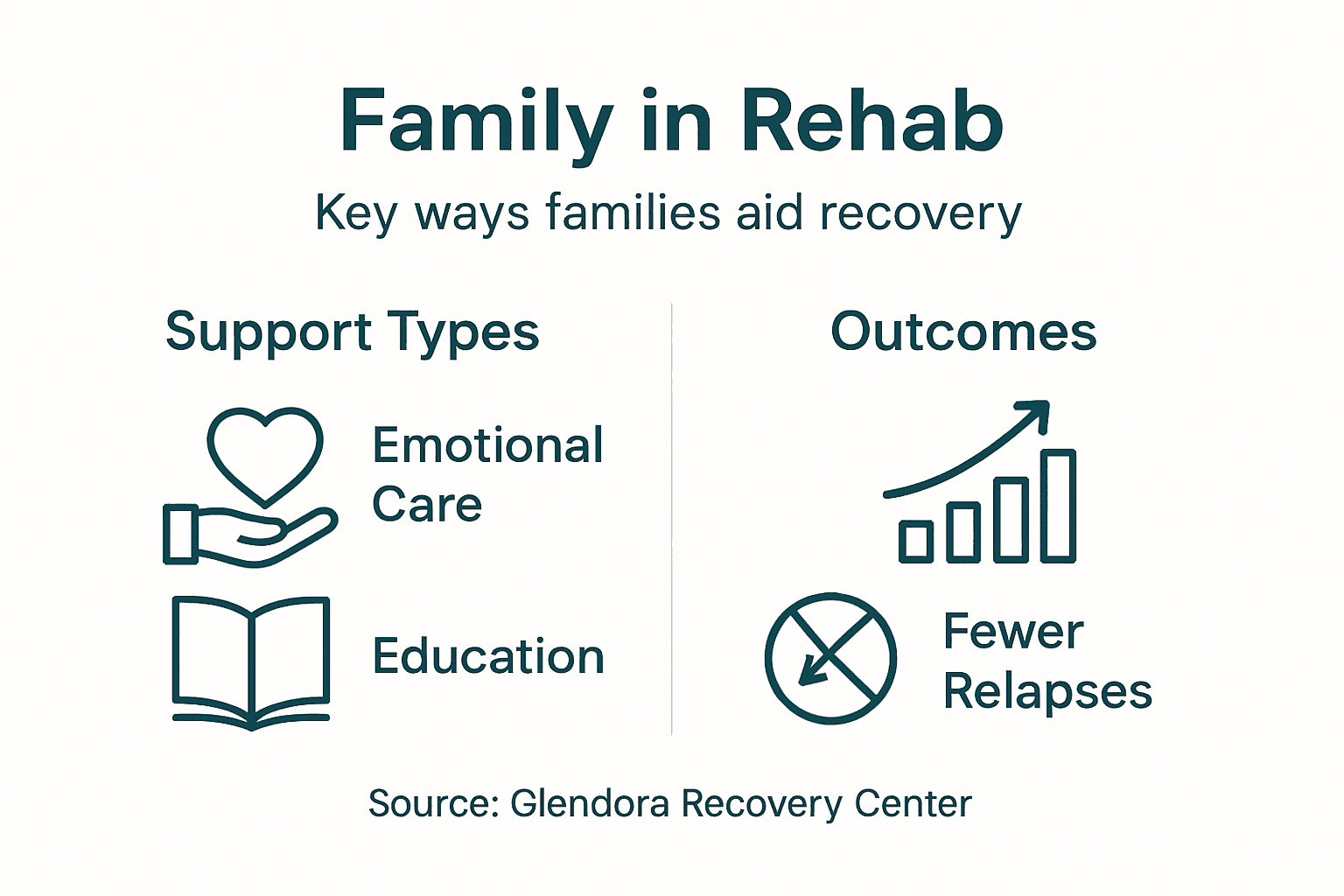
Here’s a comparison of family participation models and their typical impact on recovery stages:
| Participation Model | Main Focus | Stage of Recovery Supported |
|---|---|---|
| Emotional Support | Fostering trust and acceptance | Early & ongoing |
| Educational Engagement | Understanding addiction mechanisms | Early to mid |
| Treatment Collaboration | Active involvement in therapy | Mid to late |
| Boundary Setting | Defining healthy relationship dynamics | Throughout |
| Lifestyle Transformation | Creating stable home environment | Mid to late |
| Ongoing Recovery Support | Sustaining motivation and assistance | Long-term maintenance |
Pro tip: Schedule regular family therapy sessions to develop consistent, supportive recovery strategies that adapt to your loved one’s changing needs.
Core Roles and Responsibilities of Families
Family support plays a critical role in successful addiction recovery, transforming from passive observers to active participants in the healing process. Understanding the core responsibilities helps families become effective partners in their loved one’s rehabilitation journey.
Substance use disorder treatment involves several key family responsibilities:
- Treatment Engagement: Encouraging consistent participation in recovery programs
- Emotional Support: Creating a compassionate, non-judgmental environment
- Recovery Environment: Removing triggers and establishing healthy home dynamics
- Communication Management: Learning effective communication strategies
- Boundary Setting: Establishing clear, supportive interpersonal boundaries
- Relapse Prevention: Understanding and implementing prevention strategies
Emotional support requires families to balance compassion with accountability. This means offering unconditional love while simultaneously establishing clear expectations and consequences. Families must learn to differentiate between supporting recovery and enabling destructive behaviors, a nuanced skill that often requires professional guidance.
The treatment collaboration aspect demands active participation in recovery planning. Family members are not passive recipients of information but crucial team members who contribute insights, attend therapy sessions, and help develop comprehensive recovery strategies. This collaborative approach ensures a holistic understanding of the individual’s unique challenges and strengths.

Pro tip: Attend family therapy and support groups to develop effective communication skills and learn evidence-based strategies for supporting your loved one’s recovery.
How Family Engagement Improves Rehab Outcomes
Family engagement is a transformative element in addiction recovery, significantly enhancing rehabilitation success rates and long-term recovery potential. By actively participating in the treatment process, families become powerful catalysts for healing and sustained behavioral change.
Patient and family engagement demonstrates remarkable impacts on treatment outcomes, creating a comprehensive support system that extends beyond traditional clinical interventions:
- Treatment Adherence: Increased commitment to recovery programs
- Psychological Support: Reduced isolation and enhanced emotional resilience
- Communication Improvement: Better understanding between patient and treatment team
- Relapse Prevention: Early identification of potential warning signs
- Holistic Recovery: Addressing underlying family system dynamics
- Long-Term Motivation: Sustained encouragement throughout recovery journey
Research indicates that families who actively engage in rehabilitation processes create a more supportive recovery environment. This involvement goes beyond simple emotional support, encompassing strategic participation in treatment planning, understanding addiction mechanisms, and developing skills to support sustainable behavioral changes.
The collaborative approach transforms recovery from an individual challenge to a collective healing journey. Family members learn to recognize subtle behavioral shifts, provide constructive feedback, and create home environments that support ongoing recovery. This systemic approach significantly reduces the likelihood of treatment interruption and increases the probability of long-term success.
Pro tip: Develop a consistent communication strategy with your loved one’s treatment team to maintain active involvement and track recovery progress.
Risks, Boundaries, and Common Pitfalls
Family dynamics in addiction recovery create complex challenges that can significantly impact treatment success. Navigating these intricate relationships requires careful understanding, strategic communication, and professional guidance to avoid potential rehabilitation roadblocks.
Family involvement in patient care presents several critical risks and potential pitfalls:
- Emotional Overinvolvement: Excessive emotional investment that hinders recovery
- Enabling Behaviors: Unintentionally supporting destructive patterns
- Communication Breakdown: Ineffective dialogue that creates treatment barriers
- Privacy Concerns: Balancing patient autonomy with family support
- Unrealistic Expectations: Placing undue pressure on recovery timelines
- Boundary Violations: Crossing personal and therapeutic boundaries
Ethical considerations play a crucial role in managing family involvement. Families must learn to provide support without compromising the individual’s personal agency or treatment integrity. This delicate balance requires ongoing education, professional guidance, and a commitment to understanding addiction as a complex, individualized journey.
Successful family engagement demands continuous learning and adaptation. Families must develop emotional resilience, learn to recognize their own patterns of interaction, and create supportive environments that encourage recovery without creating additional psychological pressure. Professional therapy and support groups can provide essential tools for navigating these complex interpersonal dynamics.
The following table highlights common pitfalls of family involvement and strategies to prevent them:
| Pitfall | Typical Impact on Recovery | Prevention Strategy |
|---|---|---|
| Emotional Overinvolvement | Can hinder independence | Set healthy boundaries |
| Enabling Behaviors | Promotes relapse risks | Learn accountability methods |
| Communication Breakdown | Creates treatment barriers | Practice active listening |
| Unrealistic Expectations | Adds pressure and stress | Set achievable recovery goals |
| Privacy Concerns | Erodes patient trust | Respect autonomy and confidentiality |
| Boundary Violations | Disrupts therapeutic progress | Seek professional guidance |
Pro tip: Seek professional family counseling to develop healthy communication strategies and understand appropriate boundaries during the recovery process.
Strengthen Your Loved One’s Recovery with Expert Family Support at Glendora Recovery Center
Family involvement is crucial in overcoming the challenges of addiction. When families actively engage through emotional support, boundary setting, and treatment collaboration as described in “Family Involvement in Rehab – Why It Matters for Recovery,” the chances of sustained recovery improve dramatically. At Glendora Recovery Center, we understand that navigating these complex family dynamics can feel overwhelming, which is why our compassionate professionals specialize in family therapy and holistic care designed to empower you and your loved one.
Explore how our Intensive Outpatient Programs and tailored family therapy sessions provide the tools needed to foster healthy communication and create a supportive home environment. Don’t let uncertainty or fear stall progress. Take the critical step now to join a community committed to healing together by visiting Glendora Recovery Center and connecting with our caring team who can guide your family through every stage of recovery.
Frequently Asked Questions
What is family involvement in rehab and why is it important?
Family involvement in rehab refers to the active participation and emotional support provided by family members during a loved one’s recovery journey. It is essential because it helps create a stable and supportive environment, encourages adherence to treatment, and enhances overall recovery outcomes.
How can families effectively support a loved one in rehab?
Families can effectively support a loved one in rehab by participating in therapy sessions, learning about addiction and recovery processes, establishing healthy communication strategies, and setting appropriate boundaries to foster a supportive home environment.
What are some common models of family participation in recovery?
Common models of family participation include emotional support, educational engagement, treatment collaboration, boundary setting, lifestyle transformation, and ongoing recovery support. Each model focuses on different aspects of the recovery process, contributing to the individual’s success.
What risks should families be aware of when getting involved in rehab?
Families should be aware of risks such as emotional overinvolvement, enabling behaviors, communication breakdowns, privacy concerns, unrealistic expectations, and boundary violations. Understanding these challenges can help families provide better support without hindering the recovery process.
Recommended
- Role of Family in Recovery – Supporting Lasting Change | Glendora Recovery Center
- Family Therapy Workflow Addiction: Effective Steps for Recovery | Glendora Recovery Center
- Signs an Addict Is Relapsing – What Families Should Know | Glendora Recovery Center
- Questions to Ask Addicts in Recovery – Supporting Lasting Change | Glendora Recovery Center
- 7 Inspiring Examples of Group Projects for Success – Optio Station: Best Project Management App for Prioritization