
Struggling to find rehab that fits your unique situation can leave you feeling lost and discouraged. Each recovery journey in Los Angeles County is shaped by personal challenges, from mental health concerns to family obligations. This article explains how customized treatment plans offer tailored solutions for adults and teens dealing with substance abuse and co-occurring disorders, helping you discover care options that reflect your individual needs and goals.
Table of Contents
- What Individualized Care in Rehab Means
- Types of Individualized Care Approaches
- Key Components of Tailored Treatment Plans
- How Personalized Rehab Plans Are Developed
- Common Mistakes and Success Factors
Key Takeaways
| Point | Details |
|---|---|
| Individualized Care Importance | Individualized rehabilitation focuses on personalized treatment plans that consider a person’s unique psychological, biological, and social factors. |
| Comprehensive Assessments | Effective treatment begins with thorough initial assessments to create tailored strategies that address complex addiction issues. |
| Continuous Adaptation | Ongoing evaluation and modification of treatment plans are essential to meet evolving needs during the recovery journey. |
| Collaboration and Communication | Active participation and open communication between patients and treatment teams enhance the success of personalized care. |
What Individualized Care in Rehab Means
Individualized care in rehabilitation represents a personalized, holistic approach to treating substance abuse that recognizes every person’s unique journey and specific healing requirements. Unlike one-size-fits-all treatment models, this strategy acknowledges that addiction and recovery are deeply personal experiences shaped by individual psychological, biological, and social factors.
At its core, individualized care involves creating customized treatment plans that address multiple dimensions of a person’s health and circumstances. These comprehensive plans consider:
- Physical health and medical history
- Mental health conditions
- Personal trauma backgrounds
- Social support networks
- Professional and family responsibilities
- Specific substance use patterns
- Personal motivation and recovery goals
The goal of individualized addiction treatment is not just managing symptoms, but empowering individuals to understand their unique addiction triggers, develop personalized coping strategies, and create sustainable pathways toward long-term recovery. This approach recognizes that effective rehabilitation requires more than standard protocols—it demands a nuanced, compassionate understanding of each person’s distinctive challenges and strengths.
Pro Tip: When seeking rehabilitation services, always ask potential treatment centers about their approach to creating personalized care plans and how they customize treatment for individual needs.
Types of Individualized Care Approaches
Individualized addiction rehabilitation encompasses a diverse range of therapeutic interventions designed to address the complex, multifaceted nature of substance use disorders. Rehabilitation approaches are carefully tailored to meet each individual’s unique physical, psychological, and emotional needs, ensuring a comprehensive and personalized path to recovery.
Key types of individualized care approaches include:
- Behavioral Health Therapy: Focuses on understanding and modifying patterns of thinking and behavior related to substance use
- Cognitive Rehabilitation: Helps individuals rebuild cognitive skills and develop coping strategies
- Trauma-Informed Care: Addresses underlying psychological trauma that may contribute to addiction
- Dual Diagnosis Treatment: Simultaneously manages substance use and co-occurring mental health disorders
- Holistic Therapies: Integrates alternative approaches like meditation, nutrition counseling, and physical wellness
Each therapeutic approach is strategically selected based on a thorough assessment of the individual’s specific challenges, medical history, and recovery goals. Comprehensive rehabilitation strategies recognize that addiction is not a one-dimensional problem, but a complex interplay of biological, psychological, and social factors.
Successful individualized care requires a dynamic, flexible approach that can adapt to changing client needs. Treatment plans are continuously evaluated and modified, ensuring that the rehabilitation strategy remains aligned with the individual’s progress, emerging challenges, and evolving personal circumstances.
Here’s how common types of individualized care differ in focus and benefits:
| Approach Type | Primary Focus | Key Benefit |
|---|---|---|
| Behavioral Health Therapy | Modifying behavior patterns | Reduces relapse risk |
| Cognitive Rehabilitation | Rebuilding cognitive skills | Strengthens problem-solving |
| Trauma-Informed Care | Addressing past trauma | Promotes emotional stability |
| Dual Diagnosis Treatment | Treating mental health & SUD | Supports overall mental wellness |
| Holistic Therapies | Integrating alternative methods | Enhances well-being and balance |
Pro Tip: Always seek treatment centers that offer comprehensive assessments and demonstrate willingness to customize and adjust treatment plans based on your unique recovery journey.
Key Components of Tailored Treatment Plans
Crafting an effective individualized treatment plan requires a comprehensive, multidimensional approach that goes beyond traditional rehabilitation models. Rehabilitation intervention frameworks emphasize the importance of creating dynamic, personalized strategies that address the unique complexities of each individual’s addiction and recovery journey.
Key components of tailored treatment plans typically include:
- Comprehensive Initial Assessment: Detailed evaluation of physical, psychological, and social factors
- Personalized Goal Setting: Collaborative development of realistic, achievable recovery objectives
- Multidisciplinary Treatment Approach: Integration of medical, psychological, and holistic interventions
- Continuous Monitoring and Adaptation: Regular evaluation and modification of treatment strategies
- Holistic Support Systems: Addressing family dynamics, social networks, and personal relationships
Rehabilitation intervention strategies recognize that effective treatment extends far beyond symptom management. The most successful plans incorporate comprehensive support that addresses underlying causes of addiction, builds essential life skills, and provides robust mechanisms for ongoing personal development and recovery maintenance.

The ultimate goal of a tailored treatment plan is to create a flexible, responsive approach that evolves alongside the individual’s recovery journey. This means continuously reassessing progress, identifying emerging challenges, and adjusting interventions to ensure the most effective path to long-term healing and personal transformation.
Pro Tip: Request a detailed breakdown of how treatment centers personalize their approach and be prepared to actively participate in creating and refining your individual treatment strategy.
How Personalized Rehab Plans Are Developed
Personalized health planning represents a collaborative and comprehensive approach to developing rehabilitation strategies that address an individual’s unique recovery needs. This process goes far beyond traditional treatment models, involving a deep, multifaceted assessment of each person’s physical, psychological, and social circumstances.
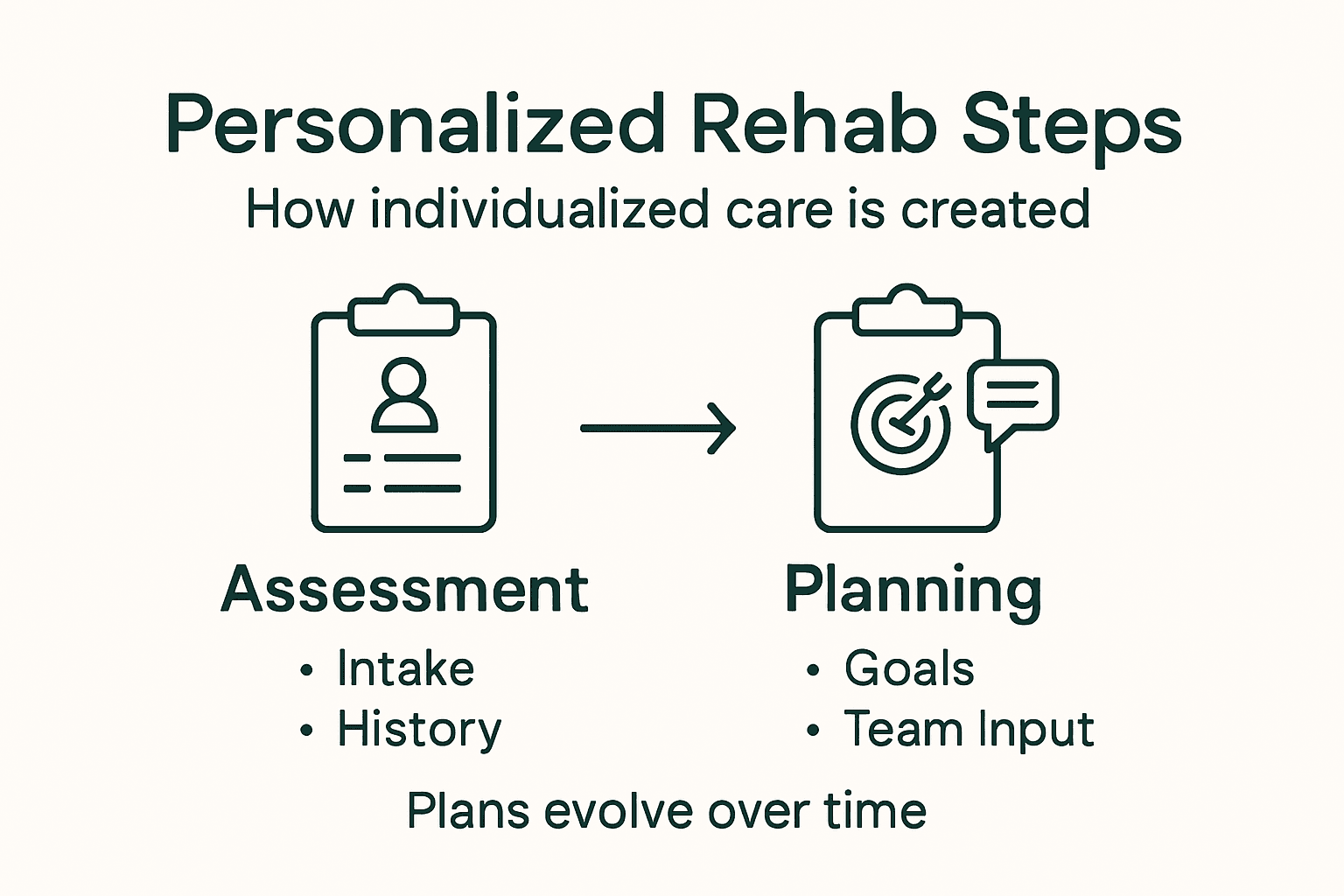
The development of a personalized rehab plan typically involves several critical stages:
- Initial Comprehensive Assessment: Detailed evaluation of medical history, substance use patterns, mental health status, and personal background
- Patient Self-Reflection: Identifying personal goals, motivations, and potential barriers to recovery
- Collaborative Goal Setting: Working together to establish realistic, meaningful recovery objectives
- Diagnostic Profiling: Utilizing advanced diagnostic tools to understand individual health dynamics
- Customized Intervention Design: Creating a tailored treatment approach that addresses specific needs
Technological innovations in rehabilitation are increasingly supporting more precise and adaptive treatment planning. Advanced diagnostic technologies and artificial intelligence now enable clinicians to develop more nuanced, responsive rehabilitation strategies that can be adjusted in real-time based on an individual’s progress and changing needs.
Successful personalized rehab plans require ongoing communication, flexibility, and a commitment to continuous assessment. Treatment teams must remain responsive, regularly reviewing and adjusting interventions to ensure they remain aligned with the individual’s evolving recovery journey and personal growth.
Pro Tip: Be transparent and honest during your initial assessments, as the most accurate and effective treatment plans are built on complete and authentic information about your experiences and challenges.
Common Mistakes and Success Factors
Patient circumstances and contextual factors play a critical role in determining the success of individualized rehabilitation strategies. Understanding the potential pitfalls and key success factors can significantly improve recovery outcomes and help individuals navigate their unique healing journey more effectively.
Common mistakes in personalized rehabilitation often include:
- Overlooking Personal Context: Ignoring individual life circumstances that impact recovery
- One-Size-Fits-All Approaches: Applying generic treatment models instead of tailored interventions
- Insufficient Communication: Failing to maintain open, honest dialogue between patient and treatment team
- Rigid Treatment Plans: Not adapting interventions as individual needs change
- Neglecting Holistic Support: Focusing solely on substance abuse without addressing underlying psychological factors
Success factors in individualized care require a comprehensive, empathetic approach that goes beyond traditional treatment methodologies. This means creating treatment plans that are not just medically sound, but also responsive to the individual’s unique personal, social, and economic challenges.
Effective rehabilitation demands continuous reassessment and flexibility. Treatment teams must remain committed to understanding the complex interplay of factors that influence an individual’s recovery, including mental health, social support, personal motivations, and potential barriers to long-term healing.
Common mistakes and success factors in individualized care side by side:
| Common Mistake | Why It Hurts Recovery | Success Factor | Why It Helps Recovery |
|---|---|---|---|
| Ignoring personal context | Misses unique challenges | Comprehensive assessments | Customizes treatment focus |
| Rigid treatment plans | Fails to adapt to needs | Ongoing plan adjustments | Improves responsiveness |
| Insufficient communication | Limits trust and openness | Collaborative goal setting | Encourages active participation |
| Overlooking support systems | Reduces long-term stability | Holistic support inclusion | Strengthens recovery network |
Pro Tip: Actively participate in your treatment plan by sharing comprehensive information about your life circumstances and being open to adaptive strategies that evolve with your recovery journey.
Discover Truly Individualized Rehab Care That Understands You
Struggling with addiction is never a simple journey and requires more than generic solutions. This article highlights the critical need for individualized care that addresses your unique challenges, including your mental health, personal history, and recovery goals. At Glendora Recovery Center, we specialize in crafting personalized treatment plans that adapt to your evolving needs through comprehensive assessments, dual diagnosis treatment, and trauma-informed care. Our compassionate approach ensures you receive the support tailored specifically for your healing and long-term wellness.
If you are ready to take control of your recovery and experience care designed just for you, explore our Partial Hospitalization Programs and Intensive Outpatient Programs. Begin your journey with a team dedicated to providing flexible scheduling and a full spectrum of services including aftercare support and family therapy. Visit Glendora Recovery Center today to start building your personalized path to lasting recovery.
Frequently Asked Questions
What is individualized care in rehab?
Individualized care in rehab refers to a personalized approach to treatment that recognizes each person’s unique needs, backgrounds, and circumstances in their recovery journey.
Why is individualized care important in rehabilitation?
Individualized care is important because it empowers individuals to understand their specific addiction triggers and develop tailored coping strategies, leading to more effective recovery outcomes.
What are some key components of a tailored treatment plan?
Key components include comprehensive initial assessments, personalized goal setting, multidisciplinary treatment approaches, continuous monitoring, and holistic support systems.
How are personalized rehab plans developed?
Personalized rehab plans are developed through initial comprehensive assessments, patient self-reflection, collaborative goal setting, diagnostic profiling, and customized intervention design.