
Stressful days, familiar neighborhoods, or unexpected celebrations can all make cravings feel impossible to ignore in Los Angeles County. If you have ever wondered why certain moments catch you off guard, you are not alone. Recognizing and understanding your own triggers is a powerful first step toward lasting recovery. This guide will help you uncover your personal risk factors, distinguish between internal and external triggers, and develop tailored strategies to protect your progress with support from Glendora Recovery Center.
Table of Contents
- Step 1: Identify Your Unique Addiction Triggers
- Step 2: Develop Personalized Coping Strategies
- Step 3: Anticipate Risky Situations And Plan Ahead
- Step 4: Practice Healthy Responses Daily
- Step 5: Evaluate Progress And Adjust Techniques
Quick Summary
| Key Point | Explanation |
|---|---|
| 1. Identify Your Triggers | Recognize both internal and external triggers to combat cravings effectively. |
| 2. Develop Coping Strategies | Create personalized action plans to address each identified trigger. |
| 3. Anticipate Risky Situations | Plan ahead for high-risk scenarios to reduce vulnerability and cravings. |
| 4. Practice Healthy Responses | Regularly engage in positive behaviors to make healthy choices automatic. |
| 5. Evaluate and Adjust Regularly | Monthly check-ins help refine strategies and foster ongoing recovery growth. |
Step 1: Identify your unique addiction triggers
You’re probably aware that certain situations, emotions, or people make cravings stronger. The goal of this first step is to pinpoint exactly what sets off your urge to use. This isn’t a one-time exercise. Recovery involves recognizing patterns that may surprise you, especially the difference between what happens around you and what happens inside your mind.
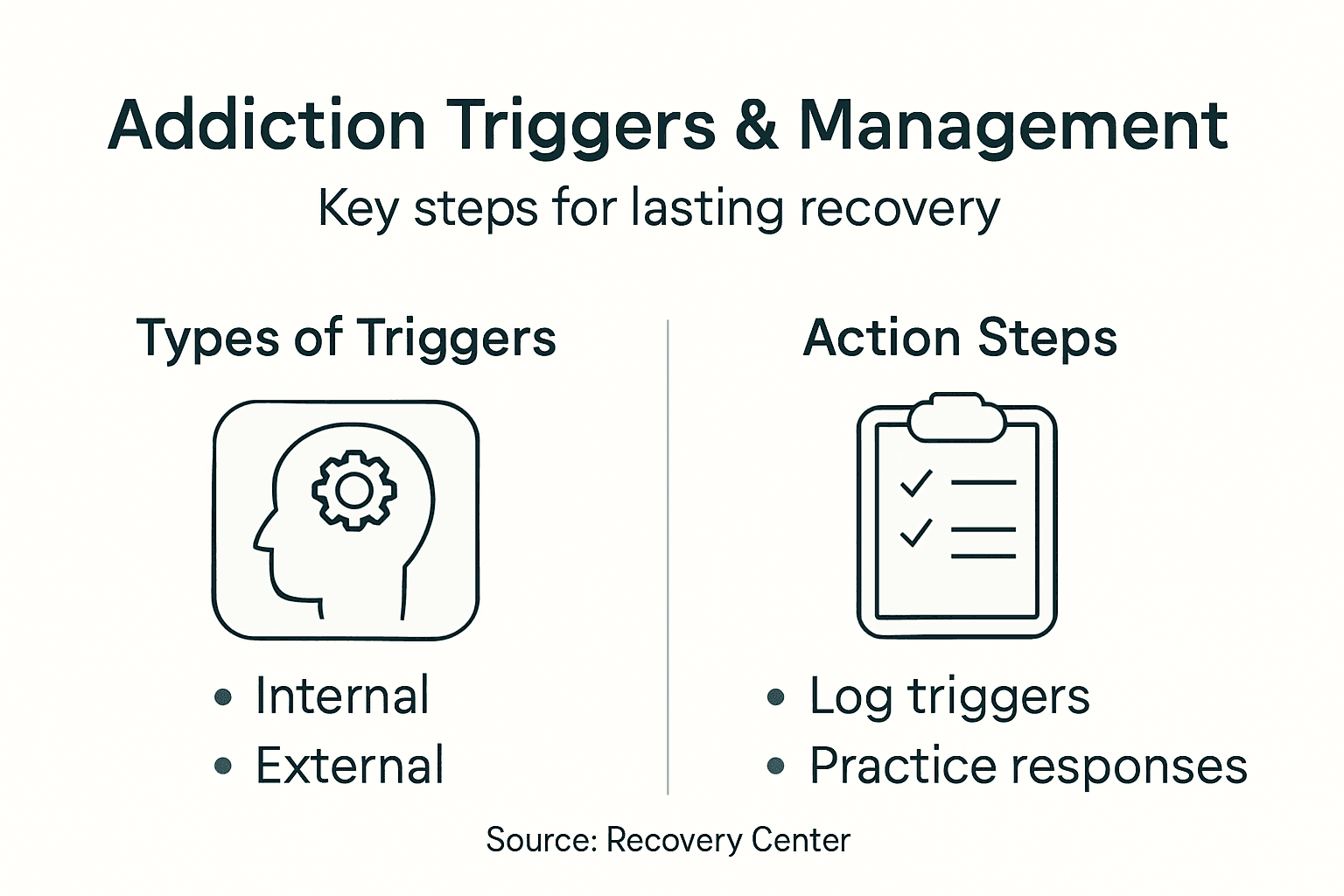
Start by distinguishing between the two main categories of triggers. Internal emotional triggers like stress, loneliness, frustration, or even positive feelings such as happiness or celebration can pull you toward substance use. Many people don’t realize that good moments can be just as risky as difficult ones. External triggers are equally powerful: specific locations where you used before, certain people in your social circle, particular times of day, or even sensory experiences like specific music or smells. Someone in Los Angeles County might find that driving past a particular neighborhood or running into old friends triggers powerful cravings. Both types of triggers deserve your attention because both can derail your recovery if you’re not prepared.
To identify your triggers, spend the next week keeping a simple log. When you notice a craving appearing, pause and write down what was happening right before it hit. Were you feeling anxious about work or facing relationship tension? Had you just woken up after a rough night of sleep? Did you drive by a specific location or see someone from your past? Don’t judge yourself for having cravings. Instead, treat this like detective work where you’re gathering clues about your own patterns. After a week or two, you’ll likely notice that certain situations, emotions, or people appear repeatedly. These are your primary triggers. Some people find it helpful to write these down in a list they can refer to later when temptation strikes. Others prefer to share their discoveries with a therapist or counselor who can help them process what they’re finding. Understanding what the recovery process actually looks like can also help you recognize why certain triggers matter more than others.
As you build this awareness, remember that knowledge alone won’t prevent relapse. The real power comes when you match each trigger with a specific action plan. But that’s coming next. For now, your job is simply to notice and record. Some triggers will be obvious. Others might be subtle. Maybe you didn’t realize that Sunday afternoons alone trigger cravings, or that certain family conversations bring up old feelings. Pay attention to the small details. You might notice that you’re more vulnerable when you’re tired, hungry, or isolating yourself. These details matter because they become your early warning signs.
Here’s a summary of common addiction triggers and potential approaches for managing them:
| Trigger Type | Example Triggers | Potential Management Approach |
|---|---|---|
| Internal Emotional | Stress, loneliness, happiness | Journaling, deep breathing, therapy |
| External Situational | Locations, specific people | Avoidance, alternative routes, social groups |
| Sensory | Music, smells | Mindfulness exercises, changing environment |
Pro tip: Keep your trigger log on your phone using a simple notes app or memo function so you can record observations immediately when cravings happen, capturing details while they’re still fresh rather than trying to remember patterns later.
Step 2: Develop personalized coping strategies
Now that you’ve identified your triggers, the next step is building your toolkit. You need specific, actionable strategies that work for you when cravings hit. This isn’t about copying someone else’s recovery plan. Your strategies need to match your triggers, your personality, and your lifestyle in Los Angeles County.
Start by matching coping strategies to each trigger you’ve identified. If stress at work triggers cravings, your strategy might involve stepping outside for five minutes of deep breathing or calling a trusted friend during your lunch break. If loneliness pulls you toward substance use, you might join a community group, volunteer, or schedule regular coffee dates with people who support your recovery. If specific locations trigger cravings, plan alternative routes or activities in those areas. The key is that coping strategies should address your unique triggers with concrete actions you can take in the moment. Some people find success with physical activities like walking, running, or yoga because movement actually reduces cravings by changing brain chemistry. Others benefit from creative outlets like drawing, writing, or music. What matters is that your strategy is something you’ll actually do when you’re struggling, not something that sounds good in theory but feels impossible when emotions run high.
Build your toolkit beyond just coping with cravings. You also need strategies for preventing situations where cravings become overwhelming. This might mean learning how to politely decline social invitations that involve substance use without feeling guilty or isolated. It could mean developing new routines that replace old patterns. If you used to spend Friday nights at certain places with certain people, what will you do instead? Maybe that’s a movie night with supportive friends, a cooking class, volunteer work at a local organization, or time with family. The goal is filling the void with activities that are genuinely rewarding. Some people in recovery find that having a list of emergency coping strategies posted on their bathroom mirror or phone helps. When emotional triggers hit hard and your mind goes blank, you can refer to that list instead of relying on memory. Your strategies might include calling your sponsor or a trusted friend, attending a support group meeting, using breathing exercises, taking a cold shower, or going for an intense workout. The strategy doesn’t matter as much as having a plan before you need it.
As you develop these strategies, think about what actually brings you comfort and calm. Recovery isn’t about white knuckling through cravings. It’s about replacing harmful coping mechanisms with healthier ones that genuinely make you feel better. Maybe you’ve never thought about what you actually enjoy doing because substance use has been your go to response for so long. This is your chance to experiment. Try different strategies, see what sticks, and refine your approach based on what actually works for you. Your personalized toolkit will evolve as you move through recovery, and that’s exactly how it should be.
Pro tip: Write your top three coping strategies on a wallet card or save them as a note on your phone so you can quickly reference them when a trigger catches you off guard and your thinking gets cloudy.
Step 3: Anticipate risky situations and plan ahead
Risky situations don’t announce themselves. They creep up gradually, and before you realize what’s happening, you’re in a place where cravings feel overwhelming. This step is about thinking ahead so you’re never caught unprepared. You’ll identify the specific situations most likely to test your recovery and create detailed action plans for each one.
Start by recognizing that high-risk situations usually follow predictable patterns. For many people, they happen around holidays when family dynamics intensify, during periods of stress at work, after relationship conflicts, or when you’re bored or isolated. Some risky situations are calendar events you can see coming like your birthday or New Year’s Eve. Others emerge from emotional states that build gradually. You might notice that when you’re feeling anxious about money or dealing with disappointment, your vulnerability increases. By mapping out early warning signs and developing action plans, you transform vague worries into concrete strategies. Think about the specific high-risk situations you’re most concerned about. Maybe you’re worried about running into old friends at the grocery store or gym. Perhaps you dread attending your cousin’s wedding where alcohol will be served. You might be anxious about being alone on Friday nights when substance use was your main activity. Whatever your risky situations are, name them specifically. General anxiety about staying sober is hard to fight. A specific plan for what to do when you run into your old roommate is manageable.
For each high-risk situation you’ve identified, write out a detailed action plan. This isn’t a vague intention like “I’ll stay strong.” Instead, it’s a minute-by-minute strategy. Let’s say you’re dreading a family gathering where relatives will drink and might pressure you. Your plan might look like this: arrive with a supportive friend or call someone immediately upon arrival, stay in the kitchen or common areas where you feel grounded, have non-alcoholic drinks prepared ahead of time, plan a reason to leave if you feel overwhelmed, and identify a quiet space where you can step away for a few minutes. If you’re worried about Friday night loneliness, your plan might include signing up for a class, scheduling a dinner with a friend, volunteering at an organization, or attending a support group meeting. The more specific and detailed your plan, the better. When you’re in the actual situation and emotions are high, your brain won’t be at its sharpest. A written plan gives you a script to follow when thinking clearly feels impossible. Some people in Los Angeles County find it helpful to share their plans with a therapist, sponsor, or trusted friend who can help them refine them and offer accountability.
Beyond specific situations, think about daily maintenance practices that keep you resilient. This might include attending regular support group meetings, maintaining consistent sleep and exercise routines, staying connected to your support network, and checking in with yourself about your emotional state. When you’re sleeping well, moving your body regularly, and feeling connected to people who care about you, your resistance to cravings naturally increases. Conversely, when you’re isolated, sleep-deprived, and stressed, even minor triggers feel huge. Your daily practices are like maintaining a strong immune system. Crisis planning prepares you for emergencies, but daily maintenance prevents many crises from happening in the first place. These practices don’t feel urgent until you realize how much they actually protect you.
Pro tip: Schedule your high-risk situations and daily maintenance plans in your calendar with phone reminders so you’re not relying on memory when life gets chaotic, and review your plans monthly to adjust them based on what you’re learning about yourself.
Step 4: Practice healthy responses daily
Recovery isn’t something you do once and then check off a list. It’s something you practice every single day through small, intentional choices that build your strength and resilience. This step is about making healthy responses automatic so that when triggers appear, your first instinct is to reach for your coping strategies instead of old patterns.

Start by understanding that daily practice rewires your brain. When you repeat a healthy response over and over, neural pathways strengthen and new habits form. If you practice deep breathing when mildly stressed, then when a major trigger hits, your body already knows how to activate that calming response. If you regularly connect with supportive people, then isolation becomes less appealing. If you exercise consistently, you develop a reliable way to manage difficult emotions. The beauty of daily practice is that it doesn’t require willpower in the moment because you’ve already built the muscle memory. Think of it like physical exercise. You don’t go to the gym once and expect to stay fit. You go regularly so your body becomes stronger and more capable. The same applies to your mental and emotional health. Daily self-care practices including meditation, social connection, and focusing on your strengths form the foundation of lasting recovery. These aren’t luxuries or treats you earn after staying sober. They’re essential maintenance that prevents cravings from becoming overwhelming in the first place.
Identify three to five healthy responses you can practice daily, regardless of whether you’re facing a trigger. Maybe that’s a ten-minute walk in the morning to clear your head, a journaling session where you process your feelings, a phone call with someone in your support network, a meditation or breathing practice, or time doing something you genuinely enjoy. The specific activities matter less than consistency and authenticity. You need practices that feel nourishing rather than like another obligation. If meditation feels forced, try yoga or hiking instead. If journaling feels awkward, try talking to a friend or therapist. Some people thrive with structured routines while others prefer flexibility. Honor what actually works for you rather than following what you think should work. The goal is building a life that feels so rewarding and connected that relapse becomes genuinely unappealing. This might sound idealistic, but it’s grounded in how human brains work. When life feels meaningful and you have real connection and purpose, the pull toward substance use naturally weakens.
Beyond individual practices, pay attention to the larger patterns that affect your wellbeing. Sleep quality dramatically impacts your emotional resilience and ability to handle stress. When you’re exhausted, even minor frustrations feel unbearable. Physical activity acts as a natural antidepressant and stress reliever. Social connection provides accountability, support, and a sense of belonging. Having goals and working toward them gives you purpose beyond just staying sober. These elements work together. When you’re sleeping well, exercising regularly, staying connected to people, and working toward meaningful goals, you’re not just managing triggers. You’re building a life worth protecting. Some days you’ll practice these responses enthusiastically. Other days it will feel like going through the motions. Both are fine. Consistency matters more than enthusiasm. You’re training yourself to show up for recovery even when it doesn’t feel exciting. That reliability is what carries you through the difficult moments.
Pro tip: Create a simple daily checklist with your three to five healthy responses and track completion for one month so you can see patterns in what actually protects you versus what you’re neglecting during stressful periods.
Step 5: Evaluate progress and adjust techniques
Your recovery plan isn’t a static document that stays the same forever. What works brilliantly in month one might become less effective in month six. Life changes, your circumstances shift, and your triggers evolve. This step is about regularly assessing what’s working and what isn’t, then making intentional adjustments to keep your recovery strategies effective and relevant.
Schedule a monthly check-in where you honestly evaluate your progress. Look back at your trigger log and coping strategies. Are the triggers you identified still your biggest challenges, or have new ones emerged? Are your coping strategies actually working when you use them, or are some falling flat? Monitoring recovery progress through regular reassessment helps you recognize early warning signs and adjust strategies as your needs change. Think about whether you’re actually practicing your daily healthy responses consistently or whether you’ve drifted back into old patterns. Are you maintaining your support network connections or have you started isolating more? Have you avoided your high-risk situations, or have they come up and tested your action plans? Pay special attention to any warning signs that relapse might be approaching. Maybe you’re sleeping worse, skipping exercise, canceling plans with supportive people, or finding yourself thinking about substance use more frequently. These early warning signs tell you something needs adjustment before a small problem becomes a crisis. Some people find it helpful to use a simple self-assessment where they rate their stability in different areas like sleep, exercise, relationships, work or school, mental health, and overall motivation for recovery. By tracking these areas over time, patterns become visible.
When you notice something isn’t working, get curious rather than critical. If a coping strategy isn’t helping, ask yourself why. Maybe the strategy itself is fine but you’re not using it at the right time. Maybe it worked when stress was moderate but doesn’t cut it when stress is intense. Maybe you’ve outgrown it and need something more challenging or different. Rather than abandoning strategies that aren’t perfect, try refining them. If calling a friend helps but sometimes friends are unavailable, maybe add a backup strategy like a support group meeting. If exercise helps but cold weather makes it hard to stick to, maybe find indoor alternatives. If your daily check-ins with your support person used to feel helpful but now feel obligatory, maybe adjust the frequency or format. Recovery isn’t about finding the perfect plan and executing it flawlessly. It’s about developing self-awareness, experimenting with different approaches, and building flexibility into your system. The strategies that sustain long-term recovery are ones you’ve tested, refined, and genuinely believe in rather than ones you think you should use.
Share your progress assessments with your treatment team, sponsor, or trusted support person. They notice things you might miss and can offer perspective on your progress. Sometimes what feels like failure to you actually represents significant growth. Someone who used to isolate for weeks might now isolate for only a few days, which is real progress even if it’s not yet where you want to be. Getting external feedback helps you celebrate genuine accomplishments and identify blind spots. Also think about your larger recovery goals beyond just staying sober. Are you rebuilding relationships that matter to you? Moving toward meaningful work or education? Taking care of your physical health? Developing hobbies and interests? Feeling more hopeful about your future? These broader measures of recovery quality matter as much as maintaining abstinence. If you’re technically sober but deeply unhappy and disconnected, something still needs adjustment. Conversely, if you’re engaged in life, connected to people, working toward goals, and sleeping well, you’re building genuine recovery that sustains itself. Your adjustment process should strengthen all these areas, not just manage cravings.
Reviewing and adjusting your recovery plan is crucial for long-term success. Here are essential checkpoints to consider each month:
| Area to Monitor | Evaluation Question | Adjustment Example |
|---|---|---|
| Coping Strategies | Are strategies effective? | Swap out for new actions |
| Support Network | Are connections maintained? | Schedule more regular check-ins |
| Emotional Warning Signs | Are negative patterns emerging? | Reinforce self-care routines |
| Recovery Goals | Is progress in life areas obvious? | Set fresh, motivating targets |
Pro tip: Schedule your monthly review on the same day each month and set a phone reminder so you don’t let it slip, then write down three specific things that are working and one thing you want to adjust so you have concrete direction for the coming month.
Overcome Addiction Triggers with Expert Support at Glendora Recovery Center
Managing addiction triggers like stress, loneliness, and high-risk situations requires more than awareness. It demands a personalized approach combining clear action plans, effective coping strategies, and ongoing evaluation for lasting recovery. The challenges you face with cravings and the need to develop healthy daily responses are exactly where professional guidance makes a difference.
At Glendora Recovery Center, we specialize in individualized addiction treatment tailored to your unique triggers and life in Los Angeles County. Whether you need help forming your recovery toolkit, anticipating risky situations, or strengthening daily healthy habits through partial hospitalization or intensive outpatient programs, our compassionate team is here to support you. Don’t let cravings control your life—partner with us to design a plan that adapts as you heal. Start building a safer, stronger future today by reaching out through our Contact Us page. Get personalized care that evolves with you by exploring how we can help manage your triggers and protect your recovery journey.
Frequently Asked Questions
How can I identify my addiction triggers?
To identify your addiction triggers, keep a log for at least a week. Record your cravings and note what was happening around you or within you just before those cravings hit.
What coping strategies can I develop for managing triggers?
Develop personalized coping strategies by matching specific actions to each of your identified triggers. For instance, if stress triggers cravings, practice deep breathing for five minutes or call a friend for support.
How can I prevent risky situations that lead to cravings?
Anticipate high-risk situations by recognizing patterns and planning ahead with detailed action strategies. For example, if you fear social gatherings where substances are present, have a friend accompany you or prepare an excuse for leaving early.
What daily practices can help reinforce my recovery?
Practice healthy responses daily by incorporating activities such as exercise, meditation, or journaling into your routine. Aim to consistently engage in at least three of these activities each week to build resilience against cravings.
How often should I evaluate my recovery progress?
Evaluate your recovery progress monthly to assess what’s working and what isn’t. During this check-in, review your trigger log and coping strategies to make necessary adjustments for ongoing success.
What should I do if my coping strategies are not effective?
If your coping strategies aren’t effective, get curious about why. Reflect on the specific circumstances when you used them and adjust your plan accordingly—consider trying a new strategy to better suit your evolving needs.
Recommended
- Signs an Addict Is Relapsing – What Families Should Know | Glendora Recovery Center
- Questions to Ask Addicts in Recovery – Supporting Lasting Change | Glendora Recovery Center
- Why Ongoing Recovery Matters in Addiction Treatment | Glendora Recovery Center
- 7 Steps to a Successful Addiction Recovery Checklist | Glendora Recovery Center
- How to Manage Stress Naturally for Nonprofit Leaders|CS