
More than one in four adults facing serious mental health challenges also struggle with substance use, revealing a link that is often misunderstood and overlooked. When bipolar disorder and addiction overlap, the symptoms and risks can quickly become tangled, making daily life feel unpredictable and overwhelming. Understanding how these conditions interact is key to finding lasting solutions and effective support for those dealing with both issues.
Table of Contents
- Defining Bipolar Disorder and Addiction
- How Co-Occurring Disorders Interact
- Common Symptoms and Warning Signs
- Integrated Treatment Approaches for Dual Diagnosis
- Risks, Challenges, and Support Resources
Key Takeaways
| Point | Details |
|---|---|
| Co-occurrence of Disorders | Bipolar disorder and addiction frequently intersect, complicating treatment and recovery. Integrating care for both conditions is crucial for effective outcomes. |
| Symptoms and Warning Signs | Early identification of behavioral, physical, and social symptoms can facilitate timely intervention and support for individuals experiencing co-occurring disorders. |
| Integrated Treatment Approach | A holistic approach to treatment addresses both mental health and substance use issues concurrently, involving multidisciplinary teams to provide comprehensive care. |
| Risks and Support Resources | The dual diagnosis of bipolar disorder and addiction poses significant risks; effective management relies on leveraging support networks and professional resources for recovery. |
Defining Bipolar Disorder and Addiction
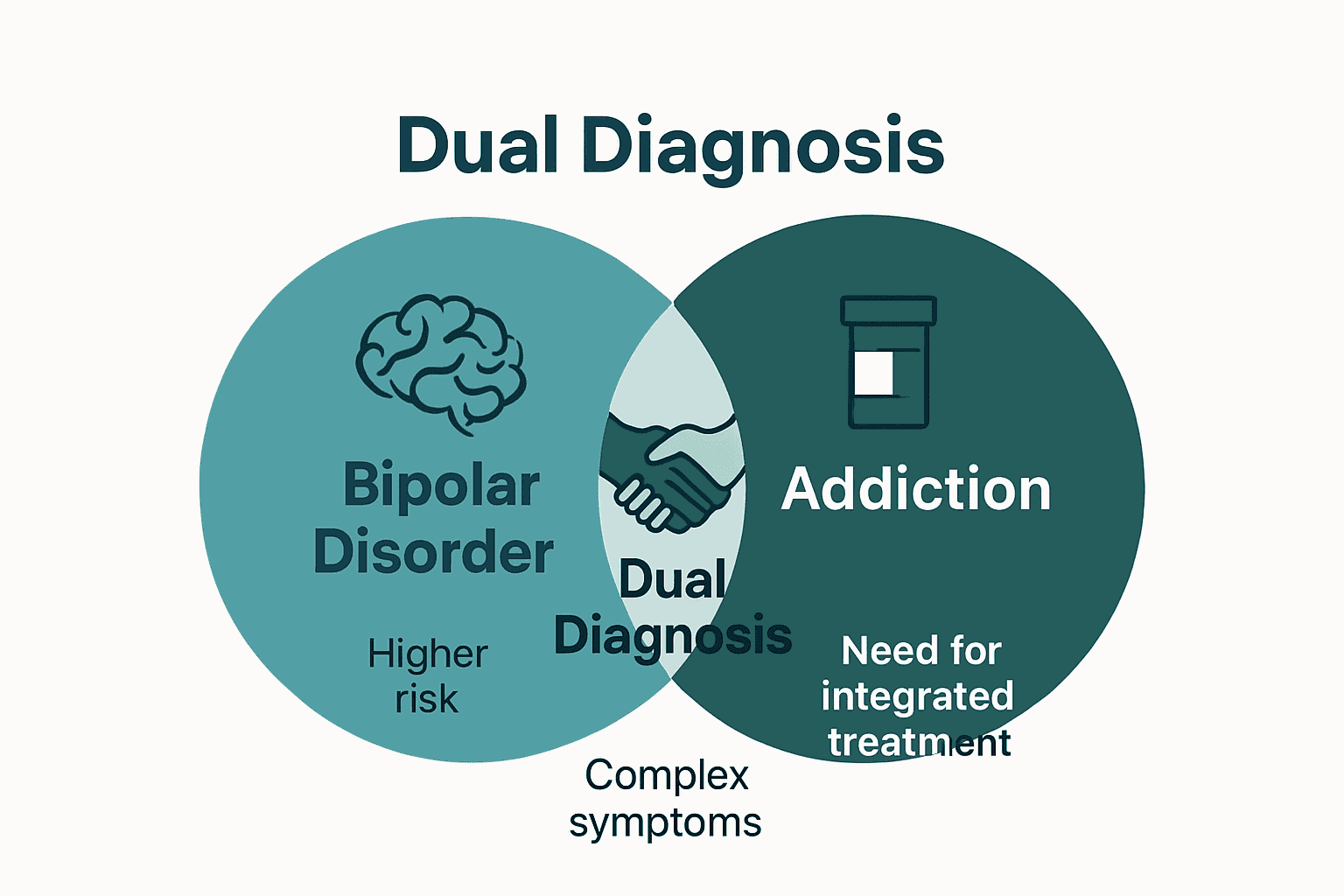
Bipolar disorder and addiction are complex mental health conditions that frequently intersect, creating challenging treatment scenarios for individuals struggling with both. According to SAMHSA, more than one in four adults experiencing serious mental health issues also have a substance use problem, highlighting the intricate relationship between these disorders.
At its core, bipolar disorder is a mood disorder characterized by extreme emotional fluctuations between manic and depressive episodes. These mood swings can be intense and disruptive, often leading individuals to seek temporary relief or self-medication through substance use. NIDA emphasizes that shared risk factors like genetic vulnerabilities and early exposure to stress can contribute to the development of both conditions simultaneously.
The interaction between bipolar disorder and addiction is particularly complex. Individuals might use substances to manage overwhelming emotional states or to counteract the intense symptoms of their mood disorder. This can create a dangerous cycle where substance use temporarily alleviates symptoms but ultimately exacerbates the underlying mental health condition. Key characteristics of this relationship include:
- Increased vulnerability to substance abuse during manic episodes
- Using drugs or alcohol to manage depressive symptoms
- Higher risk of developing more severe mental health complications
- Potential for more intense and frequent mood fluctuations
Understanding the intricate connection between bipolar disorder and addiction is crucial for effective treatment. Integrated care approaches that address both conditions simultaneously offer the most promising path to recovery. Learn more about our comprehensive treatment strategies in our guide on substance abuse and depression.
How Co-Occurring Disorders Interact
The interaction between bipolar disorder and substance use disorders is complex and multifaceted, creating a challenging landscape for both patients and healthcare professionals. Mayo Clinic notes that alcohol use disorder frequently co-occurs with bipolar disorder, though the exact connection remains intricate and not entirely understood.
Neurological vulnerability plays a significant role in how these disorders interact. Individuals with bipolar disorder may experience heightened sensitivity to substance use, which can trigger or exacerbate mood episodes. According to research published in PubMed, patients with both bipolar disorder and substance use disorders often experience a more severe course of their condition, characterized by:
- Earlier onset of bipolar symptoms
- More frequent mood episodes
- Increased risk of anxiety disorders
- Higher likelihood of aggressive behavior
- Greater potential for legal complications
- Elevated suicide risk
The self-medication hypothesis provides crucial insight into this complex relationship. Many individuals with bipolar disorder use substances as a way to manage or temporarily alleviate their intense emotional experiences. Drugs or alcohol might seem like a quick solution to regulate mood swings, but they ultimately disrupt brain chemistry and create a destructive feedback loop. Understanding these intricate interactions is essential for developing comprehensive treatment strategies. Explore our guide on substance abuse and anxiety disorders to gain deeper insights into co-occurring mental health challenges.
Treatment approaches must recognize the interconnected nature of these disorders. Integrated care that simultaneously addresses both bipolar disorder and substance use is crucial for effective recovery. This holistic approach helps patients develop healthier coping mechanisms, understand their triggers, and build resilience against the destructive cycle of co-occurring disorders.
Common Symptoms and Warning Signs
Recognizing the symptoms of bipolar disorder and addiction is crucial for early intervention and effective treatment. SAMHSA highlights that individuals struggling with these co-occurring disorders often display a complex set of behavioral, physical, and social warning signs that can be challenging to identify.
Behavioral symptoms provide the most immediate indicators of potential co-occurring disorders. These may include dramatic shifts in mood, energy levels, and overall functioning. Specifically, individuals might experience:
- Sudden and extreme mood swings
- Significant changes in work or academic performance
- Engaging in secretive or deceptive behaviors
- Erratic sleep patterns
- Impulsive decision-making
- Difficulty maintaining consistent relationships
Physical manifestations can also signal underlying issues. SAMHSA notes that observable physical changes might include unexplained weight fluctuations, bloodshot eyes, sudden changes in personal hygiene, and apparent physical exhaustion. These symptoms often reflect the complex interplay between bipolar disorder and substance use, where individuals may use substances to manage or mask their mental health challenges.
Social warning signs are equally important and can provide critical insights into an individual’s mental health and potential substance use struggles. Unexpected financial problems, sudden changes in social circles, withdrawal from previously enjoyed activities, and increased isolation are powerful indicators that something might be wrong. Understanding these warning signs is not about judgment, but about compassionate recognition and the potential to offer meaningful support and professional intervention.

Integrated Treatment Approaches for Dual Diagnosis
Integrated treatment represents a comprehensive approach to addressing the complex intersection of bipolar disorder and substance use disorders. SAMHSA recommends a coordinated care model that links individuals to providers who can deliver personalized services addressing both the mental and substance-related aspects of their conditions.
The core philosophy of integrated treatment centers on treating the whole person, rather than addressing mental health and substance use as isolated issues. NIDA emphasizes that simultaneous treatment can significantly improve overall health outcomes. Key components of this approach typically include:
- Comprehensive initial psychological and medical assessment
- Personalized treatment planning
- Concurrent mental health and substance use interventions
- Medication management
- Individual and group therapy
- Skill-building for emotional regulation
- Relapse prevention strategies
Multidisciplinary treatment teams play a crucial role in integrated care. These teams typically include psychiatrists, psychologists, addiction specialists, and therapists who collaborate to develop a holistic treatment strategy. By addressing the underlying mental health conditions alongside substance use, patients receive more effective, nuanced care that recognizes the intricate relationship between bipolar disorder and addiction.
 Explore our treatment approach for bipolar disorder in Los Angeles to understand how comprehensive care can transform recovery journeys.
Successful integrated treatment requires a patient-centered approach that adapts to individual needs. This means recognizing that each person’s experience with co-occurring disorders is unique, and treatment must be flexible, compassionate, and responsive to changing circumstances. The ultimate goal is not just managing symptoms, but empowering individuals to achieve lasting mental health and substance-free living.
Risks, Challenges, and Support Resources
Bipolar disorder and substance use create a complex web of risks that can significantly impact an individual’s mental and physical health. International Society for Bipolar Disorders highlights the profound challenges faced by individuals struggling with these co-occurring disorders, noting that substance use can dramatically worsen existing symptoms and create additional complications.
The specific risks associated with this dual diagnosis are substantial and multifaceted:
- Increased likelihood of medication ineffectiveness
- Higher rates of hospitalization
- Greater risk of suicide attempts
- Potential for more severe and frequent mood episodes
- Compromised treatment response
- Accelerated progression of mental health symptoms
- Potential legal and financial complications
Support resources play a critical role in managing these challenges. Comprehensive support networks typically include professional mental health services, peer support groups, family counseling, and specialized treatment programs. These resources aim to provide holistic care that addresses both the psychological and physiological aspects of co-occurring disorders. For individuals seeking specialized support, individual counseling can be particularly beneficial in developing personalized coping strategies.
Navigating the complex landscape of bipolar disorder and addiction requires patience, understanding, and professional guidance. Recognizing that recovery is a journey, not a destination, helps individuals approach treatment with hope and resilience. Support is not just about managing symptoms, but about empowering individuals to rebuild their lives, restore relationships, and create sustainable paths to mental wellness and sobriety.
Find Hope and Healing for Bipolar Disorder and Addiction Today
Struggling with the intense mood swings of bipolar disorder alongside addiction can feel overwhelming and isolating. This article highlights the complex challenges you face such as severe mood fluctuations, the cycle of self-medication, and the increased risk of relapse or complications. You deserve a treatment plan that understands these painful realities and offers compassionate, integrated care tailored specifically to dual diagnosis.
Glendora Recovery Center specializes in comprehensive programs designed to address both bipolar disorder and substance use together. Our experienced team provides personalized therapies and flexible options including Partial Hospitalization and Intensive Outpatient Programs. You are not alone in this journey. Take the first step toward lasting recovery by connecting with us now. Learn more about how we support those facing these co-occurring struggles by visiting individual counseling for addiction treatment. Reach out today through our contact page and begin the path to renewed hope and stability.
Frequently Asked Questions
What is the relationship between bipolar disorder and addiction?
The relationship between bipolar disorder and addiction is complex, as individuals may use substances to cope with extreme mood swings. This self-medication can create a dangerous cycle, worsening the symptoms of bipolar disorder.
What are the common symptoms of co-occurring bipolar disorder and substance use disorders?
Common symptoms include severe mood swings, impulsive behaviors, erratic sleep patterns, and significant changes in work or academic performance. Physical signs may include weight fluctuations and changes in personal hygiene.
How is integrated treatment for bipolar disorder and addiction approached?
Integrated treatment focuses on addressing both bipolar disorder and substance use simultaneously. This includes personalized treatment planning, concurrent interventions for mental health and substance use, medication management, and therapy aimed at emotional regulation.
What risks are associated with having both bipolar disorder and an addiction?
The risks include increased likelihood of medication ineffectiveness, higher rates of hospitalization, greater risk of suicide attempts, and more severe mood episodes. These factors can complicate treatment and recovery efforts.