
More than 35 million people around the world struggle with substance use disorders, yet confusion remains about whether addiction is a disease or a choice. This debate matters because it shapes how we understand, treat, and support those affected. By looking at both scientific evidence and real life experiences, you can gain a clearer view of what truly drives addiction and what that means for recovery and stigma.
Table of Contents
- Defining Addiction: Disease Versus Choice Debate
- Medical and Psychological Perspectives on Addiction
- Personal Responsibility and Free Will in Addiction
- Impact on Treatment Approaches and Recovery
- Common Misconceptions and Social Stigma
Key Takeaways
| Point | Details |
|---|---|
| Disease vs. Choice Perspectives | Addiction is a complex condition influenced by both biological factors and personal agency, requiring a balanced understanding for effective treatment. |
| Holistic Treatment Approaches | Recovery should integrate medical, psychological, and social dimensions to empower individuals in their healing journey. |
| Challenging Misconceptions | Education is vital in combating stigma, helping reshape societal perceptions that addiction is solely a personal failure. |
| Empowerment through Understanding | Recognizing the multifaceted nature of addiction offers hope and highlights the potential for recovery through comprehensive support. |
Defining Addiction: Disease Versus Choice Debate
Addiction represents a complex psychological and physiological condition that challenges traditional understanding of personal agency and medical classification. The ongoing debate surrounding whether addiction is fundamentally a disease or a choice continues to spark intense discussion among healthcare professionals, researchers, and policymakers.
According to the United Nations Office on Drugs and Crime, addiction is definitively classified as a disease, not a personal choice. This perspective emphasizes the critical role of education in combating social stigma and promoting understanding about the neurological mechanisms underlying addictive behaviors. The UN’s stance highlights several key points:
- Addiction involves measurable brain changes
- Neurochemical dependencies are not simply willpower issues
- Genetic predispositions play a significant role in susceptibility
However, nuanced research from PubMed suggests a more intricate perspective. While acknowledging addiction’s biological foundations, researchers propose that addictive behaviors are not entirely compulsive and that individual choice still plays a meaningful role in treatment and recovery. This balanced approach recognizes addiction as a condition existing on a spectrum, where biological vulnerability intersects with personal decision-making.
The disease versus choice debate ultimately reveals addiction’s multifaceted nature. It is neither purely a medical condition nor solely a matter of personal willpower. Understanding addiction requires recognizing its complex interplay between neurological mechanisms, psychological factors, environmental influences, and personal agency. Effective treatment approaches must therefore be holistic, addressing biological, psychological, and social dimensions simultaneously.
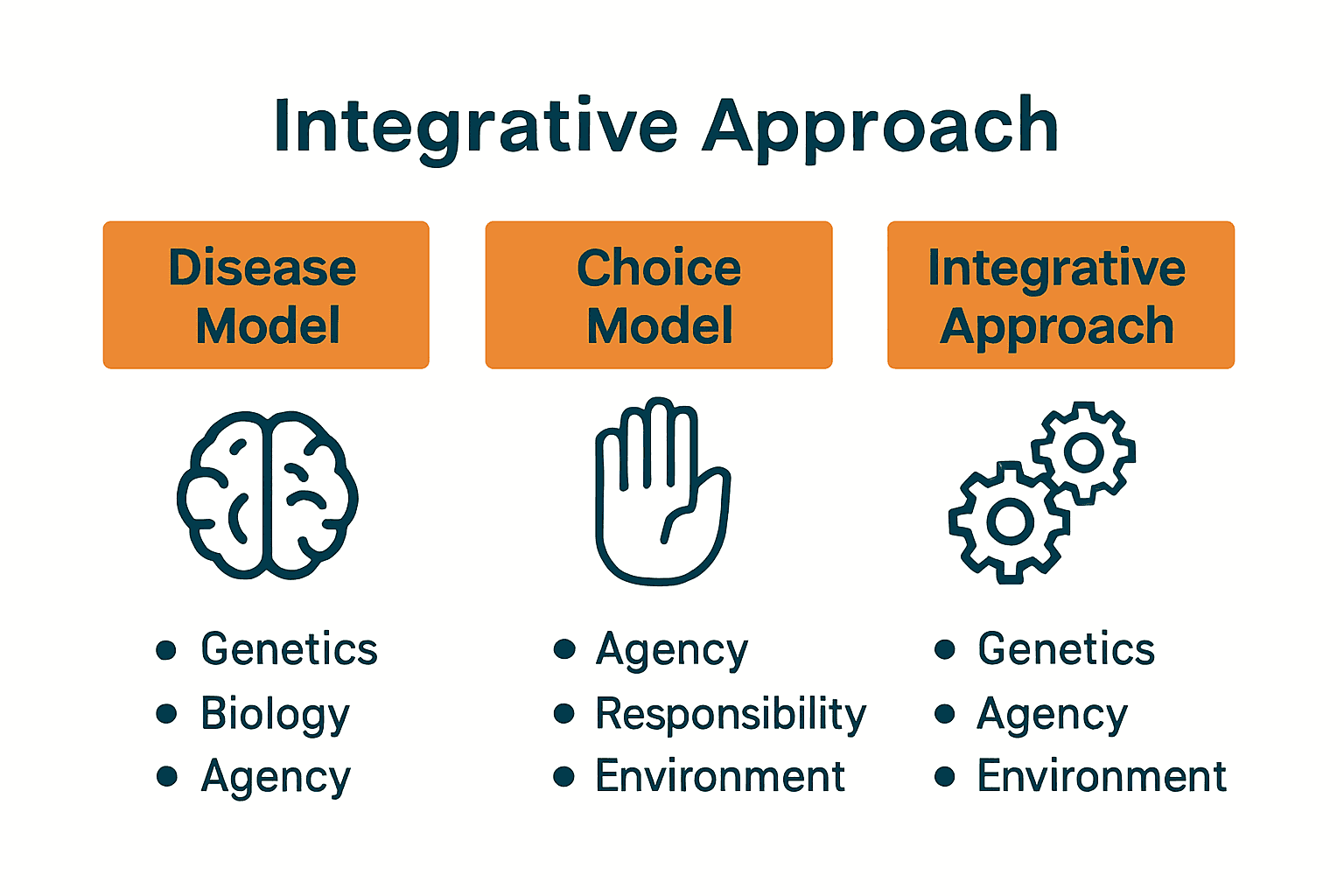
Here’s a comparison of key perspectives in the addiction disease versus choice debate:
| Perspective | View on Addiction | Key Focus Areas |
|---|---|---|
| Disease Model | Chronic Brain Disease | Neurological changes Genetics Neurochemistry |
| Choice Model | Result of Free Will | Personal agency Behavioral decisions |
| Integrative/Balanced Approach | Spectrum of Both | Biological vulnerability Personal responsibility Environmental factors |
For individuals struggling with addiction, this nuanced understanding offers hope. It suggests that recovery is possible through comprehensive support systems that combine medical intervention, psychological counseling, and personal commitment. If you or a loved one are navigating addiction challenges, professional guidance can provide the comprehensive care needed for sustainable recovery. Contact our compassionate team to explore personalized treatment options tailored to your unique journey.
Medical and Psychological Perspectives on Addiction
Addiction represents a complex phenomenon that challenges traditional boundaries between medical diagnosis and psychological understanding. The intersection of neuroscience, psychology, and personal experience creates a nuanced landscape where simplistic explanations fall short of capturing the intricate nature of addictive behaviors.
Research from PubMed reveals fascinating insights into how neuroscience information can fundamentally reshape our understanding of free will in addiction. By examining brain mechanisms, researchers demonstrate that our perceptions of personal responsibility are deeply influenced by scientific understanding of neurological processes. This emerging perspective suggests that addiction is neither purely a medical condition nor simply a matter of individual choice, but a complex interplay of biological, psychological, and environmental factors.
Critical examinations of the brain disease model challenge traditional medical frameworks. PubMed highlights that neither a strictly medical nor a purely moral approach adequately captures the complexity of addictive behaviors. This nuanced perspective recognizes that addiction involves:
- Neurological vulnerability
- Psychological conditioning
- Social and environmental influences
- Individual decision-making capacities
Understanding addiction requires a holistic approach that integrates medical knowledge with psychological insights. Biological predispositions interact with psychological mechanisms, personal experiences, and environmental factors to create unique pathways of addiction. This comprehensive view moves beyond reductive models, acknowledging the profound complexity of human behavior and neurological functioning.
For individuals navigating addiction challenges, this multidimensional perspective offers hope and understanding. It suggests that recovery is not about assigning blame or following a singular treatment approach, but about developing comprehensive, personalized strategies that address the intricate web of factors contributing to addictive behaviors. Addressing addiction and ADHD represents one example of how specialized approaches can provide targeted support for complex psychological conditions. If you or a loved one are seeking compassionate, scientifically informed care, contact our team to explore personalized treatment options that recognize the unique complexity of your journey.

Personal Responsibility and Free Will in Addiction
The concept of personal responsibility in addiction represents a profound and nuanced psychological landscape where individual agency intersects with complex neurobiological mechanisms. This delicate balance challenges traditional assumptions about choice, compulsion, and personal control in the context of addictive behaviors.
Research from PubMed provides compelling evidence that challenges simplistic narratives about addiction. Surprisingly, many individuals who meet clinical criteria for addiction demonstrate the ability to quit without professional intervention, suggesting that personal choice and responsibility play a more significant role than previously understood. This finding highlights the critical importance of individual agency in the recovery process.
Further insights from PubMed reveal how neuroscientific explanations can fundamentally reshape our understanding of free will in addiction. The research demonstrates that presenting addiction through a neurological lens profoundly influences perceptions of personal responsibility. This nuanced perspective suggests that free will exists on a complex spectrum, where:
- Biological predispositions interact with personal decision-making
- Neurological mechanisms do not entirely negate individual agency
- Recovery involves a dynamic interplay between biological vulnerability and personal choice
- Self-awareness and intentional behavioral change are powerful recovery tools
Ultimately, the dialogue around personal responsibility in addiction moves beyond binary thinking. It recognizes that individuals are neither entirely powerless nor completely in control. Recovery becomes a collaborative journey that respects both the biological challenges of addiction and the human capacity for transformative personal choice. There Is No Shame in Seeking Help for Addiction underscores this compassionate approach, emphasizing that seeking support is an act of personal responsibility and strength. If you or a loved one are navigating the complex path of addiction, contact our team to explore personalized strategies that honor your unique journey of recovery and personal empowerment.
Impact on Treatment Approaches and Recovery
The ongoing debate about addiction as a choice or disease fundamentally transforms how treatment approaches are conceptualized, designed, and implemented. This paradigm shift challenges traditional rehabilitation models and demands a more nuanced, personalized approach to recovery that recognizes individual agency and neurobiological complexity.
Research from PubMed reveals critical insights into treatment effectiveness when addiction is viewed through the lens of personal decision-making. The understanding that recovery involves active personal choice rather than passive treatment fundamentally reshapes therapeutic interventions. This perspective empowers individuals by positioning them as active participants in their healing journey, not merely recipients of medical intervention.
Further research from PubMed demonstrates how framing addiction impacts treatment approaches. Presenting addiction exclusively as a brain disease can inadvertently diminish personal responsibility, whereas a balanced approach recognizes that recovery involves:
- Acknowledging biological vulnerabilities
- Developing personal coping strategies
- Enhancing self-awareness
- Cultivating intentional behavioral change
- Promoting individual empowerment
Modern treatment models are increasingly integrating this holistic perspective. Individual Counseling Benefits in Drug Addiction Treatment exemplifies this approach by focusing on personalized strategies that respect both neurological challenges and individual potential. By recognizing addiction as a complex interplay between biological predispositions and personal agency, treatment becomes a collaborative, empowering process. If you or a loved one are seeking a compassionate, personalized approach to recovery, contact our team to explore treatment options that honor your unique journey and potential for transformation.
Common Misconceptions and Social Stigma
Addiction remains one of the most misunderstood and stigmatized health conditions, with widespread misconceptions creating significant barriers to understanding, treatment, and recovery. These deeply entrenched social perceptions often transform personal struggles into sources of shame, isolation, and additional psychological burden for individuals battling substance use disorders.
According to the United Nations Office on Drugs and Crime, viewing addiction as a personal choice dramatically contributes to social stigma. This perspective erroneously suggests that addiction results from moral weakness or individual failing, rather than recognizing it as a complex health condition involving biological, psychological, and environmental factors. The UNODC emphasizes that education plays a crucial role in dismantling these harmful misconceptions and reducing discriminatory attitudes.
Critical research from PubMed further challenges prevailing narratives by highlighting that even the brain disease model may not effectively reduce stigma. Common misconceptions about addiction include:
- Addiction is a sign of moral weakness
- People with addiction can quit anytime they want
- Addiction only affects certain types of people
- Treatment is ineffective or unnecessary
- Relapse means complete failure
These misconceptions create profound psychological barriers that prevent individuals from seeking help and receiving compassionate, evidence-based care. There Is No Shame in Seeking Help for Addiction represents a powerful counter-narrative, emphasizing that addiction is a treatable health condition deserving understanding and support. By challenging societal stigma and promoting empathy, we can create environments that encourage healing, personal growth, and sustainable recovery. If you or a loved one are struggling with addiction-related stigma, contact our team to explore supportive, judgment-free pathways to wellness.
Understanding Addiction as a Choice and Finding Support
The debate around addiction as a choice or disease highlights a key challenge many face: feeling caught between personal responsibility and the powerful biological forces that influence behavior. This struggle can create confusion, guilt, and isolation for individuals striving to regain control. If you recognize terms like “personal agency,” “biological vulnerability,” or “neurochemical dependencies” in your own experience, you are not alone. Addiction is complex, involving both neurological changes and individual decisions.
At Glendora Recovery Center, we understand this delicate balance and offer comprehensive, personalized treatment that respects both the medical and personal aspects of addiction. Our compassionate team provides tailored programs that include counseling and support designed to empower your recovery journey. Don’t wait for the right moment to take charge of your healing. Connect with us today by visiting contact us and learn how our caring professionals can help you build the tools to embrace recovery with confidence. Facing addiction is difficult but reaching out is your first step to lasting change.
Frequently Asked Questions
Is addiction considered a disease or a choice?
Addiction is classified as a disease by organizations like the United Nations Office on Drugs and Crime, emphasizing its neurological changes and genetic predispositions. However, some research suggests a balance, recognizing individual choice and responsibility in recovery.
What role does personal responsibility play in addiction recovery?
Personal responsibility is crucial in addiction recovery. Many individuals demonstrate the ability to quit without professional help, indicating that personal agency plays a significant role in the treatment process and outcome.
How do misconceptions about addiction impact treatment?
Misconceptions, such as viewing addiction as a moral failing, create barriers to treatment and can lead to stigma. Understanding addiction as a complex health condition helps promote empathy and encourages individuals to seek the support they need.
What are the key factors involved in understanding addiction?
Understanding addiction involves recognizing a combination of biological factors, psychological influences, environmental contexts, and personal decision-making. This multi-dimensional approach leads to more effective treatment strategies.